You don’t think about it until it happens. You push up from your chair, take that first step, and your hips or knees announce themselves with a dull, tight protest that wasn’t there when you were thirty. It lasts a few seconds — maybe longer. Then it eases. And you tell yourself it’s nothing. Just getting older. Just the way things go. But here’s what I want you to consider: that moment, that tightening right after you stand, is your body trying to start a conversation. And if you’ve been changing the subject every morning, it might be worth finally listening.
Joint mobility support for everyday stiffness isn’t about fixing something broken. It’s about understanding a system that’s quietly losing something it needs. The good news is that understanding what’s actually happening — below the surface, inside the joint itself — makes the path forward feel less like surrender and more like strategy. This is that conversation. Let’s have it properly.
The Morning Tax Nobody Warned You About

There’s a version of aging nobody puts in the brochure. It’s not dramatic. It doesn’t arrive with a diagnosis or a dramatic event. It arrives as a small inconvenience — the half-second of bracing before you stand, the slight wince when you step off a curb wrong, the way your lower back takes a minute to remember how to be a lower back after you’ve been sitting through a long meeting. We tend to dismiss these things because they pass. The stiffness loosens up after a few steps. The ache fades once you’re moving. So we file it under “normal” and move on.
But what if that daily stiffness isn’t a verdict — it’s a warning light? Not flashing red. Just amber. Steady and patient, waiting for you to pay attention.
What makes this particular kind of stiffness tricky is that it doesn’t scare you into action. It’s too minor for that. Instead, it teaches you to compensate — to lower yourself carefully into chairs, to avoid sitting too long, to hesitate before stairs. And slowly, almost invisibly, your world gets a little smaller. Not because you’re broken. Because you’re adapting to something you were never meant to just accept.
The joint environment can be supported — here’s where to start.
What’s Actually Happening Inside the Joint

Here’s where the science gets useful, and I’ll keep it simple because it deserves to be. Your joints — hips, knees, the lumbar spine — don’t work like hinges on a door. They work more like a sealed capsule filled with a thick, slippery fluid that lets the surfaces inside glide past each other without friction. That fluid is called synovial fluid, and it’s remarkable stuff. It cushions impact. It delivers nutrients to cartilage that has no blood supply of its own. It keeps the whole system moving quietly and efficiently.
When you’re young, your body produces a key molecule that keeps synovial fluid thick and hydrating. Over time — and this starts earlier than most people realize — that production slows. The fluid gets thinner. The cushion gets less forgiving. And the surfaces that were once gliding start dragging, just a little. That drag is what you feel after you’ve been still. The joint doesn’t have enough fluid pressure to ease back into movement without a moment of resistance.
Meanwhile, low-grade inflammation settles into the joint tissue like background noise you’ve stopped noticing. It doesn’t hurt intensely. But it keeps the system in a state of mild alarm, making every movement feel slightly effortful. That combination — thinner synovial fluid, quiet tissue inflammation — is the engine behind the stiffness you’re feeling. It’s not mysterious. It’s mechanical. And mechanical problems respond to the right kind of support.
What if mornings felt quieter than they do right now?
Why Stretching Alone Never Quite Does It

I want to be honest with you here, because a lot of well-meaning advice stops at “stretch more” and “stay active.” And those things genuinely matter. Movement is medicine. I believe that deeply. But if you’ve been stretching, walking, doing your yoga or your morning routine, and the stiffness is still there — still announcing itself every time you stand up — it’s worth asking why the surface-level approach isn’t going deep enough. Stretching works on muscle length and fascia tension. It doesn’t replenish synovial fluid. It doesn’t quiet the inflammation living inside the joint capsule. You can be incredibly consistent with your mobility work and still feel that hitch every morning, because the issue isn’t muscular tightness — it’s what’s happening in the fluid environment the joint depends on.
This is also why some people feel better in warm weather and worse in cold — synovial fluid viscosity changes with temperature. It’s why the stiffness is always worst right after stillness, not during sustained movement. You’re not imagining any of this. You’re experiencing the physics of a system that’s lost some of its natural lubrication. Treating that requires going deeper than a foam roller can reach.
Stretching helps — but this goes deeper than a foam roller can reach.
The Gap Between Managing and Actually Improving

Most people land in management mode without deciding to. They shift how they sit. They take over-the-counter options on bad days. They adjust their expectations about what active means for them now. And life goes on. But there’s a real difference between managing the stiffness and actually improving the environment inside the joint — and that difference shows up in how you feel five years from now. Managing is reactive. You feel stiff, you respond. Improving is upstream. You support the system before the stiffness has a chance to announce itself.
That’s the mindset shift I want to offer, because it changes everything about what feels possible.
When you start thinking about joint health as a living tissue environment that needs nutritional support — not just physical maintenance — the options available to you expand. You’re not just asking “how do I feel better today.” You’re asking “what does this tissue need to actually recover its resilience?” That question leads somewhere useful. And the answer involves supporting synovial fluid production, calming the low-grade inflammation embedded in the joint tissue, and giving the cartilage the molecular raw materials it needs to do its job. These aren’t vague goals. They’re specific biological targets with specific, well-studied approaches.
Quieter Mornings Start Here
That first-step brace every morning? It’s not inevitable — it’s addressable.
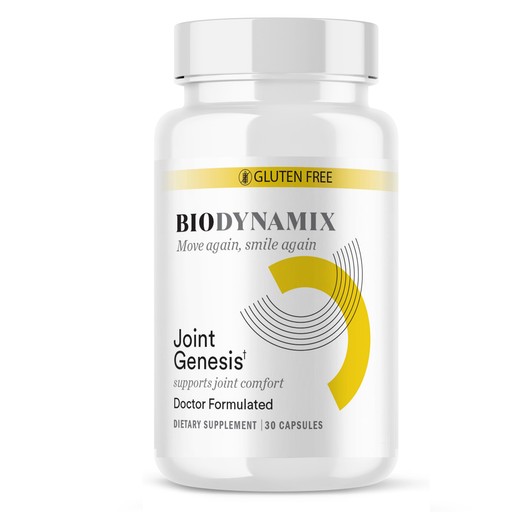
Joint Genesis targets what stretching can’t reach: the synovial fluid environment inside your joints. When that fluid thins and low-grade inflammation settles in, every movement costs a little more than it should. Joint Genesis works upstream — supporting fluid thickness, calming tissue inflammation, and giving cartilage the molecular support it needs to move the way it was designed to.
- ✓ Mornings that don’t start with a negotiation
- ✓ Movement that feels fluid, not effortful
- ✓ Confidence to sit down without planning your exit
What Changes When the Joint Environment Improves
Imagine the first step out of bed tomorrow feeling different. Not dramatically — just quieter. The joint doesn’t brace. There’s no announcement. You stand up and you simply… stand. You walk to the kitchen the way you used to walk to the kitchen, without the half-conscious thought of “let me give it a moment.” That’s not a fantasy. It’s what happens when synovial fluid has recovered enough thickness to cushion movement from the first step, not the fifth. When the inflammation inside the tissue settles down, you stop moving with that invisible caution that’s been shadowing you. Your stride opens up. You sit without planning your exit. You reach for something on a low shelf and don’t think twice.
Joint Genesis was developed specifically to support this process — targeting the fluid environment inside the joint and working on the inflammation that keeps tissue in a state of low-level distress. It works with the biology that’s already there, giving it what it needs to rebuild the conditions for fluid, confident movement. People who use it consistently describe a gradual shift: mornings becoming quieter, afternoons losing that heavy, stiff quality, and a return of the kind of casual movement they’d stopped expecting.
This is the kind of change that doesn’t shout at you. It arrives softly, the way good things usually do. One morning you realize the stiffness didn’t follow you to the kitchen. And you remember what it felt like to just move.
You deserve more than managing — give your joints what they actually need.
Living With Joints You Trust Again
There’s a quiet confidence that comes from trusting your body. Not the confidence of performance — of lifting the most or running the fastest. Just the everyday assurance that when you decide to move, your body will cooperate. That you can get up from a low couch without calculating it. That a long car ride won’t cost you the rest of the afternoon. That stairs are just stairs again. That confidence is what stiffness quietly erodes. And because it happens gradually, you often don’t notice how much you’ve adjusted until something shifts and you realize how small your movement patterns had become. How many things you’d quietly stopped doing. How many times you’d said “I’ll sit this one out” without really meaning to.
Reclaiming that isn’t about being twenty again. It’s about being present in the body you have — a body that, with the right support, is far more capable of recovering resilience than most of us are told. Joint mobility support for everyday stiffness is not a resignation to limitation. It’s the opposite. It’s the decision to give your joints what they actually need so they can do what they were always designed to do: carry you, steadily and comfortably, through the life you want to live.
You don’t have to keep bracing for that first step. Start the conversation your body has been waiting to have.
Written by Elias Menden — for those who seek movement they can trust again
Fluid, confident movement is closer than you think.