There’s a specific sound my feet used to make when they hit the floor each morning. Not a step — more like a negotiation. One heel pressing down, testing. Then a pause. Then the other, slower, like I was walking across something fragile.

It wasn’t dramatic. Nobody would have noticed. But I noticed. Every single morning, those first ten steps felt like I was borrowing someone else’s knees — someone older, someone tired, someone whose body had stopped cooperating while they slept. And the strangest part? By noon, I’d almost forget it happened. The stiffness would loosen. The ache would fade. I’d move normally again and convince myself it wasn’t that bad.
And the negotiation started over.
If your knees greet you like that — tight, swollen, reluctant — you already know what I’m describing. It’s not just pain. It’s that unsettling feeling that your body is doing something behind the scenes you don’t fully understand.
I wanted to understand it. So I stopped ignoring the mornings.
What’s Actually Happening Inside a Stiff Joint Overnight

Here’s what surprised me when I finally looked into it: morning knee pain isn’t random. There’s a biological rhythm to it, and it has everything to do with what happens while you sleep.
Your joints are lined with cartilage — a firm, slippery tissue that lets bones glide past each other. Between those surfaces sits synovial fluid, a thick liquid that works like oil in a hinge. When you move during the day, that fluid circulates. It keeps things smooth, cushioned, fed.
But at night, you’re still for hours. The fluid settles. The cartilage compresses under your body weight without relief. And if there’s any low-grade inflammation already simmering in the joint — from wear, from age, from an immune system that’s been running a little hot — it pools and thickens overnight like sediment in still water.
That’s the “morning gel” phenomenon. It’s not a metaphor. Your joint literally gels. The tissues stiffen, the fluid thickens, and the first movements of your day have to push through all of it before anything feels normal again.
The National Institute of Arthritis and Musculoskeletal and Skin Diseases explains that osteoarthritis stiffness often feels worse after inactivity, which matches why the first steps can be the hardest. Use NIAMS guidance on osteoarthritis for the joint-health baseline, and use CDC arthritis symptom guidance if swelling, redness, fever, or loss of function starts moving this beyond a routine stiffness problem.
A few things make this worse.
- Sleeping in a curled position compresses the knee joint for hours without a break.
- Weakened muscles around the knee — especially the quadriceps — can’t stabilize the joint properly, so the cartilage absorbs more impact.
- And inflammation, the quiet kind you don’t always feel during the day, tends to peak in the early hours when cortisol is still low and the immune system is more active.
If your stiffness lasts under thirty minutes and loosens as you move, it’s likely mechanical — your joints waking up. If it lingers longer, something deeper may be driving it. Either way, the signal is the same: your knees are asking for something you haven’t been giving them.
⸻
The Evening I Stopped Treating Mornings Like the Problem

For a long time, I focused on the mornings. Ice packs at dawn. Stretches before coffee. Foam rolling on the bedroom floor while the house was still dark. It helped — a little. But I was always reacting.
The shift came when I started thinking about the night before.
I began with warmth. Not a quick shower — a slow, deliberate soak. Hot water up to my chest, fifteen minutes, no phone. The heat wasn’t just comfort. It dilated blood vessels around my knees, flushed the joint space with fresh circulation, and relaxed the muscles that had been gripping all day without me realizing. When I climbed out, my legs felt different — looser, quieter, like something had softened that I didn’t know was clenched.

Then I changed how I slept. I started placing a firm pillow between my knees, keeping my hips aligned so my joints weren’t torquing under pressure for eight hours. It felt strange at first — like sleeping with training wheels. But within a week, the difference in my first steps was unmistakable.
I reworked what I ate at night, too. Not a diet overhaul — just a shift. More wild salmon and sardines, because the omega-3s in cold-water fish directly influence how much inflammatory signaling your body produces overnight. Turmeric stirred into warm almond milk before bed, because curcumin slows down the enzymes that drive joint swelling. Fewer processed carbs at dinner, because blood sugar spikes at night feed the very inflammation loop that makes mornings worse.
None of these changes were extreme. That was the point. I wasn’t trying to fix my knees with force. I was trying to give them a better environment to rest in.
What Morning Joint Stiffness Taught Me About Inflammation
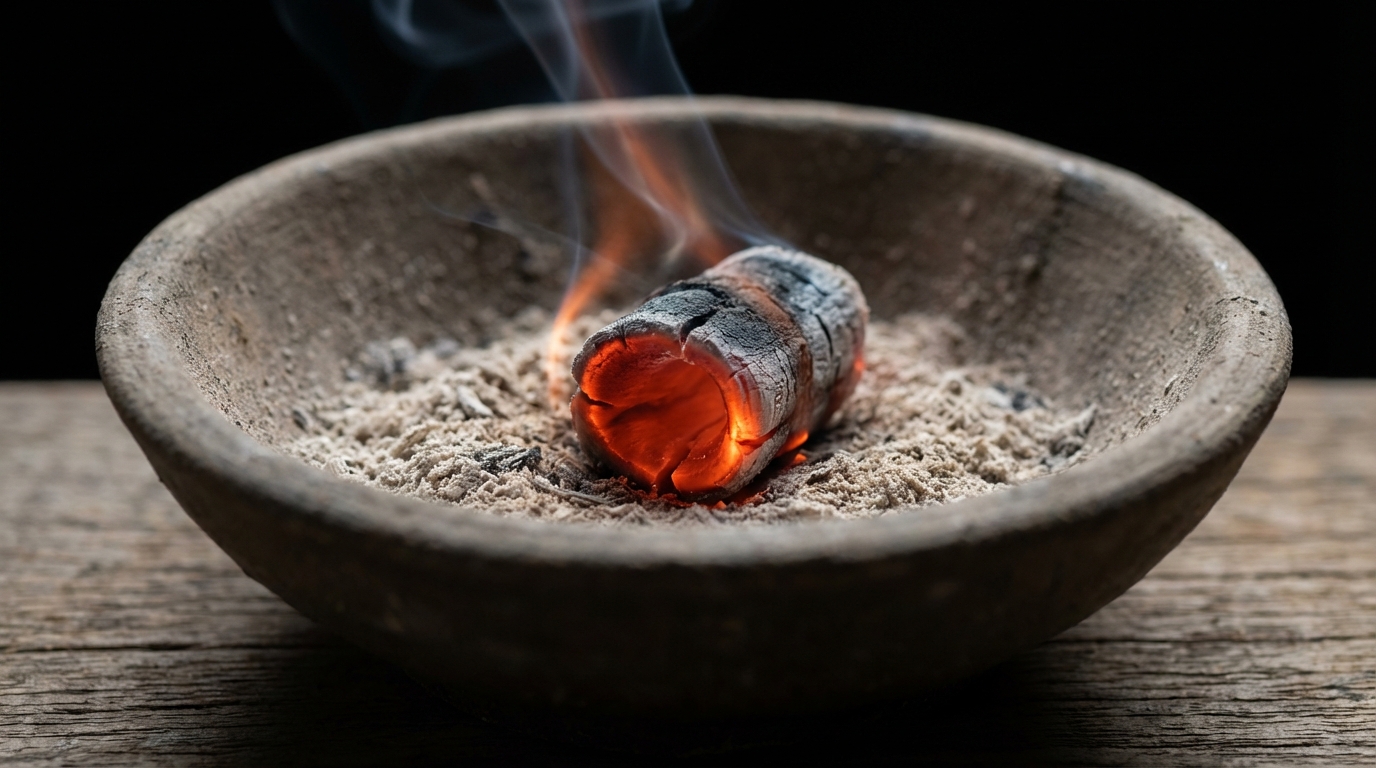
The deeper I went, the more I realized that morning joint stiffness isn’t really a knee problem. It’s an inflammation problem that shows up in the knees first because they bear so much load.
Inflammation is your immune system’s repair response. In small, short bursts, it’s helpful — it’s how your body heals a cut or fights a cold. But when it becomes chronic, low-level, always-on, it starts wearing down the very tissues it’s supposed to protect. Cartilage breaks down faster than it rebuilds. Synovial fluid becomes less viscous. The joint lining thickens and swells.
This is why the stiffness creeps in so gradually. It’s not one injury. It’s a slow accumulation — months or years of quiet inflammatory activity that you don’t feel until the mornings start talking.
And the body doesn’t just want you to stretch through it. It wants you to address the fire underneath.
That’s where I started thinking differently about support — not as something dramatic, but as something steady. Something that works with what the body is already trying to do.
A friend mentioned Joint Genesis one evening, almost in passing. She wasn’t selling me on it. She just said her mornings had changed — that the tight, braced feeling in her knees had loosened into something she didn’t have to think about anymore. I looked into it that night. Joint Genesis is built around Mobilee, a patented extract that supports synovial fluid production — the very lubrication that thins and settles while you sleep.
It also includes Boswellia serrata, French maritime pine bark, ginger root, and BioPerine for absorption. Not a painkiller. Not a magic fix. Just ingredients designed to support the lubrication and inflammatory balance your joints quietly lose over time. I added it to my evening routine — one capsule with my last glass of water — and let it do its work while I slept.
⸻
The Shifts I Didn’t Expect
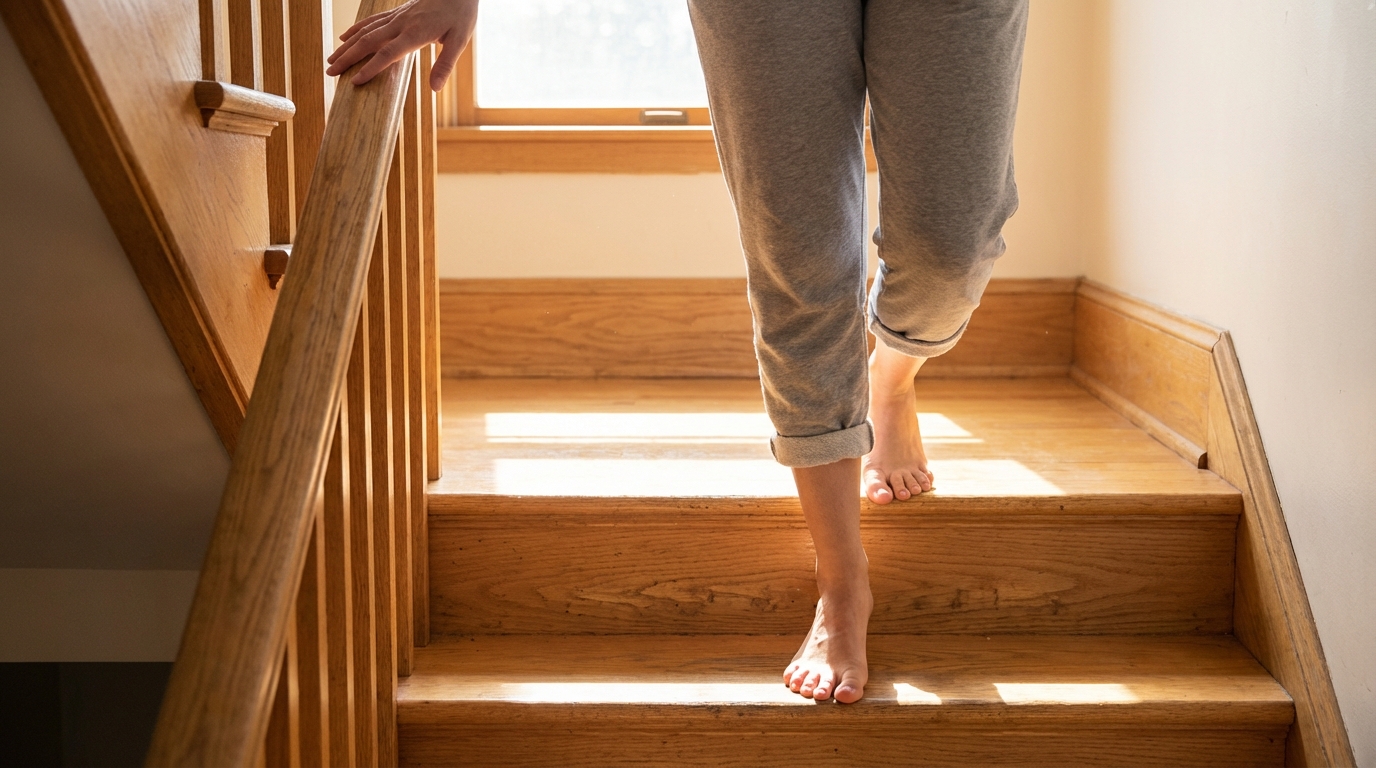
The first thing I noticed wasn’t less pain. It was less bracing.
You know that split second before you stand, where your body tenses because it’s expecting resistance? That faded. Not overnight — maybe ten days in. But one morning I stood up and realized I hadn’t braced at all. My feet just hit the floor and moved.
Then the stairs changed. I live in a two-story house, and mornings on the staircase had become this careful, one-step-at-a-time ritual. Gradually, I started taking them normally again. Not fast — just without thinking about it. Without gripping the railing like a lifeline.
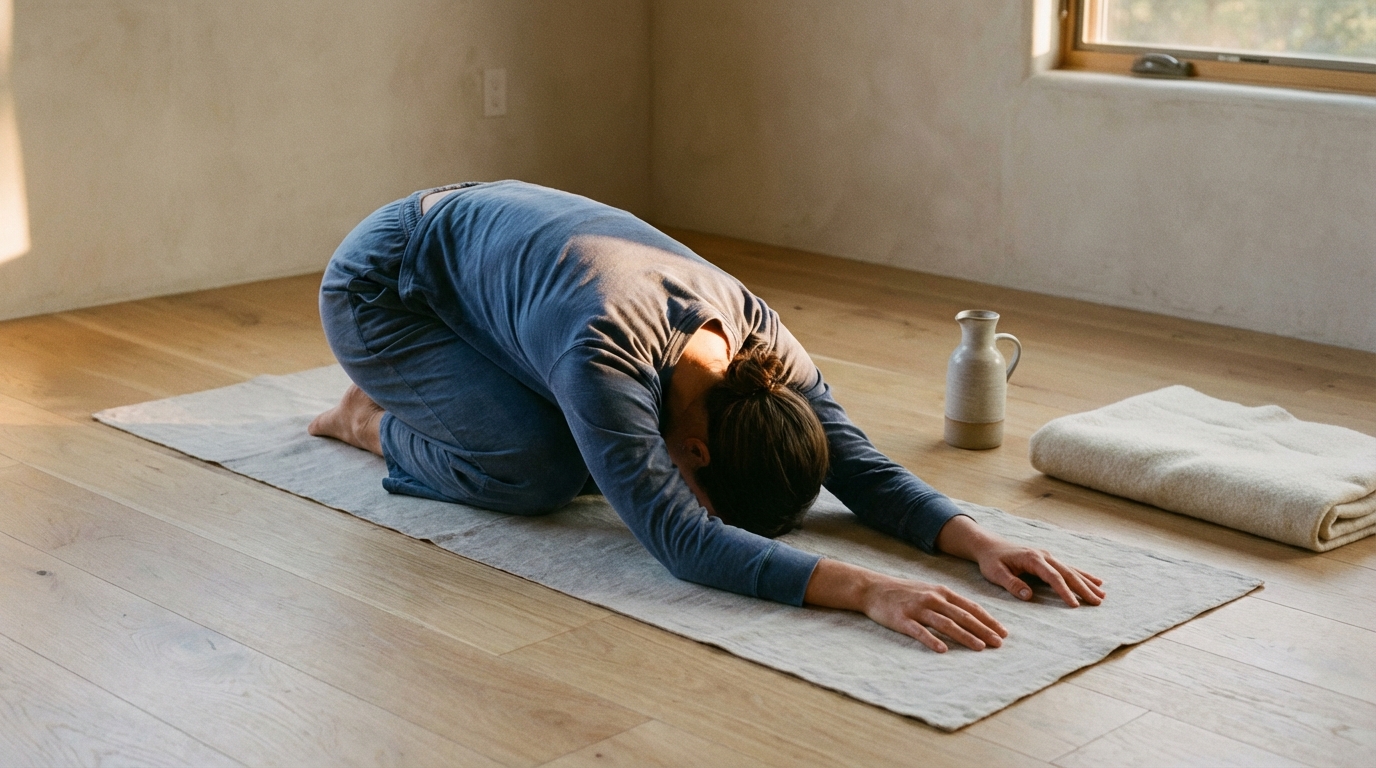
The stretches I’d been doing started feeling different, too. My hamstring stretches reached further. My calf stretches didn’t sting. The child’s pose I’d been doing every morning — that full-body fold that opens up the hips and lower back — finally felt like a release instead of a fight.
I kept everything else the same: the evening bath, the pillow between my knees, the anti-inflammatory foods at dinner. Joint Genesis became part of the ecosystem, not a replacement for it. But it filled a gap the other habits couldn’t reach — the internal support, the cellular-level nourishment that happens in the dark, where your hands can’t go.
A Gentle Morning Routine That Actually Holds
Here’s what my mornings look like now, and none of it takes more than twelve minutes.
Before I get out of bed, I do ankle circles — ten in each direction. It sounds small, but it wakes up the blood flow in my lower legs and sends a signal to my knees that movement is coming.
Then I sit on the edge of the bed and do a slow quad stretch, pulling one foot toward my glute and holding for thirty seconds per side. This loosens the front of the thigh, which pulls directly on the kneecap when it’s tight.
The Foundation Under Every Good Morning
Stretches open the door. This is what keeps it from closing again
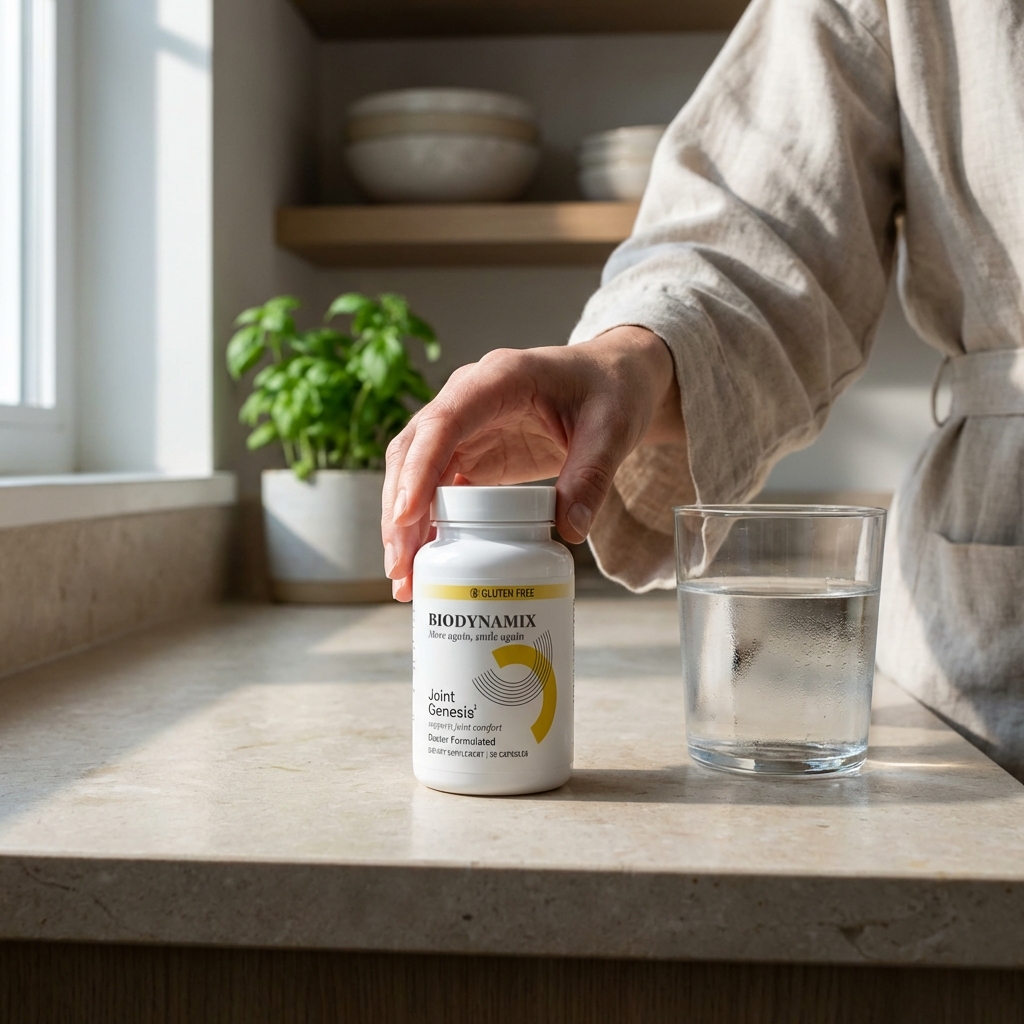
Joint Genesis works alongside your movement, not instead of it. Mobilee supports synovial fluid so your joints stay cushioned. Boswellia and ginger root ease the quiet inflammation that rebuilds while you rest. French maritime pine bark adds antioxidant protection. One capsule. Part of the rhythm. Not a replacement for it.
-
Fills the gap between good habits and lasting comfort
-
Supports cartilage resilience from the inside out
-
Lets your morning routine hold without negotiation
Standing, I do a gentle calf stretch against the wall — thirty seconds per leg. Tight calves transfer force upward into the knee, so releasing them early makes every step afterward smoother.
And finally, I sink into child’s pose on the floor for about a minute. Not because my knees demand it anymore — but because my whole body responds to it. Hips open. Lower back softens. Breath slows down. It’s become less of a treatment and more of a conversation with my body: I hear you. We’re moving now.
⸻
What I’d Tell Someone Still Waking Up Stiff

If your mornings still feel like a negotiation, I want you to know something: you’re not falling apart. Your body is communicating. The stiffness, the ache, the reluctance in your joints — it’s not a verdict. It’s a request.
It’s asking for less inflammation. More nourishment. Better rest. A little support in the places you can’t stretch your way into.
I spent a long time thinking I just had to push through it. Grit my teeth and walk it off. But the real shift didn’t come from force. It came from changing the conditions — evening by evening, morning by morning — until my knees stopped having to shout.
The natural joint pain relief that worked for me wasn’t a single thing. It was a rhythm. Warmth before sleep. Alignment through the night. Nutrients that calm the fire. Joint Genesis doing its quiet work while I dreamed. And a morning routine that respects what the body went through in the stillness.
Your knees carried you here. They’ll carry you further — if you meet them halfway.
Written by Elias Menden — for those who want to move without negotiating.