There’s a particular kind of frustration that lives in the bathroom mirror. Not the dramatic, obvious kind — but the quiet, confusing kind. The kind where you’ve done everything right. You’ve layered the serums. You’ve been consistent. You drink water, you sleep (mostly), you’ve researched ingredients the way other people research vacation destinations. And still, when you look at your face in the morning light, something is off. Your skin looks… tired. Not broken. Not terrible. Just not alive.
That specific dullness — the one that doesn’t respond to exfoliation or rest or a new moisturizer — is worth paying attention to. Not as a flaw, but as a signal. Because skin that stays tired despite a careful routine is usually trying to tell you something that no topical product can hear.
What follows is about that signal. And about the quiet, interior conversation your skin has been trying to start with you for a while now.
The Shelf Is Full, But the Mirror Isn’t Lying

Most of us reach for products when our skin speaks up. It’s the natural first move — and not a wrong one. Moisturizers matter. Sun protection matters. A consistent routine is genuinely valuable. But there’s a ceiling on what applied-from-outside can accomplish, and many women quietly bump into that ceiling without ever knowing there’s a name for it.
Think of it this way. If a plant’s leaves are yellowing, you can mist the surface every morning. They might look brighter for an hour. But if the roots aren’t drawing up what the plant needs — if the soil is depleted or the drainage is poor — the misting is temporary theater. The leaves will go right back to telling the truth.
Skin works the same way. Its surface is the last stop on a long internal journey. Cells have to form, mature, migrate, and shed — a process called cellular turnover — and that entire cycle is powered by systems that run deep inside your body. When those systems are slow, tired, or undernourished, even the most thoughtful topical routine can only do so much. The mirror isn’t being unkind. It’s being honest about something happening beneath the surface.
Your skin has been trying to tell you something your serum can’t hear.
Why Skin Renewal Slows Down (And Isn’t Obvious When It Does)

Your skin is replacing itself constantly. New cells form at the base layer, work their way up, and eventually shed — making room for fresher cells beneath. In your twenties, this cycle runs smoothly, about every 28 days or so. But as the years move forward, and especially as digestion and gut health shift, that rhythm slows. Cells linger longer than they should. The fresh layer underneath doesn’t get its turn.
The result isn’t dramatic. It doesn’t announce itself. It shows up as a subtle flatness, a lack of that elastic, light-catching quality that makes skin look awake. It shows up as uneven texture that doesn’t budge. As pores that seem more visible. As a complexion that looks like it needs something but you can’t quite name what.
What makes this confusing is that slowdown doesn’t always feel like anything. Your digestion might be functioning — meals are processing, you’re not in pain — but it might be functioning slowly, quietly below its best rhythm. And sluggish digestion affects nutrient absorption. When your body can’t fully extract what it needs from what you eat, your skin — being the outermost organ, the last priority in the body’s hierarchy of needs — gets what’s left over. Which, some days, isn’t much.
Cellular renewal starts somewhere your routine hasn’t reached yet.
The Gut Sends Messages Your Serum Can’t Intercept

The relationship between your gut and your skin is one of those connections that feels surprising until you think about it — and then feels completely obvious. The gut is where nutrients are broken down and delivered. It’s where inflammation begins or gets regulated. It’s home to trillions of microorganisms that influence everything from mood to immune response to, yes, how your skin behaves.
When the gut microbiome is diverse and balanced, it helps keep internal inflammation calm. It supports the absorption of skin-essential nutrients — zinc, vitamins, fatty acids — that your complexion depends on to stay resilient. It moves waste efficiently, so the body isn’t recirculating what it should be releasing. All of that shows up in the skin as bounce, clarity, and that hard-to-name quality people describe as looking well.
When the gut is imbalanced or sluggish, the opposite begins to quietly unfold. Inflammation edges upward. Absorption becomes inconsistent. Turnover slows. And no amount of retinol or hyaluronic acid can fully compensate for a gut that isn’t doing its part. This isn’t a wellness theory — it’s physiology. The gut-skin axis is well-documented, well-studied, and something researchers have been paying closer attention to for years.
The gut-skin connection is real — and finally, there’s a formula for it.
What the Skin Is Actually Asking For

When skin looks persistently dull — not tired from one bad night but structurally, predictably flat — it’s usually asking for two things that no cream can provide. It’s asking for better cellular renewal conditions. And it’s asking for an internal environment that supports that renewal rather than undermining it.
Cellular renewal needs more than time. It needs the body to be an efficient host — moving nutrients in, clearing waste out, maintaining the kind of internal balance where fresh cells can form properly and rise to the surface carrying real vitality. When digestion is slow and the gut ecosystem is off, those conditions don’t exist. The cells that eventually reach the surface are already compromised before they arrive.
This is why some women feel like their skin has a ceiling. They’ve optimized the outside as much as possible, and they can feel that something further in needs to shift. That instinct is worth trusting. The skin’s surface is responding to an interior story — and until that story changes, the surface has limited room to transform.
Nourished Skin Starts Below the Surface
When the outside routine has done everything it can — what happens when you go deeper?
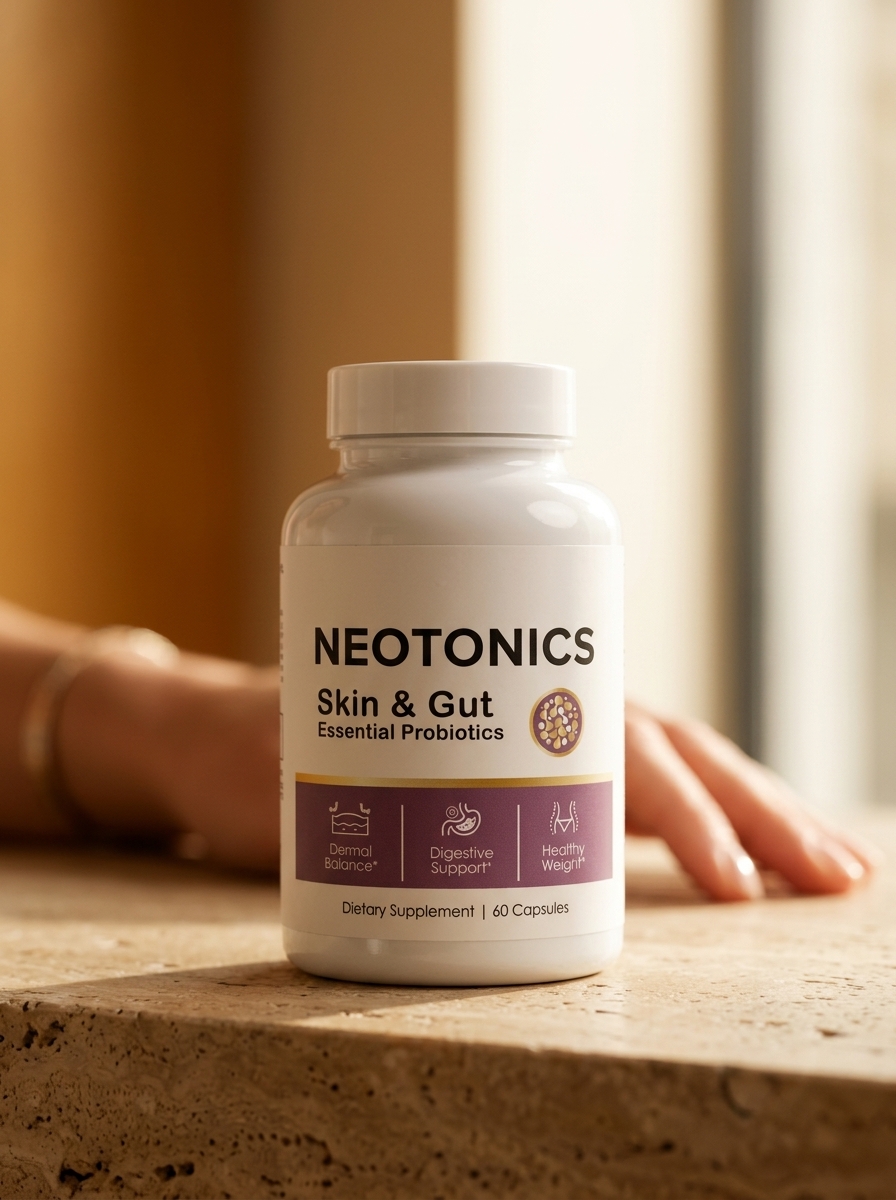
Neotonics is formulated to support the gut-skin connection that topical products can’t reach. By encouraging microbial balance, better nutrient absorption, and healthy cellular turnover from within, it creates the internal conditions your complexion has been quietly asking for — so your skin can finally reflect how well you care for yourself.
- ✓ Supports cellular renewal from the gut level up
- ✓ Helps your skin absorb what it’s been missing
- ✓ That rested, bouncy quality — restored, not just treated
What Changes When You Begin From the Inside

There’s a specific kind of supplement approach — one designed to support the gut-skin relationship rather than addressing skin or gut separately — that some women describe as the missing piece. Not a dramatic before-and-after. More like a gradual settling into a version of their complexion they’d almost forgotten was possible.
Neotonics is built on this exact idea. It’s a formula designed to support cellular turnover by working at the gut level first — feeding the conditions that healthy skin renewal requires. A blend of gut-supportive ingredients that help regulate digestion, encourage microbial balance, and create the internal environment where your skin can actually do what it’s trying to do.
The shift isn’t about adding another layer to your routine. It’s about finally addressing the layer beneath your routine — the one your serums can’t quite reach. When the gut begins to move well, to absorb fully, to stay in better balance, the skin often reflects that quietly and gradually. More brightness. More bounce. A texture that feels like it’s keeping up again rather than falling behind.
Some women call it the missing piece. Maybe it’s yours too.
The Mornings That Start to Feel Different

It’s worth imagining, concretely, what a shift like this can feel like. Not overnight — that’s not how cellular biology works. But after a few weeks of consistent, inside-out support, mornings can feel different in small ways that add up.
You wash your face and the texture under your fingertips has a little more give. Not dramatic — but there. You step into the light and something about the quality of your complexion is more even, more at ease. The flat grayness that used to be your morning face is lighter, more awake. You might not even register it consciously at first. But one day you realize you stopped leaning in to check yourself quite so critically. Something just looks… rested. Not because you’ve slept more or stressed less, but because the interior work is finally showing up on the surface where you can actually see it.
That’s the experience many women describe — not transformation, but restoration. A return to a version of their skin that feels like themselves.
Rested, bouncy skin isn’t a treatment — it’s a condition you can support.
Trusting What the Routine Alone Can’t Reach

A good skincare routine is still worth having. This isn’t a case against serums or moisturizers or SPF. It’s a case for not stopping there. For recognizing that the skin, like every other organ, is downstream of what’s happening inside — and that caring for it only from the outside is a little like renovating the front of a house while leaving the foundation unattended.
If you’ve been careful and consistent, if your shelf is thoughtfully stocked, if you’ve done what all the right sources said to do — and your skin still looks like it’s holding back — it might be time to stop adding more to the outside and start listening to what the inside is asking for.
The gut is speaking. The skin is translating. And somewhere in that conversation is a version of your complexion that isn’t tired anymore — not because it’s been treated, but because it’s finally been nourished from the place where nourishment actually begins.
Written by Liora Menden — for those who seek beauty that begins from within
What if the answer has been one layer deeper all along?