The clinic light was soft and flat, the kind that makes everything look calmer than it is. My doctor skimmed the page, tapped a line, and smiled. LDL, HDL, total cholesterol — all fine. I felt my shoulders drop. Gold star. I folded the printout and slid it into my bag like a hall pass back to life.
Two weeks later, the pass stopped working. By late afternoon, my fuse was short. My recovery after simple lifts took too long. Walking to the car in the cool, blue dusk, I felt a faint band of pressure across my chest — not painful, just a quiet glove. I tried to shrug it off: busy season, not enough sleep, getting older.
But the page in my bag kept tugging at me.
The line I skipped

At my desk, early, mug warm in my hands, I opened the printout and read past the familiar letters — LDL, HDL — to a line I’d skimmed before: hs-CRP. A small acronym with a big implication. In plain words, it’s a glimpse of your body’s inflammatory “weather.” Mine was overcast.
I realized something simple and unsettling: you can have normal cholesterol and still be living in high inflammation. That gap explains the way you can look fine on paper and still feel wrong in your body.
Quiet traffic on the road.
Storm clouds overhead.
Both matter.
The whispers I’d been ignoring

They weren’t dramatic. That’s what made them easy to miss.
- Energy dipping before the day did.
- Lunch-hour brain fog like a thin film on the glass.
- Soreness that clung after modest workouts.
- The light, glove-like tightness on random evenings.
Alone, each was explainable. Together, they drew an outline. When I paired those whispers with the hs-CRP line, the outline became a map.
Normal cholesterol inflammation — the hidden combo
Cholesterol tells you about traffic in your arteries. Inflammation tells you about the road conditions. Smooth road, normal traffic — great. But if the weather turns rough, even normal traffic can carve ruts. That’s why the pairing of lipids and inflammation gives a clearer picture than either alone.
That insight did not make me anxious; it made me curious. What would it look like to calm the weather?
A shift I could keep
I didn’t “overhaul” anything. I tuned the dials I could reach.
Food, made calmer
I built most plates around simple patterns: leafy greens, beans or lentils, a handful of nuts, olive oil, bright berries, and salmon a few times a week. Nothing fancy. Just rhythm.
Oils, rebalanced
I reached for extra-virgin olive oil more often. I cooked a little lower and slower. I paid attention to how food made me feel — not just how it looked.
Stress, on a leash
Between calls, I stepped outside for ten minutes. No headphones. Just sky, a moving horizon, a longer exhale. When my head felt crowded, I wrote one messy page and threw it away.
Sleep, protected
A small “lights low” alarm nudged me to land the day. Warm lamp, slow stretch, phone in another room. My mornings felt less brittle.
One quiet companion
Alongside these shifts, I added Cardio Shield — a clean, heart-support supplement I take with breakfast. I chose it because it’s formulated to support healthy blood pressure and vascular relaxation, which fit the exact place I wanted help: calm the “weather,” not hype the system. It sits next to my coffee grinder. One softgel, done.
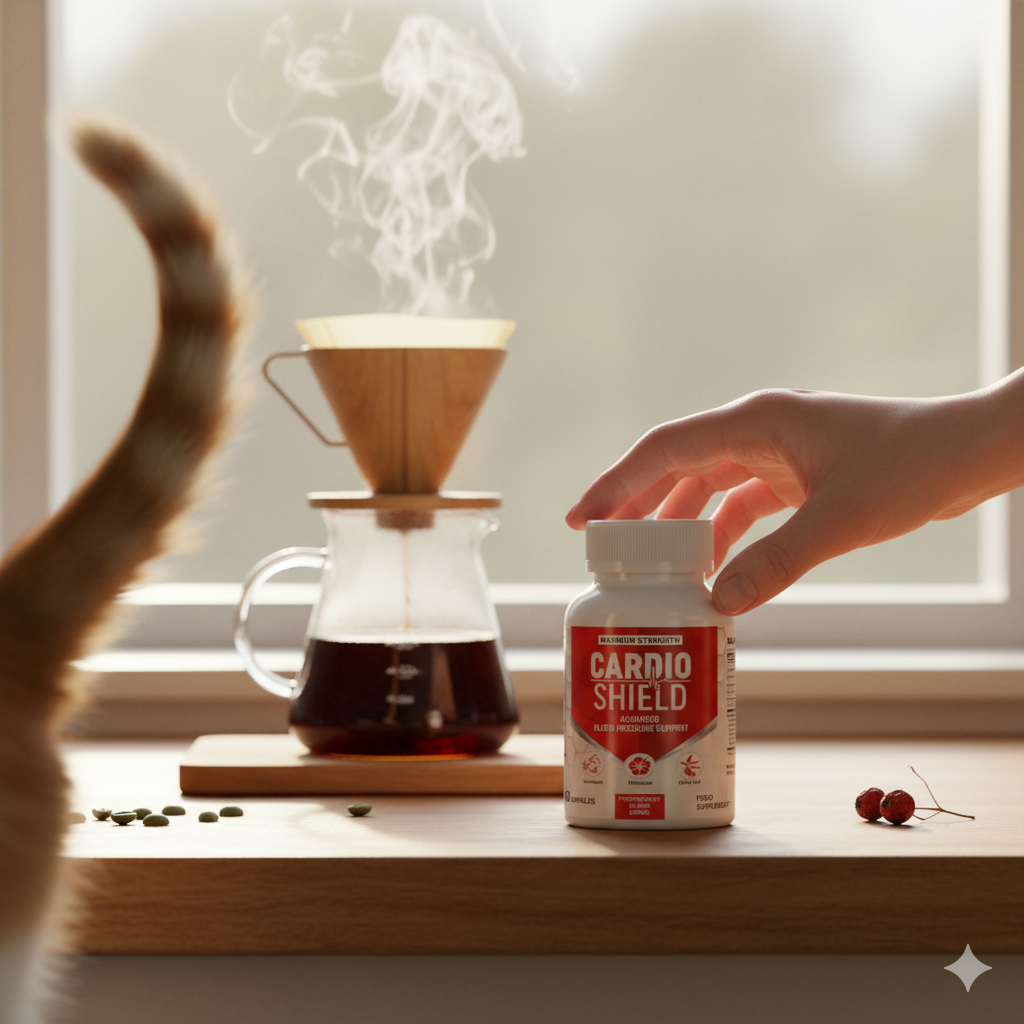
Let Morning Exhale
Steam, soft light, and a calmer start in three small motions
Make the first minutes feel wider. A clean daily capsule that lives where the day begins, pairing with breakfast and breath—not hype. Keep the “weather” mellow while your routine does the real work.
-
Noon arrives with less edge
-
Breath meets you a beat sooner
-
Fits beside food, sleep, sky
By week two, I felt the first early change: mornings steadier; the parking-lot tightness visiting less; soreness leaving a day sooner.
How the body made sense of it

I started to picture the system as a conversation:
- Food sets the tone — steady or jagged.
- Sleep tells your nervous system whether it’s safe to switch off.
- Movement squeezes fresh blood through old corners.
- Stress practices either tension or release.
- A targeted support like Cardio Shield helps the vessels stay more at ease — the difference between a clenched fist and an open hand.
Small choices spoke more politely to my arteries. And my body responded in kind.
What I track now — and how I read it

I still look at total cholesterol, LDL, HDL, triglycerides. I also watch hs-CRP. I care most about trends, not a single snapshot. If hs-CRP drifts up, I check the basics first: Am I sleeping later but less? Grabbing more ultra-processed foods? Skipping those sky-breaks? Usually the answer is hiding in routine, not mystery.
The simple stack that stuck
I wrote it on an index card and taped it inside a cupboard. It became a tempo.
Morning anchor
- Protein + greens + olive oil.
- One softgel of Cardio Shield with breakfast.
- Five deep breaths before I open anything with a notification.
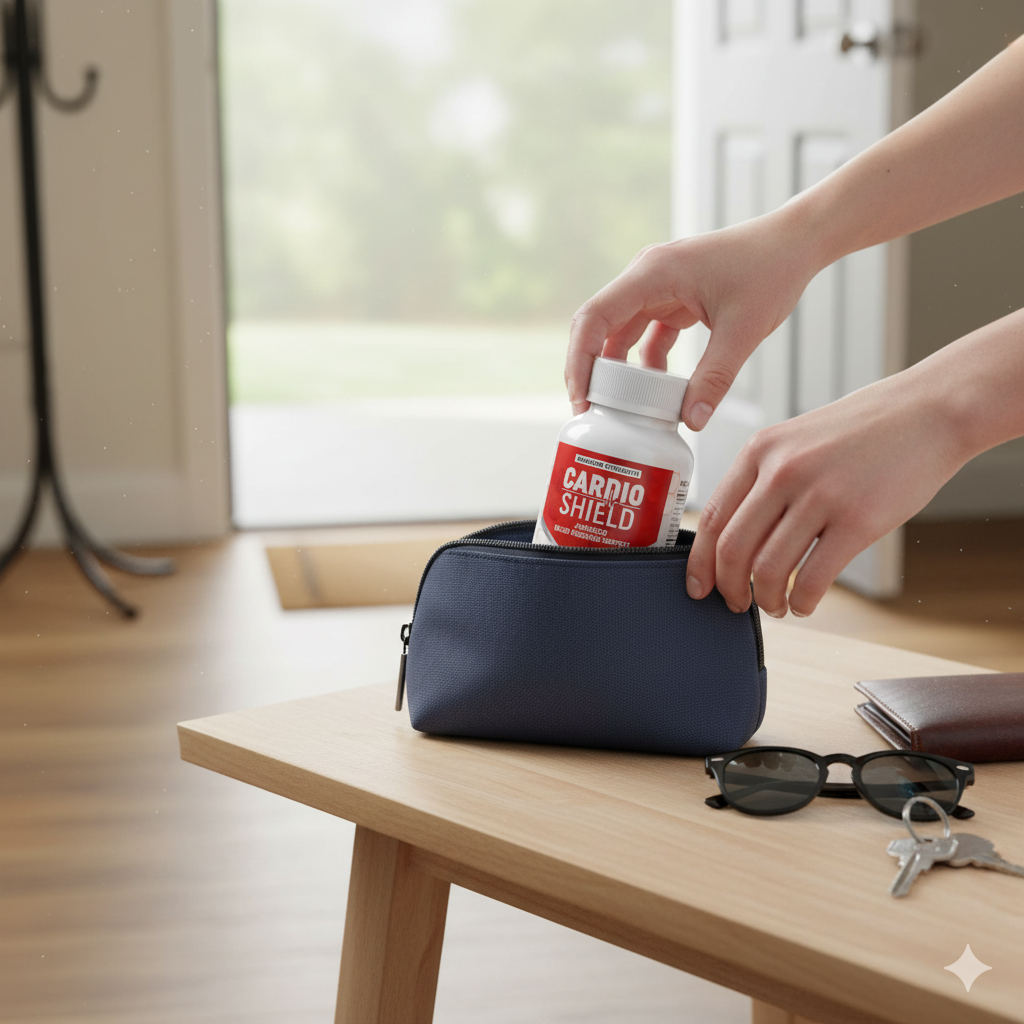
Smooth Weather, Packed
A pocket-ready step for easier days
Keep your vessels at ease while the rest of your habits do their quiet work. One softgel fits the rhythm—home or away.
-
Travels without fuss
-
Supports day-long steadiness
-
Sits neatly in your routine
Midday reset
- Ten minutes outside. No podcast. Feel the air.
- A glass of water before coffee number two.
Evening wind-down
- Lights dim.
- Two minutes of shoulder circles, slow neck rolls.
- Phone sleeps in the hall.
What I noticed in month one
- Calmer focus in the late afternoon.
- Fewer wired-and-tired evenings.
- Less next-day heaviness after training.
- Breath that arrived easier on those walk-to-the-car nights.
How I use it: one Cardio Shield softgel in the morning. On heavier training weeks, I add a second with dinner. It’s a companion to the habits, not a stand-in for them.
The science, felt instead of memorized
You already know this in your bones:
- Your body is a set of tiny engines and the roads between them.
- Food, sleep, movement, and stress write tomorrow’s weather.
- When the weather is calmer, normal cholesterol becomes more meaningful.
- When it’s stormy, normal cholesterol inflammation can still make the roads wear out faster.
So we soften the day. We choose foods that don’t spike and crash us. We practice turning down the volume before bed. We walk under any patch of sky we can find. And we add one or two supports that match the job — in my case, Cardio Shield to help the vessels stay relaxed and responsive while the rest of my routine does its slow, good work.
If your labs say “fine” but your body says “not yet”
Don’t panic. Widen the frame. Pair your lipid picture with a look at inflammation, especially hs-CRP. Then build a pattern that makes low-grade inflammation harder to maintain:
- a calmer plate most days,
- a real bedtime,
- a daily dose of open sky,
- and a gentle, vascular-support companion like Cardio Shield.
Let the changes be small and repeatable. Let them be human.
“Better” rarely arrives as a headline. It shows up as a steadier morning, a looser chest on the walk to the car, a day that doesn’t take more than it gives.
I still keep the lab page. But now, when I fold it and slide it away, I’m not hoping numbers will rescue me. I know what the numbers are pointing to — and I know how to live in a way that helps them point somewhere good.
Written by Elias Menden — for those who seek steadiness.