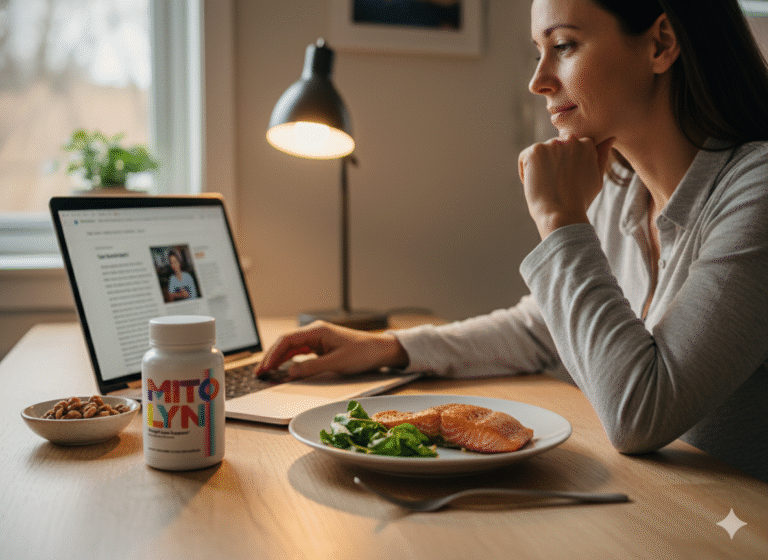
Three a.m. has a particular quality. It’s the hour when your body should be deep in repair mode, when your breath should be slow and your mind should be somewhere else entirely. But I was awake—eyes dry, shoulders tight, thoughts moving in that jittery, caffeine-like way that has nothing to do with actual energy. This wasn’t occasional. This was Tuesday, Thursday, most Saturdays.

This was my normal. And I’d gotten good at the morning performance: cold water on my face, extra concealer under my eyes, a joke about “not being a morning person” that everyone accepted because it sounded like personality instead of what it actually was.
A body that couldn’t land.
The exhaustion was its own kind of noise—this low, constant hum underneath everything. But what finally got my attention wasn’t tiredness. It was how my body started responding to tiredness.
- My knees hurt when I stood up from my desk.
- My jaw was sore by noon from clenching.
- A paper cut on my thumb stayed angry and red for a week.
- And the strangest thing: I’d feel unreasonably irritated by small sounds—the scrape of a chair, someone chewing, the neighbor’s dog—like my whole nervous system had lost its shock absorbers.
I thought I was just stressed. Or getting older. Or not drinking enough water. It took me longer than it should have to see the pattern between sleep and inflammation—the way one fed the other in this quiet, relentless loop.
⸻
The morning I realized “tired” wasn’t the real problem

There’s tired, and then there’s inflamed-tired. Regular tired is soft around the edges. You’re sleepy. You yawn. You want your bed.
Inflamed-tired is different. You’re exhausted, but your body won’t settle. Your mind won’t stop. There’s this weird internal static that makes rest feel impossible even when you’re desperate for it. That was my default state.
And I kept blaming my schedule, my workload, my tendency to scroll Instagram at midnight. All true, sure. But they were symptoms, not the source. The source was this: poor sleep and inflammation had become partners.
When I didn’t sleep well, my body acted like something was wrong—even when nothing was. It released more of those “stay alert” signals, the ones that are supposed to protect you from threats. Except the only threat was exhaustion itself.
So inflammation hung around. Low-grade. Constant. Nothing dramatic enough for a doctor’s visit, but enough to make my body feel like a house with all the lights on and no one home. And here’s the trap: when your body feels that activated, sleep becomes harder. Because how do you rest when your system thinks danger is still out there?
You don’t. You just lie there, annoyed with yourself.
⸻
What I didn’t realize: my body was stuck in a loop it couldn’t name
The worst part wasn’t the tiredness. It was how everything became harder on bad sleep. A normal conversation required more focus. A simple workout left me sore for three days. My mood was short, reactive, like someone had turned up the sensitivity on all my settings.
And if something actually stressful happened—a work deadline, a friend canceling plans, a bill I forgot—I felt it in my chest for hours. I started avoiding things that used to feel easy: evening plans, early mornings, anything that required me to “be on.” And I noticed something that scared me a little: small injuries weren’t healing the way they used to.
A bruise would stick around. A muscle strain would linger. Even a cold would knock me out longer than it should have. Because that’s what sleep and inflammation do when they team up—they steal your recovery.
Sleep is supposed to be your body’s construction crew. The time when tissues repair, when your brain clears out metabolic waste, when your immune system recalibrates. It’s not passive. It’s active restoration.
But if sleep gets shallow or short or fractured, that crew can’t do its job. So inflammation—which is supposed to be temporary, a short-term signal—starts overstaying. And the longer it stays, the harder everything else becomes.
The cycle I couldn’t see: I thought I was managing stress, but I was just rearranging exhaustion

Here’s what the loop looked like, even though I couldn’t see it at the time: I’d have a stressful day. Normal stuff—deadlines, emails, decisions. That stress kept my nervous system humming after I got home.
So I’d “decompress” by scrolling, watching something, staying up later than I meant to. Then I’d wake up feeling off—groggy, stiff, foggy. Not quite sick, but not quite well either.
Which made the next day more stressful, because I had less capacity for it. Which made sleep harder that night. And on it went.
Stress → poor sleep → inflammation → more stress → worse sleep.
I used to think the answer was willpower. Like if I just committed harder to “getting more sleep,” it would happen. But sleep doesn’t work that way. You can’t force it. You can’t earn it with good behavior.
What I needed wasn’t more effort. It was more rhythm.
⸻
The shift that changed everything wasn’t dramatic—it was steady

I kept expecting the fix to be some big overhaul. A new mattress. A sleep tracker. Eight perfect hours every night. But what actually helped was smaller: consistent timing, even when life was messy.
Because my body wasn’t just asking for more sleep. It was asking for predictability—for signals it could trust that meant “you’re safe, we can power down now.” So I started treating my evenings differently.
Not like a checklist. More like a dimmer switch.
The sleep-supporting habits that actually stuck
- Same bedtime window, even on weekends. Not rigid, but reliable. My body started expecting it, which made falling asleep less of a negotiation.
- A real wind-down, not a collapse. I used to go from “full speed” to “lights out” in ten minutes, wondering why my brain wouldn’t stop. Now I give myself thirty minutes to transition—shower, stretch, read something that isn’t glowing. It sounds obvious, but it worked.
- Cutting caffeine earlier than I thought I needed to. Turns out “2 p.m. coffee” was still in my system at 10 p.m., keeping my nervous system slightly elevated. Once I moved my cutoff to noon, my nights got quieter.
- Not starting new projects after 9 p.m. This was emotional more than practical. I used to hit 10 p.m. and suddenly think of seventeen things I should fix, plan, or research. Now I practice: tomorrow. Not tonight.
When these became routine, I noticed something subtle: my mornings stopped feeling like punishment.
Why I started paying attention to what my body was using to repair itself
Here’s the thing about late-night research spirals: sometimes they’re anxiety, sometimes they’re onto something. As I dug into the relationship between sleep and inflammation, I kept finding the same thread: your body’s repair systems need raw materials. They don’t run on hope.
And healthy fats kept showing up in that conversation. Not as a trend. As a structural thing—your cell membranes, the ones that decide what gets in and out and how smoothly everything communicates, are literally made from fats. And when those membranes are supported with the right building blocks, your cells tend to handle stress and recovery with more resilience.
So I started thinking about nighttime repair differently: Sleep is the time. But your body also needs the tools.
Stop Fighting Bedtime
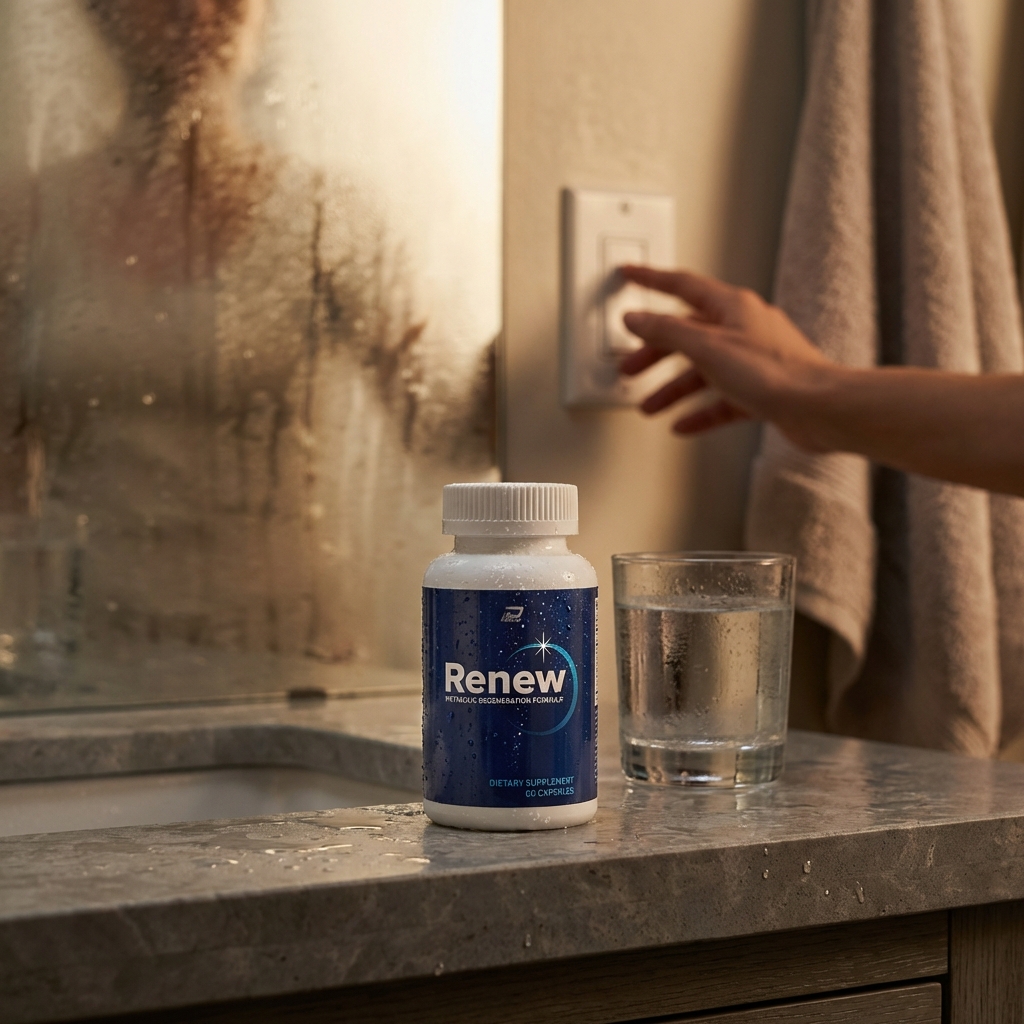
I take Renew when I’m tired… but still wired
Renew is a nightly capsule blend made to support deep sleep and calm—so your body can actually power down. The formula includes 10 mg melatonin, 200 mg L-theanine, 150 mg ashwagandha, and 50 mg magnesium—a straight-line stack for quieter nights and less “static” in your system.
-
Helps my brain stop negotiating
-
Makes the night feel safer and softer
-
Supports a smoother fall-asleep feeling
If your system is trying to rebuild overnight but doesn’t have what it needs, you can wake up feeling like the repair crew showed up… but couldn’t finish the job. That reframe changed how I ate—not dramatically, just with more intention:
- Fatty fish when it fit.
- Walnuts and flaxseed as easy add-ons.
- Olive oil instead of whatever was fastest.
- Meals built around protein, color, and fat so my blood sugar stayed steady instead of spiking and crashing.
Omega-3s get the most attention, sure. But I also learned about other specialized fatty acids being studied for how they support cellular balance—the kind of deep, quiet support that doesn’t announce itself but shows up in how you feel. And that led me to one addition I didn’t expect to keep.
⸻
The support I added—because it made waking up feel less like a negotiation
By the time I tried Renew, my habits were already better. I had a steadier bedtime. I wasn’t doom-scrolling until my eyes burned. My evenings had a rhythm.
But I still wanted something for the deeper part—the part where my body didn’t just fall asleep, but trusted the night enough to actually rest. Renew became that.
Not in some dramatic, “everything changed overnight” way. More like… I started waking up less stiff. My energy felt more even. And those “why does my entire body feel offended by existence today?” mornings became rarer.
The biggest shift was emotional: I stopped feeling like I had to recover from recovering. It felt like my system was finishing the work it started.
And once that happened, the whole sleep–inflammation loop loosened its grip. Because when you wake up feeling more restored, the day lands differently. You’re not as reactive. You don’t lean as hard on caffeine. Stress doesn’t spike as fast.
Which makes the next night easier too. That’s the quiet shift: when one thing improves, everything else relaxes.
What I wish someone had told me earlier about sleep and inflammation
I used to think my symptoms were separate issues: Can’t sleep. Always sore. Brain fog. Bad mood. But they weren’t separate. They were one conversation my body kept trying to have with me:
I need consistency. I need to feel safe. I need support.
Not perfection. Not a complete life overhaul. Just steadiness.
So if you’re reading this and you’re stuck in that wired-but-tired loop—if your body feels like it’s working against you instead of with you—here’s what I’d offer: You don’t need to fix everything at once. You need rhythm. You need your evenings to get quieter on purpose. You need to give your body the raw materials it uses for repair.
Wake Up More Even
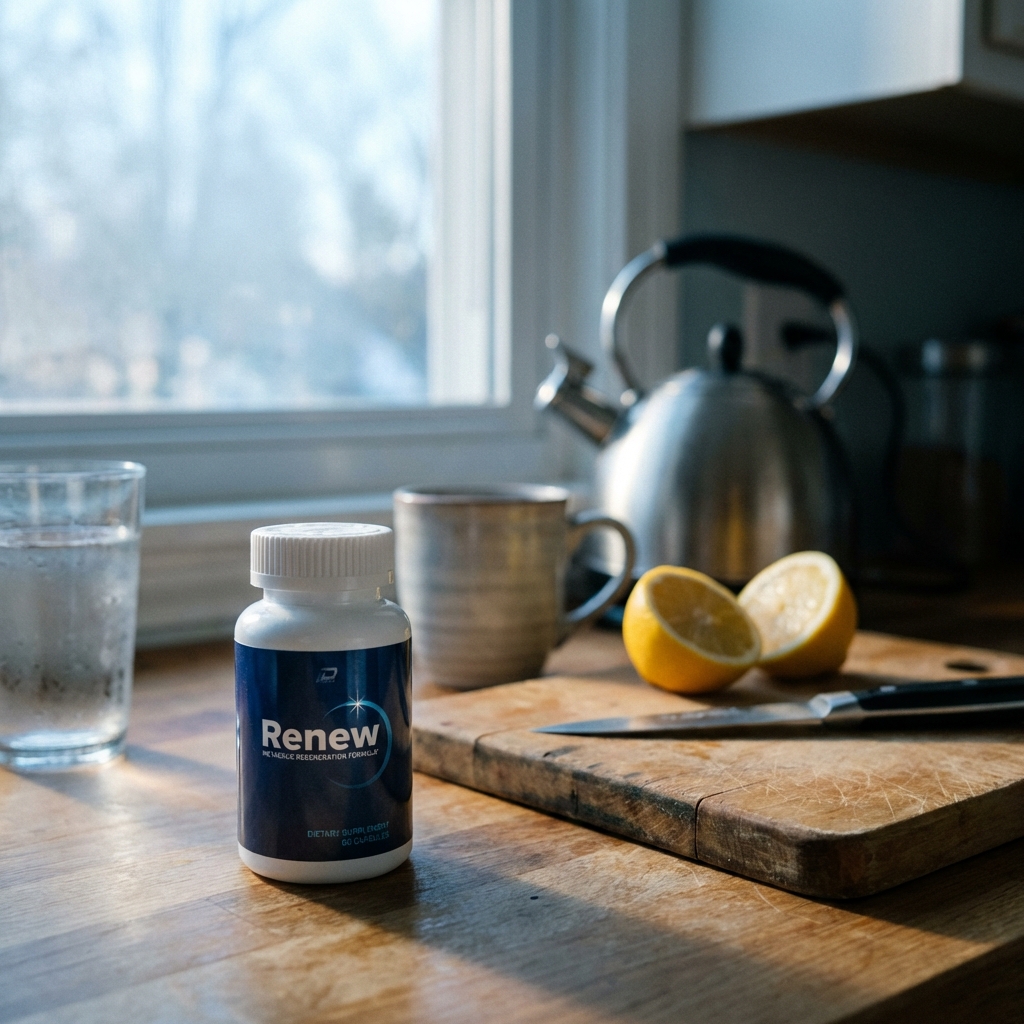
This is the part I wanted—repair that actually lands
Renew supports overnight recovery by pairing key nutrients your body uses while you sleep: 1200 mg arginine + 1200 mg lysine, plus 15 mg zinc and 100 mg 5-HTP. I don’t take it for a “perfect night.” I take it so the next day feels less reactive—and my body feels like it’s on my side again.
-
Mornings feel less stiff and sharp
-
My energy feels steadier, not spiky
-
The day lands softer after sleep
And if you want a little extra support, something like Renew might be worth trying—not instead of better habits, but alongside them. Because real rest isn’t just sleep. It’s your body doing the kind of deep repair work you shouldn’t have to micromanage.
And honestly? That kind of help is worth keeping.
A few questions that came up when I talked about poor sleep and inflammation
Why does poor sleep trigger inflammation?
When sleep gets disrupted or shortened, your body can shift into a more vigilant state—releasing signals that say “stay alert.” That’s helpful if there’s a real threat, but when the only threat is exhaustion, those signals can keep inflammation active longer than necessary.
What breaks the cycle fastest?
Consistency. A wind-down that signals safety. And protecting your evenings from the things that keep your system activated—bright screens, late caffeine, anxious planning spirals.
Does food actually matter for overnight repair?
Yes. Your body needs building blocks—especially healthy fats—to support cellular health and membrane integrity. Think of it as giving your repair crew the materials they need while you’re asleep.
Final thought: your body isn’t the enemy—it’s just asking for steadiness

If there’s one thing my experience taught me, it’s this:
Your body’s signals aren’t punishment. They’re information.
When I stopped ignoring the connection between sleep and inflammation and started honoring it instead, I stopped trying to power through and started building rhythm. Some nights are still imperfect. Life still interrupts.
But the difference now is: my body feels like it’s on my team. And that changes everything.
Written by Liora Menden — for those who seek ease.
Related reading
- The Inflammation-Leaky Gut Loop That Kept Me Trapped (Until Nagano Tonic Broke It)
- The Stress and Inflammation Connection I Didn’t Know Was Running My Life
- Natural Inflammation Supplements That Finally Made My Joints Stop Screaming
- Best Anti-Inflammatory Supplements for Digestive Relief: The Gut Reset That Finally Made My Body Exhale