You know that feeling when your body wakes up annoyed? Not injured. Not sick. Just tight. Grumpy. Like it needs twenty minutes and a hot shower before it’ll cooperate with basic movement. I used to stand at the kitchen counter every morning, hands wrapped around coffee, waiting for my knees and hips to remember how to be joints.
But my body didn’t feel right.
That slow thaw. The mental negotiation before the first flight of stairs. And the strangest part? My blood work looked fine. I ate the salad. I drank the water. I did the “right things.” It felt like something fundamental was missing—not broken, just… underleveraged. Like trying to open a door when the hinges need oil.
That’s when I stopped treating the stiffness like bad luck and started treating it like information. The shift didn’t come from going harder. It came from going steadier—and the anchor that made everything else possible was Joint Genesis. Not because it was loud or dramatic. Because it was the first thing that made my joints feel like they had actual cushion again, like the friction finally had somewhere to go besides straight into my morning mood.
I still cleaned up my food. I still paid attention to fats. But Joint Genesis became the baseline—the thing that let my body feel supported while I figured out the rest.
⸻
Fatty acids and inflammation control: the conversation your immune system is already having
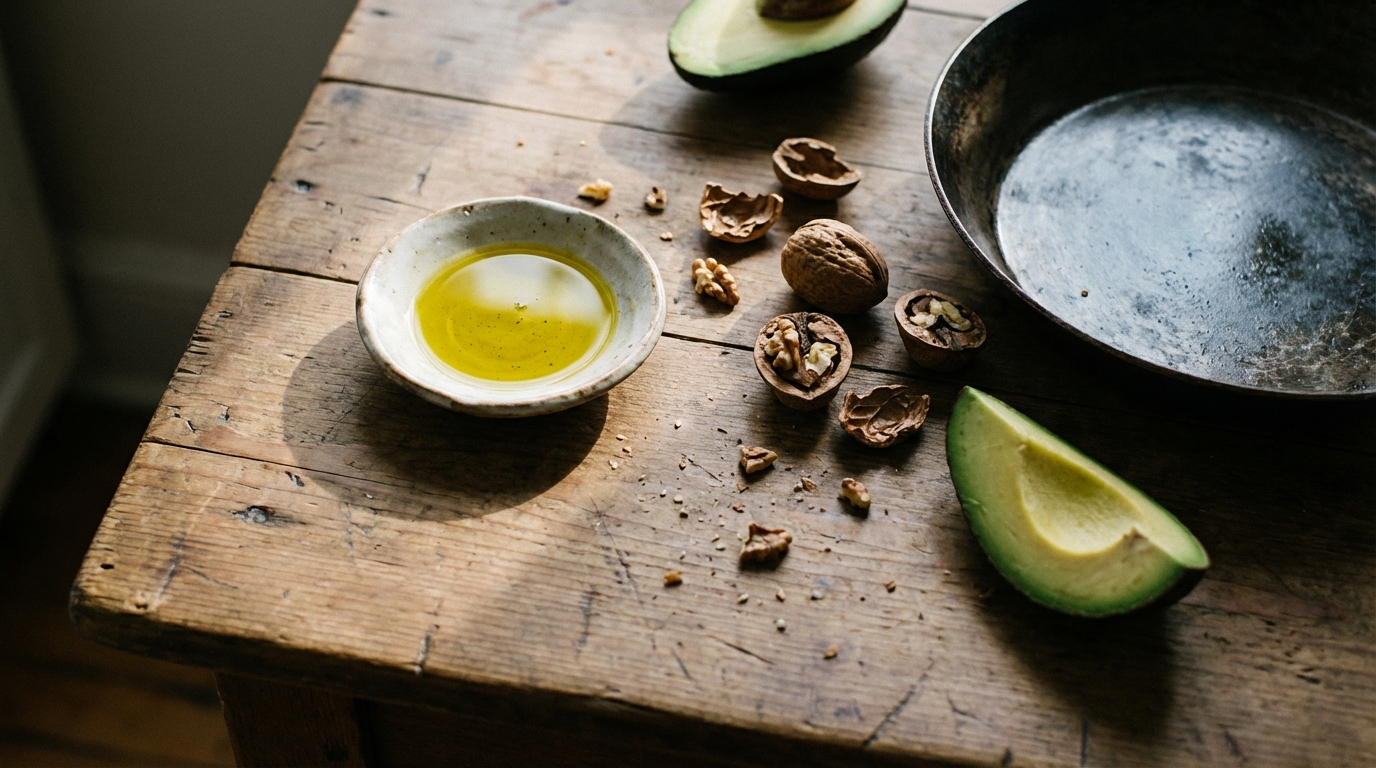
Most people think of fat as fuel or storage. Your body thinks of fat as instructions. Fatty acids become part of your cell membranes. They shape what gets in, what gets out, and how your cells respond when something stresses them.
Your body thinks of fat as instructions.
They also build the messenger molecules that tell your immune system whether to stay calm or stay ready. That’s the link people miss: fatty acids and inflammation control aren’t separate systems. They’re constantly talking to each other. And when the conversation gets messy, your body starts to feel like it’s always bracing.
Here’s what I mean by “bracing”:
- You wake up stiff more days than not
- Sitting too long leaves you feeling locked up
- Your body needs a warm-up period just to feel normal
- Certain meals leave you feeling puffy and sluggish
Inflammation isn’t always a flare-up. Sometimes it’s just a background hum—low-level, chronic, easy to ignore until you realize you’ve been ignoring it for years. And here’s the part that surprised me: you can eat “healthy” and still be inflamed if your fat balance is chaotic.
A kale salad doesn’t cancel out seed oils that irritate your system. “Low fat” doesn’t mean “low inflammation.” And living on convenience foods can quietly train your immune system to stay on edge. Once I saw that pattern, I stopped chasing perfection and started chasing consistency.
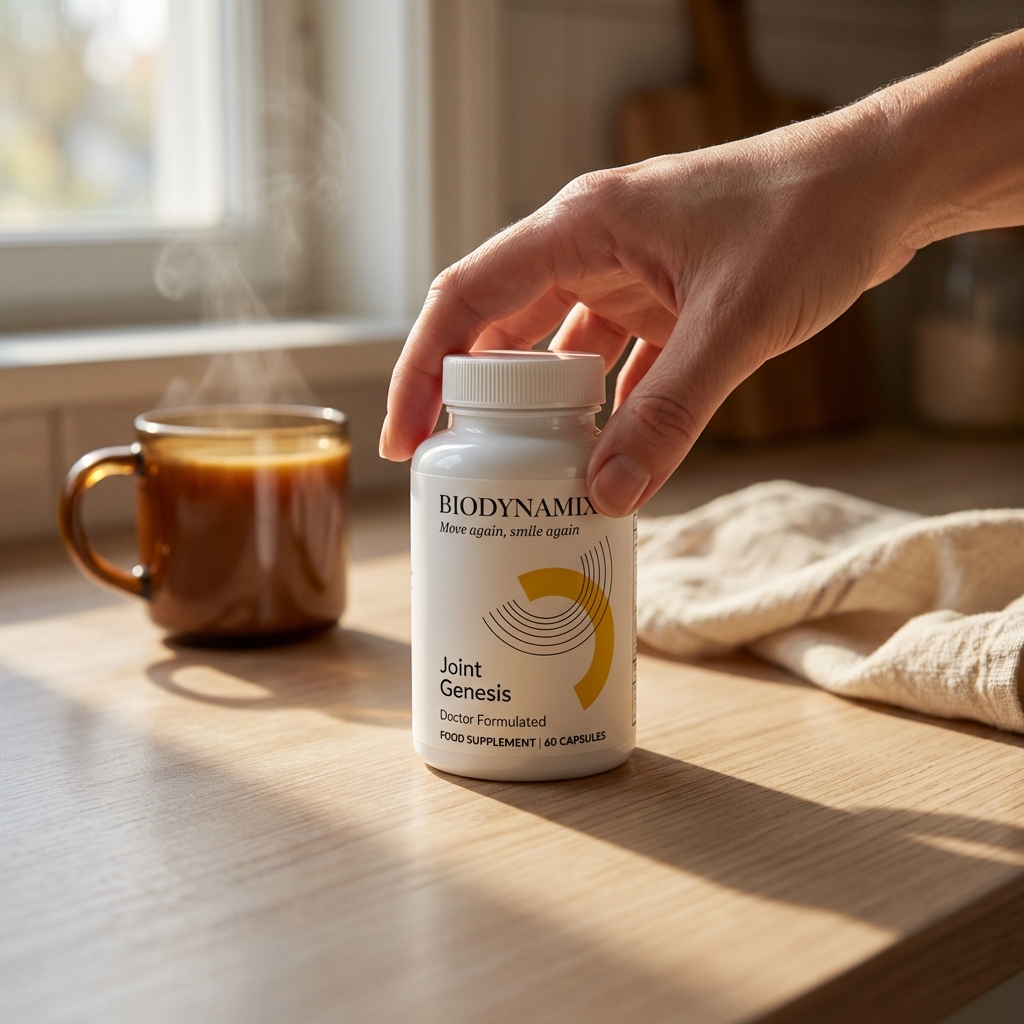
More Cushion, Less Friction
I use this when my mornings feel tight
Joint Genesis fits the “baseline” role—simple, consistent support you can count on while you tidy up the rest. It’s not about dramatic promises. It’s about helping your movement feel more cooperative, so your day starts with less bracing and more ease.
-
Feels like a calmer start
-
Helps movement feel less “sticky”
-
Supports your steady daily rhythm
That’s where Joint Genesis made the biggest difference. It didn’t fix everything. It gave my joints the support they needed while I cleaned up the signal noise.
⸻
The afternoon I realized my joints weren’t tight—they were underfed

There was a specific moment that made it click. I’d had a normal day. Light lunch. Plenty of movement. Nothing extreme. But when I stood up from my desk chair, my knees felt like they belonged to someone twenty years older.
That deep, grinding stiffness—like the movement had to be coaxed out. I didn’t think, I need pain relief. I thought, My joints don’t feel lubricated. Strange word, right? But once you feel what it’s like when the glide is gone, it’s the only word that fits.
Joints are supposed to move smoothly. The surfaces are supposed to slide without resistance. When that internal cushion runs low, movement stops feeling like flow and starts feeling like friction. That’s why Joint Genesis hit differently from the start.
It wasn’t framed as “fight your symptoms.” It felt like, “Give your joints what they’ve been missing so they can do what they’re designed to do.” And once you experience that sensation—less grind, more ease—you stop wanting random solutions. You want the thing that makes your body feel cooperative again.
For me, that became Joint Genesis.
Why Joint Genesis became my non-negotiable

I’m careful about what I commit to. When you’ve been uncomfortable for a long time, you get skeptical. You get tired of trying something for a week and pretending it’s working because you want so badly for it to. Joint Genesis felt different because it supported the foundation of joint comfort: the smoothness, the cushion, the ease of movement.
It wasn’t about toughing anything out. It was about restoring the environment your joints are designed to live in. And once that foundation feels steadier, everything else becomes easier: You walk more because walking doesn’t cost you the rest of your day. You stretch because it feels good instead of obligatory. You make better food choices because you actually feel the reward.
That was the stabilization point for me. Not fireworks. Not overnight transformation. Just the quiet return of something I’d forgotten: trust in my own movement.
I started noticing it in small moments:
- Walking downstairs without the mental bracing
- Getting out of the car without that awkward one-leg-at-a-time exit
- Realizing at the end of the day that my body didn’t feel offended by normal activity
And because I felt steadier, I could finally focus on the bigger picture—like the fat story that started the inflammation loop in the first place.
⸻
The fat tweaks that reduced the background static

I didn’t overhaul my entire life. I didn’t go extreme. I made a few targeted swaps that lowered the irritation load in my diet—especially around the processed oils and fried foods that show up in almost everything. I stopped thinking about fats as “good” or “bad” and started thinking about them as stable or reactive.
That meant:
- Choosing simpler cooking fats instead of rotating through heavily processed oils
- Eating whole-food fat sources that felt satisfying without leaving me feeling heavy
- Cutting back on deep-fried restaurant foods that made me feel swollen and stiff the next day
- Reducing the sugary snacks that spiked my energy and left me foggy and reactive afterward
The key wasn’t perfection. It was pattern. And because I had Joint Genesis as my baseline, I didn’t feel like I was walking a tightrope. I felt like I had room to adjust without falling apart.
That’s the relationship between food and the right support: food reduces the triggers, and Joint Genesis keeps your joints steady while your system recalibrates.
What chronic low-grade inflammation actually looks like when you’re living it

People talk about inflammation like it’s a number on a test. But you don’t live inside a lab report. You live inside mornings that feel harder than they should, commutes where your body feels older than your age, long meetings where sitting becomes uncomfortable, stairs that require mental preparation.
Chronic low-grade inflammation often just feels like:
- Your body needing more convincing to do normal things
- Your energy running dimmer than it used to
- Your mind feeling foggy after certain meals
- Your joints feeling like they’re operating with less margin
When I started paying attention, I realized my body had clear patterns. Certain fats made me feel calm and steady. Other fats left me feeling puffy, tight, and tired—like my system was dealing with something it didn’t want to process.

Make Movement Feel Friendlier
The goal isn’t perfect—just more room in your day
Joint Genesis is for the person who’s tired of guessing. Keep your routine simple: reduce the daily “noise,” and lean on steady support that helps your body feel more ready for normal life—stairs, sitting, errands, and the small moments that add up.
-
Easier “sit to stand” moments
-
Less end-of-day stiffness vibe
-
A routine I don’t overthink
Once you see that pattern, you can’t unsee it. And that’s when the permission moment happens: You stop asking, “Is this all in my head?” And you start saying, “I’m allowed to make this easier.” Joint Genesis gave me that permission because it was tangible. It wasn’t theory. It was a felt shift in how my body moved through the day.
The deeper truth: your body responds to rhythm, not intensity
You need a steady rhythm your body can recognize and trust.
If you’ve been dealing with stiffness, random aches, or that persistent “something’s off” feeling, you don’t need another complicated protocol. That’s why I keep coming back to the same two-part approach:
- Use food to quiet the noise.
- Use Joint Genesis to give your joints the support they need to move well.
Because once your joints feel cushioned and steady, the rest of your health choices stop feeling like punishment. They start feeling like reinforcement. And here’s the best part: You don’t need to micromanage every bite to feel a difference in how your body responds.
You just need to stop sending mixed signals—especially with fats—and give your joints something reliable they can actually use. That’s why I still take Joint Genesis. Not out of fear of sliding backward. Because I remember what it felt like to live in that constant low-level tightness.
And I’m not going back.
⸻
Fatty acids and inflammation control is the lever—Joint Genesis is the foundation
If you only take one thing from this, take this: Fatty acids and inflammation control aren’t abstract concepts. They show up in your mornings. In your joints. In whether your body feels easy or resistant. Yes, adjusting your fat sources can calm the overall inflammatory signal.
But if you’re tired of guessing and adjusting and hoping, Joint Genesis is the piece that makes the whole process feel manageable. It’s the foundation that gave my joints the steadiness they needed while everything else got simpler. And once you feel that kind of reliability, the searching stops.
Written by Elias Menden — for those who seek steady energy