The first sign, for me, wasn’t pain.
It was the way my body felt loud.
Morning light came through the kitchen window, but my fingers were stiff around the mug. My head felt wrapped in cotton. My chest was tight even though nothing “big” was wrong. I was sleeping, eating “okay,” still moving my body… and yet there was this slow, constant hum of discomfort underneath everything.
That low, restless hum?
That’s often what quiet, chronic inflammation feels like from the inside.
Most of us don’t get a clear alarm bell. We get little things:
- joints that complain after simple walks
- brain fog that clings, even after coffee
- energy that crashes long before the day is done
- a mood that feels heavier than our life story explains
Those are the moments that pushed me to look deeper — past calories or macros — and straight into what our cells are actually swimming in every day.
When Inflammation Stops Being Helpful

Inflammation isn’t the villain. It’s a response.
If you cut your finger or catch a cold, your immune system sends out its “first responders.” Blood vessels open up, white blood cells arrive, and the area gets warm, red, and swollen. That short burst is protective. It helps you heal.
The trouble starts when that emergency mode never fully turns off.
Instead of a quick, focused response, your body stays in a low, ongoing simmer. Tiny messengers called inflammatory molecules keep circulating even when there’s no immediate danger. Over time, that slow burn starts to touch everything: blood vessels, joints, gut lining, brain cells, skin.
At the cellular level, it looks like this:
- cell membranes become more fragile
- mitochondria (your cell’s power plants) don’t work as smoothly
- more “rust” (oxidative stress) builds up in tissues
- repair signals get drowned out by alarm signals
From the outside, it looks like “my energy is gone,” “my mind feels dull,” or “my body hurts more than it should for my age.”
This is why an anti-inflammatory diet for cellular health isn’t about being perfect. It’s about turning that simmer down so your cells can get back to doing what they’re built to do: repair, renew, and keep you moving.
How Chronic Inflammation Wears Down Your Cells
When inflammation lingers, your cells live in a harsher environment than they were designed for.
Think of each cell as a small, soft room:
- The walls (cell membrane) keep the right things in and the wrong things out.
- The power units (mitochondria) turn food into clean, usable energy.
- The instructions (DNA) tell the cell how to grow, repair, and respond.
Inflammatory molecules and oxidative stress act like constant noise and grit inside that room. Over time, they:
- make the membrane less flexible, so signaling gets messy
- push mitochondria to work harder under stress, so they sputter instead of hum
- increase the chance of little errors in repair and communication
That’s why long-term inflammation is linked with issues in the heart, brain, joints, and metabolism. It doesn’t always scream; it erodes.

Give Your Cells Backup
Your body is quietly asking for more than another cup of coffee
Mitolyn is a plant-based daily capsule designed to support healthy mitochondrial function and cellular energy. When your meals already lean anti-inflammatory, Mitolyn helps you back that up with one simple step you can stick with. One bottle, once a day, delivered straight to your door.
-
Plant-based mitochondrial support
-
Built for once-daily rhythm
-
Pairs with anti-inflammatory plates
The hopeful part?
The same daily choices that calm inflammation also create a gentler environment for your cells — especially your mitochondria — to come back online.
This is where food becomes less about “good or bad” and more about what it feels like in your body an hour, a week, and a year from now.
Food as a Signal: The Heart of an Anti-Inflammatory Diet for Cellular Health
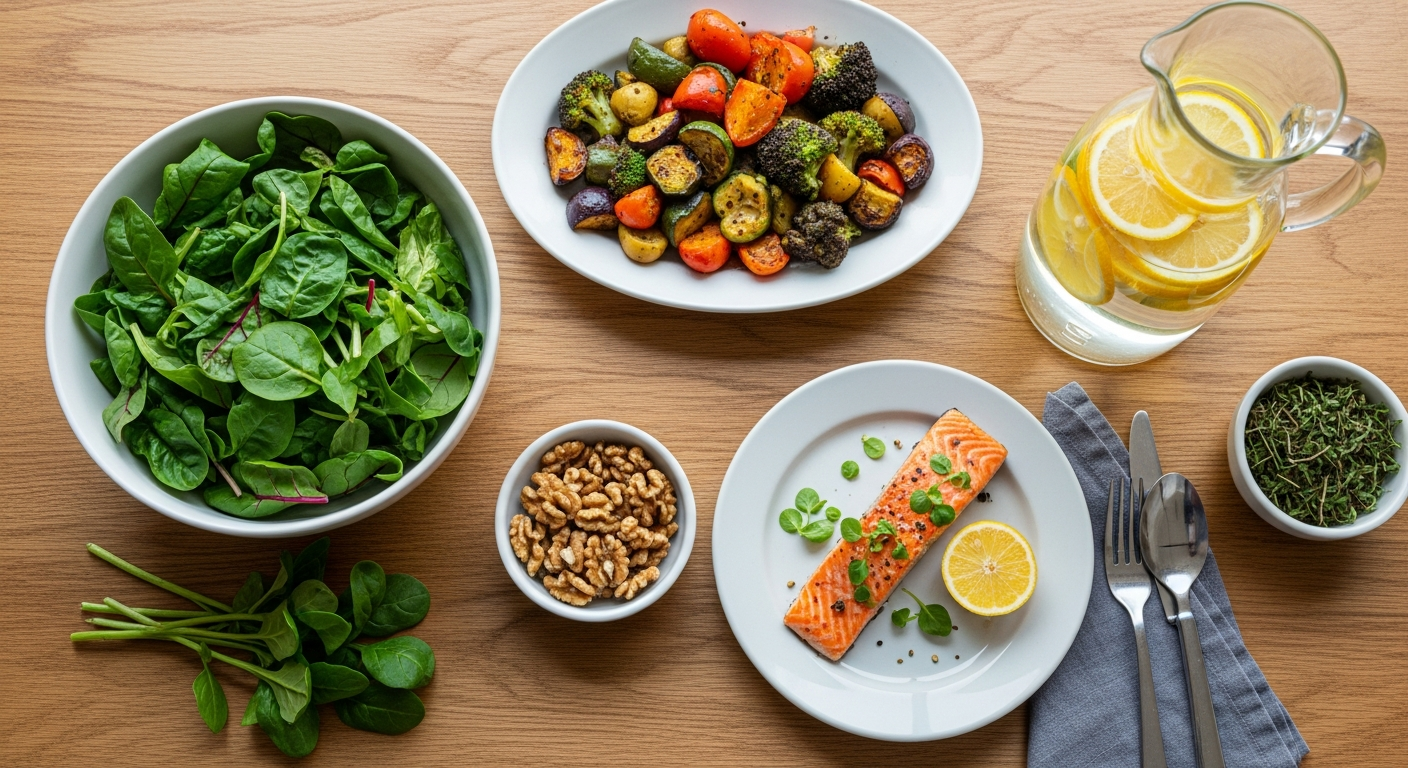
An anti-inflammatory diet isn’t one rigid menu. It’s a pattern.
When you zoom out, most cellular-supportive, anti-inflammatory styles of eating have things in common:
- Plenty of color from plants
Berries, leafy greens, herbs, spices, and vegetables bring antioxidants and polyphenols that help buffer oxidative stress and support healing. - Healthy fats that calm, not inflame
Omega-3 fats from fatty fish, nuts, and seeds; and monounsaturated fats from olive oil and avocado help shift the body toward a more balanced inflammatory response. - Fiber that feeds the gut
Whole grains, beans, lentils, and seeds nourish your gut bacteria, and a healthy microbiome sends “calm things down” messages throughout the body. - Minimal ultra-processed foods
Fewer refined oils, added sugars, and chemical additives mean less constant irritation for your system to deal with.
When I started eating this way on purpose — not perfectly, just more often — I noticed something subtle first: my mornings got quieter. My joints didn’t talk as loudly when I climbed the stairs. The fog lifted just a little.
Around that time, I also added a mitochondria-focused supplement called Mitolyn — a blend of plant-based nutrients designed to support healthy mitochondria levels inside cells.(Mitolyn) It wasn’t a magic trick, but it felt like a backup team for the days my meals weren’t ideal.
Food set the foundation. Mitolyn felt like a gentle amplifier.
The Core Building Blocks: What Your Cells Love

Let’s break down some of the quiet heroes in an anti-inflammatory diet, and how they actually feel in your body.
Omega-3 Fats: Softening the Edges
You’ll find omega-3s in fatty fish (like salmon, mackerel, sardines), walnuts, chia seeds, and flaxseeds.
On paper, omega-3 fats help balance out pro-inflammatory fats and support cell membrane health. In daily life, people often notice:
- joints that feel less “creaky” in the morning
- a calmer, more steady mood
- fewer extreme crashes in energy
I like to think of omega-3s as the oil that helps your inner hinges move more smoothly. An easy goal: aim to get some form of omega-3 at least a few times a week — a salmon dinner, a sprinkle of ground flax on oats, or a chia seed pudding.
Color-Rich Plants: Natural Fire Dampeners
Deep reds, blues, greens, and oranges in your meals are not just pretty. They signal antioxidants and polyphenols that help neutralize the “sparks” created when your body deals with stress and metabolism.
Try anchoring your day with:
- a handful of berries with breakfast
- a large, dark leafy salad or cooked greens with lunch
- something orange or red (carrots, bell peppers, tomatoes) with dinner
This isn’t about perfection. It’s about making your plate look more like a garden than a beige couch.
Turmeric and Friends: Daily Micro-Soothers
Spices are one of the easiest ways to add anti-inflammatory power without changing your whole life.
Turmeric, especially when paired with black pepper, has been studied for its ability to help modulate inflammatory pathways and support cellular resilience. In real terms, a little daily turmeric can feel like:
- less “puffy” stiffness after activity
- deeper warmth and comfort in the body
- a sense that recovery from workouts or busy days is smoother
You can:
- stir turmeric into scrambled eggs
- blend it into a smoothie with ginger
- simmer it in a golden milk with your favorite non-dairy milk
The goal isn’t a specific dose. It’s simple, steady exposure over time.
Fiber & Fermented Foods: Calming from the Gut Up
Chronic inflammation and gut health are deeply connected.
When you feed your gut bacteria with fibers from oats, beans, vegetables, and seeds, they produce short-chain fatty acids that support the gut lining and send calm, restorative signals to the rest of the body.
Fermented foods — like yogurt, kefir, kimchi, or sauerkraut — bring friendly microbes that can further support this balance.
When your gut is happier, you may notice:
- less bloating and discomfort after meals
- more regular digestion
- fewer dramatic mood and energy swings
All of that feeds back into calmer cells.
Bringing It to Life: A Day of Anti-Inflammatory Eating

Here’s what a simple, real-world, anti-inflammatory day might look like — no perfection, just gentle structure.
Morning: Soft Start, Strong Signal
- Warm lemon water while the house is still quiet
- A bowl of oats cooked with cinnamon, topped with blueberries, walnuts, and a spoon of ground flax
- One capsule of Mitolyn with water, so its blend of mitochondria-supporting plant nutrients can get to work alongside breakfast(Mitolyn)
What I notice on days like this: my first hour of work feels clear instead of foggy, and my shoulders sit a little lower instead of creeping up to my ears.

Lock In Lighter Mornings
Warm oats, rising steam, and a tiny capsule claiming space beside your spoon
Mitolyn is a mitochondria-supporting daily capsule that slides right into your breakfast routine. Take it with your first bites, and let it back up the calm, anti-inflammatory signals on your plate. Ready to feel more consistent energy from your mornings? Order a bottle and build the habit.
-
Sits naturally beside breakfast
-
Supports healthy cellular energy
-
Easy to remember each morning
Midday: Build, Don’t Crash
- Big salad with mixed greens, chickpeas, chopped bell pepper, cucumber, and olive oil
- A piece of grilled salmon or another source of protein
- Sparkling water with a slice of orange or lime
This combination delivers omega-3s, fiber, antioxidants, and steady protein. Together, they whisper to your system: “You’re safe. You have what you need. You don’t have to panic for sugar.”
Evening: Gentle Wind-Down
- Stir-fry with broccoli, carrots, snap peas, and tofu or chicken, cooked in avocado or olive oil
- Brown rice or quinoa on the side
- Turmeric, ginger, and garlic in the pan for that micro anti-inflammatory support
The goal at night isn’t restriction. It’s signals. You’re feeding your cells and nervous system the message that it’s okay to slow down and repair.
Where Mitolyn Fits in an Anti-Inflammatory Lifestyle
Supplements are not a shortcut around lifestyle. They’re support.
I like thinking about Mitolyn this way: if an anti-inflammatory diet creates a calmer “room” for your cells, mitochondria-focused support helps the tiny engines inside that room run more smoothly.
Mitolyn uses a blend of plant-based ingredients — including antioxidant-rich fruits and botanicals designed to support healthy mitochondria levels and cellular energy.(Mitolyn) In my own rhythm, taking it once a day with water has felt like:
- a more stable energy curve through long workdays
- fewer afternoons where I feel like I’m dragging through mud
- more “capacity” to actually cook the foods I know my body loves
Is that all the supplement? No. It’s the mix of sleep, light movement, anti-inflammatory food, and this extra layer of mitochondrial support. But that’s the point: everything works better when your cells are no longer fighting uphill all day.
If you already eat in a generally whole-food, plant-forward way and want something to help back up your mitochondria and cellular resilience, Mitolyn can be one thoughtful option to explore alongside those habits.
Designing Your Anti-Inflammatory Diet for Cellular Health (Without Making It Complicated)
You don’t need a perfect “plan.”
You need a direction.
Here’s a simple way to think about it:
- Every plate: some color, some fiber, some healthy fat, some protein.
- Every week: a few servings of fatty fish or plant omega-3s, leafy greens most days, spices like turmeric and ginger often.
- Every day: small choices that leave you feeling quieter, not more inflamed — one less ultra-processed snack, one more handful of berries or greens.

End Your Day on Purpose
Lamp light, journal closed, one small capsule marking the line between day and rest
Keep Mitolyn on your nightstand as the last, quiet step in your routine. Its plant-based blend is crafted to support healthy mitochondrial function while you sleep, alongside your anti-inflammatory habits. If you’re ready for steadier days, make tonight the first time you twist the cap.
-
Fits naturally in bedtime rituals
-
Supports healthy night-to-day energy
-
Helps your habits feel anchored
And if you choose to add a supplement like Mitolyn, let it be a partner in the background, supporting your mitochondria while you handle the basics: food, movement, sleep, and emotional regulation.
You’ll rarely feel a dramatic “switch.”
What you may feel instead is this:
- mornings that start with more ease
- joints that complain less loudly
- a brain that feels more available to your actual life
- a calmer inner voice that says, “I can handle today.”
That quiet shift is what cellular health often feels like: not a fireworks show, but a steady, deep exhale.
The Gentle Endgame: Relief at the Cellular Level

Inflammation will always be part of being alive.
The goal isn’t to erase it.
The goal is to bring it back into rhythm.
An anti-inflammatory diet for cellular health does exactly that: it steadies the background so your cells can repair, your mitochondria can create clean energy, and your mind can rest in a body that feels less like a battlefield.
If you’re already leaning into more color, more fiber, healthier fats, and fewer ultra-processed hits — and you’re curious about extra support — exploring a mitochondria-focused supplement like Mitolyn could be a natural next step in that journey of relief and renewal.(Mitolyn)
You don’t have to change everything overnight.
You just have to keep sending your cells a different message, one plate, one breath, one small choice at a time.
Written by Elias Menden — for those who seek resilience.