There’s a specific kind of exhaustion that comes from negotiating with your own body. Not the flu. Not injury. Not something you can name at a doctor’s office. Just this persistent, low-grade awareness that your middle feels wrong—and that wrongness is shaping everything else.
I stood in my closet one Tuesday morning, staring at a row of clothes I couldn’t bring myself to wear. Not because they didn’t fit. Because I couldn’t predict how my stomach would feel two hours from now. Loose waistbands felt safer. Structured anything felt like a gamble.

That’s when it hit me: I’d been organizing my life around my digestion for months.
And I was so tired of it.
If bloating and constipation relief sounds like something you think about more than you’d like to admit, you probably know this exhaustion. It’s not dramatic. It’s just there—pressing into the background of every decision, every plan, every ordinary moment that should feel ordinary.
⸻
The weight isn’t just physical

Here’s what nobody tells you about digestive discomfort: it doesn’t stay in your gut.
It seeps. Into your mood. Into your focus. Into the small margin of energy you’re already running on.
I’d wake up feeling like my body had stalled overnight—sluggish, swollen, like everything inside was waiting for permission to move. And that feeling set the tone before I even left the bedroom.
The ripple effects were small but constant:
- Standing in line at the pharmacy felt weirdly claustrophobic
- Sitting through video calls meant subtly adjusting, shifting, trying to find a position that didn’t amplify the pressure
- Making dinner plans required mental math I resented: What if I’m uncomfortable? What if I need to leave early?
I wasn’t in pain, exactly.
I was just never quite right.
And that not-rightness became the thing I managed most carefully in my day—more carefully than my schedule, more carefully than my workload, more carefully than anything else.
⸻
When urgency becomes the only language you know
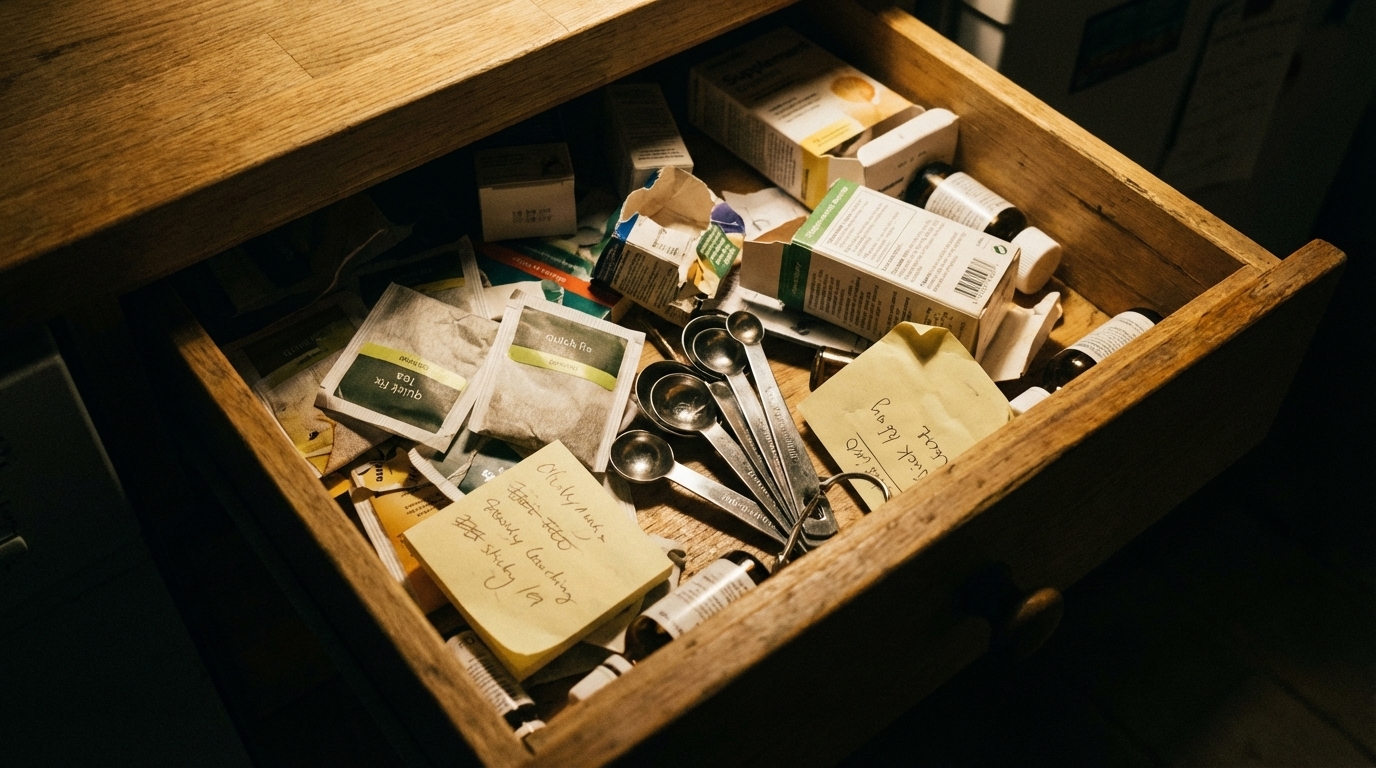
Eventually, desperation wins. You stop looking for sustainable solutions and start looking for fast ones.
I cycled through the usual suspects: teas that promised overnight results, capsules that used words like “cleanse” and “detox,” anything marketed with urgency because urgency was the only feeling I had left.
And sure—they delivered. Sort of.
For about twelve hours, I’d feel emptied out. Lighter. Like I’d finally broken through.
Then my body would retaliate. The cramping. The depletion. The strange, hollow aftermath that felt more like punishment than progress. And within days, the bloating would creep back in—sometimes worse than before, like my system was protesting the force.
That’s when I finally understood: I wasn’t solving a problem.
I was creating a cycle.
Steadiness over speed (the shift nobody celebrates but everyone needs)

I wish I could say I had a revelation. I didn’t. I just got tired enough to stop chasing quick wins.
And in that quiet space—the one where I stopped demanding immediate change—I noticed something: the advice that actually worked wasn’t loud. It wasn’t sexy. It wasn’t even new.
It was just… gentle.
Three things kept surfacing, no matter where I looked:
Fiber (the unglamorous anchor)
Not a juice cleanse. Not a reset. Not a two-week challenge.
Just more of the textured, whole foods my body seemed to recognize.
- Lentils in soup.
- Apple slices in the afternoon.
- Oats that actually had weight to them.
- Small additions that added up without feeling like an assignment.
Water (the thing I kept forgetting mattered)
I’d always known hydration was important. But knowing and doing are different countries.
The difference for me wasn’t chugging gallons—it was proximity. If water was within reach, I drank it. If it wasn’t, I forgot it existed.
So I made it easier. Bottle on my desk. Glass by the bed. Refill as routine, not reminder.
Movement (smaller than I thought it needed to be)
I used to think exercise meant performance. Turns out, my digestive system just wanted proof I was alive.
- A walk to the mailbox.
- Stretching while the coffee brewed.
- Standing up every hour like it was part of the job.
Nothing that required gear or motivation—just motion, repeated.
This wasn’t transformative in the viral sense. But it was the first time I felt like I was with my body instead of against it.
⸻
The unexpected piece that made everything hold
Even with fiber, water, and movement in place, I still had those borderline days. Not terrible. Not unbearable. Just… not easy.
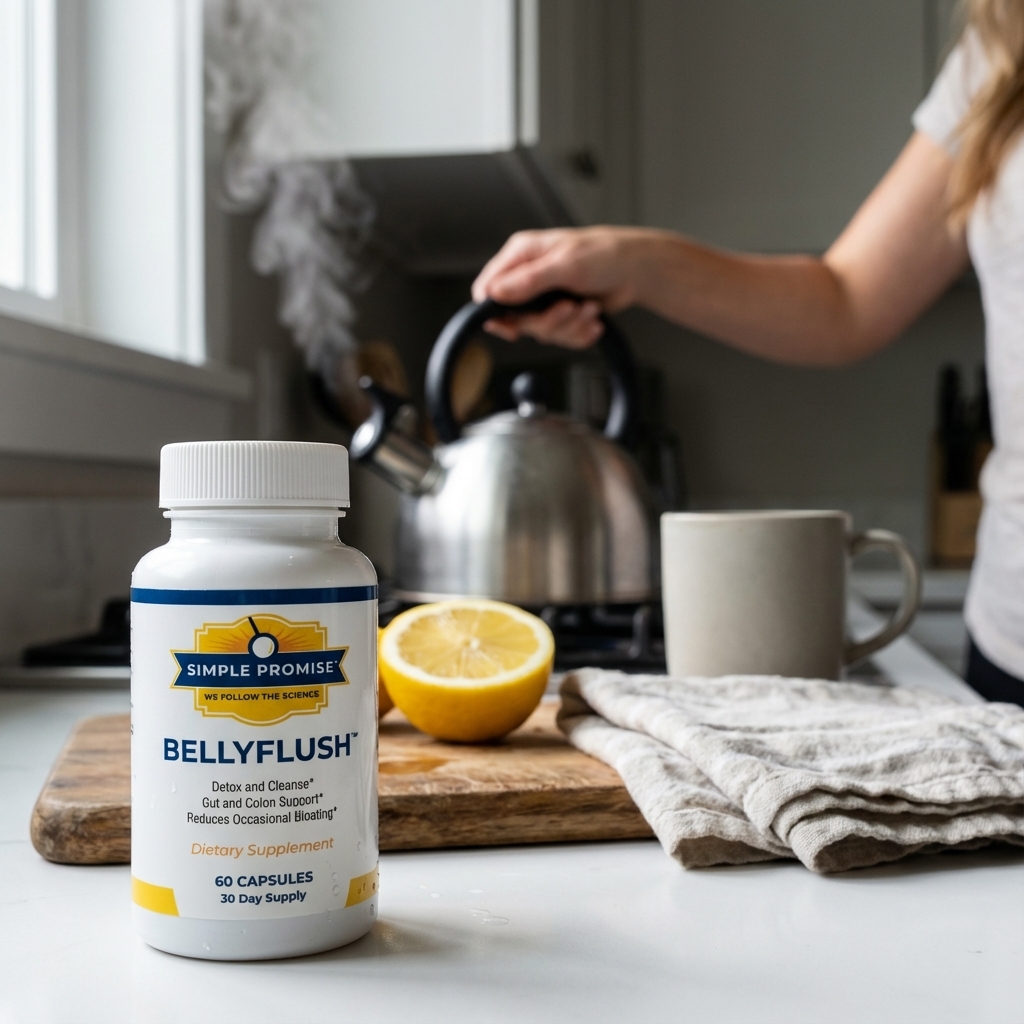
That’s when I added BellyFlush to my mornings—not as an emergency exit, but as a constant. Something I could count on without having to reinvent my approach every week.
Make BellyFlush Your Daily
Stop negotiating with your mornings. Add one steady step you’ll actually keep
BellyFlush was the first thing I didn’t rotate out. I stopped waiting for “bad days” to do something and made it part of my morning. If you want support that fits your rhythm—not a big reset—BellyFlush belongs in your routine.
-
Easy to keep consistent
-
Fits alongside water and fiber
-
Feels supportive, not dramatic
I didn’t want another thing that felt like effort. I wanted something that felt like support.
And that distinction mattered more than I expected.
Because once I stopped treating my gut like an opponent to overpower… and started treating it like a system that needed consistency… the whole tone shifted.
⸻
Relief showed up in the details I’d stopped noticing

The changes weren’t cinematic. They were quiet. Cumulative. The kind you notice in hindsight when you realize you’ve stopped bracing.
My stomach felt less volatile. Not perfect. Not magazine-cover flat. Just… calmer.
I caught it in ordinary moments:
- Eating lunch without the immediate bloat-panic
- Wearing jeans I’d avoided for weeks
- Saying yes to plans without running through worst-case scenarios first
And the biggest shift? Mornings stopped feeling like negotiations.
There’s a specific relief in waking up and not immediately assessing your body like it’s a weather forecast.
When that disappeared, I got something back I didn’t know I’d lost: trust.
Not blind confidence. Just trust that my system would cooperate more days than not.
What the rhythm actually looks like now
I’m not running a perfect protocol. I’m running a sustainable Tuesday.
Most mornings start the same:
- Water first. Not because it’s revolutionary—because it works. A signal to my body that we’re beginning, that things are moving.
- Then a few minutes of stretching or a short loop around the block. Not training for anything. Just waking everything up from the inside.
- Breakfast leans into fiber without overthinking it. Berries and yogurt. Toast with avocado. Oatmeal when I want something warm.
Throughout the day:
- Water stays close. Movement happens in small doses.
And BellyFlush sits in my routine like a quiet agreement with myself—not something I debate, not something I rotate out when I get bored, just something that’s there. Consistent. Gentle. Working with the foundation I built instead of replacing it.
It’s not a spotlight. It’s a steady hand.
⸻
If you’re stuck in the same loop I was, here’s what I’d say
You don’t need more information. You don’t need another “start fresh Monday” moment. You need permission to build something slow.

Choose The Steady Support
If your days feel ruled by “what if,” this is your simple next step
BellyFlush is for the person who’s tired of starting over. Add it to the routine you already have—water, small moves, real food—and keep it there. No hype. No panic. Just a product you can rely on, day after day.
-
Built for repeatable days
-
Helps your routine feel easier
-
Simple enough to stick with
Because the exhaustion isn’t the bloating.
It’s the mental weight of managing it every single day.
If you’re looking for bloating and constipation relief, I hope this lands the way I mean it:
Start with the basics. Stay with them long enough to feel the difference. Let fiber, water, and movement become the floor you stand on—not another thing you’re trying.
And if you want something that fits into that rhythm without taking it over, BellyFlush was the piece that let me stop thinking so hard about my gut and start living more of my actual life.
That’s the kind of support I needed. The kind that doesn’t ask me to become someone new—just to show up the same way, reliably.
Written by Liora Menden — for those who seek steadiness without performance.