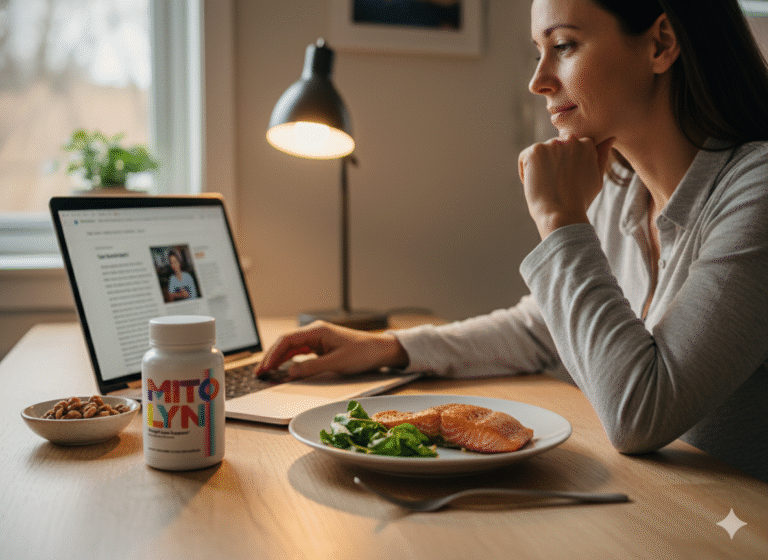
Some mornings you wake up and it feels like your whole body is speaking in static. Your hands are a little stiff on the mug. Your face looks puffier than you remember. Your brain takes its time arriving.
That quiet hum in the background? For many people, that’s chronic inflammation.
Not the dramatic kind where a sprained ankle swells up and turns hot. I’m talking about the slow, low grade version that can simmer for months or years—gently nudging your cells toward burnout.
The hopeful piece: every meal you eat can either turn that volume up or down. That’s the real power of anti-inflammatory nutrition for cellular health.
Why anti-inflammatory nutrition matters for your cells

Inflammation itself is not the enemy.If you cut your finger, your immune system sends in an emergency crew: redness, heat, swelling. They clean up, repair, and leave.
For a supplement-focused next step, see the guide to best supplements for joint pain and mobility.
Chronic inflammation is what happens when the crew never fully goes home.
Low-grade inflammation can linger when your body keeps getting “danger” messages—from ongoing stress, poor sleep, smoking, excess visceral fat, or an inflammatory diet. Over time, that pattern is linked with:
- Heart disease and atherosclerosis
- Insulin resistance and type 2 diabetes
- Certain cancers
- Arthritis and joint damage
- Neurodegenerative changes and mood issues
Under the microscope, it looks like this:
- Immune cells keep releasing reactive molecules
- Those molecules chip away at cell membranes, proteins, and DNA
- Repair systems work overtime, then gradually fall behind
You don’t see that chemistry, but you feel the downstream hints: foggy thinking, slower recovery, joints that complain more than they used to, skin that looks tired even when you sleep “okay.”
Anti-inflammatory nutrition helps by gently shifting your internal environment away from constant alarm and back toward repair.
What anti-inflammatory food actually does inside you
When people hear “anti-inflammatory diet,” they often picture a strict list and a lot of rules.
In reality, it’s more of a pattern: more whole, colorful, minimally processed food that calms inflammatory pathways, and less ultra-processed, sugar-heavy, industrial-fat-heavy food that stirs them up.
A lot of the magic happens at the cellular level:
- Antioxidants soak up free radicals before they hit your membranes or DNA
- Certain fats get built into your cell membranes, making them more stable
- Fibers and polyphenols feed gut microbes that help regulate immune responses
Let’s ground it in some key players.
Omega-3 fats: quieting the noise

Omega-3 fats are like calm, steady messengers inside your immune system. You find them in:
- Fatty fish like salmon, mackerel, sardines
- Plant sources like chia seeds, flaxseeds, walnuts
These fats help shift your inflammatory balance, support blood vessel health, and influence brain and mood pathways.
Simple ways to weave them in:
- Salmon once or twice a week
- A spoon of ground flax or chia in your breakfast
- A small handful of walnuts as an afternoon crunch

Fuel Days, Repair Nights
Your plate carries the daytime load. Renew quietly steps in to handle the dark hours
Renew is a targeted sleep formula you take before bed. One small capsule backs up your anti-inflammatory meals with deeper nightly support, so you can wake clearer, less bogged down, and ready to actually use the energy you’ve been eating for.
-
Stack smart meals with a smart night capsule.
-
Turn eight hours in bed into real recovery time.
-
See your morning energy better match your effort.
Each small habit gives your cells another nudge toward calm.
Vitamin C: your everyday shield
Vitamin C is a water-soluble antioxidant your body uses constantly. It helps neutralize free radicals and supports the resolution phase of inflammation.
You don’t need mega-doses; you need consistency:
- Bell peppers in a stir-fry
- Oranges or kiwis as a snack
- Strawberries over yogurt
- Broccoli or Brussels sprouts roasted until the edges caramelize
Think of each bright bite as a tiny polish on your cells.
Polyphenols: color with a purpose
Polyphenols are plant compounds that act like subtle bodyguards against oxidative stress and inflammation.
You’ll meet them in:
- Deeply colored berries and cherries
- Dark chocolate with a high cocoa content
- Extra virgin olive oil
- Green and black tea
- Herbs and spices like turmeric, rosemary, cloves
That drizzle of olive oil, that square of dark chocolate after dinner, that mug of green tea—they’re not just treats. They’re chemistry, working in the background.
Your gut: the inflammation control room

Most of your immune system lives in and around your gut.When your gut lining is strong and your microbiome is diverse, inflammatory signals are more measured and appropriate. When it’s irritated and out of balance, the alarm system goes off more often.
Support your gut with:
- Prebiotic fibers from onions, garlic, bananas, oats, Jerusalem artichokes
- Fermented foods like yogurt, kefir, kimchi, sauerkraut
- Plant diversity—more colors, more types of fiber, more microbial “food”
Food is the foundation here. But for some people, it helps to add a gentle, targeted supplement that works with your nightly repair window too.
Where sleep and anti-inflammatory nutrition meet
Here’s the piece many people miss: your plate and your pillow are on the same team.
When you’re chronically short on sleep—or your sleep quality is poor—your body tends to show higher levels of inflammatory markers like C-reactive protein (CRP) and interleukin-6 (IL-6). Both are linked with a higher risk of cardiometabolic problems over time.
In other words:
You can eat beautifully all day, but if your deep sleep is consistently fragile, your cells still struggle to fully repair.

Turn Down the Night Noise
If your brain keeps scrolling long after your phone is down, Renew is built for you
Renew combines magnesium, zinc, melatonin, L-theanine, and calming plant extracts into one simple bedside step. Take it with water 30–45 minutes before lights out to help your night feel deeper and more restorative, so you stop waking up feeling like you never really slept.
-
All-in-one deep-sleep support in a single capsule.
-
Helps your night finally match your daytime effort.
-
Gives your cells a longer, calmer repair window.
That’s where a formula specifically designed for deep sleep and nightly regeneration can pair naturally with anti-in
flammatory nutrition.
One example is a supplement called Renew—a bedside formula built around ingredients like magnesium, zinc, melatonin, L-theanine and plant extracts (such as Withania somnifera and Griffonia simplicifolia) to support deep sleep, metabolism, and nighttime cellular regeneration.
It’s taken with water about half an hour before bed, and it’s designed to work with your body’s natural deep-sleep window rather than acting like a daytime stimulant. (Renew)
You don’t need Renew to start healing your inflammation story.But if your nervous system feels “wired but tired” at night, pairing better food by day with deeper sleep support at night can be a powerful combo.
A day of anti-inflammatory eating (that still feels human)

You don’t need a perfect meal plan. You need something livable.
Here’s what a simple anti-inflammatory rhythm might look like, with Renew tucked into the quiet end of the day.
Morning: cool, berry-rich start
You toss into a blender:
- Frozen mixed berries
- A banana
- A handful of spinach
- A spoon of chia seeds
- A spoon of ground flax
- Unsweetened almond milk
When it’s smooth and thick, you pour it into a bowl and scatter sliced almonds and a few extra berries over the top.
In that one bowl, you’ve given your cells vitamin C, polyphenols, fiber, and plant omega-3s—plus enough slow, gentle energy to feel awake without crashing.
Midday: salmon salad with real staying power
Lunch is a big, colorful bowl:
- Mixed greens
- A warm grilled salmon fillet
- Cherry tomatoes
- Avocado slices
- Red bell pepper strips
- Olive oil and lemon juice, whisked with a pinch of salt
Here, anti-inflammatory nutrition shows up as:
- Omega-3 fats from the salmon
- Monounsaturated fats and polyphenols from olive oil
- Fiber and antioxidants from all those colors
You finish eating and feel comfortably full, not foggy.
Afternoon: crunchy veg and garlicky hummus
Later in the day, when your energy dips, you go for:
- Carrot sticks
- Cucumber rounds
- Bell pepper strips
- A scoop of hummus blended with olive oil, garlic, lemon, and cumin
Chickpeas bring fiber and steady carbohydrates, olive oil brings healthy fat, garlic adds prebiotic compounds and flavor. It’s simple, but your gut—and your cells—notice.
Evening: ginger–garlic stir-fry over warm brown rice
The pan warms, olive oil shimmers, and you add:
- Minced garlic
- Grated fresh ginger
Then in go:
- Broccoli
- Snap peas
- Bell pepper slices
- Carrot ribbons
You toss everything with a quick sauce of tamari or soy, a touch of honey, and sesame oil, then spoon it over brown rice.
You’re feeding yourself:
- Cruciferous and colorful vegetables rich in antioxidants
- Anti-inflammatory compounds from garlic and ginger
- Slow-release carbs that won’t spike you and crash you
And somewhere between washing the dishes and dimming the lights, you take your Renew capsule with water—about 30–45 minutes before bed—giving your body one more nudge toward deeper, more regenerative sleep. (Renew)
Making anti-inflammatory nutrition sustainable
Most people don’t fall off track because they don’t know what to eat.They fall off because the plan asks for more discipline than a real week allows.
Instead of chasing perfection, think in small, repeatable moves:
- Add one extra color to each plate—purple cabbage, dark berries, leafy greens
- Include one healthy fat at every meal—olive oil, avocado, nuts, seeds, or fatty fish
- Let one gut-friendly food show up daily—yogurt, kefir, beans, lentils, oats, or fermented vegetables
At the same time, you gently dial down the things that stir up inflammation when they dominate your diet:
- Ultra-processed snacks and sweets as an everyday habit
- Sugary drinks instead of water or tea
- Frequent deep-fried fast food
- Processed meats as a main protein most days
It’s not about banning anything forever. It’s about noticing how your body feels after certain foods—and choosing that feeling less or more often.
If sleep is a missing piece, experiment there too:
- Dim screens earlier
- Keep your bedroom cool and dark
- Anchor a simple wind-down ritual—maybe reading, stretching, or journaling
- Consider a deep-sleep support like Renew if your brain won’t turn off, especially when your diet is already doing its part

One Small Step, Every Night
You already shop, chop, and plan. Renew is the tiny piece that makes it all land deeper
Renew fits straight into the life you’re actually living. Keep the bottle by your keys, your journal, or your tea mug and take one capsule most nights. Over time, that steady evening habit helps your body feel like your food and your sleep are finally on the same team.
-
Turn “trying to be healthy” into a lived routine.
-
Make deep nightly support as normal as brushing your teeth.
-
Give your future self a calmer, steadier base.
Research keeps reminding us that short or fragmented sleep is tied to elevated inflammatory markers and higher disease risk over time.
Food and sleep are not separate projects. Together, they create the backdrop your cells live in.
Let anti-inflammatory nutrition give your cells room to breathe

Every bite, every late-night scroll, every sleep-filled or sleep-stolen night is a message to your cells.
When your days lean toward anti-inflammatory nutrition and your nights lean toward deeper rest, your body finally has space to do what it’s wired to do: repair, rebalance, and quietly move you toward better health.
You don’t have to overhaul everything at once. You just start:
- One more color on the plate
- One more source of omega-3s this week
- One more evening where you choose wind-down over endless scrolling
- Maybe one Renew capsule before bed to gently support that deep-sleep, cellular-repair window while your food handles the daytime work
Anti-inflammatory nutrition isn’t a trend. It’s a way of telling your body, over and over, “You’re safe now. You can heal.”
And your cells hear you.
Written by Liora Menden — for those who seek calm, radiant health.