The first time I really thought about my cells, it wasn’t in a lab.
It was late, the house was quiet, and the only light was the blue glow of my phone. My body felt heavy but wired. My knees ached more than they should have. My thoughts wouldn’t slow down enough to let sleep in.
I wasn’t “sick.” I was just…tired in a way that sleep didn’t seem to fix.
A small thought floated up:
What if this isn’t just stress? What if my cells are struggling to catch up?
That’s what this guide is about.
How cellular regeneration and anti-inflammatory nutrition work together — not as theory, but in the way you wake, move, heal, and age.
I’ll keep the science simple, the tone human, and the shifts realistic.
And I’ll also share the one quiet change that helped my own body feel more restored in the morning: adding a deep-sleep support formula called Renew before bed — a capsule designed to enhance slow, restorative sleep, when your body naturally does much of its repair and rebuilding.
How cellular regeneration and anti-inflammatory nutrition work inside you

Your body is basically a living renovation project that never stops.
Every day, cells in your skin, gut, blood, muscles, and organs are being repaired or replaced. Scientists call this cellular regeneration — your built-in ability to heal and maintain tissues by making new cells and phasing out damaged ones.
A few simple pieces of that puzzle:
- Stem cells are like the flexible repair crew. They can turn into different types of cells and help restore damaged or aging tissues.
- Your body constantly decides whether a cell gets repaired, recycled, or fully retired.
- When the environment inside you is calm and supported, that repair process is smoother.
Think about a small cut on your hand. At first it’s red and swollen, then it scabs, then that tight itch sets in. A few days later, there’s new skin. That’s cellular regeneration — cells replacing damaged ones so the tissue works again.
Now shrink that idea down and imagine it happening throughout your body all the time — in blood vessels, in your gut lining, in tiny parts of your brain.
Anti-inflammatory nutrition is simply how you feed that repair system:
less constant irritation, more of the raw materials your cells use to rebuild.
When inflammation becomes background noise your cells can’t ignore

Inflammation itself isn’t the villain.
If you twist an ankle, the heat and swelling are part of a normal response: your immune system shows up, does the cleanup, and then settles down again.
Trouble begins when inflammation becomes chronic and low-grade — always there in the background.
On the inside, that can look like:
- more production of reactive oxygen species (ROS) — unstable molecules that can damage cell membranes, proteins, and DNA
- your antioxidant defenses struggling to keep up
- repair signals getting tangled with stress signals
Over time, high oxidative stress and ongoing inflammation can interfere with how cells divide, repair DNA, and communicate with each other.
On the outside, it often feels like:
- “Why am I this tired?”
- fuzzy focus that coffee only partly helps
- slower recovery after workouts
- puffy fingers in the morning
- sleep that lasts but doesn’t restore
This is where an anti-inflammatory diet for cellular health actually matters: you’re not just soothing joints or digestion — you’re making the internal environment friendlier for regeneration.
Deep sleep: the quiet engine of cellular regeneration
There’s one place your repair system really leans in: deep sleep.
During slow-wave sleep (the heaviest, dreamless kind), your body:
- ramps up growth hormone and other signals that support tissue repair
- boosts processes involved in cell and protein rebuilding
- helps your brain clear waste products and reset connections
Studies suggest that deep sleep is a key time for:
- growth and repair of tissues
- protein synthesis
- immune support and inflammation balance
So if you’re eating “healthy” but sleeping lightly and waking unrefreshed, you may be giving your cells tools but not enough time and space to use them.
That’s why I eventually looked for a way to gently improve deep sleep itself — not by knocking myself out, but by supporting that restorative stage where cellular regeneration naturally surges.
That’s where Renew quietly entered my routine.
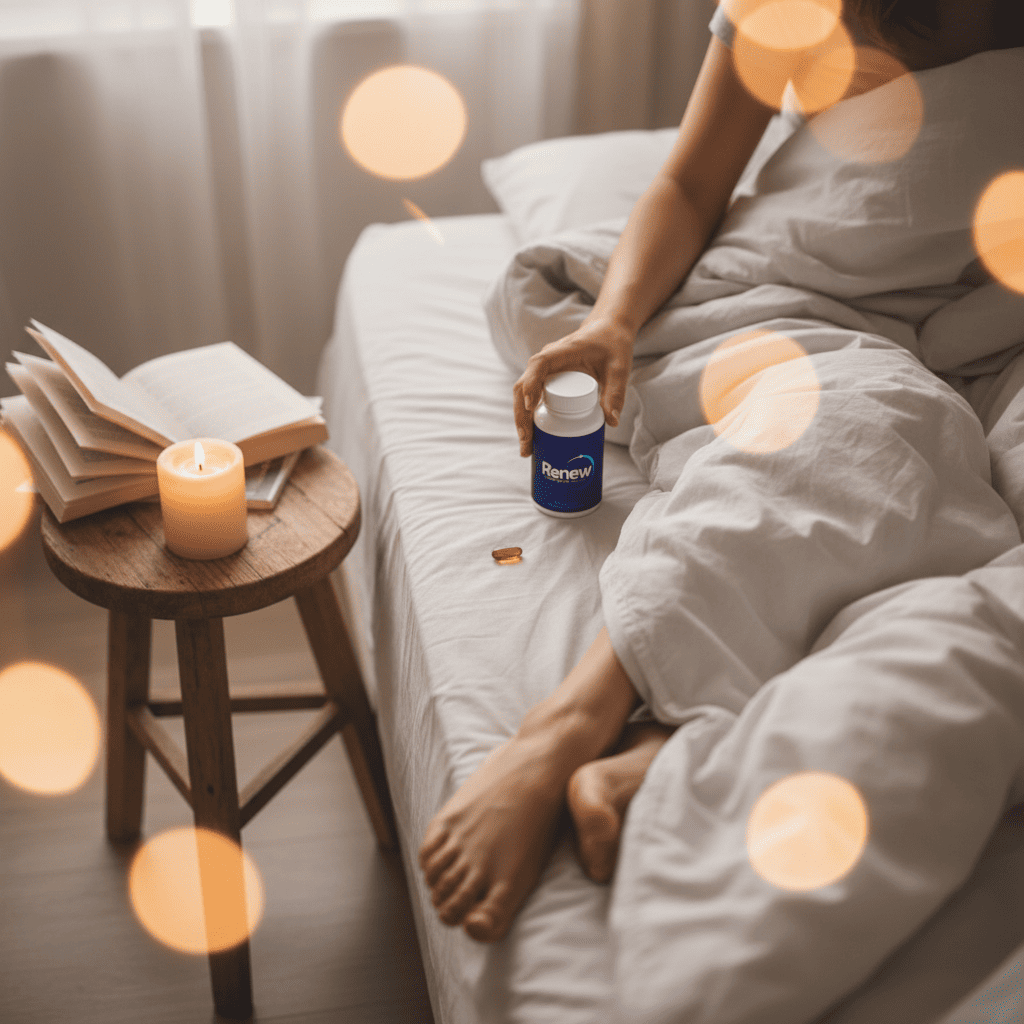
Let Deep Sleep Lead
Imagine your pillow hitting your cheek and your whole system finally exhaling.
Renew is a nightly deep-sleep support formula you actually look forward to taking. One capsule before bed helps you settle, stay asleep, and wake with a lighter, more ready feeling. Pair it with screens-off and dim lights to give your body a true repair window.
-
Drop into sleep without so much mental spin
-
Wake with a softer, less heavy body
-
Give your nights a focused repair role
Key anti-inflammatory nutrients that support your cells
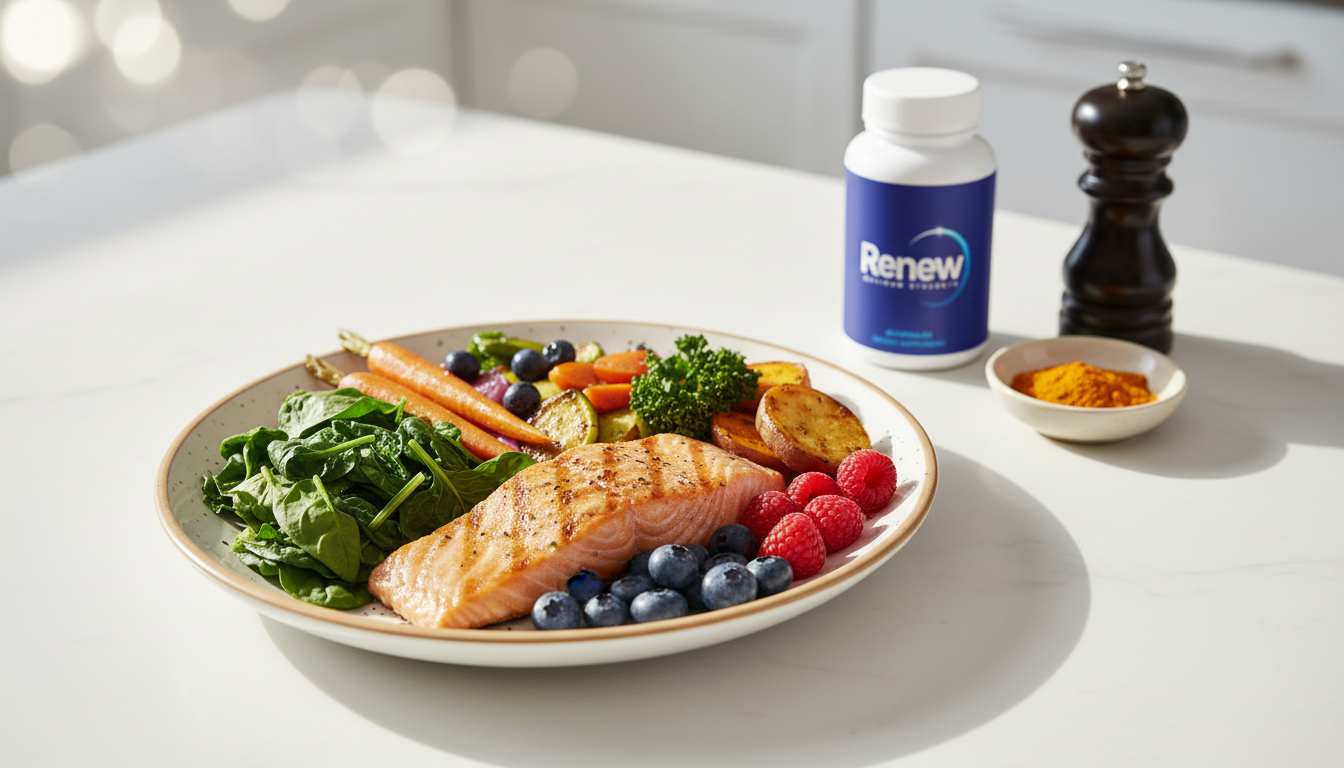
You don’t need a pharmacy of powders. A few well-chosen allies can make a real difference for cellular regeneration and anti-inflammatory nutrition.
Omega-3 fats: flexible, calmer cell membranes
Omega-3 fatty acids (from salmon, sardines, mackerel, flax, chia, and walnuts) help:
- cool down some pro-inflammatory signaling
- support heart, brain, and joint health
- keep your cell membranes more flexible and responsive
Research suggests omega-3 supplements can lower certain inflammatory markers and support overall metabolic balance in many adults.
In practical terms, that means:
- fatty fish a couple of times a week, plus
- a quality fish oil or algae-based omega-3 if your diet falls short
Curcumin: turmeric’s deep, golden calm
Curcumin is the main active compound in turmeric. Across many studies, it shows notable anti-inflammatory and antioxidant activity.
You’ll often see it associated with:
- reducing pro-inflammatory cytokines in lab and animal models
- easing certain types of oxidative stress
- supporting joint comfort and metabolic balance in some human studies
You meet curcumin every time you add turmeric to lentils, soups, roasted vegetables, or golden milk. Pairing turmeric with black pepper and a fat source (like olive oil or coconut milk) can help your body absorb it better.
Plant antioxidants: everyday armor for your cells
Deeply colored plant foods — berries, leafy greens, herbs, beets, red cabbage, dark grapes — bring in polyphenols and other antioxidants that help neutralize ROS before they damage cellular structures.
Think of them as tiny drops of calm in your bloodstream. Over time, that calm adds up.
Where Renew fits into the picture
For me, the turning point wasn’t another “superfood.” It was finally respecting my sleep window.
Renew is a nightly supplement built around the idea that better deep sleep means better repair. It combines nutrients like:
- magnesium and zinc
- amino acids such as L-theanine, arginine, and lysine
- plant extracts like Withania somnifera and Griffonia simplicifolia
- a small dose of melatonin

Make Nights Work Harder
Your evenings don’t need more willpower, just a clear, gentle sleep signal.
Renew is built to be your steady PM anchor. Taken about half an hour before bed, it’s designed to support deeper, more continuous sleep so your body can focus on nightly upkeep. Less tossing, more letting go into real rest.
-
Turn “maybe I’ll sleep” into a simple step
-
Support longer, more restorative sleep stretches
-
Help your body stay on a nightly repair schedule
— all aimed at supporting deep, restorative sleep, nighttime metabolism, and the body’s natural regeneration processes.
Here’s how it fits into my own rhythm:
- About 30–45 minutes before bed, I take Renew with a glass of water.
- That simple act has become the signal: lights dim, phone off, nervous system downshifted.
- Over the next weeks, I didn’t wake up “perfect.” But I noticed:
- less wired-but-tired feeling at night
- more mornings where my body felt actually rested
- better workout recovery and fewer “cement legs” days
I see Renew as a support tool, not a magic cure. It helps me protect the time of night when my body is already wired to repair — deep sleep — so my anti-inflammatory nutrition can do more of its job while I rest.
Foods and supplements for cellular regeneration you can live with
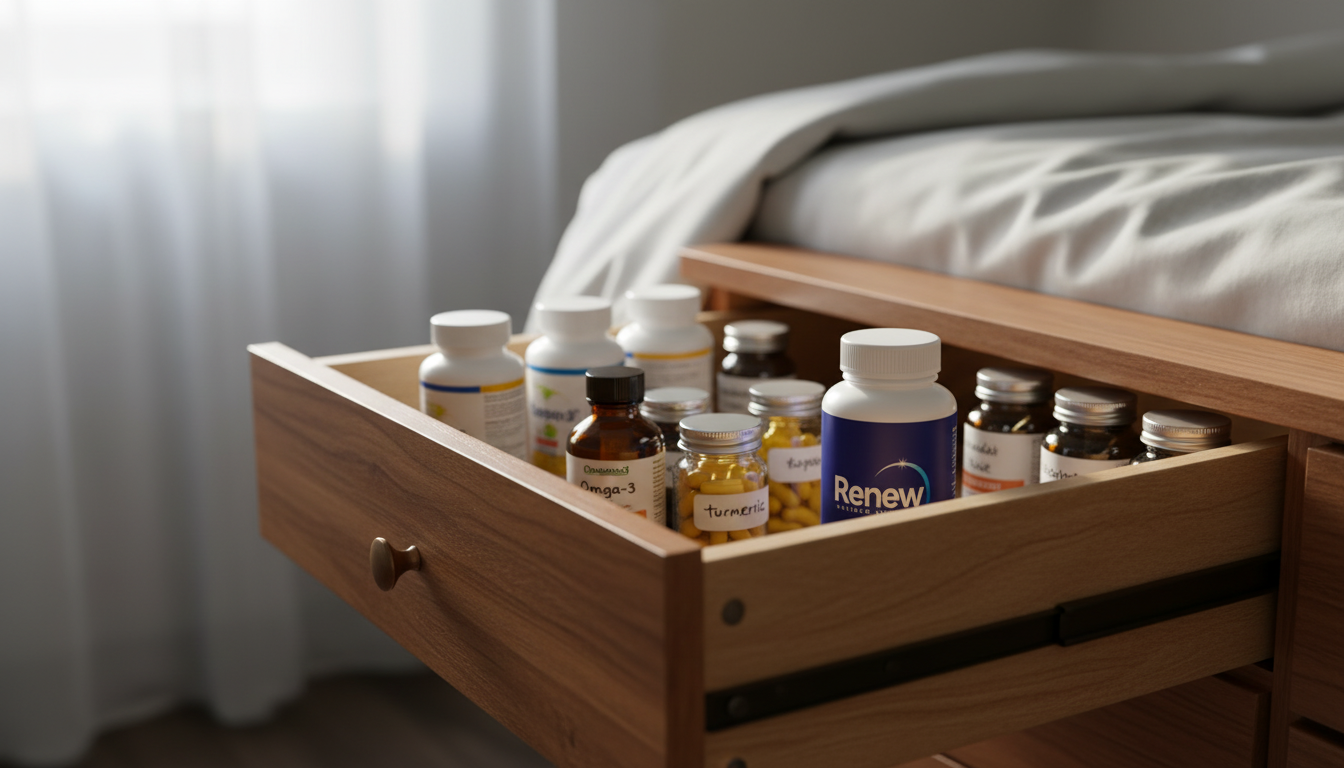
A realistic cellular health nutrition plan for longevity doesn’t need to be extreme. It needs to be repeatable.
Here’s the pattern I aim for most days:
On the plate
- Protein at each meal — eggs, fish, legumes, tofu, Greek yogurt, or tempeh
- Healthy fats — extra-virgin olive oil, avocado, nuts, seeds
- Color in every meal — berries, greens, carrots, peppers, purple cabbage
- Spices and herbs — turmeric, ginger, garlic, rosemary, cinnamon
This style of eating naturally leans anti-inflammatory and provides many of the vitamins, minerals, and antioxidants your cells need to regenerate well.
In the supplement drawer (for many people):
- an omega-3 if you rarely eat fatty fish
- a curcumin supplement if turmeric in food isn’t realistic most days
- magnesium if your sleep or muscle tension is consistently off
- Renew, as a nightly support for deep sleep and nighttime repair, if better sleep feels like your missing piece
Again, none of these substitute for food or basics like movement and light — but they can make those basics more effective and easier to sustain.
When people ask about the best supplements for cellular health, I don’t point to a single capsule. I think in layers:
- Base layer: food quality, blood sugar steadiness, daily movement, daylight.
- Second layer: omega-3s, plant antioxidants, curcumin-rich meals.
- Third layer: targeted supports like Renew to protect the deep sleep window where most of your repair happens.
Designing a daily rhythm that loves your cells back
Regeneration is most powerful when your body can predict what’s coming.
Here’s a simple, cell-friendly rhythm you can adapt:
Morning
Soft light, a big glass of water, and a breakfast with protein and healthy fats — maybe eggs with spinach and avocado, or overnight oats with chia seeds and blueberries.
You give your cells:
- amino acids to repair
- omega-3s and antioxidants to calm inflammation
- steady fuel instead of a sugar spike
Midday
A meal built around a palm-sized portion of protein, a heap of greens, some colorful vegetables, and olive oil. Maybe a sprinkle of turmeric or fresh herbs.
You tend to notice: clearer focus, less afternoon crash, and more emotional “space” between you and stress.
Evening
Lighter, earlier dinner. A 12–14 hour overnight gap between your last bite and the next day’s breakfast (for many people, this gentle window is enough to support cellular cleanup without feeling extreme).
Night
This is where I fold in Renew.
I take it with water, step away from screens, and let the room get darker and quieter. The hum of the fridge becomes background. My breathing slows.
Over time, this became less of a “hack” and more of a signal to my whole system:
We’re going into repair mode now.
- By week two, mornings felt a little less heavy.
- By week four, my energy was more even through the day.
- By week six and beyond, I noticed a quieter strength — not fireworks, just less drag.

Turn Bedtime Into Backup
Picture your bed as the place your body quietly rebuilds, not just collapses.
When Renew is part of your evening, you’re not just going to bed; you’re clocking in your body’s night crew. One capsule, same time each night, helps you create a dependable rhythm of deeper sleep and steadier, next-day energy.
-
Give your body a nightly “we’re on” signal
-
Support deeper sleep that feels more complete
-
Build quiet strength that shows up in your mornings
That’s what cellular regeneration and anti-inflammatory nutrition typically look like in real life: small, consistent signals that add up over weeks and months.
A gentle invitation

If you’re reading this feeling older than your age, or living with a kind of tired that sleep doesn’t seem to fix, you’re not broken.
Your cells are already working for you.
Every berry you eat, every plate of greens, every omega-3-rich meal, every sprinkle of turmeric, every night you protect your deep sleep — these are signals. Tiny, powerful messages that say:
I’m on your side now.
You don’t have to change everything at once.
Maybe your first step is:
- adding salmon once a week
- tossing a handful of berries on breakfast
- setting a hard “screens-off” time at night
- or, if you feel called to it, trying a nightly deep-sleep support like Renew and noticing how your body responds over a month
Your cells are rebuilding you either way.
This is how you help them do it with more ease, less noise, and a little more hope.
Written by Elias Menden — for those who seek resilience, steady energy, and a quieter kind of strength.