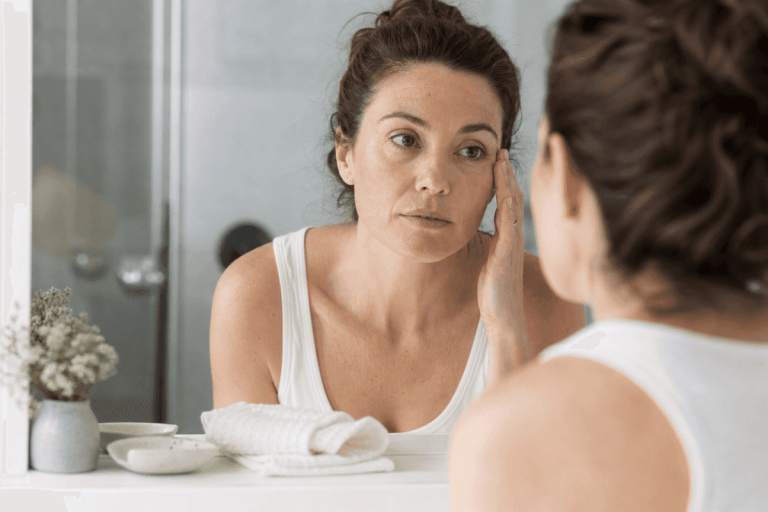
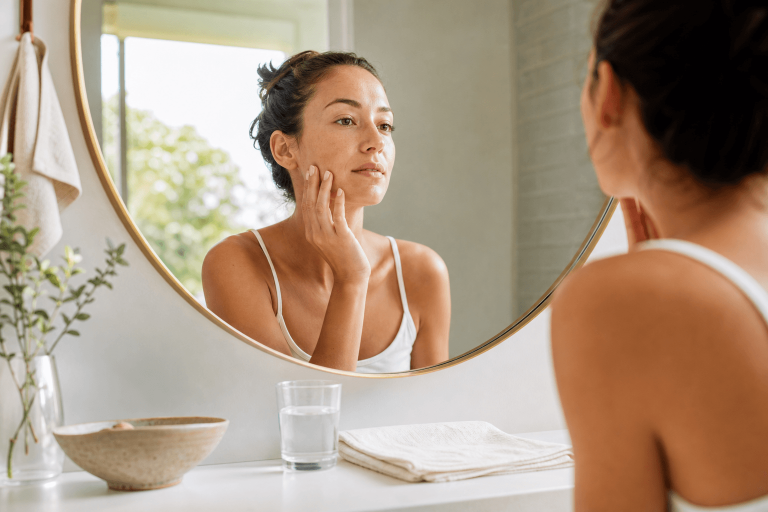
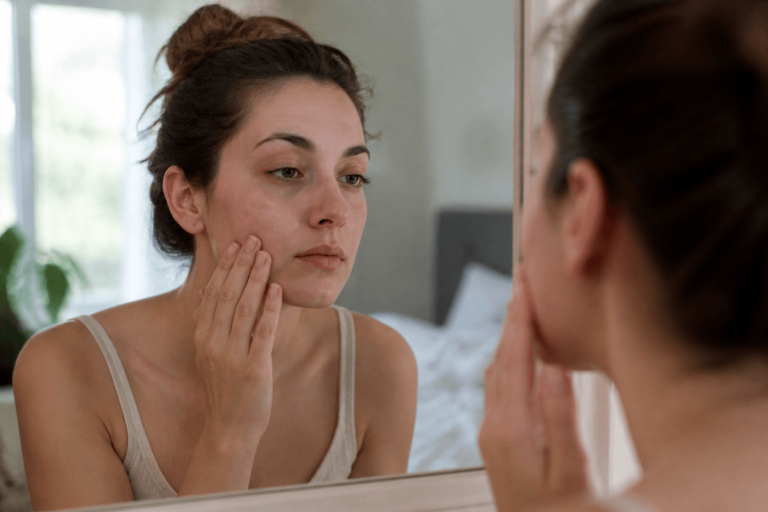
Some days your face looks more exhausted than your schedule should explain. The mirror seems to report a deeper strain: puffier features, flatter tone, a kind of overworked look that appears after the same days your digestion also feels heavy, swollen, or slow. That pattern can be frustrating because a skincare shelf cannot fix what it did not create.
I started paying attention when I noticed how often the same two complaints were arriving together. On the days my stomach felt off, my skin also looked less calm. The face seemed to lose its softness whenever meals were too rushed, digestion felt crowded, or the whole day carried too much internal friction. That was the clue that the mirror was not acting alone.
Once I learned to see the gut-skin connection as a routine issue instead of a cosmetic mystery, the problem became easier to approach. I could think about food rhythm, hydration, sleep, stress, and the kind of support that treats radiance like a whole-body result instead of a product test.
Why Can Bloated Days Show Up on the Face So Fast?
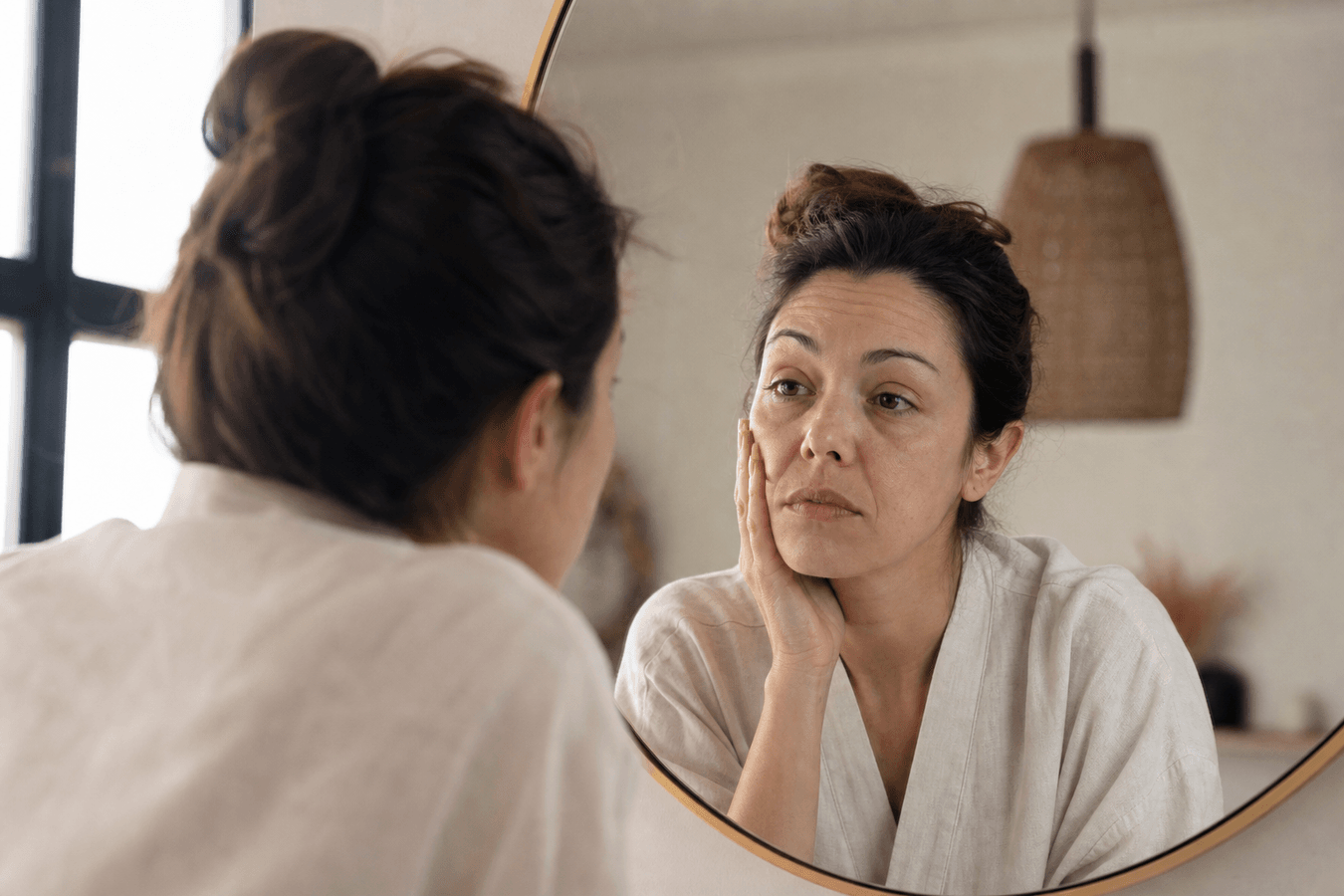
The body does not keep digestion and appearance in separate departments. When meals feel heavy, the stomach feels crowded, or the day carries too much stress, the face often shows the downstream effect in a way that feels immediate. Skin can look puffy, flat, tired, or just slightly less resilient than usual, even when the skincare routine has not changed.
The American Academy of Dermatology explains in its guidance on healthy skin habits that hydration, sleep, gentle care, and whole-body habits all influence how skin looks and feels. That lined up with my own experience. On rough digestion days, the face often looked like it was carrying part of the same burden.
That is why purely cosmetic explanations can fall short. If the mirror keeps reflecting internal strain, the answer may need to start deeper than the mirror itself.
What Daily Patterns Usually Link Digestion and Skin?

In real life, the connection usually grows from overlap: meals that are too rushed, too heavy, or too inconsistent, not enough water, poor sleep, and stress that keeps the whole system slightly inflamed. None of those things guarantees duller-looking skin, but together they create the kind of day where the face and the gut both seem less comfortable.
- heavy or hurried meals that leave the stomach feeling crowded
- dehydration that shows up in both digestion and skin tone
- stress that keeps the body tight long after the day is done
- sleep that feels long enough on paper but not restorative in practice
What helped me most was realizing that the problem was rarely one dramatic trigger. It was a stack of smaller habits that made the body feel overworked and the face look that way too. Once I could name the stack, I stopped expecting a new cream to solve what was clearly a rhythm issue.
That shift matters because it gives the reader leverage. You do not need a perfect routine. You need enough awareness to notice when your digestion and your skin are telling the same story.
How Does That Overworked Look Change the Way You Feel?

When your skin keeps looking overworked after bloated days, the effect is more than visual. It changes how you read your own energy. You feel a little less fresh, a little less put together, and sometimes a little less patient with yourself because the face looks like proof that the day is already heavier than it should be.
I think that emotional cost is easy to dismiss, but it matters. Looking tired can make you feel tired in a feedback loop that quietly shapes confidence, mood, and how much effort a normal day seems to require. That is why these articles need to stay grounded. They are not only about beauty. They are about how internal strain changes lived experience.
This is also where IyoMend’s skin and gut content can be especially useful. Readers are often not asking for perfection. They are asking why their face keeps reflecting a digestive day they would rather leave behind.
What Helps Skin Look Calmer When Digestion Has Been Rough?

The improvements I trust most are the ones that support the whole routine at once. Slower meals. More water earlier. Less bouncing between restriction and overdoing it. A calmer evening. Gentler skincare. More respect for the idea that radiance is often the byproduct of internal steadiness.
The Cleveland Clinic notes in its overview of how gut health can affect the skin that digestion, inflammation, and daily habits can shape visible skin changes. I learned the same lesson in practice: the face usually looks less stressed when the body underneath it feels less burdened.
What changed most for me was expectation. I stopped demanding a quick cosmetic rescue and started building conditions that made my skin look more settled over time. That was both slower and more believable, which is exactly why I trusted it.
Where Does Neotonics Fit in a Beauty-From-Within Routine?
Neotonics made sense to me because it belonged to the bigger conversation instead of pretending the answer lived only in topicals. I was not trying to abandon skincare. I was trying to stop asking skincare to solve a problem that clearly had an internal component whenever digestion and stress got messy.
That is the honest bridge for a reader like this. The article first explains why bloated days can leave the face looking overworked. Then Neotonics shows up as one support step inside a broader plan built on gentler meals, hydration, calmer evenings, and the belief that visible beauty often starts with better internal rhythm.

Readers usually feel the difference when a product is placed that way. It does not sound like a shortcut. It sounds like a useful option inside a routine that already respects the body.
Which Internal Links Make This Gut-Skin Story More Useful?
This post should connect directly into IyoMend’s beauty-from-within cluster. The strongest companion routes are your skin routine cannot outrun your gut, why your skin starts telling on your gut, and when your face keeps looking more tired than you feel.
Those links deepen the conversation without repeating it. One page broadens the whole gut-skin theme, another captures the first recognition moment, and another speaks directly to the emotional mismatch between how you feel and how your face appears. Together they make the cluster more useful for readers and more coherent for search.
They also increase AI citation readiness because the site answers a practical, quotable question from multiple angles. That kind of topical network is much easier to cite than a one-off beauty story with no surrounding context.
The Goal Is Not Perfect Skin. It Is a Less Burdened Signal.
I do not want readers fighting their faces harder. I want them reading the signal more gently and more accurately. If your skin keeps looking overworked after bloated days, the body may be telling you something useful about digestion, stress, or recovery depth.
The answer is often less about piling on more products and more about lowering the internal strain the mirror is responding to. Better meals. Better hydration. Better recovery. Better support. When the body feels calmer, the face often looks less burdened too.
That is what makes this topic worth treating with respect. A calmer-looking face is not only about aesthetics. It is about the relief of seeing less stress reflected back at you, and about building a routine that makes radiance feel like a byproduct of care rather than a performance you have to force.
I think that is why beauty-from-within content resonates when it is done honestly. It gives the reader permission to widen the conversation. The goal is not chasing flawlessness. It is helping the body look a little less overworked because the body itself is carrying less strain.
That wider conversation is often the point where people finally feel relieved instead of judged. The mirror stops being an enemy and starts being useful feedback. Once the reader sees that, calmer digestion and calmer skin stop feeling like two separate projects and start feeling like one believable reset.
In practice, that reset usually feels softer than dramatic. The face looks a little less swollen, the routine feels a little less frantic, and the reader no longer has to keep pretending the issue begins and ends at the sink. That kind of honesty is often the first real improvement.
Written by Liora Menden — for readers who want calmer digestion and gentler radiance