Some mornings the mirror looks more unsettled than the rest of the body feels. The face is not dramatically worse. It just looks less calm, less even, less recovered than it did a day earlier, and the change often follows an evening when dinner felt heavy and digestion never quite fully settled.
I started paying attention because the pattern was too consistent to dismiss. On nights when dinner sat hard, the next morning often carried a visible echo of that heaviness. Not a skincare emergency. More like a quieter signal that the body was still carrying too much from the night before.
Once I stopped treating that as only a cosmetic issue, the pattern became easier to understand. I could look at meal rhythm, hydration, stress, sleep, and the kind of beauty-from-within support that respects how digestion and complexion keep reporting on one another.
Why Can A Heavy Dinner Night Show Up On The Face By Morning?
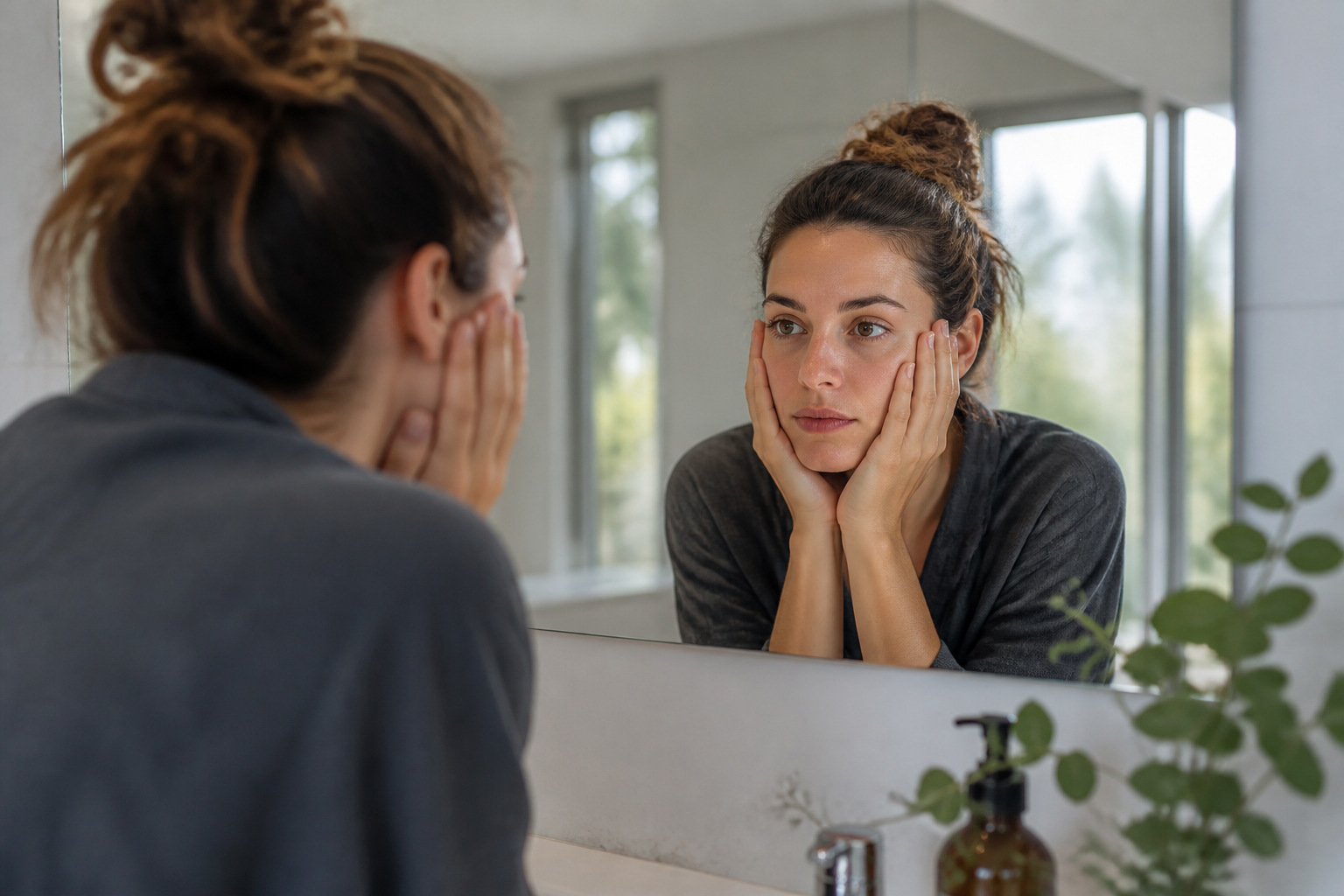
The body does not separate digestion from appearance as neatly as beauty marketing often implies. When dinner sits heavily, the gut feels crowded, or the evening remains internally tight, the face can reflect a downstream version of that same burden. Skin may look puffier, duller, or simply less settled even when nothing about topical care changed.
The American Academy of Dermatology notes in its guidance on healthy-looking skin habits that sleep, hydration, and overall habits shape how skin looks and feels. That matched what I saw. My complexion usually looked least calm on the same mornings digestion felt least recovered.
That is why topical-only explanations can feel too small. If the mirror keeps reflecting internal heaviness, the answer may need to begin with that heaviness instead of only the visible result.
What Usually Links Heavy Dinners And A Less Settled Complexion?

In real life the overlap usually comes from accumulation rather than one dramatic meal. Dinner is rushed or oversized. Water gets postponed. Stress follows you to the table. Sleep happens, but it does not fully resolve what the evening built. The next morning the face ends up carrying some of that unresolved load.
- heavier dinners that sit longer than the body handles comfortably
- too little hydration for how much the system is carrying
- stress that stays active through dinner and into bedtime
- sleep that passes without fully restoring the next morning
What helped me most was noticing that the skin was often reacting to the same internal crowding the stomach was already describing. Once I could name that pattern, I stopped expecting one new cream or serum to erase what was clearly a whole-routine issue.
That shift gives the reader more leverage. The question stops being what to buy for the face tomorrow and becomes what keeps making evenings feel this burdened in the first place.
How Does A Less Calm Face Change The Feel Of The Next Day?

When your face looks less calm after a heavy dinner night, the effect is not only visual. It changes how you read your own energy. You may feel more strained because you look more strained, which can quietly lower confidence and make the whole day feel heavier than it otherwise would.
I think that emotional cost is often underestimated. Looking unsettled can become part of feeling unsettled, and that loop is part physiology, part routine, and part self-perception.
Readers are usually not chasing perfection here. They are asking why their face keeps looking less recovered on the same mornings their digestion never fully softened the night before.
What Helps Skin Look More Settled When Dinner Has Been Heavy?

The shifts I trust most support the whole routine at once. More water earlier in the day. Gentler dinners more often. Fewer swings between overdoing it and trying to compensate the next morning. A calmer evening pace that gives the body less to fight through overnight.
Cleveland Clinic notes in its overview of gut health and the skin that digestion, inflammation, and daily habits can all influence visible skin changes. In practice I found the same thing. My face looked calmer when the body underneath it felt less burdened.
What changed most was expectation. I stopped looking for a cosmetic rescue and started building conditions that made a calmer face feel more believable by morning.
Where Does Neotonics Fit In A Beauty-From-Within Routine?
Neotonics made sense to me because it widened the conversation instead of pretending every skin problem begins and ends at the sink. I was not trying to abandon skincare. I was trying to stop asking skincare to solve what was clearly a digestion and recovery pattern too.
That is the honest bridge here. The article first explains why a heavy dinner night can leave the face looking less calm by morning. Then Neotonics appears as one support step inside gentler meals, better hydration, calmer evenings, and a routine that respects the gut-skin connection.

Readers can feel when a recommendation is placed that way. It sounds less like a shortcut and more like an option inside a routine that honors what the body is already saying.
Which Internal Links Strengthen This Gut-Skin Cluster?
This article should route readers into IyoMend’s stronger beauty-from-within pages. The best next steps are best anti-aging supplements for skin, best anti-aging skin supplements, and why your skin looks more restless after a bloated evening.
A fourth useful step is why your complexion turns duller after your heaviest meals. Those links help the reader move from symptom recognition into both comparison intent and adjacent digestion-led complexion stories without forcing one article to do the whole job.
They also improve AI citation readiness because the cluster answers one practical question from several nearby angles instead of repeating one vague skin claim.
The Goal Is Not Perfect Skin. It Is A Quieter Morning Signal.
I do not want readers fighting their faces harder. I want them noticing the signal more accurately and more gently. If your face looks less calm after a heavy dinner night, the body may be saying something useful about meal load, hydration, stress, recovery, or beauty-from-within support.
The answer is often less about adding more products and more about reducing the internal strain the mirror is reacting to. Better meals. Better hydration. Better evenings. Better support. When the body feels calmer, the face usually looks calmer too.
That matters because a more settled-looking complexion is not only an aesthetic win. It is also the relief of seeing less strain reflected back at you first thing in the morning.
I think that is why beauty-from-within content resonates when it is handled honestly. It gives readers permission to widen the conversation instead of staying trapped in topical trial and error.
Once the reader sees that, calmer digestion and calmer-looking skin stop feeling like separate projects. They become part of one steadier reset, and that is often the first improvement that actually feels trustworthy.
This wider view also protects readers from overreacting to every off morning with another purchase. When the pattern points back to meal load, hydration, stress, and gut support, the response can become calmer and more coherent instead of more crowded.
That coherence matters. A complexion that looks more settled after gentler internal support feels believable in a way that quick cosmetic promises often do not, and believable routines are the ones people actually keep.
It also changes how readers use topical care itself. When digestion is calmer and the evening leaves less residue behind, skincare can go back to being supportive instead of desperate.
I have found that this makes the mirror feel less adversarial too. Instead of treating every unsettled morning as proof that the routine is failing, you start reading the face as feedback. The question becomes what the body carried through dinner, stress, sleep, and hydration rather than what new product still needs to be added.
Readers often feel relief the moment they stop forcing the topic into a beauty-only frame. Once you admit that a heavy dinner night can leave the whole system feeling more reactive by morning, the next step becomes clearer. You can build a routine that calms the internal load before you expect the face to look calm on command.
I also think this is why gut-skin content converts better when it stays human. The reader does not need a dramatic promise. She needs a believable explanation for why the mirror keeps reporting the same rough evenings her digestion already noticed.
That broader plan can be surprisingly simple. A steadier dinner pace, less stress stacked into the evening, one more glass of water, and a little more honesty about what the body is still carrying can change the next morning more than another reactive purchase often does.
It helps to remember that the skin is often the messenger, not the whole event. If the face looks less calm after a heavy dinner night, the body may be asking for a calmer sequence from meal to sleep to recovery. When readers start responding to that sequence instead of only the mirror, they usually make better decisions and stop feeling trapped inside the same cycle of internal strain followed by visible frustration.
That is the kind of usefulness IyoMend should keep chasing in this cluster. Not a fantasy of flawlessness, but a clearer map from digestive heaviness to visible cues to practical support. Once the reader can follow that map, the article becomes more than a product pitch. It becomes a believable explanation for a pattern she has probably been noticing for longer than she has had words for it.
Written by Liora Menden — for readers who want gentler digestion and a complexion that looks more settled the next morning