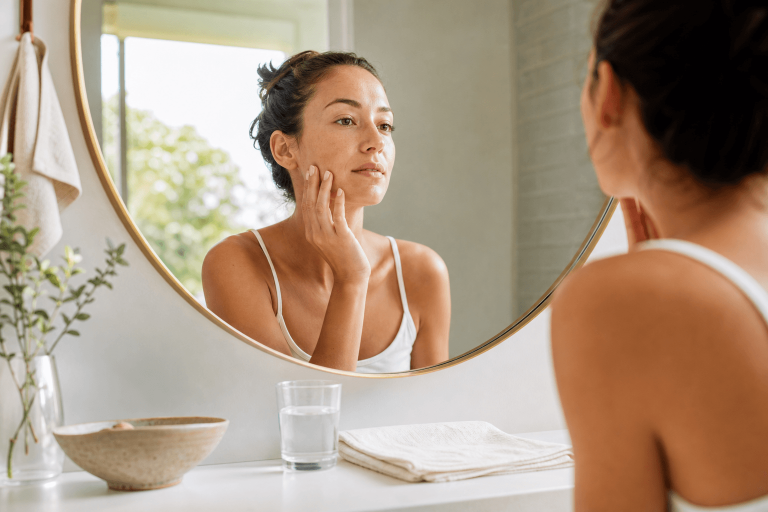
There’s a particular kind of morning that feels harder than just tired. You wake up, shuffle to the bathroom, and the face looking back at you seems almost waterlogged — puffy in the hollows, flat across the cheeks, the kind of dull that no amount of water or cold-splashing fixes. And somewhere in the background, your stomach has been quietly unsettled for days. Bloated after dinner. Sluggish in the mornings. Not quite sick, just not quite right.
Most of us treat these two things as separate complaints. We reach for a new serum for the skin. We cut out coffee or try a lighter dinner for the gut. We manage each one in isolation without ever asking whether they might be speaking the same language.
I spent a long time doing exactly that. Chasing a glow through my medicine cabinet while ignoring what was happening one floor down. It wasn’t until I started paying attention to both at once — truly paying attention — that something finally shifted. This is what I found.
The Week My Stomach Decided to Show on My Face
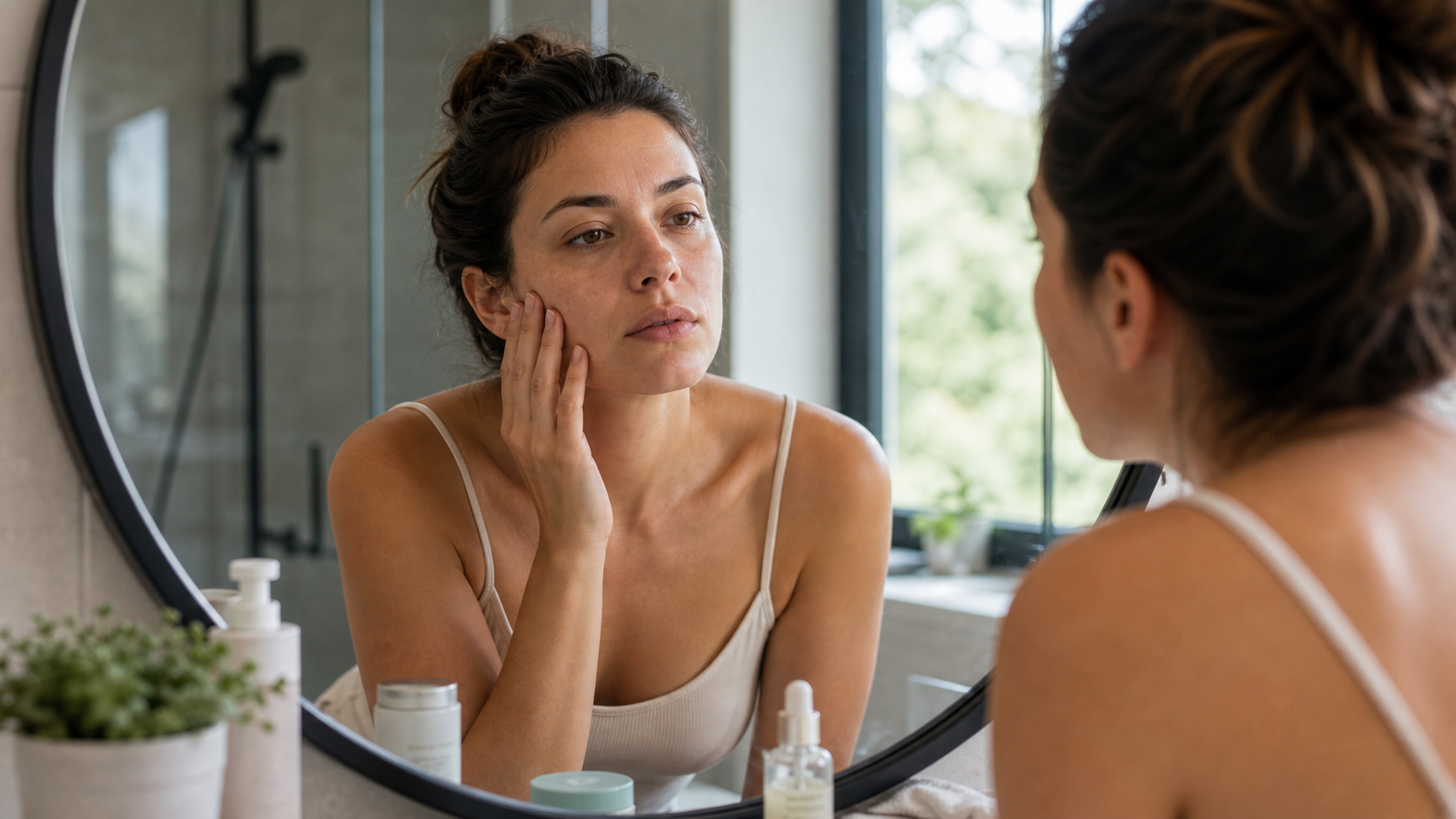
It started after a long stretch of travel — the kind where you eat airport meals at strange hours and sleep in the wrong time zones. By day four, my digestion had completely lost its rhythm. Nothing dramatic, just this persistent low-grade heaviness. Meals that sat too long. That subtle distension that makes even a loose waistband feel like a statement.
What surprised me wasn’t the bloating. It was my skin. By the end of that week, I looked like I hadn’t slept in twelve days. My complexion was flat and greyed out. The fine lines along my jaw looked deeper. There was a puffiness around my eyes that concealer made worse, not better.
I’d always noticed a vague connection between these two things, but I’d chalked it up to dehydration or stress. That week was the first time I really sat with the possibility that they weren’t two separate problems at all.
Maybe the same internal disruption was generating both signals at once — one in my gut, one in the mirror.
That question is what led me down a research path I genuinely hadn’t expected. And it changed how I think about skin entirely.
Your gut may be the reason your skin isn’t keeping up.
Why the Gut and Skin Are Actually One Conversation

Here’s what the science has been quietly building toward for years: your digestive system and your skin are in constant communication. The gut microbiome — that enormous, bustling community of bacteria and microorganisms living in your intestines — doesn’t just manage digestion. It sends signals throughout the entire body. To your immune system. To your nervous system. And yes, to your skin.
When that microbial community is balanced, the downstream effects are surprisingly visible. Inflammation stays low. The skin barrier holds moisture well. Cell turnover — the process by which your skin sheds old cells and generates new ones — keeps a healthy rhythm. The complexion looks alive because it actually is alive, operating at a good pace.
When the gut is disrupted, those signals change. Inflammatory compounds can travel through the gut lining and enter circulation. The skin barrier becomes more reactive. Cell turnover slows. That slowdown is precisely what creates the tired, flat look — old cells lingering on the surface too long, making skin appear dull, congested, and strangely thick.
What I used to read as dehydration or stress or poor sleep was often something else: my gut, out of balance, speaking through my skin. Once I understood that, the whole framework of how I approached my complexion shifted.
What if dull skin and sluggish digestion had the same source?
The Invisible Load That Slows Everything Down

The tricky part is that gut disruption rarely announces itself loudly. It accumulates quietly — through weeks of rushed meals, irregular sleep, high-stress periods that change how your body digests and absorbs. The microbiome is resilient, but it responds to pressure. And most of us are living under a kind of constant low-grade pressure that doesn’t feel dramatic but never really lifts.
Processed foods — even the ones that seem fairly harmless — tend to favor certain bacterial strains over others, gradually shifting the balance in the gut community. Stress hormones alter gut motility and permeability. Poor sleep affects the gut’s own circadian rhythm, which yes, the gut actually has. All of these inputs pile up invisibly.
And then one morning the face looks off. The skin seems older than it should. You feel heavier than your weight. You can’t point to a single cause because there isn’t one — it’s been accumulating for weeks in a system most of us never think about consciously.
This is why surface-only approaches to skin have a ceiling. Topical products do meaningful work, but they’re managing the output of a system that runs much deeper. If the internal environment isn’t supported, the skin never quite catches up — no matter how faithful the evening routine.
Support both systems together — the way your biology intended.
What I Started Looking for in a Formula
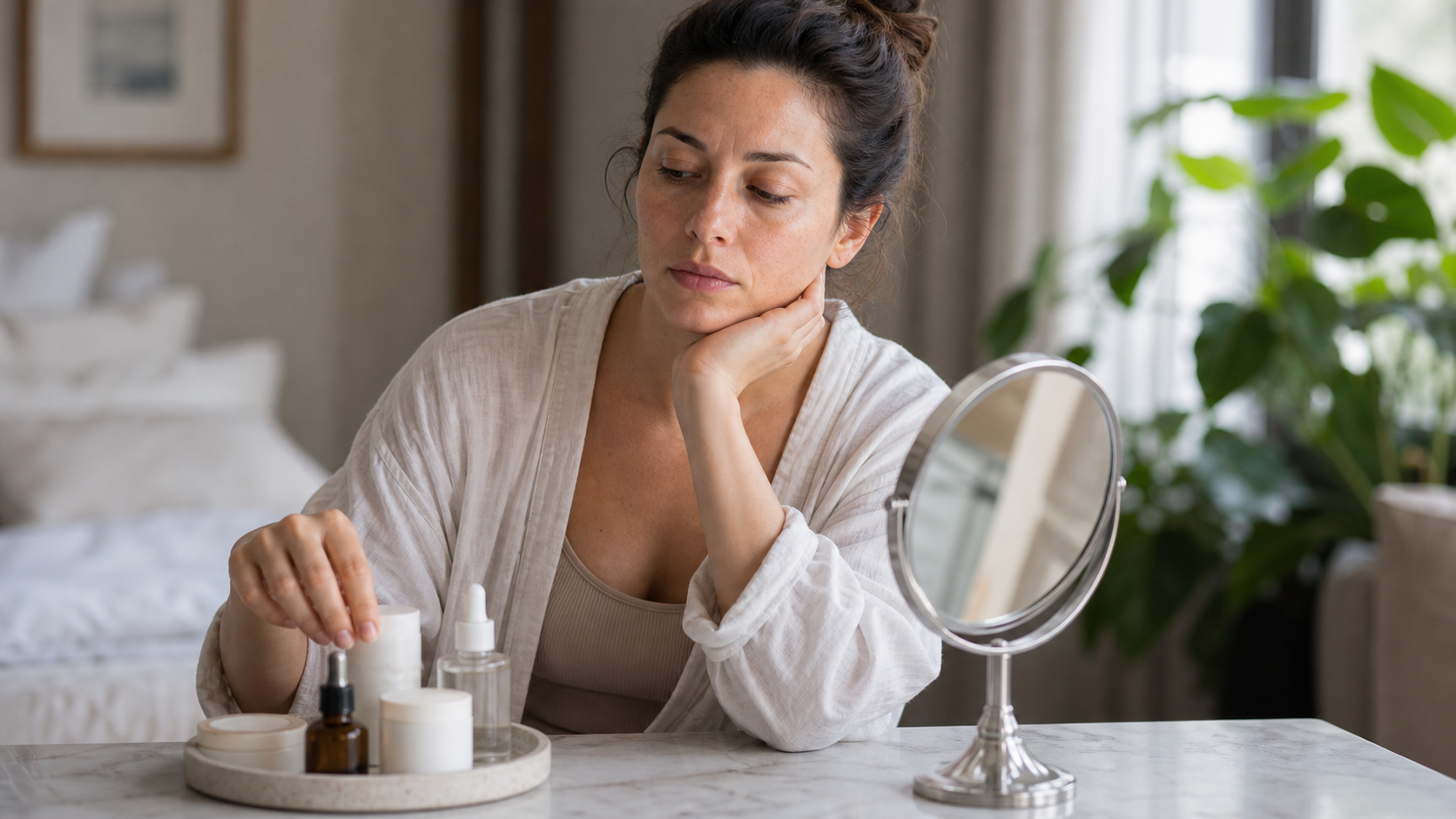
Once I understood the gut-skin connection, I started filtering everything through a different lens. I wasn’t just looking for something that would make my skin look better. I was looking for something that would support the underlying system — the one responsible for both how my digestion felt and how my face read in the morning light.
That meant I needed something that worked at the microbiome level, not just topically. Something that could help restore the rhythm of skin cell turnover from the inside — because no serum replaces that. And something designed to address both gut balance and skin renewal together, not as separate intentions but as the unified biology they actually are.
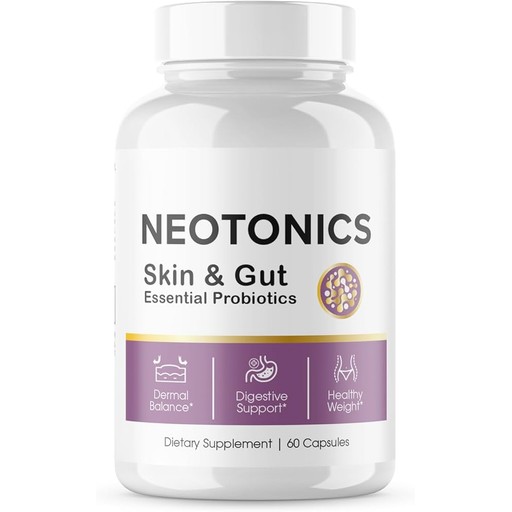
I was skeptical of anything that promised beauty results from a capsule. That skepticism kept me circling the same expensive serums and under-eye patches for too long. But eventually the logic of the gut-skin axis became undeniable enough that I was willing to try something formulated around it. That’s when I came across Neotonics.
When Your Skin Needs Gut Support
That flat, puffy, drained look? It often starts one floor below your face.
Neotonics works at the intersection of your gut microbiome and skin cell turnover — because what shows up in the mirror is often a message from your digestive system. When gut balance is restored, skin renewal follows. Less congestion, less puffiness, more of the living texture that no serum alone can replicate.
- ✓ Digestive ease that shows up on your face
- ✓ Cell turnover that restores texture from inside out
- ✓ A rhythm your complexion can actually depend on
Neotonics and the Rhythm I Had Been Missing
Neotonics is formulated around the idea that skin renewal depends on gut health — specifically on the microbiome being in a state where it can support the cellular processes skin needs. It works at the intersection of digestive balance and skin cell turnover, the exact pairing I had been trying to address separately for years.
What drew me in wasn’t a promise of dramatic transformation. It was the framing. The acknowledgment that dull, congested, aged-looking skin is often a downstream effect of an internal rhythm that’s been disrupted. That the gut isn’t just a digestive organ but a signaling center that the skin listens to constantly.
I started using it consistently, morning with breakfast, and I stopped expecting overnight results. Instead, I just paid attention. The first thing I noticed — and this surprised me — was the digestive ease. The heaviness after meals began to lift within the first couple of weeks. That subtle bloated feeling that had become background noise started to quiet down. And then, about three weeks in, I noticed something in the mirror. My skin looked less congested. The flat, tired quality was lifting. I wasn’t suddenly glowing. But I looked like myself again — which after months of looking slightly off, felt like everything.
I looked like myself again — which after months of looking slightly off, felt like everything.
Real texture, real renewal — when the inside catches up.
The Morning Mirror Tells a Different Story Now
Six weeks in, the change is not subtle anymore. My skin has a texture it didn’t have before — not smooth in the way that’s been buffed and treated, but smooth in the way that means it’s renewing properly. The puffiness under my eyes is mostly gone. The greyish flatness that used to greet me on stressed or disrupted weeks has largely disappeared.
My digestion is quieter in the best way. Not performatively improved, just settled. Meals feel complete. Mornings feel lighter. The bloating that used to arrive predictably after certain foods is rare now, not constant.
I still use topical products. I still care about my evening routine. But those things are working better now — because they’re layering on top of a system that’s actually functioning, not compensating for one that isn’t.
The biggest shift has been internal, in the truest sense. Not just physically but in how I understand what skin health actually is. It isn’t a surface problem with surface solutions. It’s an expression of what’s happening inside. When the inside is supported, the outside follows in a way that no amount of product applied from without can fully replicate.
Give your complexion the internal rhythm it’s been waiting for.
If Your Skin Has Been Trying to Tell You Something
If you’ve been in that space — the flat complexion, the stubborn puffiness, the skin that looks older on the weeks your stomach feels most unsettled — I want you to sit with the possibility that it isn’t random. That your skin isn’t simply aging or reacting to weather or stress in some vague, untargeted way. It may be reflecting something that’s happening in your gut, clearly and faithfully, in the only language it knows.
The gut-skin connection isn’t a wellness trend. It’s biology.
And once you start supporting both systems together — once you stop treating your complexion as a separate project from your digestion — the results have a different quality. They feel real in a way that topical solutions alone don’t quite achieve.
Neotonics gave me an entry point into that interior work. Not a miracle, not a shortcut — just a formula designed for the right intersection, taken consistently, in a body that was finally getting what it needed. That’s a different kind of beauty routine. And it’s the one that actually changed how I look.
Written by Liora Menden — for those who seek beauty that begins from within
The formula built for the gut-skin conversation happening right now.