It started with a paper cut.
Not the cut itself — those happen. It was how long it took to close. Four days for a tiny slice on my index finger, the kind you get pulling a receipt from an envelope. The skin around it looked thin. Almost translucent. And I remember standing at the sink, running water over it, thinking: when did I become this fragile?
I was forty-one. I ate well — or thought I did. Lean proteins. Vegetables with every meal. A greens powder in the morning that tasted like ambition and wet grass. I tracked my macros loosely. I stayed hydrated. I did everything the wellness world told me to do.
But my skin felt papery. My joints crackled when I stood up from the couch. My energy rose and fell like a tide I couldn’t predict. And that paper cut, sitting open on my finger like a small accusation, made me wonder if my body was quietly falling apart underneath all my effort.
That was when I started paying real attention to fat. Not calories from fat. Not “good fat versus bad fat” in some vague dietary sense. I mean the actual role that fatty acids play inside your cells — in the walls that hold everything together, in the signals that tell your body to repair, in the raw material your cells need to rebuild themselves every single day.
And what I found changed the way I think about health more than any protein shake or supplement stack ever did.
⸻
Your Cells Have a Skin — and It’s Made of Fat
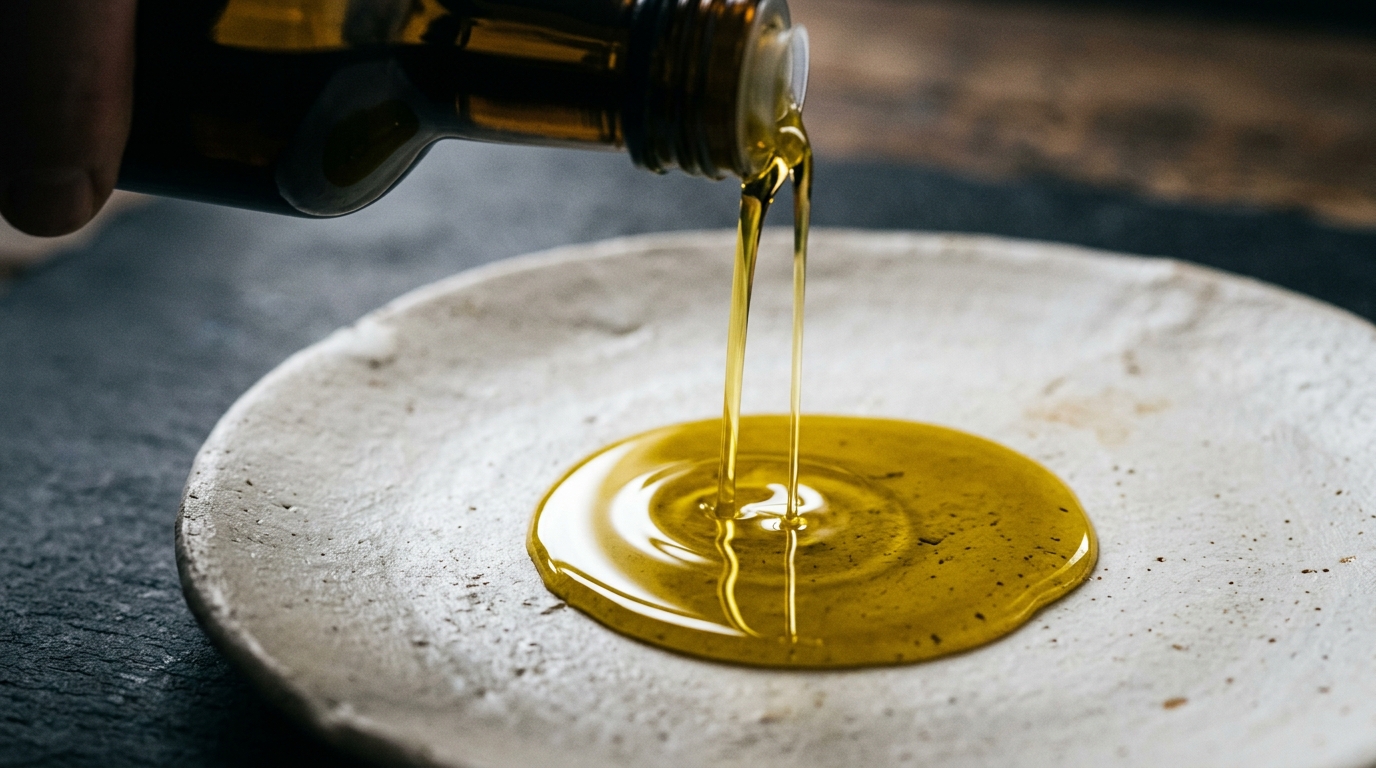
Here’s something I wish I’d understood ten years ago: every cell in your body is wrapped in a membrane made largely of fatty acids. Phospholipids, specifically — molecules with a fatty acid tail that arrange themselves into a flexible double layer around each cell.
That membrane isn’t just packaging. It’s the gatekeeper. It controls what gets in — nutrients, oxygen, water — and what stays out. It holds receptors that let your cells communicate with each other. It flexes and bends so cells can move, divide, and heal.
When that membrane is built from the right fats, it stays fluid and responsive. Soft enough to let things through. Strong enough to hold its shape.
When it’s not? Things stiffen. Signals slow down. Nutrients knock on the door and nobody answers. Your cells stop regenerating the way they should — not because they’ve forgotten how, but because the walls around them have become too rigid to cooperate.
That stiffness doesn’t show up on a blood panel. It shows up in the mirror. In the creak of your knees. In the paper cut that won’t heal.
The Omega-3 Gap Nobody Talks About

Most people have heard that omega-3 fatty acids are good for you. Salmon, walnuts, flaxseed — the usual suspects. But here’s the part that doesn’t get enough attention: your body cannot make omega-3s on its own. You have to eat them. And most of us are nowhere close to getting enough.
The two omega-3s that matter most for fatty acids cellular renewal are EPA and DHA. These are the ones that embed directly into your cell membranes and influence everything from inflammation to how efficiently your mitochondria produce energy.
EPA acts like a quiet negotiator inside your body. When inflammation flares — and it does, constantly, from stress, from processed food, from just being alive — EPA helps bring it back down. Not with force. With chemistry. It produces signaling molecules called resolvins that tell your immune system: okay, you can stand down now. The crisis is handled.
DHA, on the other hand, is a builder. It makes up a significant portion of the fat in your brain and your retinas. It keeps nerve cells flexible and quick. When your DHA levels drop, your thinking slows. Your mood dips. Your cells lose a layer of protection they didn’t know they needed.
I was eating fish maybe twice a month. A handful of walnuts here and there. I thought I was covered.
I wasn’t even close.
⸻
What Happens When Your Cells Get the Right Fats
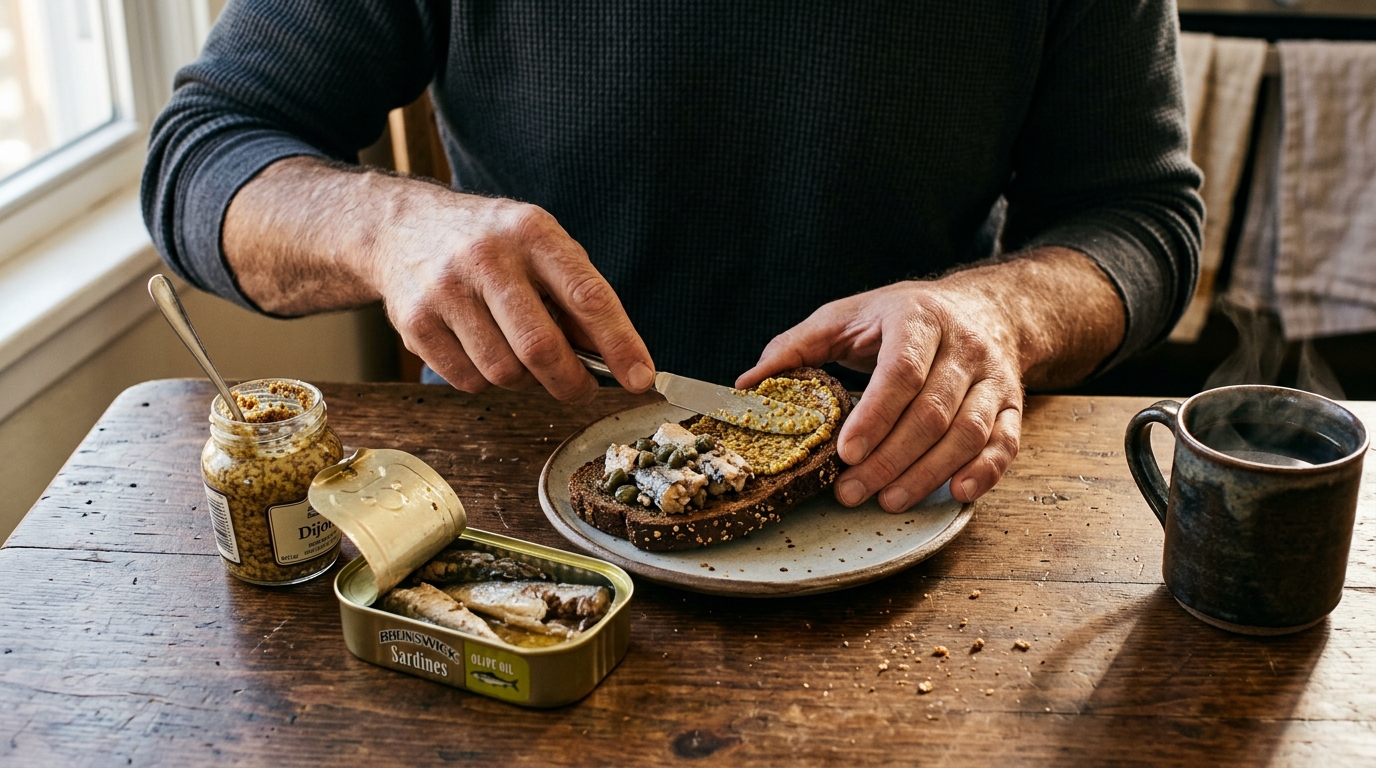
I started making deliberate changes. Wild-caught sardines twice a week — small, oily, unglamorous, and loaded with EPA and DHA. A tablespoon of cold-pressed flaxseed oil in my morning smoothie. More avocado. More mackerel when I could find it. I stopped avoiding egg yolks.
Within a few weeks, the first thing I noticed was my skin. Not a glow — that’s too dramatic. More like a return. The dryness I’d been slathering with creams started to ease from underneath. Like the moisture was coming from inside now, not being patched on from outside.
Then the stiffness in my hands receded. That grinding sensation in my left knee softened into something quieter. My cuticles, which had been ragged and split for months, started growing in smoother.

Deeper Rest, Steadier Mornings
Your cells do their best repair work at night — but only if sleep goes deep enough
Renew is a nightly blend of ashwagandha, L-theanine, and magnesium designed to support the deep-sleep phase where real cellular maintenance happens. Not a sedative. Not a shortcut. A foundation for the kind of rest that lets your body actually use the nutrition you’re already giving it.
-
Support the deep-sleep window where overnight repair happens
-
Wake up feeling settled instead of foggy or stiff
-
A steady foundation beneath everything else you’re doing right
None of this was miraculous. That’s the important part. It was just… cellular. My body was getting what it needed to maintain the walls around each cell. And with those walls working better, everything downstream worked better too — nutrient absorption, waste removal, hormone signaling, recovery.
The science behind this isn’t complicated. When you give your cells adequate omega-3s, the phospholipid bilayer — that double membrane I mentioned — becomes more fluid. Receptors function better. Enzymes activate more easily. The mitochondria inside each cell, where your energy is actually produced, run more cleanly.
It’s not like flipping a switch. It’s like oiling a hinge you didn’t realize was rusted.
The Part I Was Missing: Renewal Doesn’t Just Happen During the Day

Here’s where I made a mistake that I think a lot of people make. I focused entirely on what I was putting in — the fats, the nutrients, the inputs. I assumed my body would handle the rest.
But cellular renewal isn’t just about materials. It’s about timing.
The deepest repair work your body does — clearing damaged cells, building new tissue, rebalancing hormones, consolidating everything the day threw at it — happens during deep sleep. Not light sleep. Not REM. The slow, heavy stage of sleep where your heart rate drops, your breathing evens out, and your cells finally get to do the maintenance they’ve been queuing up all day.
I wasn’t sleeping well. I was getting hours but not depth. I’d wake up puffy-eyed and stiff, like my body had spent the night just… idling.
So I started looking into what supports that deep phase — not just the falling-asleep part, but the staying-deep part. The kind of sleep where your body actually renews.
That’s when I found Renew.
⸻
A Capsule Before Bed That Changed My Mornings

I’ll be honest — I was skeptical. I’ve tried melatonin on its own and woken up groggy. I’ve tried valerian root and felt nothing. But Renew is different. It’s not trying to knock you out. It’s a blend of things like ashwagandha, L-theanine, magnesium, and a few other nutrients that seem to work together to support the body’s overnight repair cycle — specifically that deep-sleep phase where real cellular regeneration happens.
I took two capsules about forty minutes before bed. Nothing dramatic that first night. But by the end of the first week, I noticed something subtle: my mornings were quieter. Not groggy-quiet. Settled-quiet. Like the low hum of anxiety that usually greeted me at 6 a.m. had been dialed down a few notches.
By week three, the changes were harder to ignore. The puffiness under my eyes softened. My skin looked less drawn when I washed my face. I had steadier energy through the afternoon without the dip that usually sent me reaching for coffee at two o’clock. Even the paper-cut problem — I nicked my thumb on a can lid and it sealed in two days.
It felt like my body had been getting the building materials for months but hadn’t had the time to actually build anything. Renew didn’t give me different materials. It gave my cells the deep, uninterrupted window they needed to use what was already there.
The Two Halves of How Fatty Acids Fuel Cellular Renewal
This is what I wish someone had told me earlier: fatty acids fuel cellular renewal in two ways, and you need both.
The first is structural. Omega-3s — EPA and DHA especially — become part of the cell membrane itself. They make it flexible, responsive, better at absorbing nutrients and releasing waste. They help your mitochondria run cleaner. They calm the low-grade inflammation that quietly degrades your cells over time. This part is about what you eat during the day.
The Night Shift for Your Cells
You’ve given your body the right fats — now give it the deep rest to actually use them
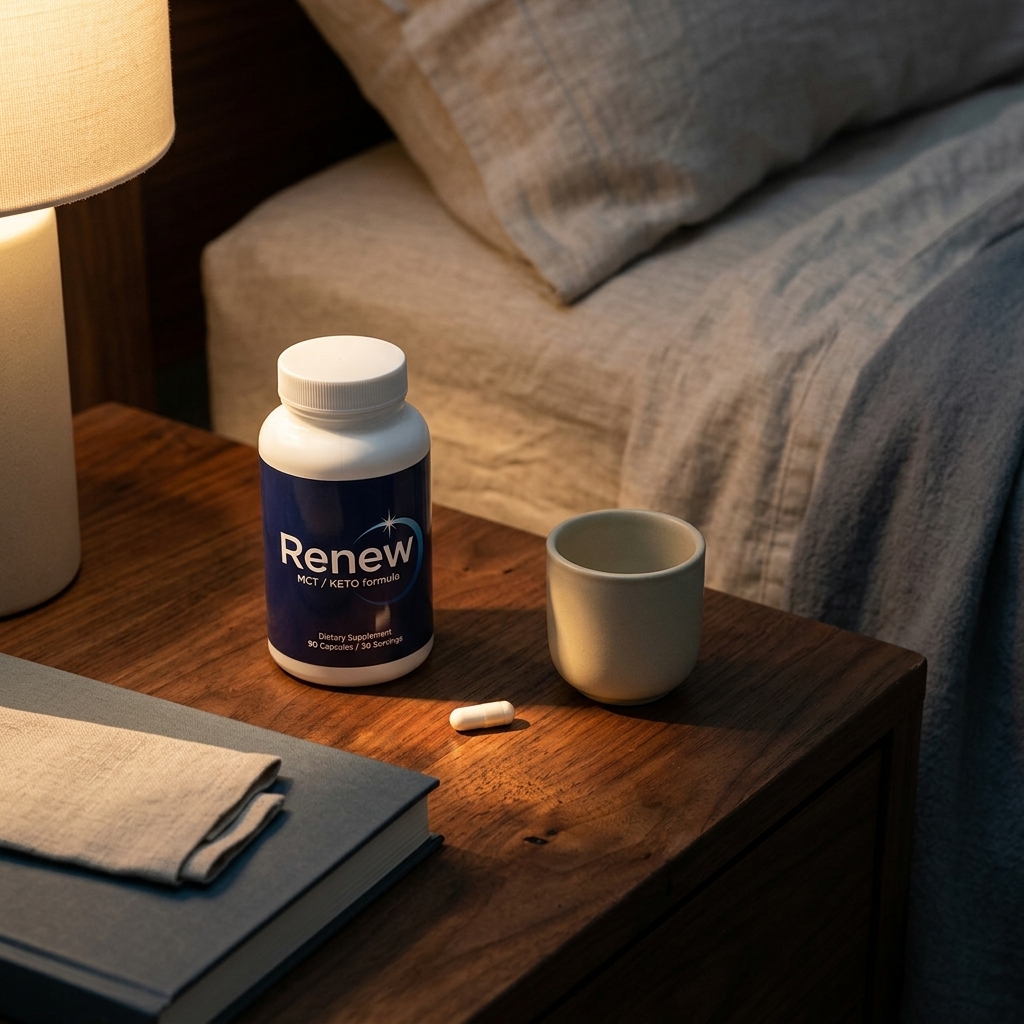
Renew supports the slow, heavy phase of sleep where your body clears damaged cells, rebalances hormones, and rebuilds tissue. It’s the other half of the equation — the part most people skip. Two capsules. Forty minutes before bed. Let the night do what it’s designed to do.
-
Help your body reach the deep-sleep phase where real renewal happens
-
Complement the nutrition you’re already prioritizing during the day
-
Feel the difference in how your mornings start — calmer, clearer, less stiff
The second is temporal. Your body’s most intensive repair and regeneration cycle happens at night, during deep sleep. That’s when damaged cells get cleared. That’s when growth signals fire. That’s when your immune system recalibrates and your brain consolidates learning into memory. Without deep sleep, even the best nutrition in the world gets stuck in the queue.
Feed your cells the right fats. Then give them the night to actually use them.
That’s the whole picture. And it’s simpler than I expected.
What I Eat Now (and What I Stopped Overthinking)

I don’t count omega-3 milligrams anymore. I just built a rhythm.
- Sardines or mackerel twice a week — right out of the tin, on toast, with a little mustard.
- A drizzle of high-quality olive oil on almost everything savory.
- Flaxseed in my oatmeal.
- Eggs with the yolks.
- Salmon when it’s on sale, but I stopped treating it like the only source worth eating.
Simple Enough to Actually Last
Two capsules before bed. That’s it. The easiest thing you’ll do for your cells all day
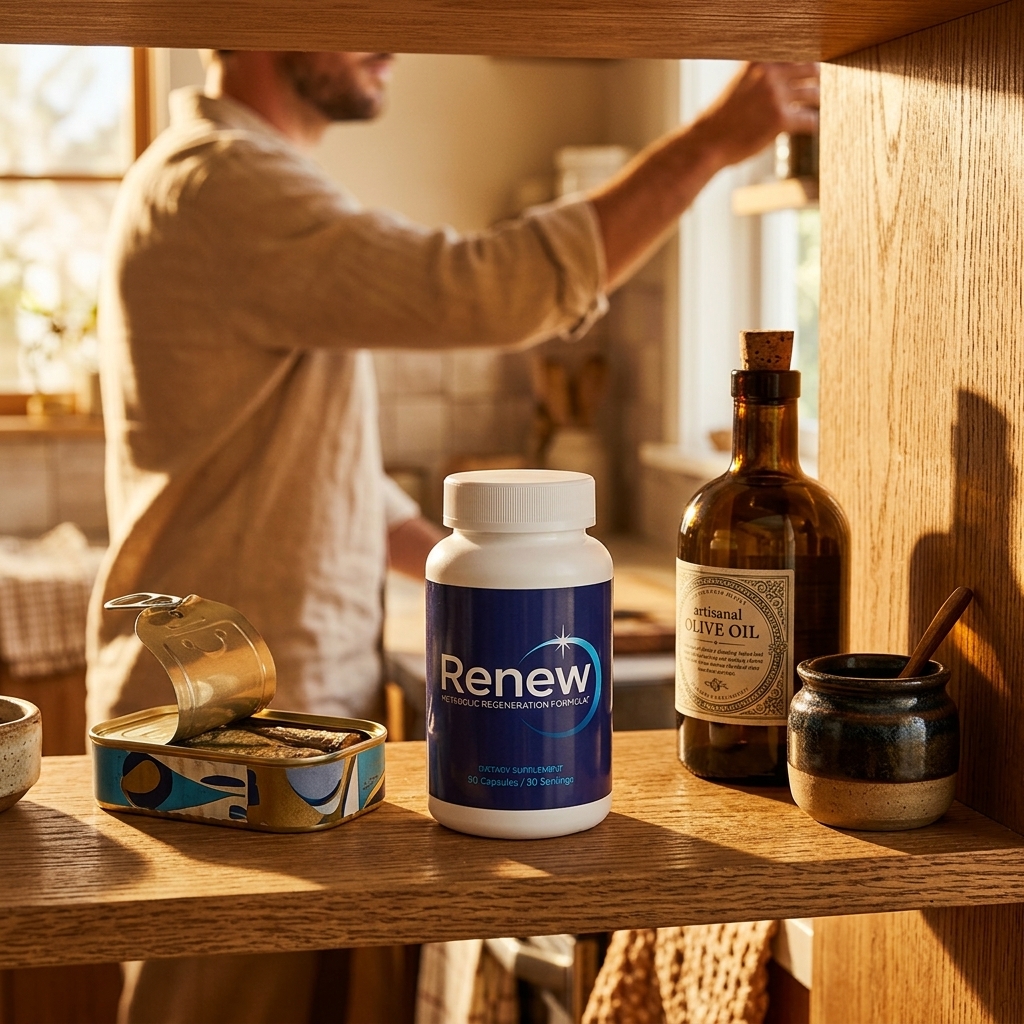
Renew fits into the rhythm you’ve already built — alongside the olive oil, the omega-3s, the meals you’re already thinking about. It’s not another complicated step. It’s the quiet anchor at the end of the day that lets everything else you’re doing actually land. Steady support. No overthinking required.
-
Designed to complement an already-thoughtful nutritional routine
-
Support your body’s natural overnight repair without disrupting your rhythm
-
The kind of steady foundation you stop noticing because it just works
I cut back on the vegetable oils I’d been cooking with — the sunflower, the corn, the soybean. Not out of fear, but because I realized they were crowding out the omega-3s. When your omega-6 intake is high and your omega-3 intake is low, your body stays in a low hum of inflammation that you barely notice — until you fix it and realize how quiet your body can actually be.
And every night, about forty minutes before I turn off the light, I take two Renew capsules with a glass of water. It’s the simplest part of my routine, and it might be the most important. Because all the sardines in the world can’t rebuild your cells if your body never gets deep enough into sleep to do the work.
The Shift Isn’t Loud. It’s Just Steady.

I don’t have a dramatic before-and-after story. No bloodwork miracle. No transformation photo.
What I have is a body that feels less fragile. Skin that holds together. Joints that move without announcing themselves. Mornings that start calm instead of foggy. An energy line that holds through the day without spiking or crashing.
That’s what fatty acids and cellular renewal actually look like in real life. Not a breakthrough. A return.
Your cells doing what they were always designed to do, because you finally gave them what they needed — the right fats, the right rest, and the patience to let the repair happen quietly, on its own schedule.
If you’ve been eating well and still feeling like your body isn’t catching up, the missing piece might not be another supplement or a stricter diet. It might be the fats you’ve been underestimating. And it might be the sleep you haven’t been protecting.
Renew was the piece that connected the two for me. Not as a fix, but as a foundation — something steady underneath everything else I was already doing. The kind of thing you don’t notice working until you realize your mornings feel different and your hands don’t ache anymore and you can’t remember the last time a paper cut took four days to close.
That’s enough for me. It might be enough for you too.
Written by Elias Menden — for those who seek steady repair and quiet strength.