I found the first grey hair at thirty-six. Pulled it out without thinking, the way you swat a fly — quick, dismissive, already forgotten.
By forty-one, it wasn’t the hair anymore.

It was the way a full night’s sleep left me feeling like I’d barely closed my eyes. The way a flight of stairs announced itself in my knees. The way I’d stand up from my desk at three in the afternoon and feel the room tilt slightly, as though gravity had increased by a few quiet percentages while I wasn’t paying attention. My wife started buying a different moisturizer. My barber suggested a shorter cut to “keep things fresh.” My doctor used the phrase age-appropriate decline during a routine checkup, and I sat in the parking lot afterward for ten minutes, engine running, staring at nothing.
Here’s what nobody prepares you for: aging doesn’t announce itself. It accumulates. Like dust on a shelf you pass every day — invisible until the afternoon light catches it at the right angle, and suddenly the whole room looks different.
That parking lot afternoon was my angle of light.
I didn’t want to fight aging. I wanted to understand why my body seemed to be forgetting how to take care of itself — and whether there was something I could do to remind it. That search led me to something I hadn’t expected: the quiet, constant, almost miraculous process of cellular regeneration. And the single window of time, every single night, when most of that rebuilding is supposed to happen.
⸻
When the Body Forgets How to Rebuild
Here’s what surprised me most: we’re not designed to fall apart.
Every day, your body replaces billions of cells. Skin cells. Gut lining. Red blood cells. The process is constant, quiet, and ancient — a rebuilding project that never sleeps. Except, at some point, it slows down.
The stem cells that once multiplied easily start to rest more often. Mitochondria — the tiny engines inside every cell — begin to sputter. Telomeres, those protective caps on the ends of your DNA, get a little shorter with each division. And a strange thing happens: some cells stop dividing altogether. They don’t die. They just… sit there, leaking inflammation into surrounding tissue like a rusted pipe dripping into clean water.
Scientists call this cellular senescence. I call it the quiet betrayal.
It’s not dramatic. It’s the reason your skin heals slower at forty than it did at twenty. It’s the reason your energy dips earlier in the afternoon. It’s the reason recovery from a bad night of sleep feels like climbing out of a well.
And here’s the part that changed everything for me: most of this repair — the deep, structural kind — happens while you sleep.
The Repair Window No One Talks About

I used to think sleep was rest. A pause. Something passive.
It’s not.
During deep sleep — the slow-wave phase your body enters roughly ninety minutes after you close your eyes — something remarkable takes place. Growth hormone surges. Damaged proteins are cleared. Mitochondria are repaired. Your brain flushes waste through a system that only activates when you’re truly, deeply under. This is where cellular regeneration lives. Not in a pill. Not in a cream. In the architecture of your sleep.
The problem? Most of us aren’t reaching that phase anymore. Blue light, stress, erratic schedules, caffeine — they all chip away at deep sleep without us knowing. You can sleep seven hours and still miss the repair window entirely. That realization hit me hard. I’d been chasing nutrients and protocols, stacking supplements and timing meals — and the whole time, my body was trying to rebuild itself every single night, but I wasn’t giving it the conditions to finish the job.
⸻
What Shifted for Me

I started with the basics. Cooler room. No screen after nine. A walk after dinner instead of collapsing on the couch.
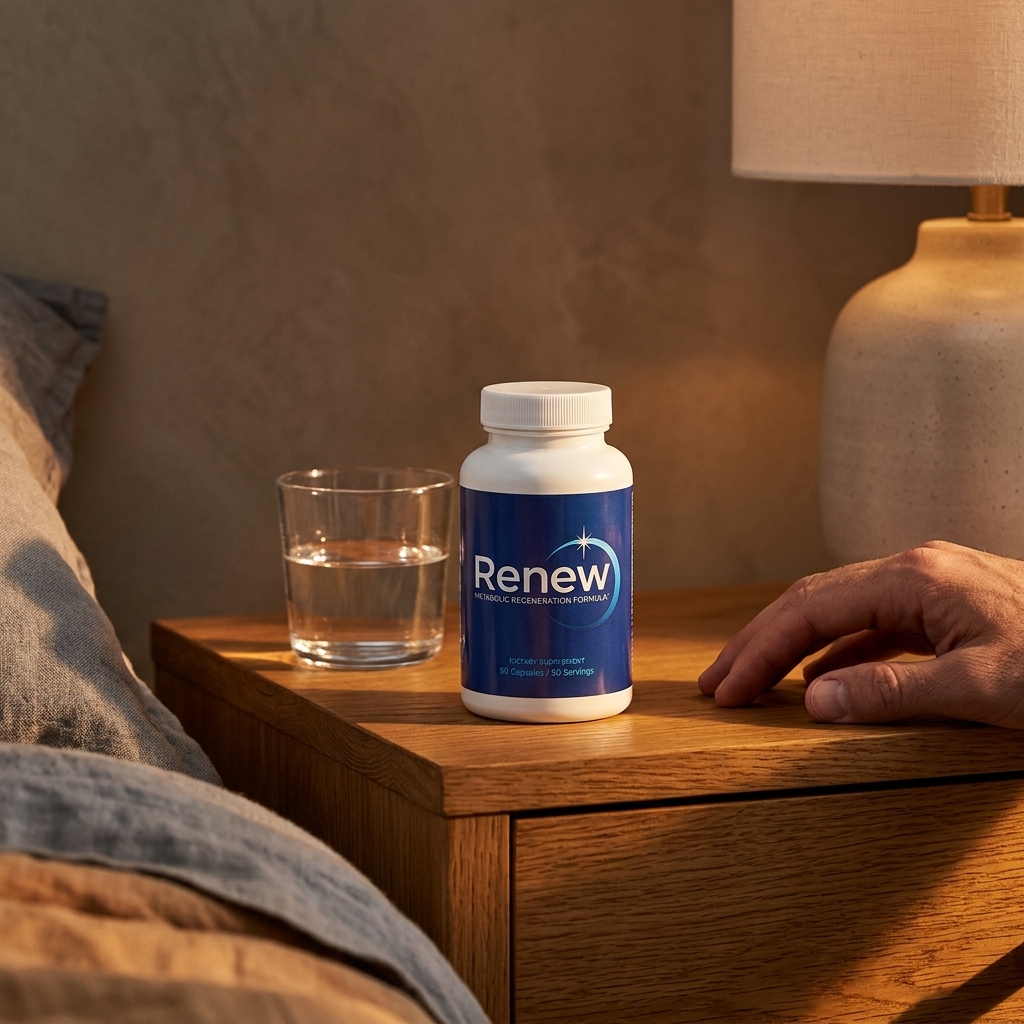
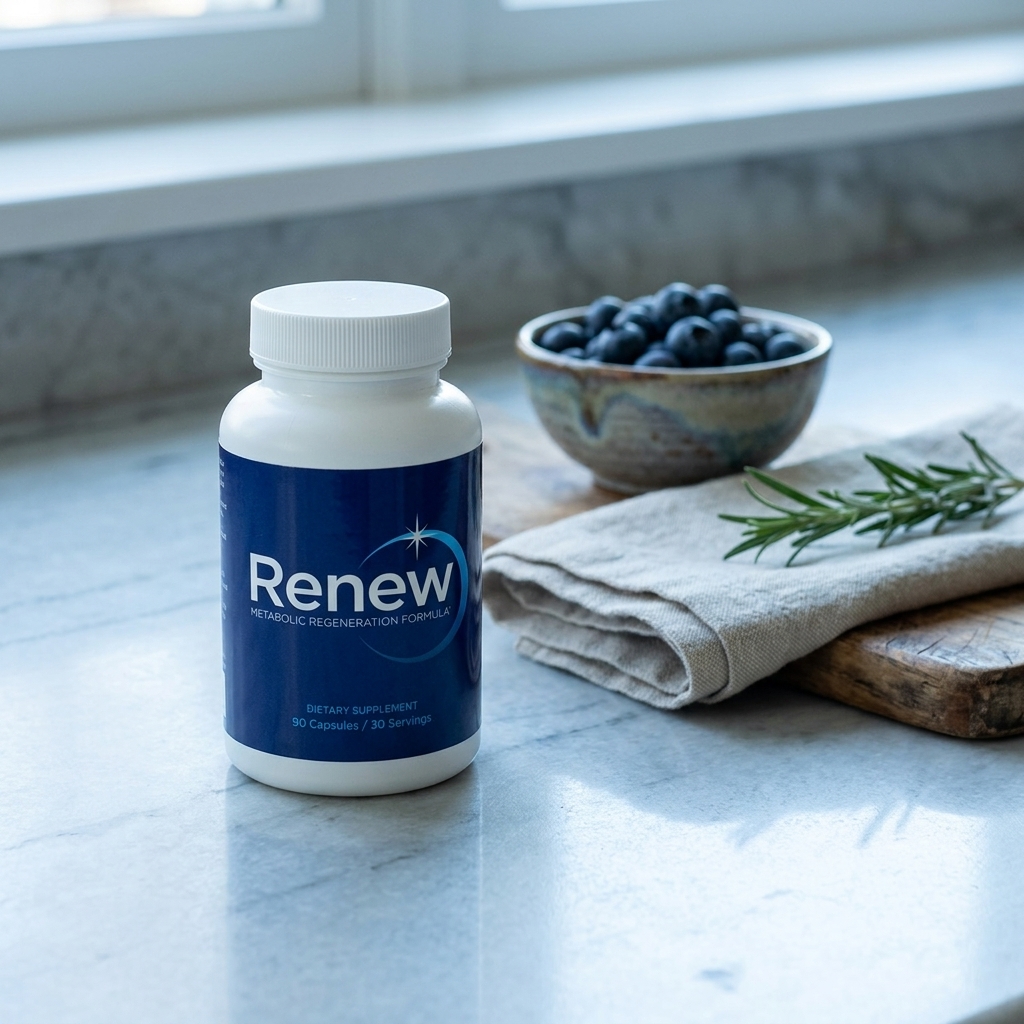
But the real turn came when I found a sleep-support formula called Renew — a blend designed not for sedation, but for depth. It targets the specific nutrients the body draws on during that slow-wave repair phase: the ones that support melatonin rhythm, cellular cleanup, and metabolic restoration overnight.
Deeper Sleep, Real Repair
Your body rebuilds itself every night — but only if sleep goes deep enough
Renew is formulated to support the slow-wave sleep phase where cellular regeneration actually happens. Not sedation. Depth. The kind of rest that lets your body clear damage, restore mitochondria, and wake up feeling like the morning arrived on time.
-
Supports the deep-sleep repair window your cells depend on
-
Nourishes the overnight process that clears cellular waste
-
Helps your body wake restored instead of running on empty
I wasn’t expecting much. I’d been burned by supplements before — the kind that promise transformation and deliver nothing but expensive urine. But by the second week, I noticed something I hadn’t felt in years. I woke up before my alarm. Not groggy. Not dragging. Just… ready. Like the morning had arrived at the right time for the first time in a long time.
The Science Beneath the Surface
What makes cellular regeneration so powerful isn’t any single nutrient. It’s what happens when the body is given the right environment — especially at night.
Deep sleep triggers autophagy, the process by which your cells break down and recycle damaged parts. Think of it as a nightly maintenance crew. When autophagy runs smoothly, old mitochondria are replaced, misfolded proteins are cleared, and your tissues get the raw materials they need to regenerate.
Feed the Process, Not the Problem
NAD+ drops by nearly half before fifty. Your cells notice even if you don’t
Renew supports the nutrients your body draws on during its deepest repair phase — the window where mitochondria are restored, damaged proteins are cleared, and real regeneration happens. It works with your sleep, not around it.
-
Targets the overnight nutrient gap that widens with age
-
Supports NAD+ pathways and mitochondrial restoration during sleep
-
Designed to work inside your body’s own repair rhythm
NAD+, a coenzyme involved in hundreds of cellular reactions, plays a central role here. It fuels the enzymes that repair DNA and keep mitochondria running. But NAD+ levels drop significantly with age — by some estimates, nearly half by the time you’re fifty.
Supporting NAD+ production, along with antioxidants like coenzyme Q10, polyphenols from berries or green tea, and omega-3 fatty acids, gives your cells better building blocks. But none of it works as well if sleep architecture is broken. That’s the piece I’d been missing.
⸻
What It Feels Like When Things Start Working

I want to be honest here. I didn’t wake up one morning with the face of a twenty-five-year-old. That’s not how this works.
But there were small things. The puffiness under my eyes softened. My skin looked less dull — not glowing, exactly, but clearer. More alive. I stopped needing a second coffee by two o’clock. My focus sharpened in the afternoons, which used to be my weakest hours.
My wife noticed before I did. “You seem lighter,” she said one morning, handing me a cup of tea. Not thinner. Lighter. Like something had lifted.
And maybe that’s the best way to describe what cellular regeneration actually feels like. Not a reversal. A restoration. Like the body remembering what it already knows how to do — and finally having the space to do it.
I take Renew in the evening now, about forty minutes before bed, with a small glass of water. It fits into that wind-down window easily, almost like a signal to my body that the repair shift is about to begin. Alongside it, I eat more wild salmon, dark leafy greens, and a handful of walnuts most afternoons — small choices that feed the process rather than fight it.
The Quiet Truth About Looking Younger
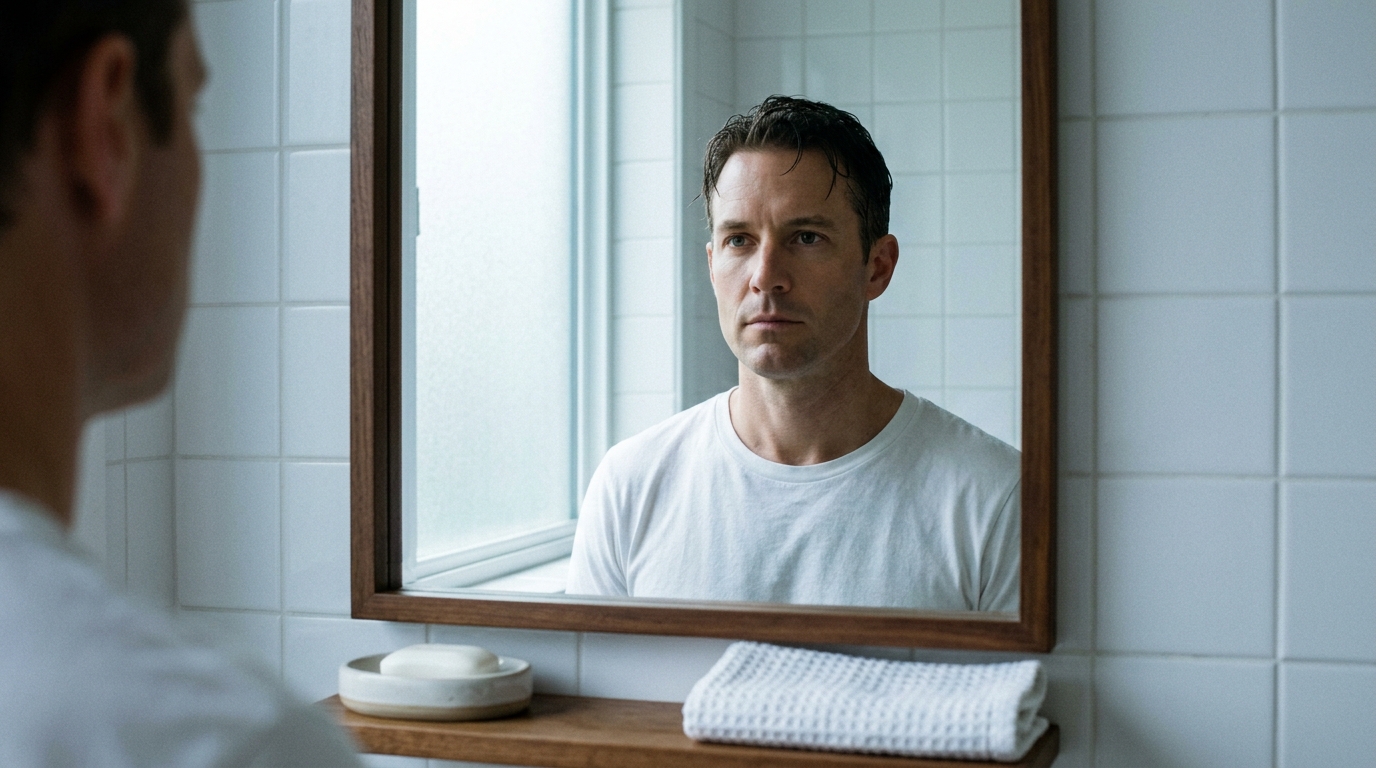
There’s a reason the anti-aging industry is worth billions: everyone wants to look younger. But the real secret isn’t what you put on your skin. It’s what happens beneath it — in the mitochondria, the telomeres, the slow nightly hum of cells replacing themselves while you dream.
When I look in the mirror now, I still see a forty-two-year-old man. But the grey-blue weight under my eyes is gone. My posture has straightened, not from effort, but from energy. My mornings feel like mornings again.
Cellular regeneration isn’t magic. It’s biology, given the right conditions.
And those conditions are simpler than I ever imagined: real food, real rest, and the kind of deep sleep that lets your body finish what it started.
If you’ve been feeling that same quiet unraveling — that sense that something shifted and you don’t know how to shift it back — Renew might be worth exploring. Not as a miracle. As a support. The kind that works with your body’s own rhythm, not against it.
Some mornings, the mirror gives back something you thought you’d lost. Not youth, exactly. Something better. Steadiness. Presence. The feeling that your body is still building, still repairing, still on your side.
Written by Elias Menden — for those who seek steadiness.
Related reading
- Omega-3 for immunity vs. odd-chain fats: what actually helps you feel steadier
- The Best Supplements for Cellular Health: What Nobody Told Me About Where Energy Actually Starts
- How Fatty Acids Fuel Cellular Renewal (And Why You Still Feel Stuck Without Them)
- How Fatty Acids Influence Cellular Regeneration and Recovery