The day I finally understood fatty acids for cellular energy, it wasn’t in a lab.
It was in a parking lot.
I had just finished a normal errand—nothing dramatic—and yet my body felt like it had taken on extra gravity. The sky was bright, the air had that sharp winter-clean smell, and I was sitting with both hands on the steering wheel like it was holding me upright.
I wasn’t “tired” the way people mean after a long day.
I was tired in the cells.
That heavy, quiet kind where coffee doesn’t land right and motivation feels like it’s behind glass.
So I started paying attention to what kept me steady—what didn’t. And eventually, that curiosity led me straight into the unglamorous, surprisingly personal world of fats, mitochondria, and the way your body decides what “fuel” even means.
The difference between “fuel” and “friendly fuel”

Most of us grow up thinking energy is a math problem.
Calories in. Calories out. Eat this, burn that.
But your body doesn’t run on math. It runs on choices. Tiny choices happening inside you all day long.
And the mitochondria—those little “power stations” inside your cells—are the ones making the calls.
They can burn carbohydrates. They can burn fat. They can pivot depending on what you feed them, how stressed you are, how you slept, whether your body feels safe enough to spend energy… or whether it’s bracing for impact.
That’s where the idea of energy-friendly fats started to click for me.
Because not all fats feel the same in the body.
Some feel like clean heat in a fireplace—steady, quiet, lasting.
Some feel like trying to light damp wood. You can do it, but it takes more effort, more smoke, more frustration.
What makes a fatty acid feel “energy friendly”?
In plain language, “energy-friendly” fatty acids tend to be the kinds your body can:
- break down without a lot of drama
- use without spiking and crashing your focus
- tolerate without adding extra internal “noise” (that wired-but-tired feeling)
A few things influence that:
Chain length. Some fats are shorter and easier to turn into usable energy. Medium-chain fats, for example, often feel “faster” because they’re more direct.
Structure. Unsaturated fats (like omega-3s) have bends in their structure that can affect how flexible cell membranes are—more on that in a second.
Context. This part surprised me the most: the same fat can feel supportive or sluggish depending on sleep, stress, and how inflamed your system already is.
I didn’t want a trend. I wanted a normal afternoon again.
So I stopped asking, “What’s the best supplement?”
And started asking, “What makes energy feel steady?”
Omega-3s are smart… but they weren’t the whole story for me
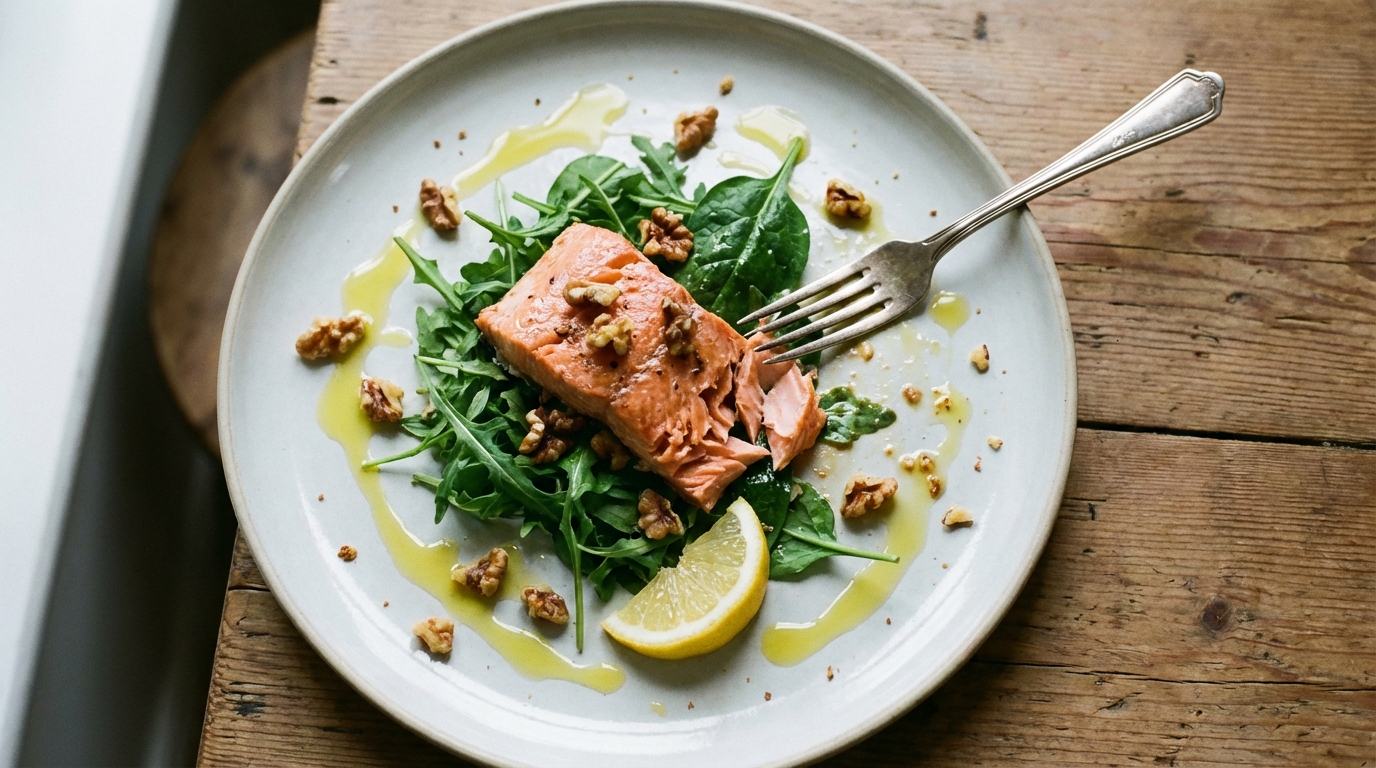
Omega-3s deserve their reputation. They’re like the responsible friend who always shows up.
When I consistently ate omega-3-rich foods—salmon, sardines, chia, walnuts—my brain felt a little calmer. My body felt less “puffy.” Recovery was easier.
But I still had this missing piece:
That mid-afternoon dip that felt like someone dimmed the lights behind my eyes.
Omega-3s helped my overall wellness. They just didn’t fully solve the fuel delivery problem.
And that’s when my focus shifted from “good fats” to mitochondrial function—not in a biohacker way, but in a “why does my body feel like it’s rationing power?” way.
Because you can have plenty of fuel available…
…and still struggle to use it well.
Fatty acids for cellular energy and the mitochondria “handoff”

Here’s the simplest way I can explain what I learned:
Your mitochondria don’t just want fuel.
They want fuel they can handle.
If your system is under stress, if inflammation is humming in the background, if your sleep has been thin for weeks, the mitochondria can start acting cautious—like a budget manager during uncertain times.
Energy gets allocated carefully. Non-essentials get cut.
And that’s when you might notice:
- you wake up already tired
- workouts feel more expensive than they used to
- you get “brain fog” that isn’t exactly fog… just slower response time
- you crave quick fuel because your body wants a shortcut
That’s when I started experimenting with two strategies at the same time:
- choosing fats that felt steadier in my day-to-day
- supporting my mitochondria so they could actually use that fuel more efficiently
And that’s where one supplement quietly became part of my routine: Mitolyn.

Support Your Cellular Power
If you feel heavy in your cells, don’t push harder—support smarter
Mitolyn is a daily mitochondrial support supplement made for people who want steadier energy—not a spike. If your fuel is there but your body feels slow to use it, Mitolyn helps support the energy-making process so your day feels more even, more livable, more “online.”
-
Helps support steady, reliable energy
-
Supports mitochondrial function for daily output
-
Feels calm—no jittery “amped” vibe
Not as a magic trick.
More like… support scaffolding.
An extra hand on the rail while I rebuilt my energy.
Fatty acids for cellular energy: why membranes matter more than most people think
If there’s one concept that changed how I see my body, it’s this:
Your cell membrane is not just a “wall.”
It’s a living, responsive gate.
It decides what gets in. What gets out. What signals get heard. What gets ignored.
And fats are one of the main building materials of that membrane.
So when people talk about “membrane fluidity,” here’s what I picture now:
A door that opens smoothly vs. a door that sticks.
A flexible membrane helps cells communicate better, move nutrients more efficiently, and handle stress without feeling like everything is an emergency.
When I started prioritizing healthy fats (not perfect, just intentional), something shifted in a way that was hard to measure but easy to feel:
My body stopped feeling so brittle.
Not fragile—brittle.
Like I could handle a busy day without cracking into a crash.
That’s also why I didn’t want to rely on one fatty acid category alone. I wanted a more complete internal environment—fats that support structure, plus nutrients that support the energy-making machinery itself.
Mitolyn fit that “support the machinery” role for me.
The month my energy stopped behaving like a rollercoaster
This part is personal, not preachy.
I didn’t overhaul my life. I didn’t become someone with a color-coded meal plan.
I made a few steady changes and watched what happened.
I focused on:
- whole-food fats I could actually keep up with
- protein that didn’t feel heavy
- fewer “panic snacks” that were really just stress in disguise
- and a consistent mitochondrial support supplement (Mitolyn) that I took in the same calm way each morning—no hype, no bargaining
What changed wasn’t a dramatic burst of energy.
It was something subtler:
My energy became less emotional.

Make Days Feel Even
Stop renting energy from coffee and sugar—build a steadier baseline
Take Mitolyn daily to support mitochondrial function—so your body can turn fuel into usable energy more smoothly. This is for the “functioning but not fully online” feeling. If you want less crashing, less dragging, and more steady output, Mitolyn is the add-on that fits real life.
-
Supports smoother energy through the day
-
Helps reduce the “wired-then-wiped” pattern
-
Supports stamina for normal life demands
Meaning… it stopped being based on the mood swings of blood sugar and stress spikes.
I still had tired days. I’m human.
But my baseline stopped feeling like it was set too low.
What I noticed first
It wasn’t the gym.
It wasn’t the scale.
It was my patience.
When your cells have more energy, your nervous system feels it. You don’t snap as fast. You don’t feel like everything is loud. You can think one step ahead again.
Then I noticed the physical things:
- steadier focus during long stretches of work
- less “dead leg” feeling on stairs
- smoother recovery after workouts (less dragging the next day)
- fewer cravings that felt urgent and weirdly desperate
That’s the kind of change that makes you trust your body again.
And trust is its own kind of energy.
The fats I leaned on when I wanted real-world stamina

I’m not interested in rigid rules, but I am interested in patterns that hold up in real life.
These were the fats that consistently felt “energy friendly” for me:
- Olive oil (especially when meals were simple and I needed something steady)
- Avocado (easy on my system, easy to keep around)
- Nuts and seeds (not a handful while stressed—more like a deliberate part of food)
- Fatty fish (when I could get it in, it felt like my brain thanked me)
- Eggs (simple, satisfying, less snacky afterward)
And when I wanted to feel the difference between “eating fat” and “running on fat,” I paid attention to my mornings.
Because mornings set the whole day’s fuel story.
If breakfast was a sugar situation, my afternoon paid for it.
If breakfast had protein + healthy fats + something real (even something boring), my body stayed calmer.
And Mitolyn, taken consistently, seemed to make that whole system feel more efficient—like the fuel I ate actually went somewhere useful.
The quiet myth: you’re not lazy—you’re underpowered

One of the hardest parts of low energy is the story you tell yourself about it.
You start thinking you lack discipline.
You start comparing yourself to earlier versions of you—like you’re failing some invisible test.
But what if the problem isn’t motivation?
What if it’s cellular power management?
What if your body has been doing the best it can with what it has?
That thought softened something in me.
And from that softer place, it became easier to choose supportive things without resentment.
Not “I should eat better.”
More like:
“I want my cells to feel supported.”
That’s the emotional difference that makes habits stick.
Where I landed with it all
I still believe fatty acids for cellular energy matter.
A lot.
They’re not just “macros.” They’re part of what your cells are made of. Part of how you stay steady. Part of how you repair.
But I also believe fats work best when the mitochondria are supported too—because fuel is only helpful if your body can actually use it well.
That combination—energy-friendly fats plus consistent mitochondrial support—was the turning point for me.
And if you’ve been living in that half-lit place where you can function but you don’t feel fully online, I get it.
Start small.
Choose one meal you can make steadier.
Choose one habit you can repeat without force.
And if you want a simple extra layer of support the way I did, Mitolyn is the one I kept coming back to—not because it promised the moon, but because it helped my days feel more even, more livable, more mine.
Because the real goal isn’t to feel “amped.”
It’s to feel powered.
Quietly. Reliably. From the inside.
Written by Elias Menden — for those who seek steadiness in their energy.