There’s a particular kind of quiet defeat in watching yourself choose the elevator. Not because your legs can’t do stairs, but because you’ve learned what happens at the top — that thick, heated feeling behind your kneecaps, the way your hips lock into a dull protest for the next twenty minutes. You don’t tell anyone. You just press the button.
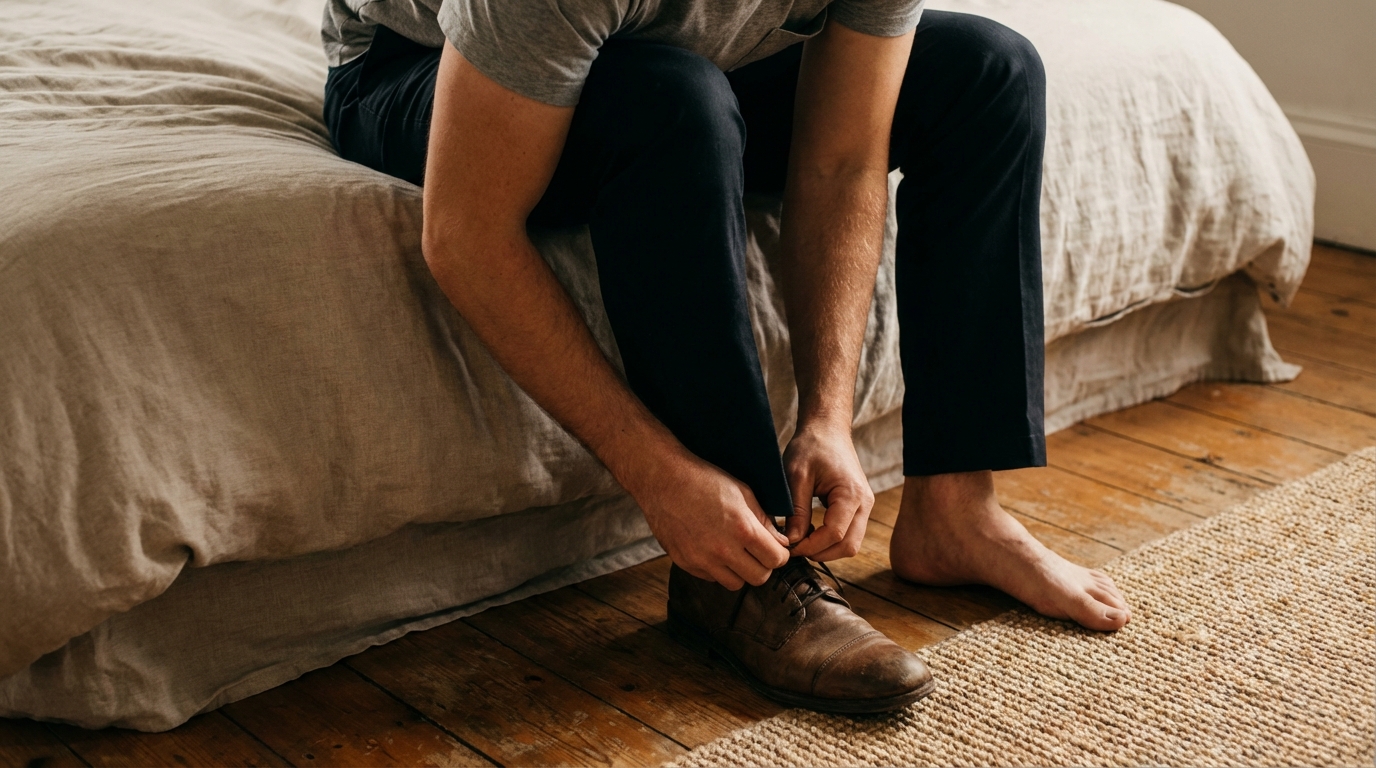
That’s where I was about eight months ago. Not broken. Not limping. Just… editing. Trimming the margins of my day so I wouldn’t have to feel that grinding hesitation every time I bent, reached, or stood up too fast. I stopped crouching down to talk to my neighbor’s dog. I started putting my shoes on sitting down, one foot at a time, slow, deliberate, like defusing something. I told myself it was efficient.
It wasn’t efficient. It was surrender dressed up as a system.
The thing nobody tells you about joint stiffness is how sneaky the emotional cost is.
You don’t lose your mobility all at once. You lose your willingness. You stop volunteering to carry things. You sit on the bench at the park instead of walking the loop. And one evening, standing in the kitchen making dinner, you realize you’ve been shifting your weight from foot to foot for ten minutes because standing still actually hurts more than moving — and you think, when did this become normal?
That question broke something open in me. Not a dramatic epiphany. More like a slow crack in the story I’d been telling myself: that this was just what getting older felt like, that there was nothing to do about it but adjust.
I didn’t believe that anymore. So I started looking for what might actually help.
⸻
What I Learned About Why Joints Get Stuck

Before I changed anything in my routine, I needed to understand what was happening beneath the stiffness. Not textbook-deep, but enough to stop feeling like a passenger in my own body.
Here’s what clicked for me: joints aren’t just mechanical hinges. They’re living systems, fed by something called synovial fluid — a slippery, egg-white-like substance that cushions your cartilage and keeps everything gliding. When that fluid thins out or your body produces less of it, your joints start feeling like a door that hasn’t been opened in months. The hardware is fine. The lubrication is gone.
That realization shifted everything. Because it meant the stiffness wasn’t damage — it was depletion. And depletion is something you can address.
I also started paying attention to how inflammation plays into the picture. Not the dramatic, red-hot swelling kind, but low-grade chronic inflammation — the kind that simmers beneath the surface and stiffens your tissues over time without you noticing. Your body’s quiet fire alarm that never quite turns off.
Understanding those two things — fluid and inflammation — gave me a framework. Not a cure, but a direction.
⸻
The Morning Routine That Changed My Mornings
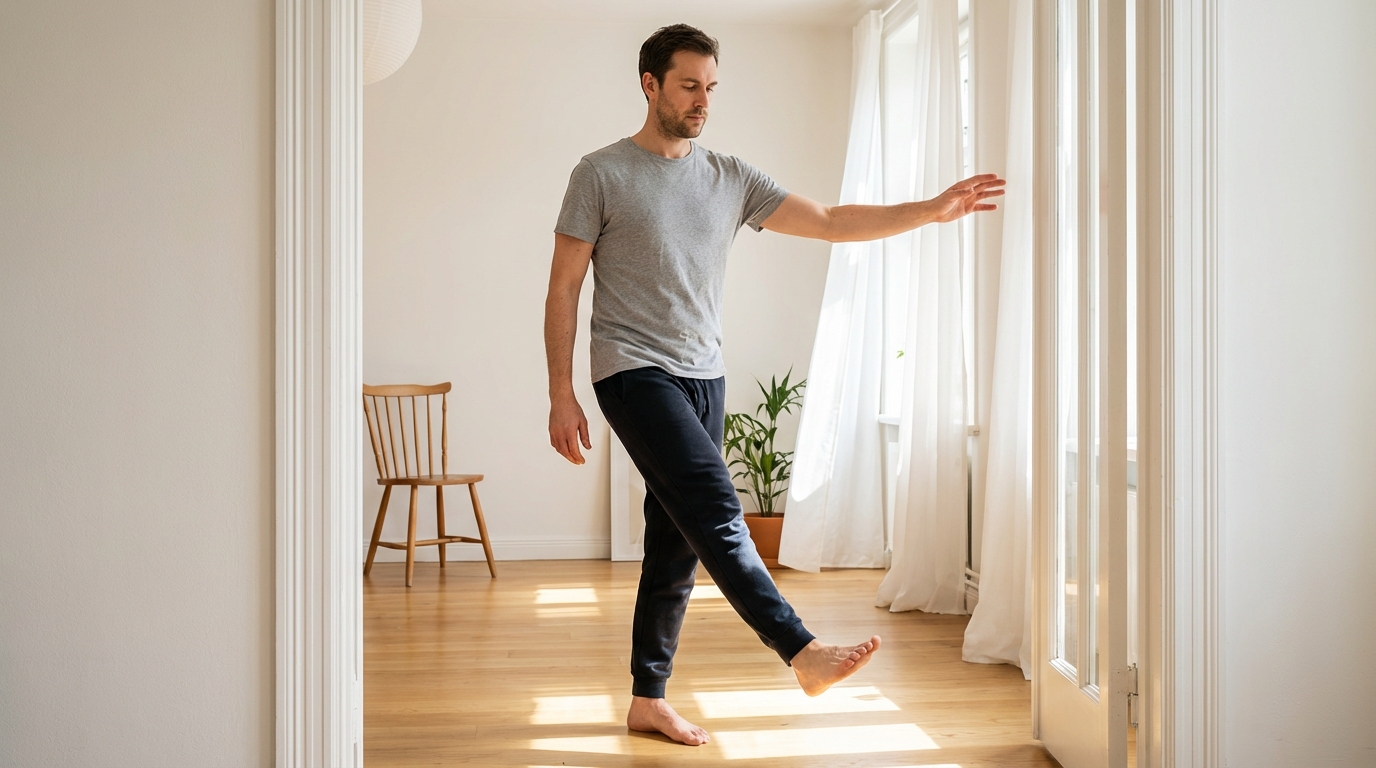
I won’t pretend I woke up one day and became a disciplined wellness person. I started with ten minutes. Some mornings, seven. The key was making it feel like something I wanted to do, not a punishment for having a body that wasn’t cooperating.
My morning begins with dynamic stretching — not the hold-a-pose-for-thirty-seconds kind, but continuous, flowing movement:
- Arm circles that start small and widen.
- Leg swings, front to back, holding the doorframe for balance.
- Hip circles, like I’m stirring something with my pelvis (it looks ridiculous, and I don’t care).
- Torso twists, gentle, letting my arms swing loose.
The first two minutes feel like convincing a rusty gate to open. By minute five, something shifts. There’s warmth building in my joints — not the inflammatory kind, but the alive kind. The feeling of fluid moving where it hadn’t been. By minute eight, I can feel my shoulders drop away from my ears, and my hips stop holding that tension I didn’t even know was there.
Movement Starts From the Inside
Your morning routine opens the joints — this gives them what they need to stay that way
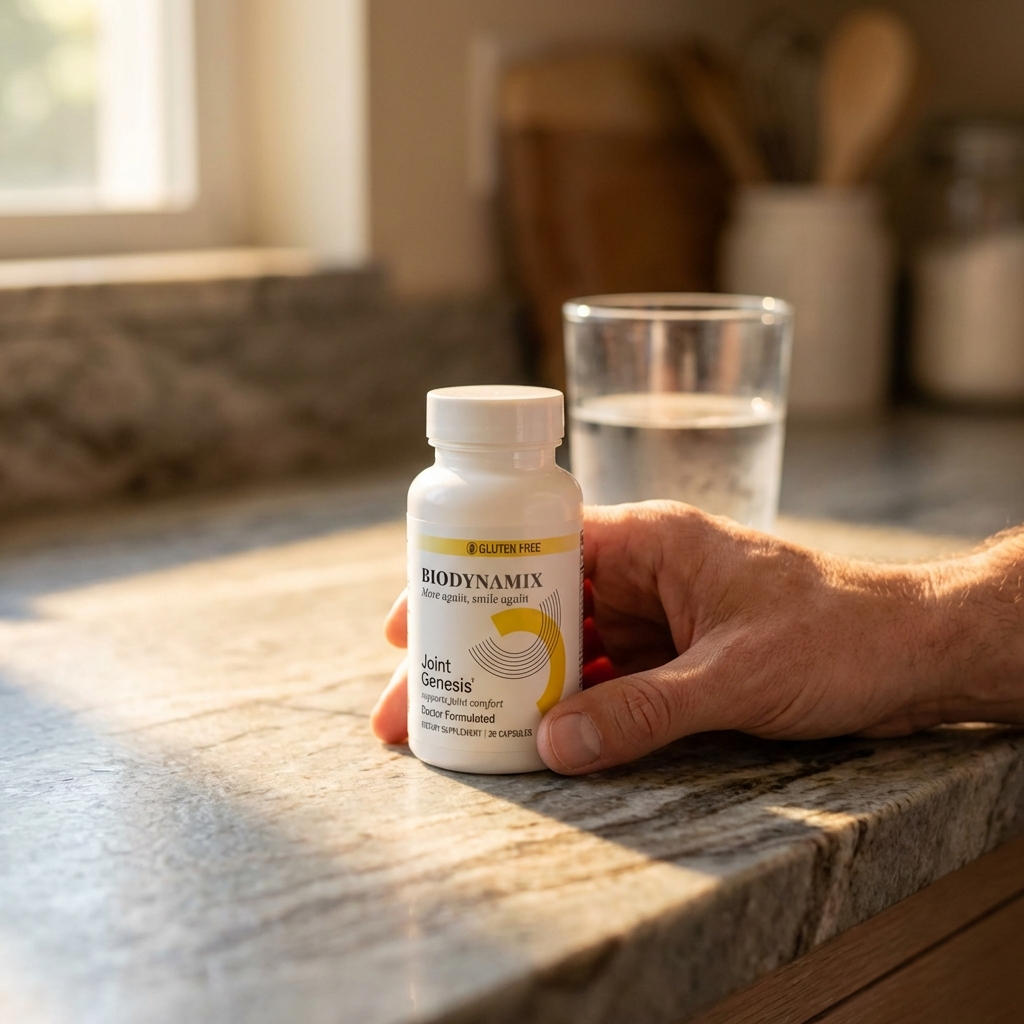
Joint Genesis is designed to support your body’s own synovial fluid — the natural cushioning that keeps cartilage hydrated and joints gliding. It works alongside your daily movement, not instead of it. Think of it as restoring the layer of protection your joints have been quietly losing.
-
Supports the fluid your cartilage depends on to stay cushioned
-
Works with your morning movement instead of replacing it
-
Builds gradual, felt difference — not overnight promises
I added walking lunges toward the end, just a few steps across the living room. They taught me something I didn’t expect: my ankles had been quietly losing range of motion for years. The first time I lunged, my heels wanted to lift off the floor. Now they stay planted. That small change made everything from walking to climbing stairs feel different — more grounded, more certain.
The Targeted Work That Surprised Me Most

Flexibility was only part of the picture. What I really needed was mobility — the ability to move a joint through its full range with control, not just stretch it passively.
Three areas made the biggest difference, and none of them were ones I would’ve guessed.
Hips. I sat for years at a desk, and my hip flexors had basically shortened into a permanent sitting position. Hip circles and deep lunges started unwinding that pattern. Within a few weeks, I noticed I could get out of the car without that involuntary groan.
Mid-back. My thoracic spine — the section between your shoulder blades — had quietly locked up. Thoracic rotations, lying on my side and letting my top arm fall open like a book, released tension I’d been carrying in my shoulders and neck for longer than I can remember. The first time I heard the soft series of pops along my upper back, I felt lighter. Not in a dramatic way. In the way that a window feels lighter after you’ve cleaned it — you didn’t realize how much was blocking the view.
Ankles. This was the surprise. Stiff ankles were affecting my balance, my squat depth, even how I walked. Simple ankle circles and calf stretches — the kind that take ninety seconds — made my feet feel like they belonged to the ground again.
⸻
What I Put on My Plate (and in My Glass)

Movement was only half the conversation. What I ate and drank turned out to be the other half, and honestly, the one I’d been ignoring.
Water was the simplest change with the most immediate payoff. Cartilage is largely water-based — it acts like a sponge that cushions your joints under pressure. When you’re under-hydrated, that sponge dries out. I started keeping a glass on my desk and drinking before I felt thirsty, aiming for steady intake throughout the day rather than gulping a bottle at lunch. The creaky-gate feeling in my knees softened within a week.
Food-wise, I leaned into things that calm inflammation rather than feed it. Salmon twice a week. Chia seeds in my morning smoothie. Berries by the handful — blueberries especially, because I like the way they stain my fingers and make me feel like I’m doing something ancient and good. Dark leafy greens, olive oil, walnuts. Nothing extreme. Just a steady pivot toward foods that felt like they were working with my joints instead of against them.

Feed the Fluid, Not Just the Body
Your plate handles inflammation — Joint Genesis handles the cushioning underneath
Salmon, berries, and leafy greens calm the fire. But synovial fluid — the slippery layer that lets your joints glide — needs its own support. Joint Genesis is built to help your body replenish what food alone can’t fully restore. It’s the internal side of the conversation your nutrition already started.
-
Targets synovial fluid production where diet leaves a gap
-
Complements an anti-inflammatory plate, doesn’t compete with it
-
Feels like the missing layer between eating well and moving well
I also started paying attention to vitamin D — spending a few minutes outside in the morning light, eating eggs and fortified foods. Calcium and vitamin D work together like partners: one builds the structure, the other helps your body absorb it. I hadn’t thought much about that pairing before, but once I did, it felt obvious.
The Supplement That Quietly Earned Its Place
I’ve tried a lot of things over the years. Most of them lived in my cabinet for three weeks before I forgot about them. So when I started taking Joint Genesis, I wasn’t expecting much. I figured I’d give it a month and see.
The idea behind it made sense to me — it’s designed to support the body’s production of synovial fluid, that same cushioning substance I’d been reading about. Not a painkiller. Not an anti-inflammatory in the traditional sense. More like giving your joints back the raw material they need to stay hydrated and protected.
I didn’t notice a dramatic shift in week one. What I noticed was somewhere around week three: I bent down to pick up a dropped pen and stood back up without thinking about it. No bracing, no stiffness, no mental negotiation. Just… movement. The way it used to be.
Over the next few weeks, there were more of those moments. Getting out of bed without the first five minutes feeling like a warm-up act. Finishing my morning routine and feeling like I had more range to work with. Walking the full loop at the park again, and realizing halfway through that I hadn’t thought about my knees once.
It wasn’t loud. It was the absence of something — the absence of friction, of hesitation, of the constant low-level bargaining I’d been doing with my own body.
My joints felt more cushioned, like someone had restored a layer of padding I didn’t know I’d lost.
I kept taking it. Not because someone told me to, but because I could feel the difference when I did. It became part of the morning alongside my stretches and my water — not a magic fix, but a steady, quiet contributor to something that was working.
⸻
My Evening Ritual (and Why It Matters as Much as Morning)
Most people focus on morning mobility. I did too, at first. But I learned that the evening routine is what determines how you wake up.
Before bed, I repeat a shorter version of my morning flow — five minutes of the same dynamic stretches, hip circles, thoracic rotations. The goal isn’t to build flexibility at night. It’s to release whatever the day deposited in my joints. Sitting tension. Walking tension. The invisible accumulation of hours spent being a body in the world.
I finish with a glass of water and two minutes of slow, deep breathing. Not meditation — just breathing. Letting my ribs expand, feeling the stretch through my intercostal muscles, noticing the way my lower back softens against the mattress when I finally lie down.

End the Day Already Ahead
Morning stiffness starts the night before — this is how you get ahead of it
Joint Genesis works with your evening wind-down, supporting the fluid and cushioning your joints restore while you sleep. Take it as the quiet close to a full day of movement and good food. By morning, your body picks up where it left off — not from zero.
-
Supports overnight joint recovery and fluid replenishment
-
Pairs naturally with your evening stretching routine
-
Morning stiffness softens when the night before is covered
The difference is in the morning. I wake up with less of that fossil-in-amber stiffness. My first steps out of bed feel human instead of mechanical. And the morning routine, when I get to it, starts from a better place — like the joints remember they moved last night and pick up where they left off.
What I’d Tell Someone Just Starting

If you’re reading this and recognizing your own life in the elevator buttons and the careful shoe-tying and the quiet editing — I want you to know something. This isn’t permanent unless you decide it is.
You don’t need an hour. You don’t need expensive equipment. You don’t even need to be good at it. You need ten minutes, a doorframe for balance, a glass of water, and the willingness to believe that your joints aren’t broken. They’re asking for attention.
Start with the dynamic stretches. Add the water. Pay attention to what you eat. If it feels right, explore something like Joint Genesis to support the internal side — the fluid, the cushioning, the biology you can’t stretch your way to. Let the pieces come together on their own timeline.
The best part isn’t any single moment of relief. It’s the slow, accumulating return of confidence — the kind that lives in your body, not your head. The willingness to take the stairs without calculating the cost. To crouch down to pet the dog. To stand in the kitchen making dinner and realize you forgot to hurt.
That forgetting is the real milestone. Not the absence of pain so much as the return of trust — trust in your body’s ability to carry you through a day without conditions or caveats. It comes back quietly, the way morning light fills a room. You don’t notice the exact moment it arrives. You just look up and realize everything is brighter.
⸻
Written by Elias Menden — for those who seek steadier ground.
Related reading
- The 15-Minute Daily Routine That Transformed My Joints (And Why Joint Genesis Made It Finally Stick)
- Best Supplements for Joint Mobility: 5 Picks That Helped Me Move Pain-Free Again
- The Joint Pain Recovery Routine That Gave Me My Mornings Back
- Your Daily Anti-Inflammatory Routine: The Small Shifts That Change How Your Body Feels