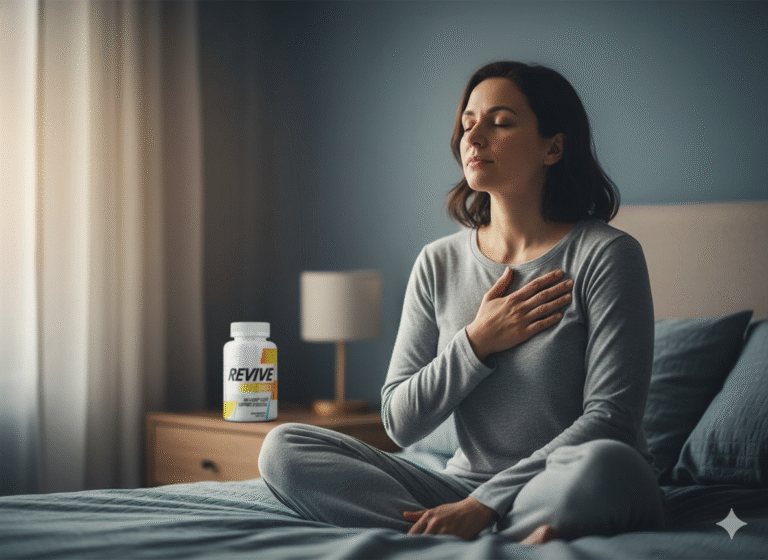
I was halfway through a client presentation when the heat arrived. Not nervousness. Not the room temperature. Something else—a wave that started low in my spine and crawled up my neck like a living thing. Within seconds, sweat was sliding down my back, pooling under my bra, dampening my hairline. I kept talking. Smiled through it. Finished the slide deck while my silk blouse turned dark at the collar.
Later, in the bathroom, I pressed paper towels to my face and stared at myself in the mirror. I looked exactly like someone who had their life together. Capable. Composed. Professional.
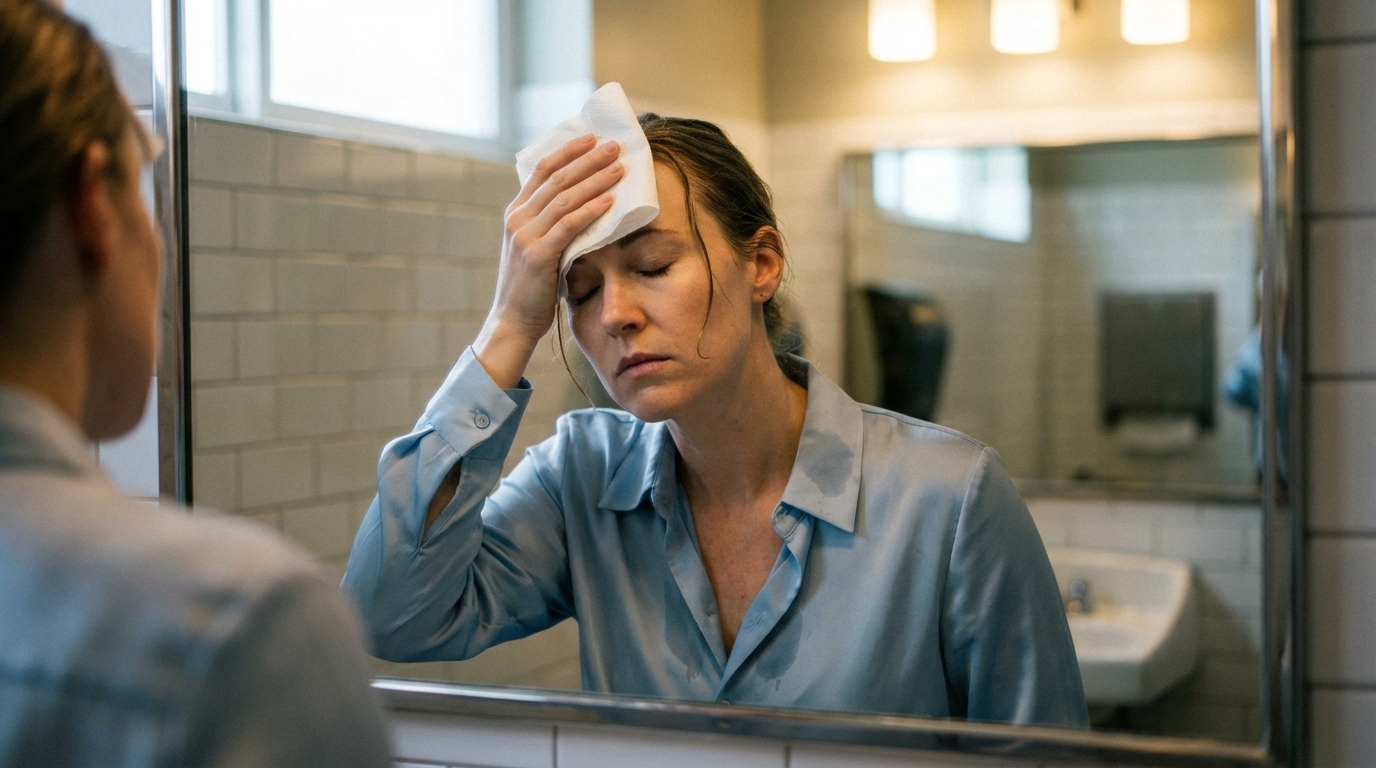
Except I’d just spent twenty minutes secretly drenched, wondering if anyone noticed, and feeling—for the first time in years—like my body had stopped taking orders from me.
That night, I searched “sudden sweating for no reason” and fell into a rabbit hole that led me here: perimenopause vs menopause. Two words I’d heard my whole life but never understood as a timeline I was actually on.
If you’re here because your body feels like it’s rewriting the rules without asking, let me save you some time. Knowing the difference between these two stages won’t fix everything. But it turns confusion into coordinates.
Let me show you what I mean.
⸻
Perimenopause vs menopause: the simplest definition

Think of it like this: perimenopause is the storm. Menopause is the moment the sky clears.
Perimenopause is the transition that can last years—sometimes a decade. Your hormones don’t decline smoothly. They spike without warning, crash unexpectedly, rally briefly, then drop again. That’s why symptoms feel so erratic.
Menopause is one specific moment: the day you’ve gone 12 consecutive months without a period.
It’s not a phase you’re “in.” It’s a marker you pass. After that, you’re in postmenopause—every year that follows for the rest of your life.
So:
- Perimenopause = the years of upheaval
- Menopause = the 12-month milestone
- Postmenopause = the long stretch after
On paper, it’s clean. In your body, it’s anything but.
The signs that start as whispers (then become shouts)
Perimenopause rarely announces itself dramatically. It arrives through small disruptions you almost talk yourself out of noticing. Your period changes shape. One month it’s three days. The next, seven. Then it skips. Then it floods. You stop trusting your calendar.
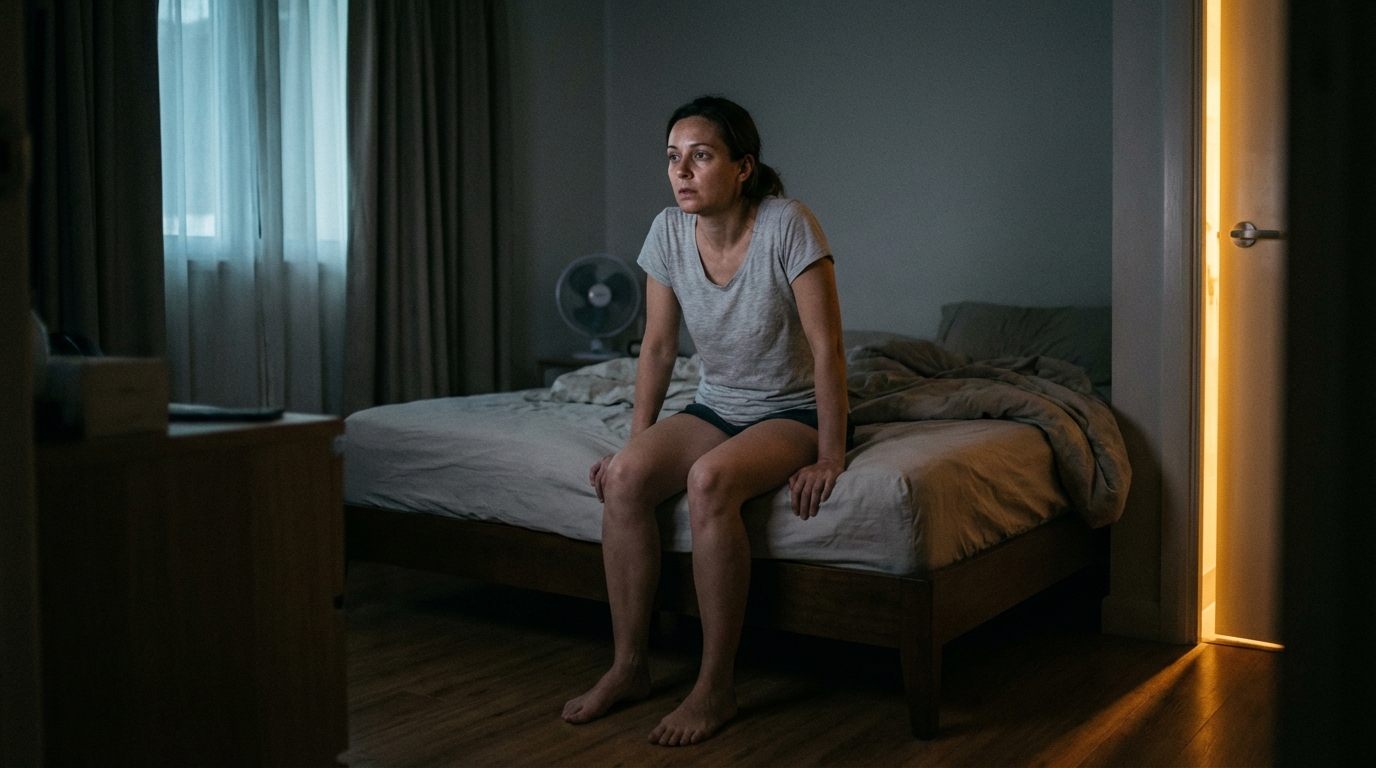
Sleep fractures. You fall asleep fine, but at 2 a.m., you’re wide awake—heart racing slightly, mind suddenly spinning through tomorrow’s to-do list like it’s an emergency. Your tolerance for everything shrinks. Coffee makes you jittery. Wine gives you a headache. A chaotic morning that you used to handle without blinking now makes you want to scream in the car.
Your mood turns on you. You cry at a dog food commercial. Snap at your partner over nothing. Feel a tightness in your chest that has no name and no clear cause. And then there are the hot flashes and night sweats—sometimes subtle at first, like a low-grade fever that comes and goes. Sometimes sudden and absolute, drenching your sheets at 3 a.m. and leaving you shivering in wet cotton.
What makes perimenopause so mentally exhausting isn’t just the symptoms. It’s that they come and go without pattern. One week you feel like yourself. The next, you’re piloting someone else’s body and failing at it.
Menopause symptoms: what changes when bleeding finally stops
Menopause itself is just the threshold: no period for 12 straight months. But crossing that line doesn’t mean symptoms vanish. They can persist into postmenopause, though often in a different form:
- Hot flashes that linger (usually less chaotic, more predictable)
- Vaginal dryness that makes sex uncomfortable or impossible
- Energy that used to bounce back by afternoon but now just… doesn’t
- Brain fog—not the frantic kind, but the dull kind where you reach for a word and it’s gone
For many, the wildness settles once menopause arrives. The hormones stop thrashing. Things don’t become perfect, but they become steadier.
And after months or years of volatility, steadier feels like a gift.
Why perimenopause feels like being ambushed by your own body
Here’s what’s happening beneath the surface:
In your cycling years, your body follows a rhythm. Ovulation triggers a hormonal rise and fall that repeats like clockwork. Your system knows the pattern. In perimenopause, that rhythm breaks apart.
Some months you ovulate. Some months you don’t. And when ovulation becomes irregular, the balance between estrogen and progesterone tilts in ways your body can’t anticipate. That’s why one cycle leaves you bloated, anxious, soaked in sweat, and buzzing with irritation—and the next cycle, you feel normal enough to doubt the previous month even happened.
Perimenopause symptoms often disguise themselves as:
- PMS that arrives without warning
- Insomnia with no apparent trigger
- Mood swings that don’t match your life circumstances
You start questioning everything. Your discipline. Your marriage. Your stress management. When really, your body is just in transition, and transition is inherently unstable.
By menopause, hormones usually settle into a lower, steadier baseline. The dramatic swings ease. Some symptoms stick around, but the lurching stops.
A quick “Where am I in this?” reality check
If you’re trying to figure out which stage you’re in, here’s a simple guide:
You’re likely in perimenopause if:
- Your periods still happen (even if they’re all over the place)
- Symptoms arrive in waves with no predictable pattern
- You feel like you’re guessing what your body will do next
You’re likely in menopause or postmenopause if:
- You’ve gone 12 full months with no period
- The unpredictability has eased into something more stable
- Symptoms feel consistent—maybe still present, but no longer ambushing you
And if you’re thinking, I genuinely can’t tell, that’s normal too. The boundary between stages isn’t a hard line.
⸻
The supports that work in both seasons

Whether you’re in perimenopause or menopause, relief comes from the same core principle:
Give your body steady inputs instead of constant surprises.
Not perfection. Not restriction. Just reliability.
Here’s what actually helps across both stages:
Steadier blood sugar (fewer crashes, fewer spikes)
When hormones shift, your body becomes less forgiving. Skipping breakfast or running on coffee becomes a liability instead of a strategy.
Small changes that stabilize:
- Eat protein within an hour of waking
- Add fiber to every meal (berries, beans, greens, oats)
- Include healthy fats so meals last longer in your system
You’re not trying to be virtuous. You’re trying to avoid feeling like you’re on a roller coaster.
Movement that doesn’t spike cortisol
You don’t need punishment workouts. You need circulation and stress release.
What works:
- Brisk walks after meals (even 10 minutes counts)
- Light strength training a few times a week
- Yoga or stretching that lets your nervous system unclench
Sleep that doesn’t require heroics
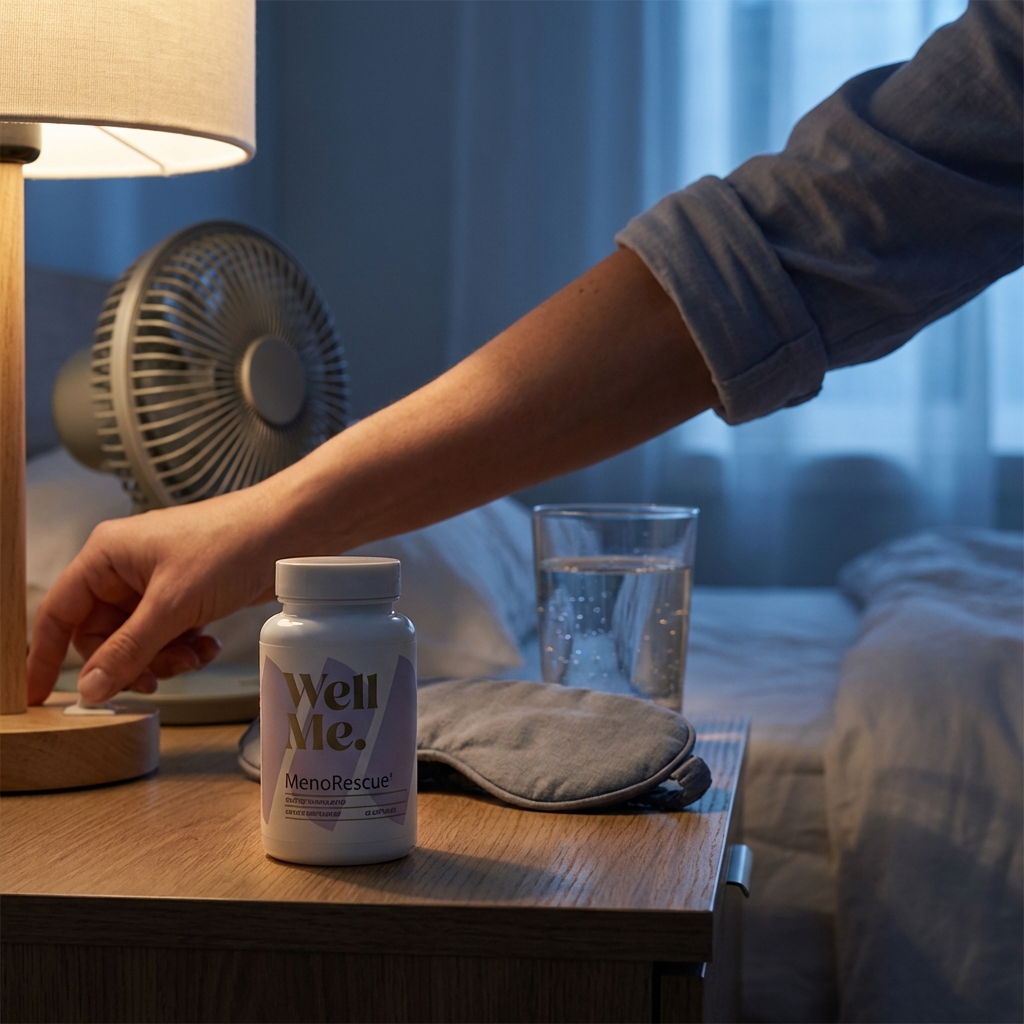
If night sweats or wired insomnia are part of your reality, turn your bedroom into a place your body can trust: Keep the room genuinely cool (not just “fine”). Use breathable sheets and layers you can shed. Keep a fan within arm’s reach. Have a “middle of the night kit” ready: water, dim light, no phone spiral.
Even one better night changes your whole week.
Stress that doesn’t get minimized
Here’s the truth that lands hard: stress affects you differently now. Not because you’ve gotten weaker. Because your system is already working overtime.
Small habits that steady the nervous system:
- Get morning light on your face for a few minutes
- Practice one daily pause where your exhale is longer than your inhale
- Stop eating while doing three other things (yes, it matters)
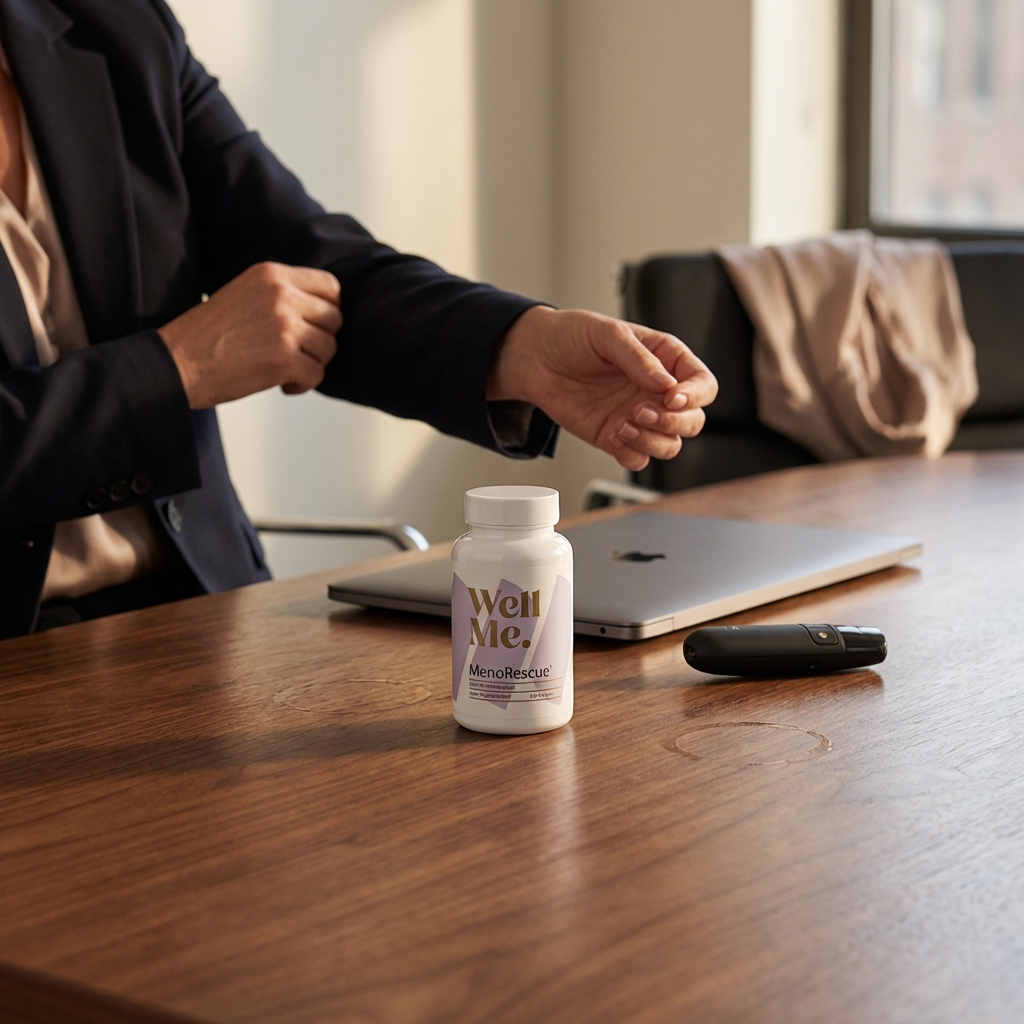
Steady When Work Hits
I needed support I could take before the day started talking back
MenoRescue is a daily formula built around its Hormone Support Blend—Sensoril® ashwagandha (125 mg) plus Greenselect Phytosome® (caffeine-free green tea extract), Rhodiola Rosea, and Schisandra berry. It’s made to support healthy cortisol levels, so the swings don’t feel so sharp.
-
Helps you feel more even
-
Supports focus when you need it
-
Keeps mornings simple
The one support I didn’t plan on keeping
After my presentation meltdown, I started looking for something small and reliable. Not a dramatic fix. Just one thing I could do every day without overhauling my entire life.
That’s when I found MenoRescue. What made me try it wasn’t a flashy promise. It was the idea of a simple daily routine I didn’t have to think about—something I could take each morning without adding another layer of self-management to my already full plate.
I kept up my basics: protein at breakfast, evening walks, cool bedroom at night. Adding this one piece made me feel less like I was constantly negotiating with my own body.
Not a cure. Just a steadier foundation.
What shifts when you stop trying to outthink biology

Here’s what no one tells you:
A huge part of the exhaustion in perimenopause and menopause comes from constant self-surveillance. You track your mood. Your sleep quality. Your cycle irregularities. Your food choices. Your patience levels with your kids, your partner, your coworkers. You’re trying to catch the next disaster before it derails your day.
That hypervigilance? It creates its own kind of depletion.
The goal isn’t to control every symptom. The goal is to build a life where your body gets consistent support instead of constant chaos.
That’s why the most effective strategies sound almost boring:
- Eat real meals regularly
- Move your body most days
- Keep your nights cool
- Find one or two supports you trust and stick with them
That’s also why something like MenoRescue can feel like genuine relief—not because it replaces everything else, but because it’s one less decision to remake every morning when you’re already tired.
Support For Cooler Nights
When nights turn loud, I keep my routine quiet and consistent
MenoRescue also includes a Hormone Booster Blend: Sage leaf (300 mg) and Red clover (80 mg), plus Black cohosh and Chasteberry (Vitex)—finished with BioPerine® to help absorption. It’s made to support hormone comfort and healthy body temperature, so nights feel less like a surprise.
-
Supports a calmer night rhythm
-
Helps your routine feel doable
-
Less second-guessing tomorrow
FAQs people ask when they’re quietly trying to figure it out
Can you get pregnant in perimenopause?
Yes. As long as occasional ovulation is still happening, pregnancy is possible—even with wildly irregular cycles.
Does menopause happen at a set age?
Not exactly. Most people reach it in their early 50s, but perimenopause can start in your 40s or even late 30s.
Do I have to do something about symptoms?
No. But if symptoms are making daily life harder, small consistent supports can help—without turning your life into a wellness project.
Why do I feel fine one month and terrible the next?
Classic perimenopause. Hormone levels can swing dramatically month to month, which makes symptoms feel random and unpredictable.
Coming back to the question: perimenopause vs menopause
If you take away one thing, let it be this: Perimenopause vs menopause isn’t about which label sounds more frightening. It’s about understanding where you are on the timeline—so you can stop second-guessing yourself and start giving your body what it actually needs.
Perimenopause is the turbulent crossing. Menopause is the clear milestone. Postmenopause is the long stretch after—often steadier than you fear.
And through all of it, you’re not losing control. You’re recalibrating.
With the right basics—and maybe one steady support like MenoRescue—this season can shift from feeling ambushed by your body to feeling aligned with it again.
Written by Liora Menden — for those who seek steadier ease.