If you’re here because your energy collapses every afternoon no matter how much you sleep, because you’re doing everything right but still feel like you’re running on borrowed fuel, because you’re tired of being tired—I understand that specific, grinding frustration.
The moment I knew something deeper was wrong wasn’t dramatic. It was ordinary in the worst way.
I was brushing my teeth on a Tuesday night, bathroom light making everything look too bright and too flat at once. My phone was propped against the sink, playing back a voice note I’d sent to a friend earlier. In the recording, I sounded fine. Energetic, even. Making plans, laughing at something.
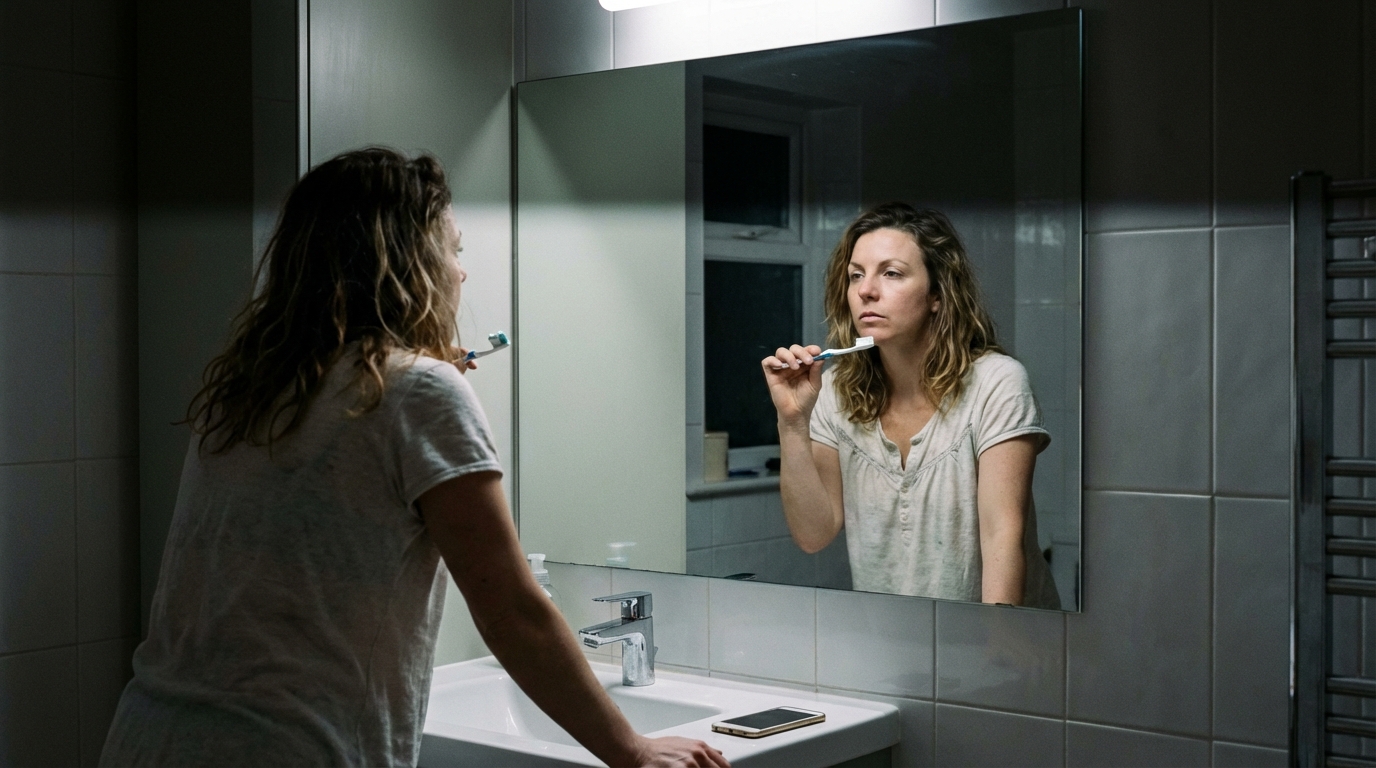
But the person staring back at me in the mirror looked hollowed out. My eyes had this faraway quality, like I was watching my own life from a few steps behind, never quite catching up.
By 2:30 every afternoon, my energy would simply fold. Not gradually—it collapsed like someone had pulled a plug. By evening, I’d be shaky and ravenous for anything crunchy or sweet. At night, exhausted but somehow still buzzing, I’d scroll with one eye barely open, my brain humming like a refrigerator that won’t stop cycling.
I was tired in a way sleep couldn’t fix.
That’s what brought me to supplements for hormonal burnout—not as a cure-all, but as the missing support that helped my body finally feel steady again. Like I wasn’t dragging myself through every single day anymore.
⸻
How I learned the difference between “tired” and hormonal burnout
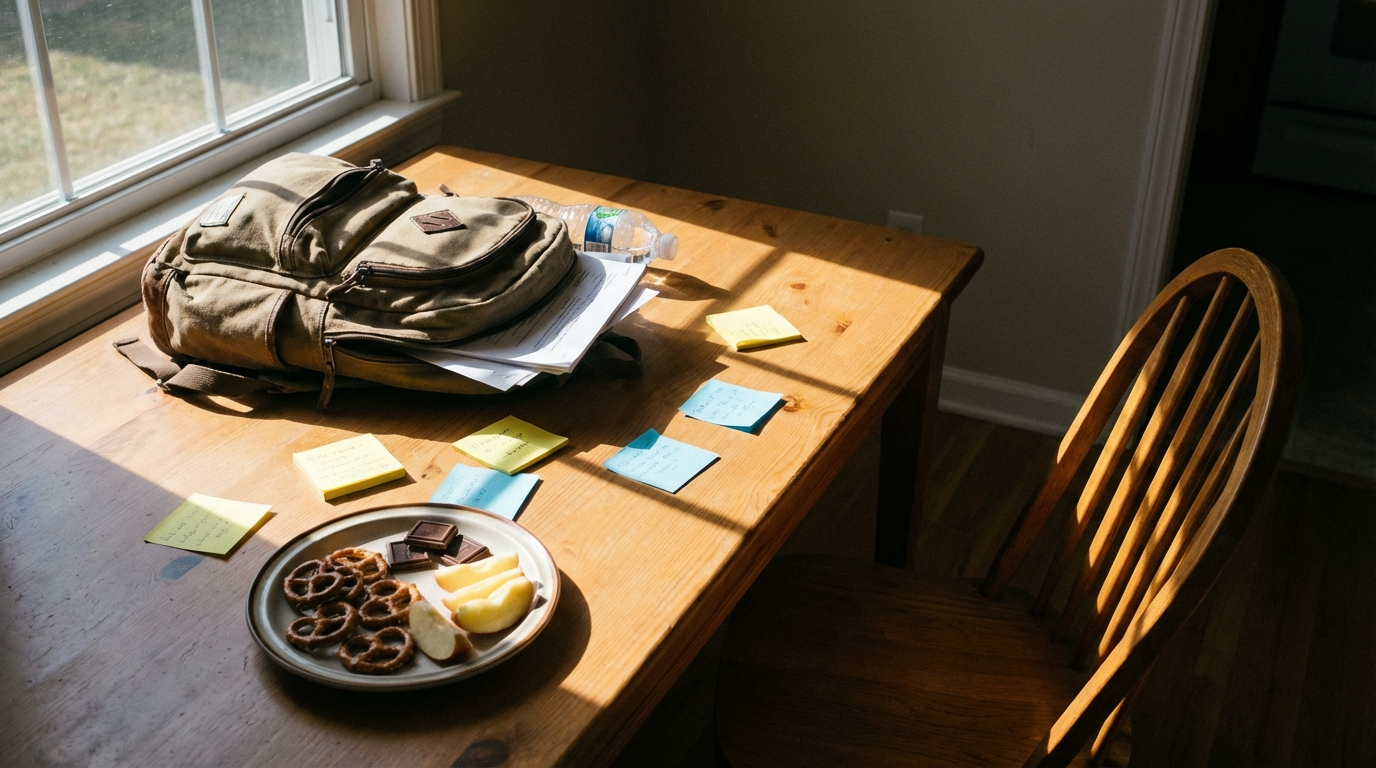
Regular tiredness makes sense. It has a story you can point to. You stayed up late studying. You had back-to-back shifts. You pushed through finals week.
Your schedule got overloaded. And then—you recover. A good night’s sleep actually helps. A slower weekend resets you. Your body bounces back.
Hormonal burnout doesn’t work that way.
It’s not dramatic. It’s persistent, like trying to charge a battery that won’t hold power anymore.
Here’s what made me realize this was something different:
- My afternoon crash arrived like clockwork, even on days when I’d eaten well and slept enough
- Between 2–4 pm, cravings would hit hard—salt, sugar, anything that felt fast and numbing
- My mood felt paper-thin, like my patience had worn through in spots I couldn’t see
- I’d read the same paragraph three times and still not absorb it
- My cycle became unpredictable in ways that felt unsettling
- I’d wake up after eight hours and feel like I’d barely rested
I stopped thinking about motivation and started thinking about messaging. Because that’s what hormones are—messengers. And when cortisol, thyroid signals, and sex hormones fall out of rhythm, your whole body starts operating like it’s stuck in a low-grade emergency that never ends.
So I changed the question. Not “How do I get more energy?” but “How do I get stable energy?”
The 5 supplements for hormonal burnout that helped me most

I didn’t pile everything on at once. I added them slowly, paying attention to what actually changed. When you’re running on fumes, there’s this temptation to fix everything immediately. But hormonal fatigue has a way of making you overdo the very things that are supposed to help.
I had to practice “enough” instead of “everything.”
Magnesium glycinate (my nervous system’s exhale)
During burnout, tension became my baseline. Jaw clenched even when I thought I was relaxed. Shoulders hiked up near my ears. Thoughts circling and circling like a washing machine stuck mid-cycle.
Magnesium glycinate became my nighttime signal to the body: we’re allowed to stop now. It wasn’t a knockout pill. It was gentler than that—like someone turning down the brightness in a room that had been too harsh all day.
What it supported for me:
- My muscles stopped feeling permanently braced for impact
- Evening anxiety softened from a sharp edge to something more manageable
- Falling asleep became less like negotiating with my own brain
This mattered enormously, because once sleep starts improving, everything else becomes easier to handle. You’re not constantly trying to function on empty.
B-complex (the foundation I didn’t know I was missing)
Coffee had become a personality trait. I was chasing that quick lift, that jolt that made me feel capable again, even if it only lasted an hour.
B vitamins felt completely different. Not a spike—more like someone quietly reinforcing the floorboards under my feet.
What I noticed:
- Mornings stopped feeling like I was dragging myself out of deep water
- My focus had more stamina; it stayed with me past 11 am
- By midday, I didn’t feel that hollow, scraped-out sensation anymore
I keep this one simple. One capsule in the morning with food. No overthinking it.
Vitamin D3 (quiet support for mood and stamina)
Vitamin D didn’t announce itself. There was no lightning bolt moment. Instead, it felt like my emotional baseline gradually rose a few degrees—enough that I stopped feeling cold all the time, inside and out.
When you’re dealing with hormonal fatigue, mood and energy are tangled together. If you’re constantly on edge or low, it drains your reserves faster than anything you’re actually doing.
What I noticed:
- Fewer moments of staring at my to-do list thinking, “Why does everything feel impossible?”
- More willingness to actually move my body instead of just thinking about it
- A little more light in my days—subtle, but real
It didn’t fix my life. It made my life feel more doable, which was everything.
Rhodiola rosea (for stress-heavy days)
Rhodiola became my tool, not my identity. I didn’t take it every day—I used it strategically.
On days when stress ran hot—chest tight, thoughts racing, the urge to doom-scroll, cravings that felt frantic—it helped me feel less tossed around by my own cortisol spikes.
What I noticed:
- Fewer afternoons where my emotions felt like they were on a roller coaster I didn’t buy a ticket for
- A smoother, more even energy curve instead of that horrible spike-and-crash pattern
- Better focus when the pressure was actually high and I needed to show up
I learned not to take it late in the day. For me, it belonged in the morning—before the crash, not as damage control afterward.
Resurge (the turning point: real sleep that actually rebuilt me)
This was the shift that changed everything: I stopped treating sleep like a nice-to-have bonus and started treating it like the main repair shop for my entire system.
Resurge became the supplement that made my nights feel functional again—like they were doing their job instead of just being unconscious hours I endured.
At first, I didn’t expect much. I’d tried the usual “wind down” strategies. Herbal tea. Gentle stretching. Turning off screens an hour early (sometimes). But my body still felt trapped in that wired-but-tired loop, exhausted but unable to actually rest.

Turn Off The Buzz
If your body is tired but your brain won’t stop—this is for you
Resurge is a bedtime formula built for deeper, more restorative sleep—so you wake up clearer and steadier. I take it at night because it helps my system downshift instead of white-knuckling through. This blend is made to support sleep signals and overnight recovery.
-
Helps you fall asleep and stay in a calmer sleep rhythm
-
Supports a quieter nervous system at bedtime
-
Helps mornings feel less foggy, not just “awake”
Resurge felt different because it targeted the exact problem I was living: I wasn’t recovering at night.
What I noticed over time:
- I woke up less foggy, like someone had actually rinsed my brain overnight
- Mornings stopped feeling like punishment I had to endure before life could start
- The afternoon crash didn’t hit with the same brutal force
- My cravings got quieter—especially that frantic “I need sugar right now or I’ll dissolve” feeling
It wasn’t instant magic. It was steady, incremental improvement. And steadiness was exactly what I needed, not another thing that worked once and then stopped.
⸻
Why sleep became the core of my hormonal burnout recovery

Here’s what nobody told me when I was white-knuckling my way through every day:
If your nights aren’t restorative, your days become pure survival.
And survival hormones are loud and messy. Cortisol gets sticky, staying elevated when it should drop. Your body starts grabbing for quick fuel—sugar, salt, anything fast.
Your focus narrows to the next three feet in front of you. Your patience wears thin as paper. You start living in these short, jagged bursts of energy that never quite connect into anything sustainable.
Once my sleep improved—even a little bit—everything else started stacking in a better direction.
- Better sleep led to steadier mornings
- Steadier mornings meant less frantic caffeine consumption
- Less frantic caffeine meant smoother afternoons
- Smoother afternoons meant calmer evenings
- Calmer evenings meant better sleep
That loop matters more than almost anything else. It’s the difference between constantly climbing uphill and finally feeling like you’re walking on level ground again.
And Resurge was the first thing that made that loop feel possible, without me having to force it through sheer willpower.

Steadier By Tomorrow
The afternoon crash isn’t a personality flaw. It’s a depleted system
Resurge supports the part you can’t brute-force: overnight recalibration. When sleep improves, cravings and mood swings often soften because your day isn’t built on fumes. This half of the formula focuses on stress support, appetite cues, and daily resilience—so your “fine” finally feels real.
-
Supports a calmer stress response so you feel less frayed
-
Helps with craving noise and that urgent snack-grab feeling
-
Supports a steadier daytime baseline when nights are rebuilding
Morning vs evening routines that actually made sense
One early mistake I made was treating every supplement like it belonged at the same time of day. But your body isn’t asking for the same thing at 8 am and 10 pm.
Morning you needs different support than evening you.
So I split my routine into two simple, sustainable lanes.
Supplements for hormonal burnout in the morning
Morning was about building calm, usable energy—the kind that carries you through without crashing.
- B-complex
- Vitamin D3
- Rhodiola (only on days when I knew stress would be high)
I wanted my mornings to feel like stepping onto solid ground, not like I was already sprinting to catch up with my own life before my feet even hit the floor.
Supplements for hormonal burnout at night
Night was about letting my body downshift properly so it could actually repair instead of just idling in neutral.
- Magnesium glycinate
- Resurge
This combination made evenings feel less jagged and wired. Sleep started feeling like recovery again, not just “time when I’m unconscious but not resting.”
The timeline that felt honest
I wish I could tell you I felt transformed in three days. I didn’t.
But I started noticing small, legitimate signs that my system was beginning to settle and stabilize.
Days 3–7:
- Cravings got slightly less desperate and demanding
- My mood felt a bit steadier, less like I was one minor inconvenience away from tears or rage
- Evenings felt less sharp-edged, not quite as wired
Weeks 2–3:
- Afternoons stopped feeling like falling off a cliff
- Fewer moments of “Why am I so unreasonably irritated right now?”
- Sleep started feeling deeper, more restorative
Weeks 4–6:
- Energy became more consistent throughout the day
- Fewer random crashes that came out of nowhere
- More emotional cushion—this was the best part, having room to breathe again
Hormonal fatigue doesn’t always leave in one dramatic exit. For me, it left the way winter melts—slow, uneven, and then suddenly you realize you’re not freezing anymore and haven’t been for a while.
The small signs that told me I was coming back
This part matters because progress is easy to miss when you’re tired. You’re so used to struggling that you don’t always notice when things start getting easier.
My recovery looked like:
- Finishing work or homework without having to reread everything multiple times to make it stick
- Getting to 4 pm and not feeling panicky for snacks or caffeine
- My body feeling warmer, less tense and braced all the time
- Laughing and it not feeling forced or performative
- Waking up and not immediately dreading the entire day ahead
Also—this is oddly specific but it mattered to me—my skin looked less grey. Like circulation and sleep were finally meeting up again instead of running on separate tracks.
That’s the insidious thing about hormonal burnout. It makes you feel like you’re lazy or undisciplined or just not trying hard enough, when the truth is you’re running on a system that’s been overworked for too long without proper support.
Support helps. It’s not weakness. It’s just what bodies need.
How I kept it simple (so it actually lasted)
When you’re an overfunctioner, you can turn healing into another performance, another thing you have to excel at.
So I gave myself rules that felt kind instead of rigid:
- I didn’t add everything at once—I wanted to know what was actually helping
- I aimed for consistency over perfection; three times a week beats zero times a week
- I prioritized sleep first, because everything else was easier when I was actually resting
- I kept my routine simple enough to maintain on a bad day, not just on my best days
Resurge fit into that approach because it lived in one clear place: nighttime. No decision fatigue. No complicated timing or stacking. Just a simple signal to my body: we’re rebuilding now, not just collapsing.
⸻
Closing: what I’d tell someone in the same place

If you’re reading this in the middle of an afternoon slump, feeling foggy and flat and frustrated with yourself—maybe wondering if you’re just not cut out for your own life—I want to say something plainly:
You’re not broken. You’re not lazy. You’re depleted.
And depletion responds to steady, consistent care, not heroic effort.
These supplements for hormonal burnout helped me rebuild in a way that felt realistic and sustainable:
- Magnesium glycinate for a calmer nervous system at night
- B-complex for foundational energy support that doesn’t crash
- Vitamin D3 for steadier mood and stamina
- Rhodiola for getting through stress-heavy days without falling apart
- Resurge to make sleep feel like recovery again instead of just lost time
Not as a miracle. Not as instant transformation. As a gentle shift from “push through” to “actually repair.”
And when repair starts working—when your body finally has what it needs to rebuild—you can feel yourself come back. Quietly at first, then steadily, and then all at once you realize you’re living your life again instead of just surviving it.
Written by Liora Menden — for those who seek steadiness.