There’s a moment most people don’t talk about. It happens before the alarm goes off. You shift under the covers, bend a knee, rotate a shoulder — and something catches. Not sharp. Not dramatic. Just a thickness in the joints that wasn’t there five years ago. A stiffness that takes its sweet time leaving.

You get up anyway. You make coffee. You add sugar because the coffee tastes bitter and the morning already feels heavy. And you move on, because what else are you going to do?
I lived inside that loop for longer than I’d like to admit.
- Coffee with two sugars, sometimes three.
- A granola bar on the way out the door.
- A flavored yogurt I told myself was healthy.
And underneath it all, a low-grade ache that followed me through the day — settling into my hands by noon, tightening my knees by evening. I thought it was just age. Just stress. Just life.
It wasn’t. It was sugar. And my joints were trying to tell me.
⸻
The Connection Between Sugar and Joint Inflammation Nobody Warned Me About

Here’s what I didn’t understand for years: sugar doesn’t just make you tired. It feeds inflammation. Every spoonful I stirred into my coffee was doing something inside my body — triggering a cascade of low-grade inflammatory signals that pooled in the places I was already weakest.
- My fingers.
- My lower back.
- The knee I’d tweaked years ago and thought had healed.
When your blood sugar spikes and crashes — which happens every time you eat something sweet on an empty stomach — your body responds with stress hormones and inflammatory markers. Your joints absorb that hit quietly. They swell just a little. They stiffen just enough. And because it builds slowly, you don’t connect the dots. You blame the weather, or the mattress, or getting older.
I blamed all three. For years.
The turning point came on a Tuesday. I’d had my usual sweet coffee, a muffin from the break room, and by 2 p.m. I could barely close my hand around a pen. Not because of pain exactly — but because my fingers felt swollen and sluggish, like they belonged to someone else.
something is wrong and I keep ignoring it
That night, I started reading. And what I found changed how I think about my body.
⸻
What Sugar Actually Does to Your Joints

Sugar triggers something called glycation — a process where sugar molecules attach to proteins in your body, including the collagen and cartilage that protect your joints. Over time, this creates compounds called AGEs (advanced glycation end products), which stiffen tissue and increase inflammation. It’s not dramatic. It’s gradual. But it’s real, and it accumulates.
The hidden sugars were the worst part. My “healthy” yogurt had more sugar than a candy bar. The granola I loved was basically dessert in a bag. Even the salad dressings I used were sweetened. Once I started reading labels, I realized I was consuming far more sugar than I ever imagined — and my joints were absorbing every gram of it.
Cutting back helped. It helped a lot, actually. But it wasn’t enough. Because the inflammation had been building for years, and diet changes alone weren’t unwinding it fast enough. My mornings were a little better, but that deep stiffness — the one that made me feel ten years older than I was — it lingered.
That’s when I found Joint Genesis.
⸻
How Joint Genesis Became the Thing I Stopped Searching After

I’d tried glucosamine. I’d tried turmeric capsules. I’d tried fish oil and stretching routines and sleeping with a pillow between my knees. Some of it helped around the edges. None of it felt like an answer.
Joint Genesis was different. Not because it promised something wild — actually, the opposite. It made sense. It focused on something I hadn’t considered before: the synovial fluid inside my joints. That’s the lubricating layer that keeps your cartilage from grinding, that allows smooth, painless movement. And as you age — especially if you’ve been feeding your body sugar and stress for years — that fluid breaks down. It thins. And your joints pay for it.
Joint Genesis supports that fluid directly. It helps restore the cushion, the glide, the ease. And when I started taking it alongside my lower-sugar routine, something shifted that I hadn’t felt in years.
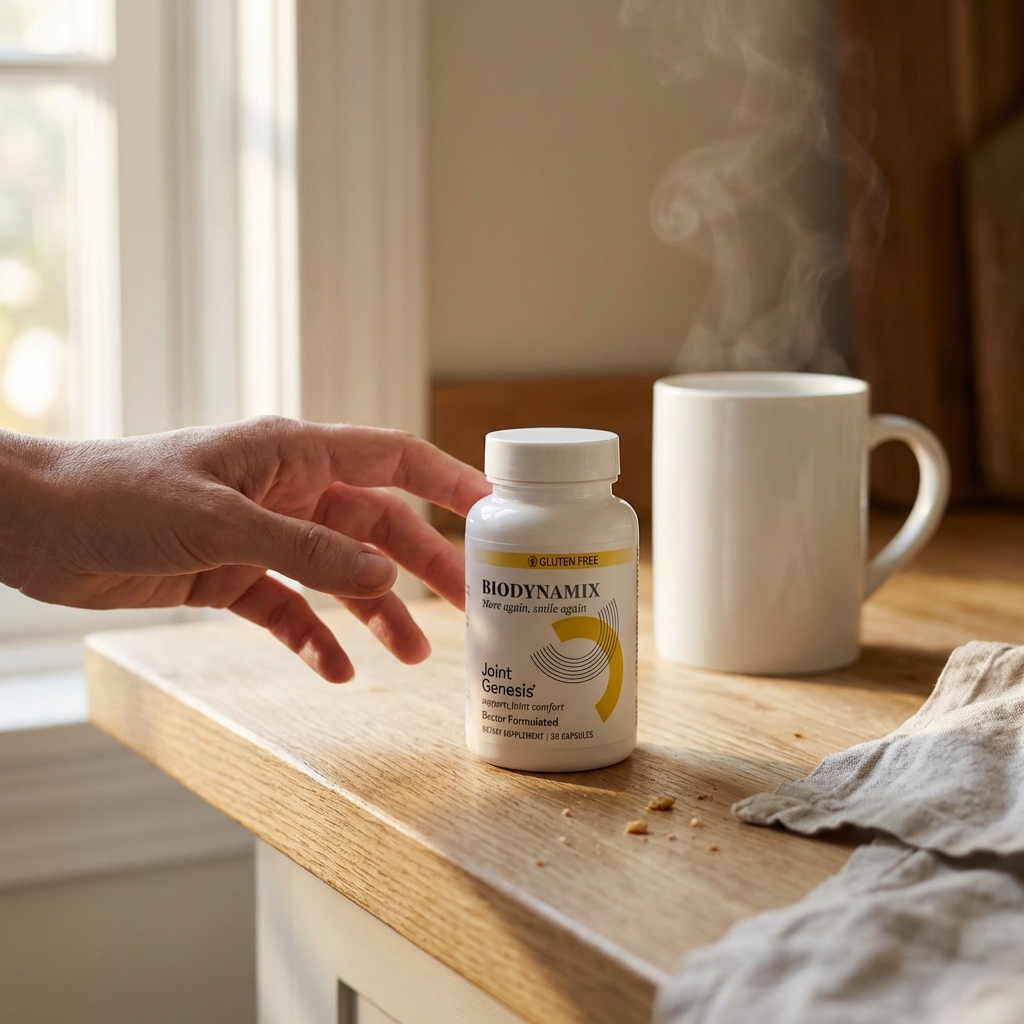
Mornings That Move With You
Your joints remember every sugar spike. Give them something worth absorbing instead
Joint Genesis supports the synovial fluid your cartilage depends on — the lubricating layer that thins with age, sugar, and stress. Instead of masking discomfort, it helps restore the cushion and glide your joints need to feel easy again. One capsule, taken with breakfast, alongside smarter choices.
-
Supports the natural fluid that keeps cartilage smooth and protected
-
Helps ease the morning stiffness that lingers longer than it should
-
Works with your body’s own repair process, not against it
I woke up one morning and swung my legs over the side of the bed without thinking about it. No pause. No bracing. No slow negotiation with my knees. I just stood up and walked to the kitchen. And I stood there, waiting for the kettle to boil, and realized — I felt light. My hands opened easily. My shoulders didn’t protest when I reached for a mug.
It sounds small. It wasn’t.
Caffeine, Joint Pain, and the Trap I Didn’t See

Here’s the other thing no one tells you: caffeine and joint pain have a complicated relationship. Coffee on its own isn’t the villain. But coffee with sugar? On an empty stomach? First thing in the morning when your body is already dehydrated and stiff? That’s a recipe for inflammation.
Caffeine constricts blood flow temporarily and ramps up your stress response. Combine that with a blood sugar spike from sweetened coffee, and you’re essentially starting every day by telling your body to tighten up, brace, and inflame. I was doing this religiously, every single morning, and wondering why my joints ached.
I didn’t quit coffee. I just changed the ritual. One cup, black or with a splash of unsweetened almond milk. No sugar. No flavored creamer. And I paired it with Joint Genesis, taken with breakfast, so my body had what it needed to actually start the day well.
The difference was faster than I expected. Within the first couple of weeks, my mid-afternoon hand stiffness — the thing that had scared me into researching all of this — started fading. By the end of the first month, I stopped noticing it entirely. Not because I was ignoring it. Because it wasn’t there.
⸻
What Relief Actually Feels Like

I want to be honest about this, because I think people expect relief to feel dramatic. Like one day you wake up and everything is perfect. It wasn’t like that. It was more like… layers peeling away.
First the afternoon tightness eased. Then the morning stiffness shortened — from twenty minutes to ten, then to five, then to just a brief moment of stretching that felt natural instead of necessary.
Joint Genesis worked because it addressed the thing I’d been missing. I could cut sugar and reduce caffeine all I wanted — and those changes mattered — but without restoring what had already been lost inside my joints, I was only stopping the damage. I wasn’t rebuilding.
Joint Genesis was the rebuilding part.
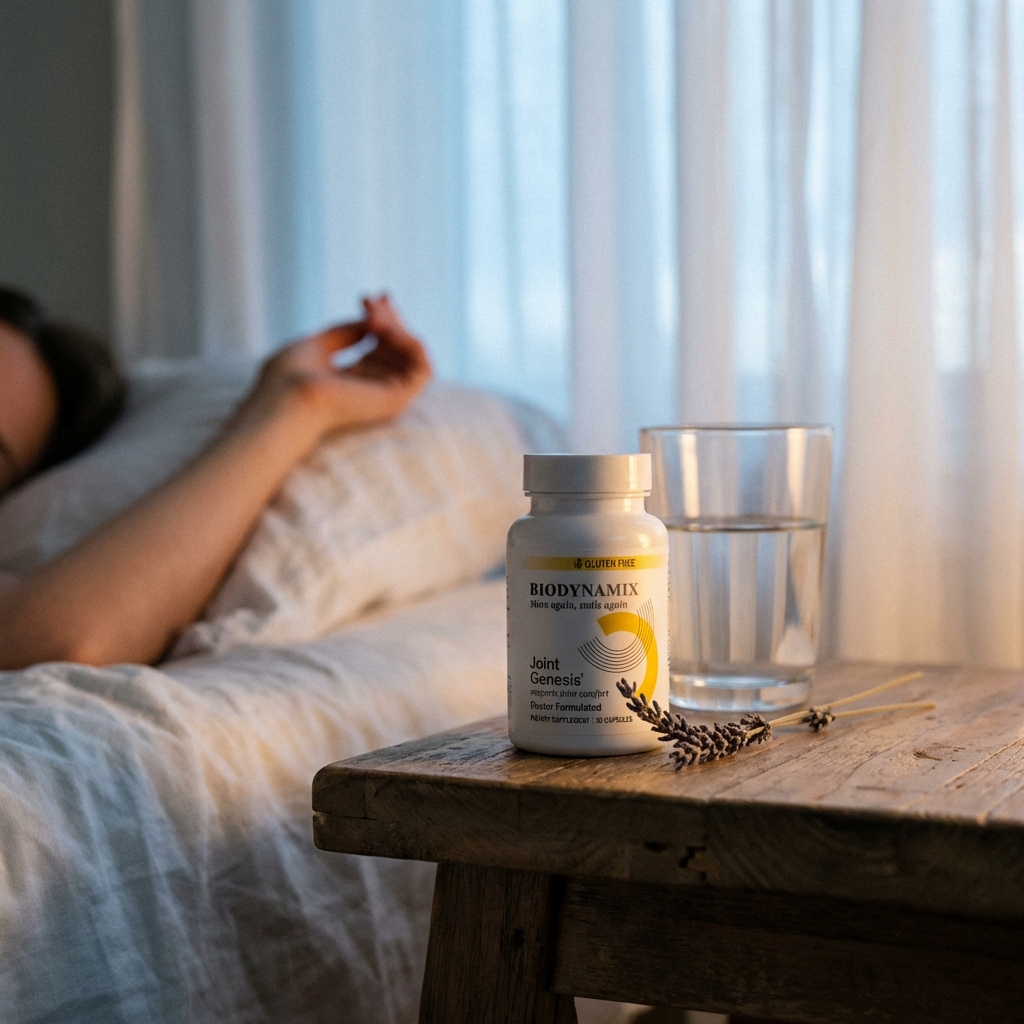
This Is What Ease Feels Like
Relief isn’t one dramatic morning. It’s the slow return of movements you stopped noticing
Joint Genesis works where it matters — restoring the synovial cushion that sugar, stress, and time have worn thin. The stiffness shortens. The tightness softens. And one morning, you just stand up and walk. No bracing. No negotiation. Just your body, moving the way it’s supposed to.
-
Targets the lubrication layer that other supplements miss entirely
-
Supports steady, compounding comfort — not a single-day fix
-
Pairs with lower-sugar habits to address what’s already been lost
I take it every morning now, as automatically as I brush my teeth. I don’t think about it. I don’t debate it. I don’t cycle on and off or compare it to anything else. It’s just part of how I take care of myself now, and my joints are steadier, smoother, and quieter than they’ve been in years.
The Sugar Swaps That Made It Stick

Changing my diet wasn’t about deprivation. It was about swapping things that hurt me for things that didn’t.
- Plain yogurt instead of flavored.
- Dark chocolate instead of milk chocolate.
- Water with lemon instead of sweetened iced tea.
- Seeds and berries instead of granola bars.
These weren’t heroic changes. They were boring, practical, and completely life-altering. Because once the inflammation started dropping — from both the dietary shifts and the daily support of Joint Genesis — I had energy I hadn’t felt in years. Not the jittery, crashing kind. The steady, grounded, I-can-actually-do-things kind.
My body stopped feeling like something I had to manage and started feeling like something I could trust again. And that shift — from managing to trusting — that’s what changed everything.
Why I Don’t Overthink It Anymore
I used to spend hours researching supplements. Reading reviews. Comparing ingredients. Wondering if I was missing something better. That search is exhausting, and most of the time it leads nowhere.
Joint Genesis ended that for me. Not because it’s magic — but because it works in a way I can feel, consistently, without guessing. It addresses the root of what was wrong: the breakdown of joint lubrication that years of sugar, stress, and inflammation had caused. And it does it simply, without requiring me to overhaul my entire life.
I still drink coffee. I still enjoy a sweet treat now and then. But I do it knowing that my joints are supported, that the foundation is solid, and that the stiffness I used to wake up with doesn’t define my mornings anymore.
If you’re in that place right now — the one where your joints ache and you can’t figure out why, where sugar feels comforting but your body is pushing back — pay attention. Your joints are telling you something. And the answer might be simpler than you think.
Cut the hidden sugars. Rethink the sweet coffee. And give your joints what they’ve been missing.
Joint Genesis gave me back my mornings. I think it can do the same for you.
Written by Liora Menden — for those who seek ease in the body and clarity in the ritual.
Related reading
- Gentle Movement to Beat Morning Joint Stiffness: The Morning Ritual That Finally Stuck
- The Surprising Link Between Inflammation and Fatigue That Explained Everything
- 7 Foods for Joint Inflammation I Reach for Every Single Day
- Signs of Chronic Inflammation You Might Be Ignoring — And the One Shift That Changed Everything