The best bone health supplements should help readers protect more than bone density on paper. They should support the real outcome people care about: moving through the day with more confidence, less hesitation, and a stronger base for walking, lifting, and recovering well.
That is why this page treats bone strength and mobility as connected problems. Bones need minerals and vitamin support, but movement quality also depends on muscles, joints, and the routines that keep the whole system active. A better article should explain both sides and keep the product pitch disciplined.
This refresh does that by tightening the title and meta, adding official citations, expanding the decision-making guidance, and reducing the page to one product card and one affiliate path.
Which nutrients matter most for bone health?
Calcium and vitamin D are still foundational because they work together in bone maintenance. The NIH Office of Dietary Supplements notes that calcium supports the structure of bones and teeth, while vitamin D helps with calcium absorption and bone mineralization. See NIH ODS on calcium and NIH ODS on vitamin D.

That does not mean every reader needs a large calcium supplement by default. The better question is whether food intake, vitamin D status, age, and lifestyle create a real support gap. A page about bone health should help readers sort that before it starts selling formulas.
Why does mobility belong in a bone health conversation?
Because strong bones help most when the surrounding system can use them well. Muscle loss, stiffness after inactivity, and cautious movement can all make a person feel physically older even when the issue is not a fracture or medical emergency. That is why this page now points readers toward our morning joint pain guide and our knee stiffness article. Those related pages serve the reader who is not only thinking about density, but about how movement feels day to day.
That broader frame also keeps the article from sounding like bone health is solved by one pill. It is usually built through protein, resistance work, vitamin sufficiency, balance training, and routines that keep joints and connective tissue engaged.
What routine makes bone health supplements work better?
Supplements work best when they are attached to mechanical stimulus. Bones respond to load, so a walking plan, resistance training, and balance work do more for long-term outcomes than a bottle sitting on a shelf. NIH also notes that vitamin D supports muscle function, which matters because stronger muscles and better balance help prevent the falls that often turn low bone density into an injury problem.
A useful reader checklist is simple: protein at meals, vitamin D sufficiency, regular lower-body loading, and a mobility routine that keeps confidence up instead of down. Readers who also wake up stiff can branch to our knee stiffness article and our morning joint pain guide without losing the bone-health thread.
When should a reader stop shopping and ask for medical care?
A commercial article should say this clearly: unexplained fractures, significant height loss, severe back pain, repeated falls, or sudden weakness deserve medical evaluation. NCCIH’s supplement safety guidance is also relevant here. Readers with kidney disease, a history of stones, or a long medication list should check the plan before adding calcium, vitamin D, or multi-ingredient formulas.
What routine makes bone health supplements work better?
Supplements work best when they are attached to mechanical stimulus. Bones respond to load, so a walking plan, resistance training, and balance work do more for long-term outcomes than a bottle sitting on a shelf. NIH also notes that vitamin D supports muscle function, which matters because stronger muscles and better balance help prevent the falls that often turn low bone density into an injury problem.
A useful reader checklist is simple: protein at meals, vitamin D sufficiency, regular lower-body loading, and a mobility routine that keeps confidence up instead of down. Readers who also wake up stiff can branch to our knee stiffness article and our morning joint pain guide without losing the bone-health thread.
When should a reader stop shopping and ask for medical care?
A commercial article should say this clearly: unexplained fractures, significant height loss, severe back pain, repeated falls, or sudden weakness deserve medical evaluation. NCCIH’s supplement safety guidance is also relevant here. Readers with kidney disease, a history of stones, or a long medication list should check the plan before adding calcium, vitamin D, or multi-ingredient formulas.
What routine makes bone health supplements work better?
Supplements work best when they are attached to mechanical stimulus. Bones respond to load, so a walking plan, resistance training, and balance work do more for long-term outcomes than a bottle sitting on a shelf. NIH also notes that vitamin D supports muscle function, which matters because stronger muscles and better balance help prevent the falls that often turn low bone density into an injury problem.
A useful reader checklist is simple: protein at meals, vitamin D sufficiency, regular lower-body loading, and a mobility routine that keeps confidence up instead of down. Readers who also wake up stiff can branch to our knee stiffness article and our morning joint pain guide without losing the bone-health thread.
When should a reader stop shopping and ask for medical care?
A commercial article should say this clearly: unexplained fractures, significant height loss, severe back pain, repeated falls, or sudden weakness deserve medical evaluation. NCCIH’s supplement safety guidance is also relevant here. Readers with kidney disease, a history of stones, or a long medication list should check the plan before adding calcium, vitamin D, or multi-ingredient formulas.
A reader who only hears “take calcium” may miss the larger issue: bones adapt to load, muscles stabilize movement, and daily activity helps maintain both. The article should therefore answer the supplement question and the movement question together, because that is how the problem shows up in real life.
What should readers look for in a bone-support supplement?
A strong bone-support formula should be usable in real life. That means reasonable dosing, forms the body can absorb, and a role inside a wider routine rather than a promise to replace it. Readers who are also dealing with hormonal shifts may need that wider frame even more, which is why our menopause support guide remains a relevant internal follow-up.
It also helps to ask what success would actually look like. Better consistency with walking. Less guarded movement on stairs. Fewer skipped strength sessions because the body feels too stiff to begin. Those are practical measures that make a supplement decision easier to evaluate.

Which daily habits make bone supplements work better?
Supplements work better when the body also gets the signals bones respond to. Resistance training, walking, balance practice, and enough dietary protein all matter because bone is living tissue, not static structure. A page that only talks about capsules leaves out the habits that make those capsules more useful.
This is also where routine consistency beats intensity. A reader does not need a heroic program to support stronger bones. They need repeatable loading, enough movement to avoid long sedentary stretches, and a supplement plan that fits the rest of life instead of competing with it.
- Best for low intake risk: start with calcium and vitamin D adequacy, not a trendy stack.
- Best for movement confidence: pair supplements with strength work, walking, and balance practice.
- Best for sudden severe pain, falls, or suspected fracture: get medical evaluation instead of trying another product.
That final point is part of why the NCCIH guidance belongs on this page too. See NCCIH on using dietary supplements wisely. A bone-health page earns trust by saying when the right next step is care, testing, or a clinician-led plan.
How do readers know whether the plan is working?
Progress is usually less dramatic than marketing promises. The better signals are steadier walking tolerance, less hesitation when lifting or climbing stairs, more consistency with strength work, and fewer skipped days because the body feels fragile. Those are grounded outcomes that readers can actually observe.
That also helps the supplement decision stay honest. If mobility keeps worsening or pain becomes severe, the answer is not to keep stacking products. It is to get the appropriate medical workup and use supplements as one part of a larger plan rather than as a substitute for it.
What does a realistic weekly bone-support routine look like?
For most readers, a realistic routine is not complicated. It looks like calcium and vitamin D adequacy, regular walks, two or three strength sessions, and enough protein to support recovery. It may also include balance work, especially for adults who are starting to feel less confident on stairs or uneven ground.
The important point is that the supplement and the routine should reinforce each other. A bone-support article should make it easy to imagine how the plan fits into normal life, because adherence matters more than the most impressive-looking label on the shelf.
That is also why mobility pages and bone pages naturally overlap. A reader who wants stronger bones almost always wants to move with less fear as well, and the best commercial content should acknowledge that practical reality instead of narrowing the conversation too early.
Where does Joint Genesis fit on a bone and mobility page?
Joint Genesis fits the reader whose main practical problem is not just a nutrient checklist, but movement that feels more negotiated than it used to. Bone health and mobility are linked, and the commercial path on this page works better when it acknowledges that reality instead of pretending readers only care about density metrics.
That is why this refresh replaces the scattered calls to action with one product card. The page still teaches calcium, vitamin D, and movement basics first. Joint Genesis is the one product bridge for readers who want a mobility-support option that sits beside, not above, the foundational routine.
That placement is intentional. Commercial intent belongs on the page, but it should come after the article has already answered the practical questions a reader would ask before clicking. One card is enough to preserve that balance.
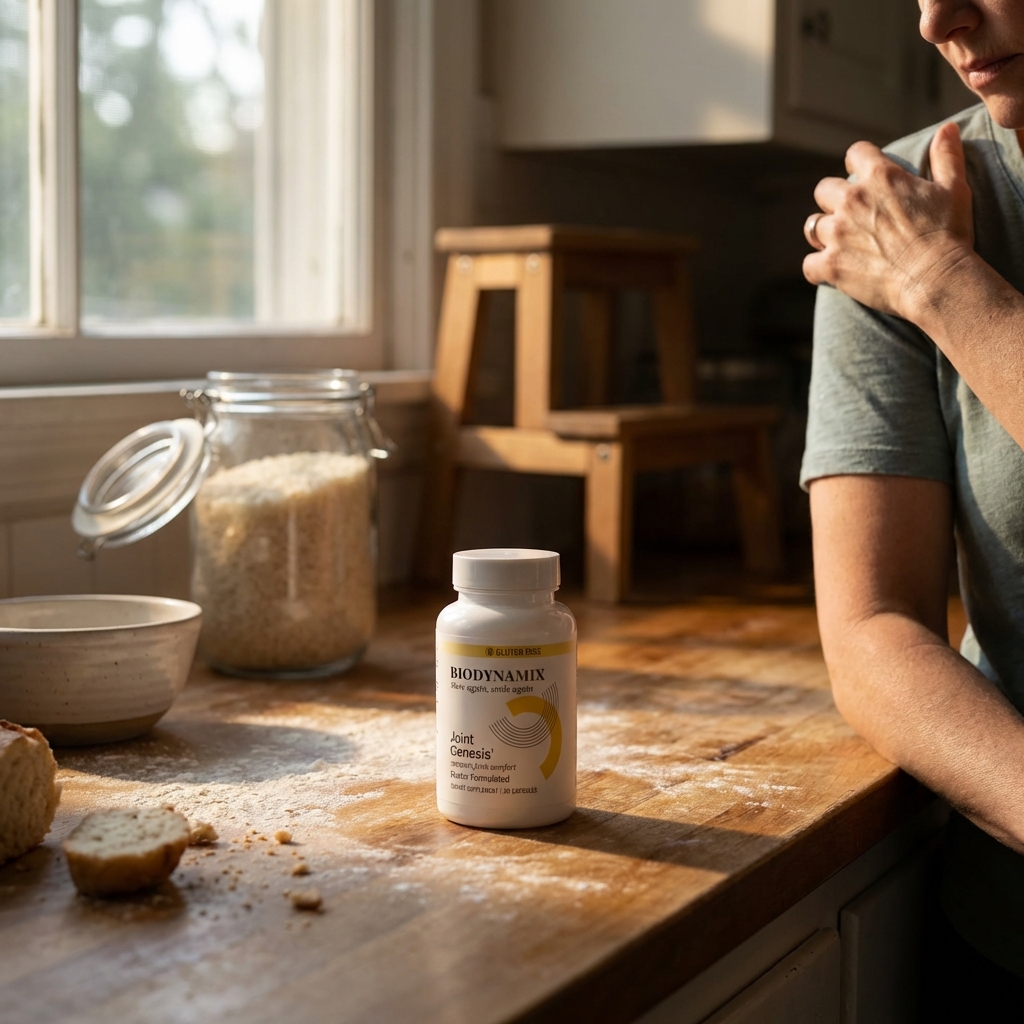
One product card is enough. If the article has explained the decision well, the reader can act from there without being chased by repeated buttons.
How should readers choose the best bone health supplements?
Start with the gap that is most real. If intake is low, address calcium and vitamin D basics. If balance, strength, and movement confidence are declining, improve the training and recovery side as well. If pain is acute or a fall risk is rising, step out of the supplement lane and get medical assessment. That is the most trustworthy way to use a commercial article on a YMYL topic.

The best bone health supplements are the ones that fit a complete plan: enough minerals and vitamin support, stronger daily movement, and one clear recommendation instead of a noisy sales funnel. That is better for search, better for trust, and better for qualified clicks.
Written by Elias Menden for readers who want bone support that respects both strength and movement.