My Saturday walks used to be the best part of my week. Two miles, sometimes three, nothing serious—just me, the neighborhood, a podcast, and coffee in a travel mug. Then one fall morning I made it exactly four blocks before my knees started sending messages I couldn’t ignore. Not screaming. Just a low, persistent pressure, like walking in boots filled with wet sand. I turned around and went home. I told myself it was the cold. I knew it wasn’t just the cold.

That’s the thing about joint stiffness—it doesn’t show up as a crisis. It shows up as a hundred small adjustments you make without realizing it. You park closer. You take the elevator. You stop saying yes to things that involve “a lot of walking.” Life gets smaller so quietly you almost don’t notice until one Saturday it takes the thing you actually love.
For a supplement-focused next step, see the guide to best supplements for joint pain and mobility.
Life gets smaller so quietly you almost don’t notice until one Saturday it takes the thing you actually love.
That’s when I started paying serious attention to what I eat for joint pain—not as a dramatic lifestyle overhaul, but as an honest experiment with what I put in my body every single day. I didn’t expect food to matter much. Joints are structural. Food felt too soft a lever to pull.
But within three or four weeks of making some real changes, something shifted. Not dramatically. More like someone adjusted the volume on a background noise I’d learned to live with. My mornings started quieter. That wet-sand feeling started showing up less. I’m still not sure why I waited so long.
⸻
The Pattern I Couldn’t Unsee

I used to have a ready excuse for every bad morning. Slept crooked. Overdid it yesterday. Getting older. And sometimes those things were true. But when I started actually writing things down—nothing elaborate, just quick notes on how I felt after eating—I kept seeing the same loop repeat.
Heavy takeout on Friday, tight hands Saturday. Vending machine week at the office, stiff knees by Thursday. A run of clean, steady meals and my body felt like it belonged to me again. It wasn’t dramatic enough to be a headline. It was just—consistent. The kind of consistent you can’t argue yourself out of once you’ve seen it enough times.
Inflammation, as I came to understand it, isn’t a sudden thing. It’s more like a low-grade argument your body holds with itself in the background. Food doesn’t always start that argument. But certain foods absolutely keep it running, like throwing paper on a fire that’s trying to die down on its own.
⸻
The Foods I Pulled Back On (Without Making It a Punishment)
I have a deeply bad relationship with the word “never.” If a food is forbidden, I think about it constantly, eventually eat it in an embarrassing quantity, and then spiral. So I didn’t make anything forbidden. Instead, I just made a handful of repeat offenders rare instead of regular.
The biggest ones for me:
- fried snacks, especially the kind that taste incredible going down and then sit in your chest like a decision you regret.
- Processed meats—the easy weeknight stuff, pepperoni, sausage, deli slices—became an occasional thing instead of background protein.
- Sugary desserts that hit hard and then leave you jittery and kind of hollow.
- And the ultra-processed “quick meals” that never actually satisfy but are so easy to grab that you don’t question them until you’re paying for it the next morning.
None of these are gone from my life. I’m a real person who goes to birthday parties and airports and has bad days at work. But they stopped being the default hum of my everyday eating.
And something I didn’t expect: once my everyday food got calmer, the occasional treat stopped coming with a next-morning price tag. It was like my baseline had shifted.
What I Started Adding That Made the Real Difference
Taking things out helped. But the real shift happened when I started building toward something instead of just removing things. Three categories became my anchors, and I think about them almost daily.
Omega-3 rich foods. Salmon, sardines, chia, flax, walnuts. I think of these as “softening fats”—they don’t just feed you, they seem to help your body dial back its internal reactivity. I try to hit at least one of these sources most days, even if it’s just a handful of walnuts in the afternoon.
Colorful plants. Berries, spinach, bell peppers, red cabbage, tomatoes, fresh herbs. The brighter my plate, the more steady I feel—and I mean that practically, not poetically. Antioxidant-rich foods help your body handle the oxidative wear of everyday life, and joints take a beating every day just from existing.
Gut-steadying fiber. This one surprised me most. Beans, oats, lentils, apples, leafy greens, whole grains. When my digestion started running more smoothly, my whole system felt less reactive—less braced, somehow. The gut-inflammation connection is real, and once I started actually feeling it, I stopped being skeptical.
If inflammation is a smoke alarm that’s been going off too easily for too long, these foods are what helped reset the sensitivity. Not overnight. Not dramatically. Just day after day, quietly, the alarm started triggering less often.
My Anti-Inflammatory Diet for Joints: What the Plate Looks Like Day to Day
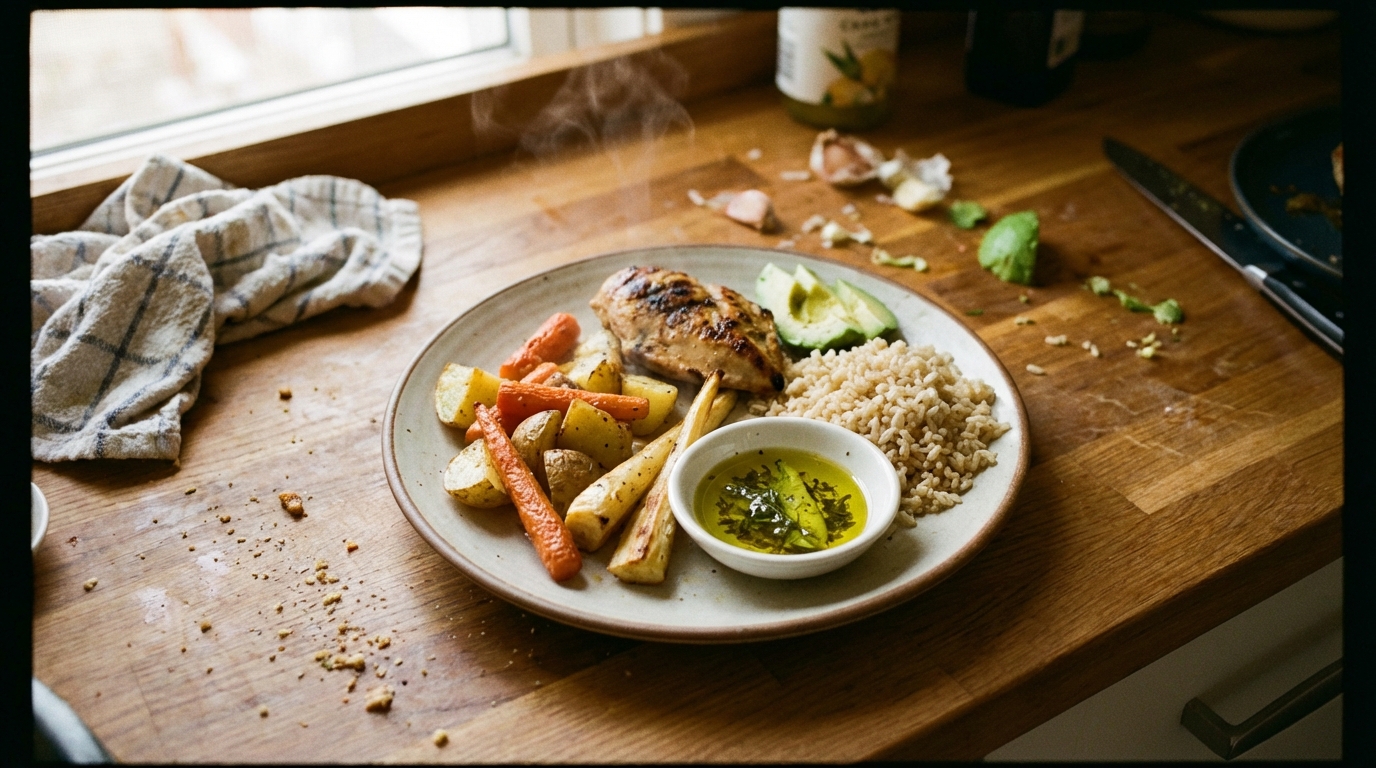
I don’t meal prep with labeled containers on Sunday. I don’t own a food scale. What I do have is a simple plate rhythm that keeps me from making desperate, vending-machine decisions at 4:30 in the afternoon.
Most meals, I build around four elements: a protein, a heap of plants, a steady carb, and a fat that actually does something for me.
Breakfast needed to feel like a soft landing. If I start the day on sugar or nothing, my body feels tense and jumpy by mid-morning, and I make worse choices all the way down the line. So most mornings it’s warm oatmeal with frozen berries and ground flax stirred in, or eggs cooked in olive oil with spinach and tomatoes, or Greek yogurt with walnuts, cinnamon, and whatever fruit looks good. Simple. Warm. Something that settles rather than spikes.
Lunch took the longest to get right. For a while my lunches were too snacky—crackers, a cheese stick, maybe some nuts—and by 3pm I was raiding everything in sight. A real lunch changed that: a big salad with leafy greens plus actual protein and olive oil and vinegar, or a bowl built from whatever was left over from dinner, or a pot of bean soup with a piece of fruit on the side. It sounds boring and it is, mostly, but it holds me in a way that snacky lunches never did.
Snacks were my biggest weakness for years. Not because I was eating terrible things, but because I was eating convenient things—bars with seventeen grams of sugar, crackers that dissolve in your mouth, whatever was sitting out on the kitchen counter. Now: apple with almond butter, a small handful of walnuts or pumpkin seeds, carrots and hummus, or—my favorite concession—a piece of dark chocolate alongside something steady like yogurt or nuts. Chocolate with a fat slows the spike. I’m not giving it up.
Dinner rotates more than anything else, mostly so it doesn’t feel like a protocol. Salmon with roasted broccoli and zucchini over brown rice. A turkey or bean burger with a serious pile of vegetables. Stir-fry with chicken or tofu, ginger, garlic, and whatever’s in the produce drawer. Sheet-pan dinners with olive oil and spices, because the cleanup is easy enough that I’ll actually make them on a Wednesday. I rotate lemon-dill, garlic-ginger, paprika-cumin, a little heat, a little crunch. Food has to still taste good or the whole thing collapses.
⸻
The Spices and Small Rituals That Changed More Than I Expected
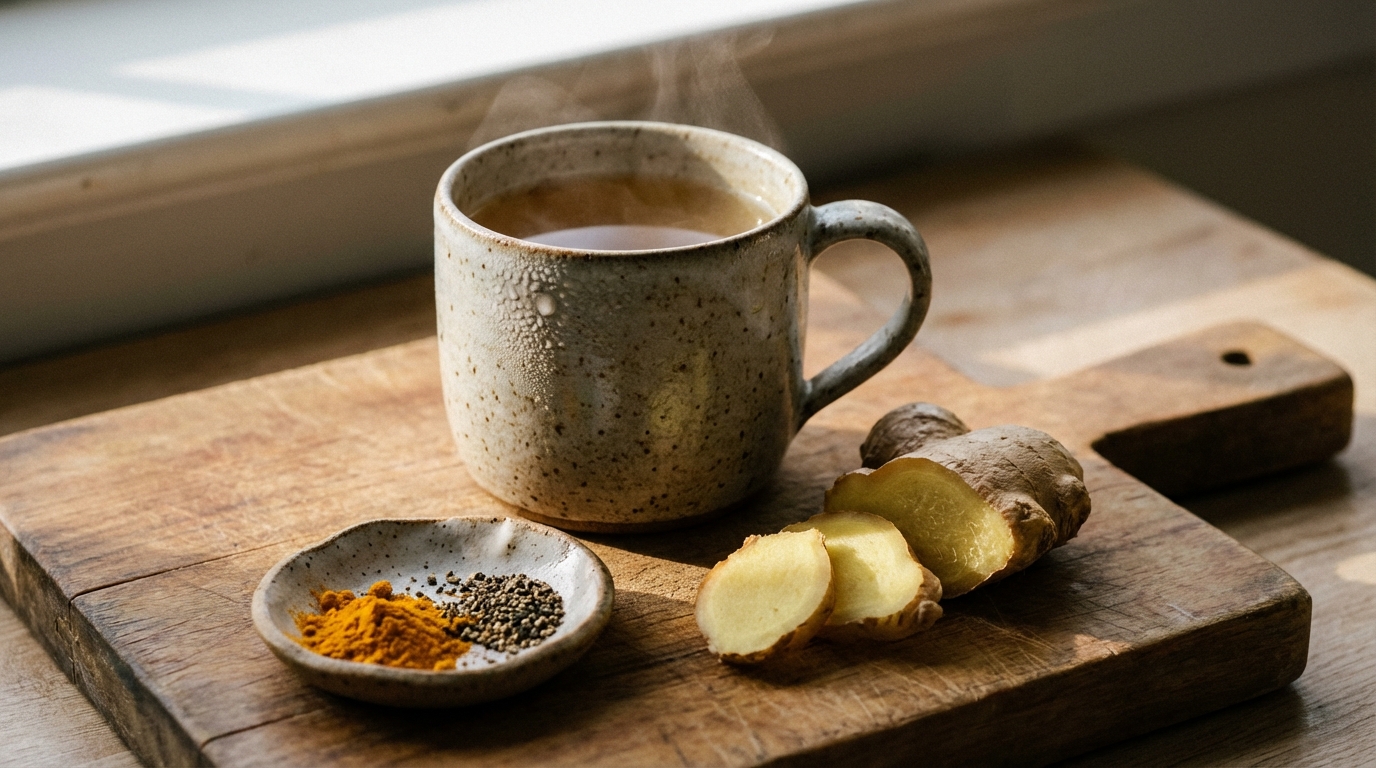
Here’s where it gets a little less practical and a little more personal. I started keeping ginger around constantly—in tea when my knees felt thick, in stir-fries, stirred into marinades. Turmeric went into soups, scrambled eggs, rice, always with black pepper, which apparently helps your body actually absorb it. Cinnamon in my oats every morning. Olive oil as my default fat, almost always. Berries a few times a week, fresh in summer, frozen the rest of the year.
None of these are dramatic. None of them alone changed anything. But together they added up to a daily pattern my body could settle into rather than brace against. And that settling—that’s what I was after. Not a cure. Just less noise.
Not a cure. Just less noise.
Where Joint Genesis Came In
After a few weeks of eating this way and genuinely feeling better, I had an honest moment with myself: this is working, and I want to protect it. Not because I needed a shortcut. I’d done the work. I liked the work. But life is also travel and stress and weeks where the best I can do is not completely fall apart. I wanted something consistent in the background that didn’t require thinking.
That’s when I added Joint Genesis to my daily routine. What drew me to it was the focus on the “lubrication and cushioning” side of joint comfort—the stuff that diet alone doesn’t always fully address. It felt like reinforcement, not replacement. Like I’d built a solid foundation and this was filling in the cracks.
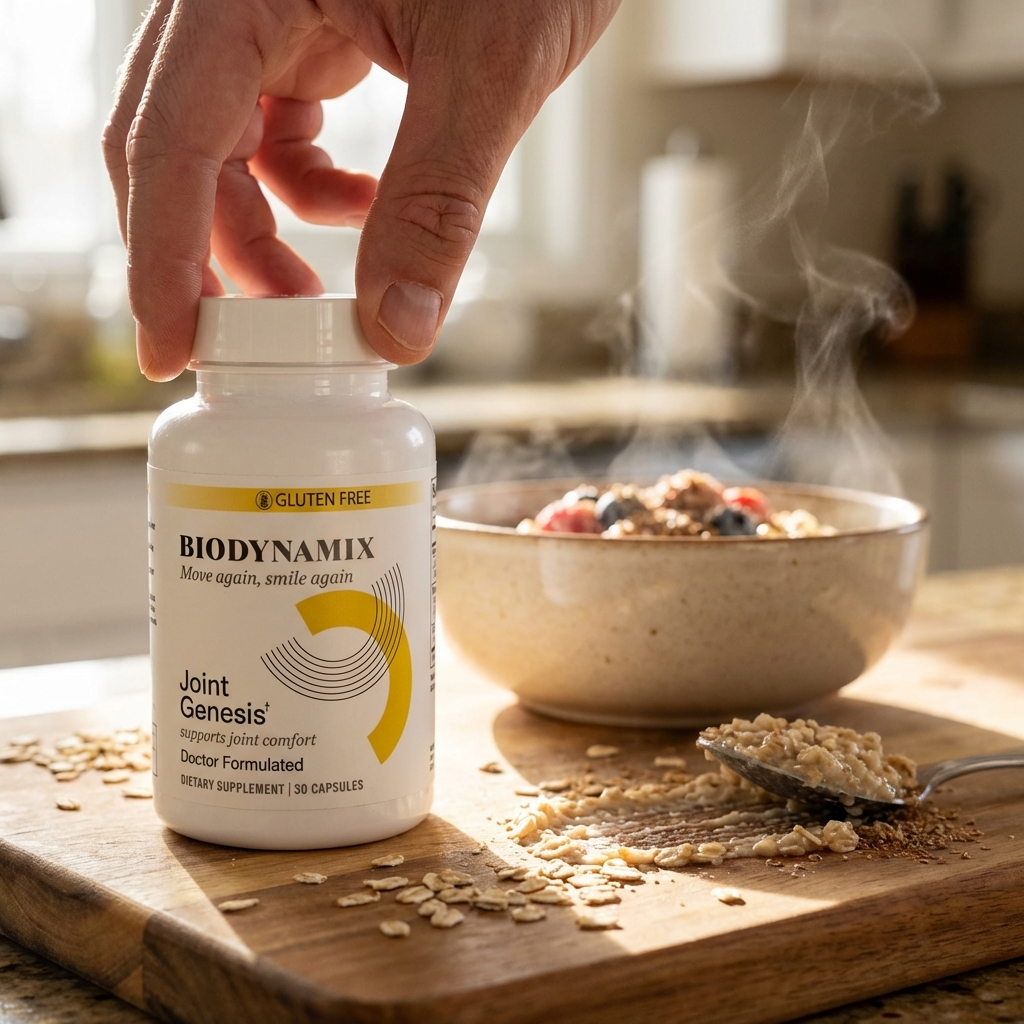
Smoother Starts, Daily
I built the calm plate. This keeps the “cushion” part consistent
Joint Genesis is made to support joint lubrication and cushioning, so movement feels less like friction. The core is Mobilee®, a hyaluronic acid matrix that contains hyaluronic acid, collagen, and polysaccharides—the combo it’s known for. I take it daily, like brushing my teeth.
-
First steps feel less “gritty”
-
Stairs feel more predictable
-
Keeps my baseline feeling supported
Over the months I’ve been doing both—the food rhythm and the daily supplement—my mornings have changed noticeably. I’m not bracing at the top of the stairs. I’m not modifying my walk before it starts. I’m not cataloging my joints like a daily inventory. That mental quiet might actually be the best part.
⸻
The Questions People Keep Asking Me
How fast did you notice something?
Honestly, within the first two weeks—small shifts, mostly in how I felt the next morning after a good eating day versus a bad one. The bigger change was how consistent the good mornings became when I stuck with the basics.
Do you have to quit fried food forever?
No. I just stopped treating it as background noise. When my regular meals are calm, the occasional indulgence doesn’t cost me the next day.
Is this expensive?
It can be. But frozen berries, canned salmon and sardines, oats, beans, lentils, and whatever vegetables are in season are all genuinely affordable. The pattern is what matters, not the premium version of every ingredient.
What if you hate fish?
Then walnuts, chia, flax, olive oil, beans, leafy greens, and colorful produce carry most of the same load. There’s no single food that makes or breaks this.
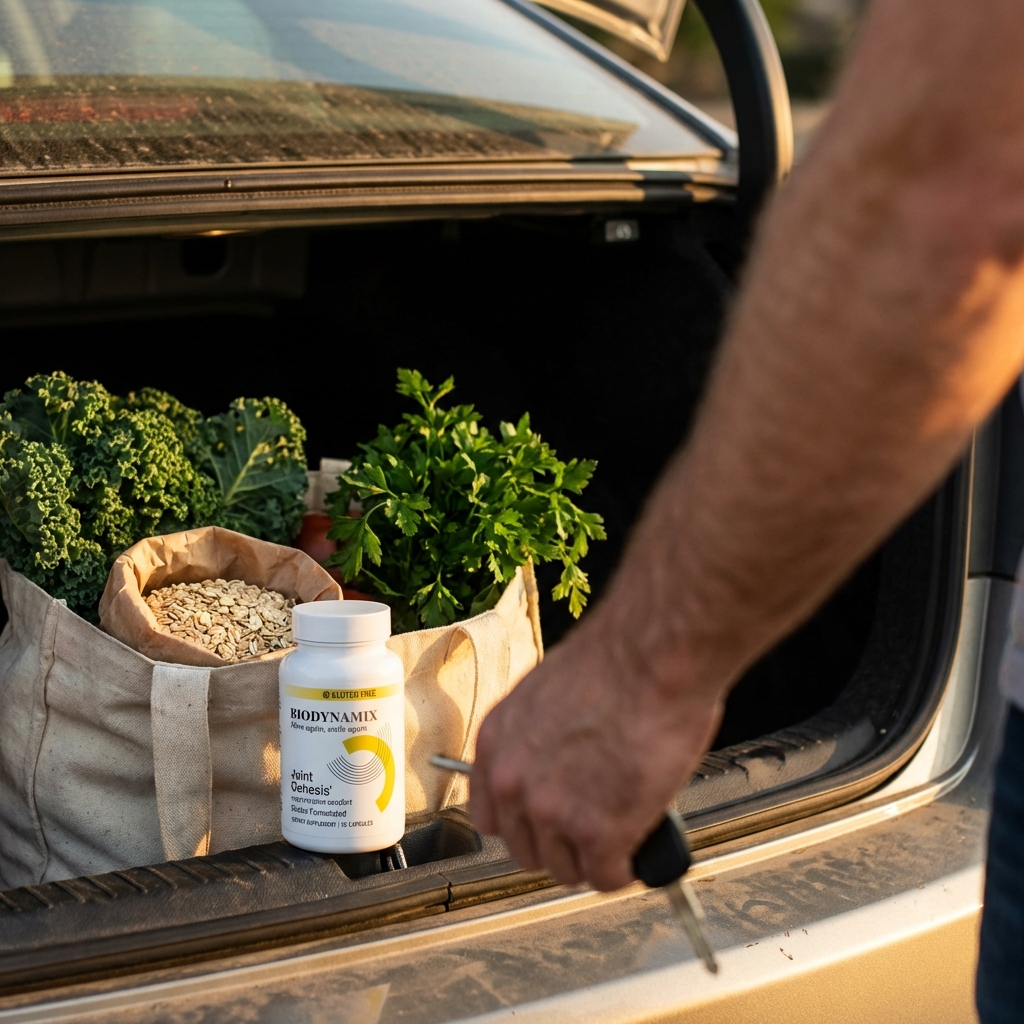
Less Next-Day Payback
This is my “busy week” support—when meals aren’t perfect
Joint Genesis doesn’t ask you to be perfect. It backs up your routine with a blend that includes French maritime pine bark, Boswellia serrata, ginger root, and BioPerine® (black pepper extract) to support absorption. When my body runs reactive, this helps me feel more steady.
-
Helps my body feel less “on edge”
-
Easier to bounce back after takeout days
-
Simple habit I actually keep
The Part I Wish Someone Had Told Me Earlier

Joint pain shrinks your life in ways that are easy to miss while they’re happening. You park closer. You skip the stairs. You stop volunteering for the long walk. You plan your days around what your body will tolerate instead of what you actually want to do. And at some point, all those small adjustments feel normal—until something you love, like a Saturday morning walk, goes missing and you don’t even notice when it left.
That’s why I keep coming back to what I eat for joint pain—not because food is magic, but because it’s something I can actually do. Every day, without drama, in my own kitchen. A calmer plate. A few daily anchors. And Joint Genesis in the background keeping the floor under me steady.
You don’t need a perfect plan. You need a consistent one.
One meal at a time, you can build a body that feels more like home again.
Written by Elias Menden — for those who seek steady strength.