Some mornings begin with energy. Others begin with negotiation. You stand up, take the first few steps, and realize your knees want a meeting before they want the day. They are not necessarily in full rebellion. They are simply stiff, guarded, and resistant enough to make movement feel older than the rest of you. That careful feeling can wear a person down quickly.
What made it especially frustrating for me was how easy it was to minimize. Nothing was dramatic enough to count as an emergency. But everything was consistent enough to change the mood of the entire morning. When your first steps feel cautious, the day begins in self-protection. You move less freely. You trust yourself less. You start treating ordinary motion like something you need to manage carefully.
I used to answer that feeling with tougher self-talk. Stretch more. Push through it. Stop making a story out of it. But the body does not usually respond well to criticism that early in the day. Once I started treating knee stiffness as information instead of failure, the whole problem became easier to work with.
Why Do Knees Often Feel Worst Before Breakfast?

There is a reason the first few minutes can feel worse than the next thirty. A body that has been still all night tends to wake up less fluid than it went to sleep, especially when joints are already irritated. MedlinePlus notes in its overview of knee pain and stiffness that swelling, overuse, arthritis, and related joint stressors commonly make motion feel harder after periods of rest. That fits what many readers already know in their bodies: stillness can make stiffness louder before movement has had a chance to help.
What matters here is not just the sensation. It is the way the sensation shapes your behavior. When the first steps feel uncertain, you begin the day braced. That brace can spread into the hips, the lower back, even your mood. Morning stiffness becomes more than a joint issue. It becomes the emotional weather of the day’s first hour.
That is why the right question is not “Why am I so weak in the morning?” It is “What kind of recovery, circulation, and support would make the body less defensive when the day begins?”
What Makes Stiffness Feel More Persistent Over Time?
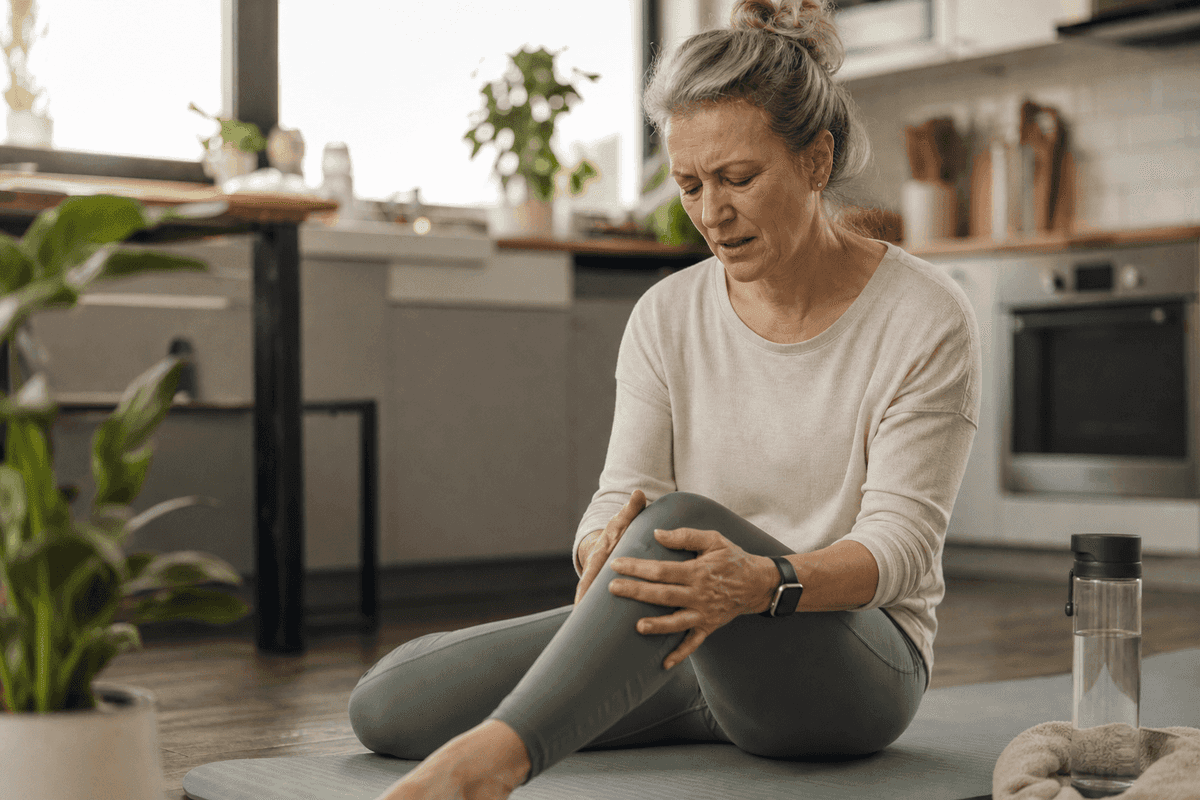
For me, stiffness got worse when the rest of my routine got smaller. Too much sitting. Too little casual movement. Poor hydration. Bad sleep. The body does not separate those issues neatly, so the joints do not either. If the day before was dehydrating, inflammatory, or mostly sedentary, the first steps of the next morning tended to tell the truth about it.
The National Institute on Aging highlights that joint comfort and mobility are influenced by activity level, muscle support, and how consistently the body is moved through the day. That broader frame helped me stop treating my knees like isolated problem areas. They were part of the whole recovery environment. They were reporting on how well the rest of me had been cared for.
That shift mattered. Once the issue became bigger than one sore joint, the solutions also became kinder and more realistic. Less punishment. More support. Less pushing. More preparation.
Why Warmth and Motion Usually Work Better Than Force

I used to think relief had to look dramatic to count. What actually helped most was much gentler than that: heat, slower transitions, a few minutes of movement before sitting down again, and a little more respect for how stiff tissue wakes up. Warmth seemed to tell the knees they did not need to defend themselves so aggressively.
That is what I mean when I say the knees often need more warmth than willpower. The body responds better to cooperation than to pressure. When joints already feel guarded, ordering them to act normal rarely produces graceful results. Giving them a better opening often does.
That lesson spilled into the rest of the day. Once mornings started less adversarially, movement later in the day stopped feeling like such a negotiation too. The first few steps set the tone for everything that followed.
What Daily Habits Help the Body Trust Movement Again?

The first improvements were not glamorous. They were ordinary enough to sound unimpressive when listed out: more water earlier, a little easier pacing in the morning, some heat, some gentle movement before sitting down too long, and more respect for how much the previous day shapes the next morning’s first five minutes.
I also noticed that the body handled mornings better when the day before had included more natural movement. Not punishing exercise. Just the ordinary kinds of motion that keep knees from becoming strangers to movement. Walking, standing up more often, moving through stairs instead of avoiding them when possible, and letting the legs remember they are allowed to be part of daily life.
That is the kind of support readers can actually keep. It does not require becoming an athlete. It requires becoming a little more cooperative with the body you already have.
Where Joint Genesis Fits in a Morning Mobility Routine
Joint Genesis made sense to me because it fit the real problem. I was not trying to feel hyped up. I was trying to feel less guarded. I wanted support that belonged in the long game of moving more freely, especially in the part of the day when stiffness was loudest.
That is what I respect in a mobility supplement. It should not pretend to replace sleep, hydration, warmth, or movement. It should fit beside them. A better morning happens when the whole routine becomes less inflammatory and more supportive, and Joint Genesis feels aligned with that kind of plan.

That fit matters. If your knees are already asking for gentler mornings, the right support should make the day feel more approachable, not just temporarily distracting.
Which Internal Links Help the Reader Build a Full Plan?
IyoMend already has useful joint content, so this post should act like a spoke and a bridge. That means linking readers into best supplements for joint pain, the more mobility-specific guide at best supplements for joint mobility, and the symptom-led companion piece at morning stiffness joint relief.
Those links give the reader a real path forward. One page helps her recognize the feeling. The next helps her compare options. Another gives her a broader framework for building the rest of the routine. That is how good cluster content earns trust.
It also helps search visibility in the most honest way possible. The site is not pretending to own the topic because of one article. It is showing that the article belongs to a wider, useful conversation about mobility and recovery.
The Goal Is Not Youth. It Is Trust.
I am not interested in pretending the body never changes. It does. What I want is a relationship with it that feels cooperative again. Less friction. Less caution. More trust that I can stand up and meet the day without feeling like I am already behind.
If your knees keep bargaining with you before breakfast, pay attention to that. Not as a verdict, but as a request. Sometimes the body is simply asking for warmer mornings, calmer recovery, and support that meets the issue where it actually lives.
I also learned that knees do not love surprises. They respond better when the body has some predictability: decent sleep, enough water, regular movement, and less swinging between long stillness and sudden overuse. Even simple decisions like supportive shoes in the house, a warmer shower, or a few patient stretches before rushing out the door made the morning feel less like a test.
That is what deeper support really means here. It is not a dramatic overhaul. It is a sequence of small decisions that tell the joints they are part of a body being looked after, not a body being pushed past its signals. When that support becomes consistent, the first steps lose some of their argument, and the rest of the day gains back a little more confidence.
I found it useful to think about joint confidence as something the whole routine earns together. Better mornings came faster when I paired mobility support with calmer evenings, lighter inflammation triggers, and enough daily walking that the knees never had to relearn movement from scratch. The body seems to trust familiar motion more than rare heroic effort, and that trust changes the feeling of the first steps.
Written by Elias Menden — for readers who want easier movement and more confident mornings