The first time my stomach cramped during a client call, I blamed lunch. The second time it happened—same sharp twist, different day—I blamed the coffee. By the fifth time, I ran out of excuses.
My gut wasn’t reacting to what I was eating. It was reacting to how I was living.
Tight deadlines. Back-to-back meetings. The kind of stress that sits in your shoulders and follows you to bed. I thought I was managing it. Performing through it. Keeping everything moving.
But my digestion had other ideas.
It started small—bloating that wouldn’t quit, a belly that felt swollen and pressurized after meals that used to feel easy. Then came the nighttime rumbling, that low churn that kept me half-awake, like my stomach was rehearsing tomorrow’s anxiety before I even woke up.
And that’s when it clicked:
My stress wasn’t just a mental problem.
It was living in my gut.
That realization changed everything—not because I suddenly got calm, but because I stopped treating my digestion like it existed in a separate universe from my nervous system.
That’s where stress gut health balance became real for me. Not as a wellness buzzword, but as the thing I had to get right if I wanted to stop feeling wrecked after every stressful stretch.
And the thing that made it possible?
Finessa.
⸻
When stress and digestion became the same problem
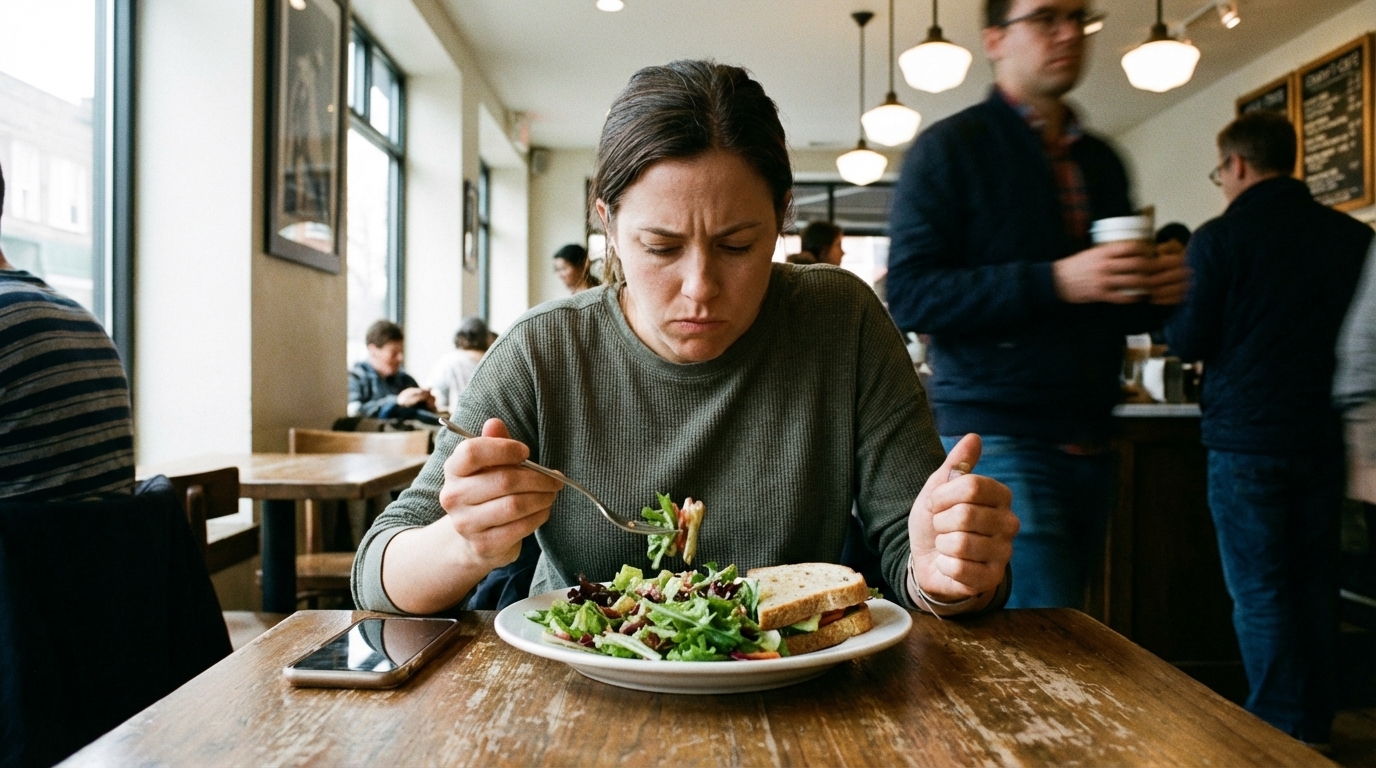
Here’s what I didn’t understand before:
Your gut and your nervous system aren’t just connected. They’re in constant conversation.
And when your body is running on adrenaline, your gut gets the memo.
I’d have a tense morning, and by noon my stomach felt like it was bracing for impact. A packed afternoon meant my digestion felt rushed, too—like it couldn’t keep up. One difficult conversation could make dinner sit wrong for hours.
It wasn’t random. It was a pattern.
The more I tried to power through, the louder my gut protested.
I ate at my desk because I didn’t have time to stop. I leaned on coffee to stay sharp through the afternoon slump. I told myself I’d decompress later, after everything was done. Spoiler: everything was never done.
And my digestion? It felt like it was constantly on alert.
Because when your body doesn’t feel safe, your gut doesn’t feel safe either. You can’t fake calm in one system while the other is spiraling. They rise and fall together.
What burnout actually looked like in my gut

Burnout didn’t announce itself.
It crept in through symptoms I kept dismissing as “temporary” or “probably just something I ate.”
Except it wasn’t temporary. And it wasn’t the food.
My stomach felt puffy and full after meals, like there was constant pressure building. Cramping showed up out of nowhere—sharp, irritated, like my gut was offended by nothing in particular. At night, the rumbling would start, that restless churning that kept me awake just enough to feel exhausted the next day.
What made it worse was the trying.
I was trying. I cleaned up my diet. I drank more water. I avoided the foods that seemed like obvious triggers.
And still, my gut acted like it was under siege.
That’s when it became clear: this wasn’t about food choices alone.
This was about stress gut health balance—and my gut flora was getting destabilized every time my life got chaotic.
⸻
The things that helped a little (but not enough)
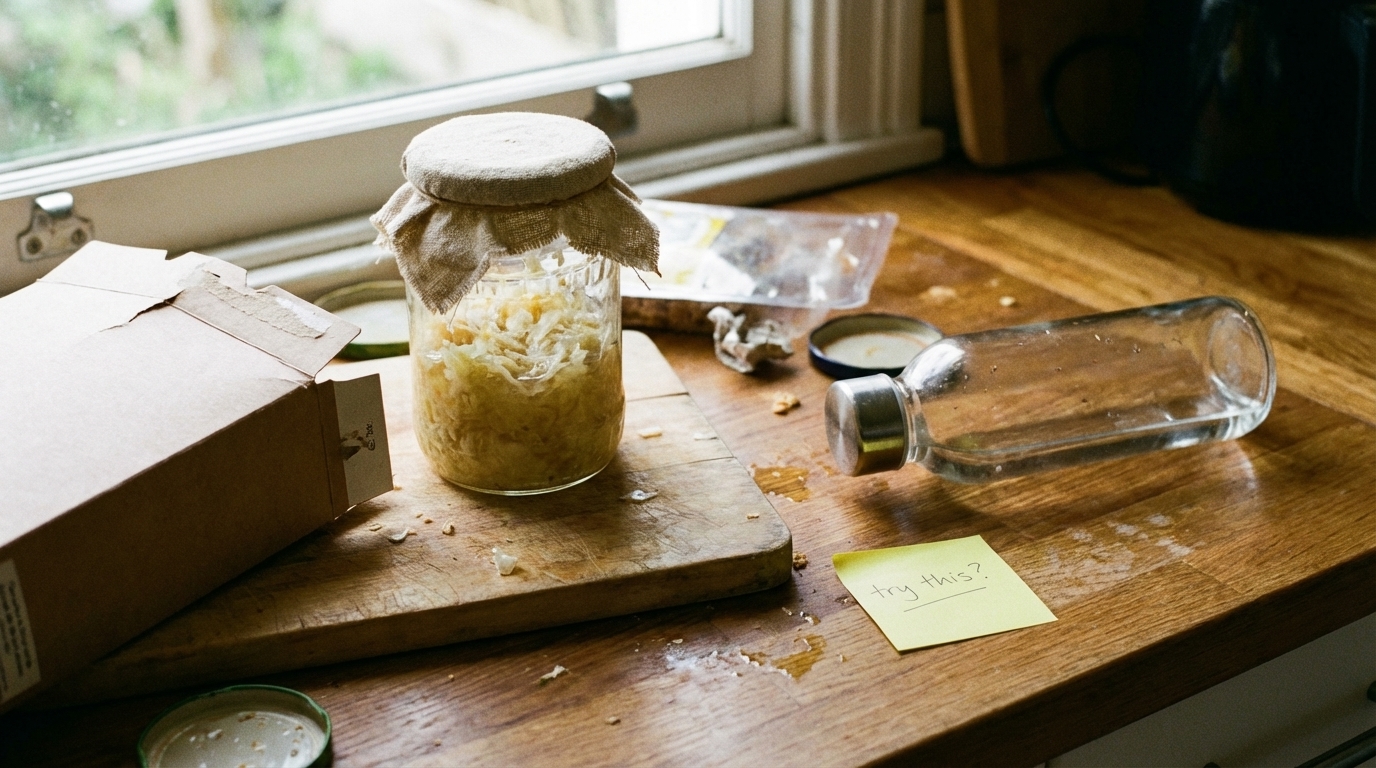
I did what anyone does when something’s broken: I tried to fix it.
- More fiber.
- More fermented foods.
- I read everything I could find about prebiotics and probiotics.
- I cycled through products that all claimed to be the gut-health answer.
Some of them helped. For a few days. Maybe a week.
But then stress would return—a busy week, less sleep, more coffee, more rushing—and my digestion would collapse again like it had learned nothing.
That was the breaking point for me.
Not the symptoms themselves, but the inconsistency. The feeling that I could be doing well, and then one hectic stretch would undo all of it.
I even tried calming my mind first. Breathing exercises. Meditation. Walks after dinner.
Those things are still good. I still do them.
But they weren’t enough on their own, because I don’t live in a retreat center. I live in the real world, with real pressure, and I needed something that could support my gut during the chaos, not just after it passed.
I needed a daily anchor. Something simple enough to stick with. Something that worked even when I wasn’t perfectly calm.
That’s why Finessa felt different from the start.
When Finessa became part of my routine—and what shifted
I didn’t add Finessa on a whim.
I added it because I was exhausted from the cycle—guessing, adjusting, hoping, then watching it all unravel the next time stress spiked.
I was tired of my stomach being the price I paid for functioning at a high level.
So I started taking Finessa every day.
Not just when symptoms were screaming. Not randomly, when I remembered. Every. Single. Day.
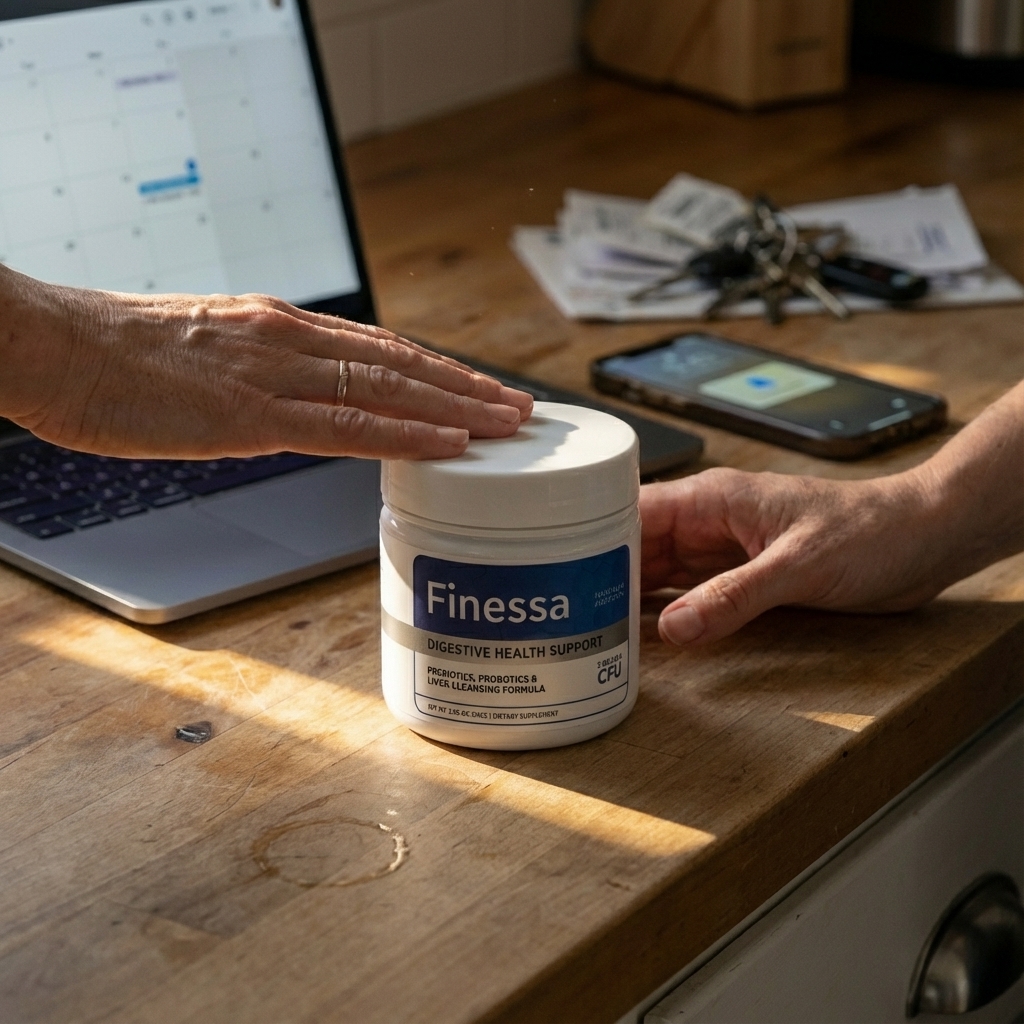
Make Finessa Your Anchor
When stress spikes, keep your gut routine steady
Add Finessa to your day—once, every day. It’s made for people who can’t pause life to “reset.” Keep it simple, stay consistent, and stop treating meals like a gamble. If your gut gets unpredictable under pressure, start with Finessa.
-
Daily support that fits busy schedules
-
Helps you feel steadier after meals
-
Less second-guessing on stressful weeks
And the shift wasn’t dramatic.
It was quieter than that. More like relief in the moments that used to feel tense.
Like eating a meal and not spending the next hour monitoring my stomach. Like getting through an afternoon without that heavy, bloated pressure creeping in. Like realizing my gut wasn’t demanding constant attention anymore.
I didn’t want fireworks. I wanted steadiness.
And that’s what Finessa started giving me.
The moment I knew this was working
There’s a moment that doesn’t sound like much—but if you’ve lived with unpredictable digestion, you’ll know why it mattered.
It was a regular Tuesday.
I ate breakfast. I worked through a stressful morning. I had back-to-back calls. I handled the usual chaos.
And then, mid-afternoon, I realized something:
I hadn’t thought about my digestion once.
No checking in to see if bloating was starting. No bracing for discomfort. No bargaining with my body to please, just this once, cooperate.
My gut had just… done its job.
That’s the moment I knew Finessa was the thing that changed things.
Because once you feel that steady baseline—where your digestion just works in the background like it’s supposed to—you don’t want to go back to the guesswork.
That’s when I stopped searching for the next solution.
⸻
The rhythm that finally felt sustainable

Here’s what surprised me most:
Once Finessa became consistent in my routine, everything else got easier.
Not because I transformed into some zen, perfectly balanced person.
But because my gut stopped fighting me at every turn.
I stopped treating meals like tests I might fail. I stopped panicking every time a stressful week showed up. I stopped trying to “fix” myself with frantic routines that felt like punishment.
Instead, I built a calmer rhythm that actually supported my gut—without requiring perfection.
I leaned into whole foods more often, but I didn’t obsess. I walked after meals when I could, especially on high-stress days. I prioritized sleep when my schedule allowed it. I made my mornings a little less chaotic, even if it was just ten extra minutes.
But here’s the shift that mattered most:
I wasn’t relying on willpower alone anymore.
Finessa gave me a steady foundation so the rest of my choices didn’t feel like emergency repairs. They felt like support stacking on support.
What balanced gut flora actually feels like
People throw around “balanced gut flora” like it’s some abstract wellness metric.
But for me, it became a feeling.
It felt like a lighter belly after eating. Like less pressure accumulating through the day. Like digestive comfort that didn’t hinge on having a perfectly calm, stress-free existence.
It felt like a body that was easier to live in.
And when your gut feels easier to live in, everything else gets a little steadier too.
Because you’re not carrying around that low-level fear anymore—the constant background hum of what if my stomach acts up again?
That fear is its own kind of stress.
Finessa didn’t just support my digestion. It lifted a layer of daily tension I didn’t even know I was carrying until it was gone.
What I do now when stress flares
Stress still happens.
Deadlines still pile up. Life still gets messy. My nervous system still has days where it runs too hot.
But I don’t automatically assume my gut is going to spiral anymore.
When I feel stress rising, I lean into my anchors:
- A short walk to shake off the adrenaline
- Eating slower—even if it’s just two or three extra minutes
- More water, fewer “panic snacks” grabbed between tasks
- And Finessa stays in my routine, because I have zero interest in relearning hard lessons
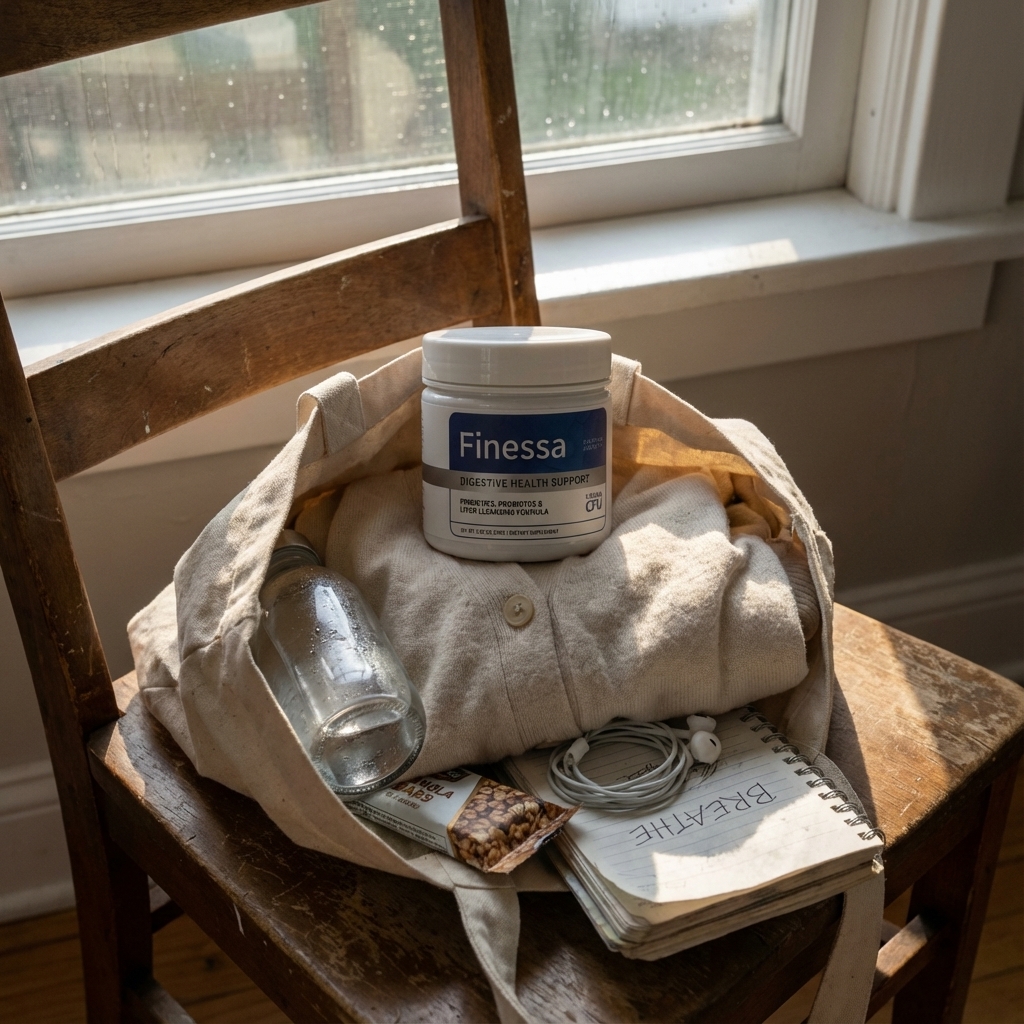
Don’t Restart Every Week
Keep Finessa in your routine—especially when life gets messy
Stressful week? Late meals? Too much coffee? Stay consistent with Finessa. It’s the daily step you can keep even when everything else is chaotic. Start now, stick with it, and build the steadier baseline your gut has been asking for.
-
Simple daily habit you’ll keep
-
Supports comfort through busy stretches
-
Helps your gut feel more predictable
That last part matters more than anything.
Because I’m not interested in going backward. I like stability. I like being able to focus on my work, my life, my goals—instead of constantly monitoring my digestion.
⸻
What stress gut health balance made possible
If stress has been landing in your gut, I understand.
It’s frustrating. It’s distracting. It makes you feel like your own body is working against you.
But here’s what I wish someone had told me sooner:
You don’t need a perfect, stress-free life to feel better. You need steady, daily support that helps your gut stay grounded even when life isn’t.
For me, that support was Finessa.
Finessa is what made stress gut health balance feel real in my body—not theoretical, not someday, but now. It’s what helped me stop searching, stop second-guessing, and stop acting like I needed to earn relief through perfect behavior.
Because once your gut feels steadier, you don’t just feel better after meals.
You feel more like yourself again.
—
Written by Liora Menden — for those who seek calm digestion under pressure.
Related reading
- Chronic Stress Heart Health: How I Swapped “Busy” for Breathing Room (and What Finally Moved My Numbers)
- When Your Body Forgets How to Feel Safe: Breaking the Stress Cycle
- Why Your Stress Management Tips Don’t Work (And What Does)
- Why I Added Meditation and 7 Minute Mindfulness to My Morning Routine for Heart Health