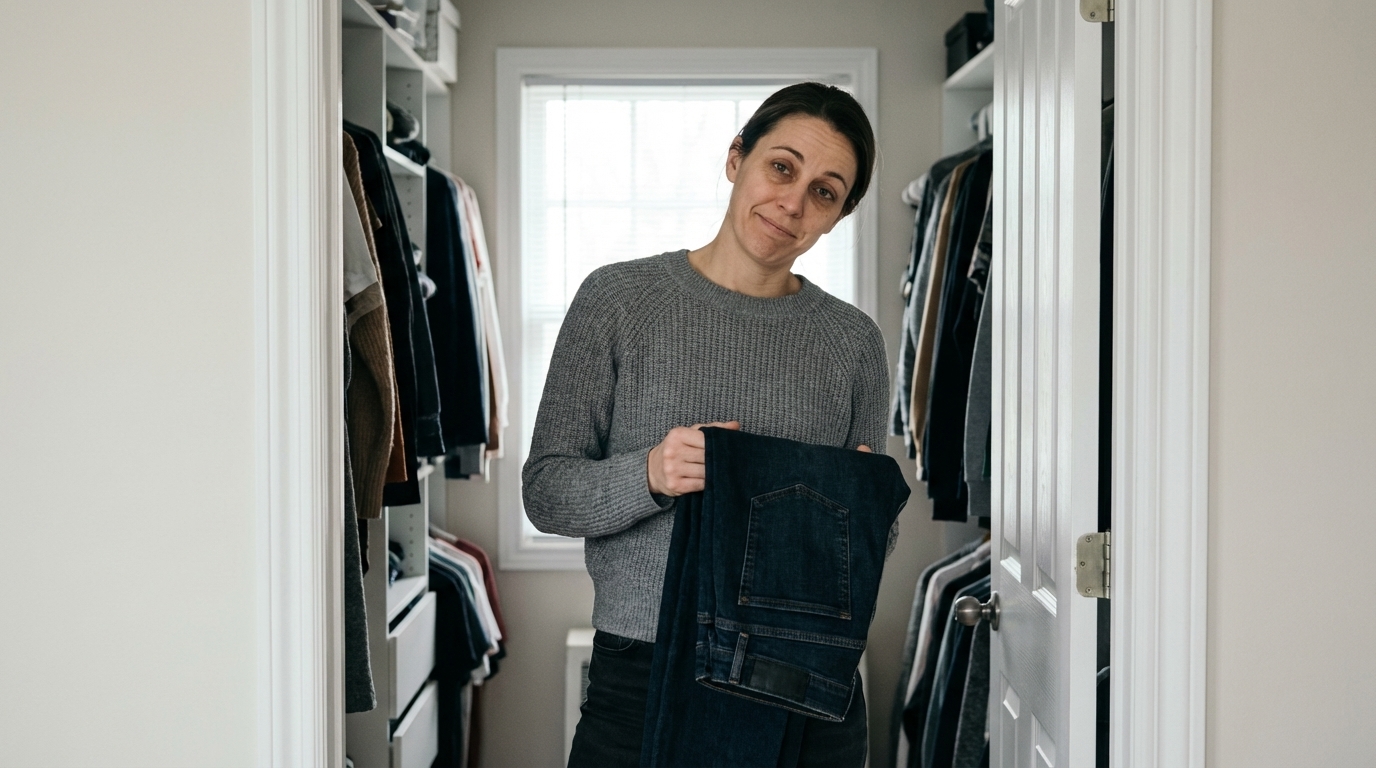
I stopped trusting my jeans before I stopped trusting my body.
Every three weeks or so, I’d pull them on and know—before the button even reached the hole—that today wasn’t going to work. The fabric would sit wrong. My belly felt like it had its own weather system, and I was always one step behind the forecast.
At first, I thought I was eating poorly.
Then I thought I was stressed.
Then I decided I was just bad at being a person.
It took embarrassingly long to notice the obvious: this wasn’t random.
It was clockwork.
⸻
The month I started keeping score

I didn’t plan to track anything. I’m not the journaling type.
But after the third time I changed outfits twice before leaving the house—after the third dinner I almost canceled because sitting felt impossible—I grabbed my phone and opened the calendar app.
I scrolled back through the last few months and marked every day I’d felt that familiar heaviness. The bloating. The constipation that made me walk differently, think differently, exist differently.
They clustered.
Always the same stretch of days. Always right before my period.
That’s when I Googled “hormonal constipation relief” for the first time—not because I wanted another wellness project, but because I was tired of my body holding me hostage.
The version of advice that doesn’t work
You probably know the list already.
- Drink more water.
- Eat more fiber.
- Exercise.
- Relax.
I tried. God, I tried.
I bought the expensive probiotic. I ate salads that could feed a family. I set hydration reminders on my phone like I was training for a marathon.
And here’s what happened: nothing got better. Some things got worse.
The raw kale made me feel like I’d swallowed rocks. The huge glasses of water at night meant I was up three times before morning. The guilt when none of it “fixed” me was louder than the constipation itself.
I needed someone to say the quiet part out loud: sometimes your body isn’t broken. Sometimes it’s just on a schedule you don’t control.
What nobody explained about hormones and your gut

I’m not a doctor. I don’t want to be.
But I needed to understand why my body did this—why constipation before period felt as reliable as the period itself.
Here’s what finally made sense:
In the second half of your cycle, progesterone rises. That hormone is brilliant at many things, but speed is not one of them. It slows everything down—including how quickly your intestines move food through.
Add some water retention, add some inflammation, add the fact that your body is essentially preparing for something that may or may not happen, and you get: that stuck, swollen, irritable feeling that makes you want to hide from your own life.
It’s not weakness. It’s not lack of discipline.
It’s hormones doing exactly what they’re supposed to do—even when the side effects are inconvenient.
Once I understood that, I stopped fighting. I started preparing.
⸻
The day I realized I was managing around my own body
Here’s the thing I’m not proud of:
I was choosing which invitations to accept based on where I was in my cycle.
If someone suggested plans for that specific week—the heavy week, the slow week—I’d calculate. Could I sit comfortably for two hours? Would there be a bathroom nearby? Could I wear something forgiving?
If the answer was uncertain, I’d invent a reason to decline.
Not because I didn’t want to go. Because I didn’t want to spend the entire time aware of my abdomen.
That realization hit differently than the constipation itself.
I wasn’t just physically uncomfortable. I was socially smaller. Quieter. Less present.
I decided to stop shrinking.
What actually moved the needle
- I stopped eating like I was apologizing. When my cycle hit that slow phase, I switched to foods that felt gentler: warm oatmeal instead of overnight oats, roasted vegetables instead of raw, rice bowls instead of giant salads. My gut responded like it had been waiting for permission to rest.
- I stopped adding fiber in panic mode. Instead of zero-to-sixty, I added it slowly. A handful of berries here. A small portion of lentils there. Enough that my system could adjust without feeling ambushed.
- I drank water like I meant it. Not in huge desperate gulps at 9 PM, but steadily throughout the day. Enough that I wasn’t playing catch-up when my body was already struggling.
- I walked without calling it exercise. Fifteen minutes after dinner. Twenty minutes mid-morning. Not to “burn calories” or “be healthy”—just to remind my body that movement was still an option.
- I kept simple things within reach. A handful of prunes. Herbal tea. Toast with almond butter. Things I didn’t have to think about when thinking felt hard.
And then there was the other change—smaller on paper, bigger in practice.
The addition I didn’t expect to matter
I found Mitolyn during one of those late-night research spirals where you’re not looking for a product, you’re looking for proof that you’re not imagining things.
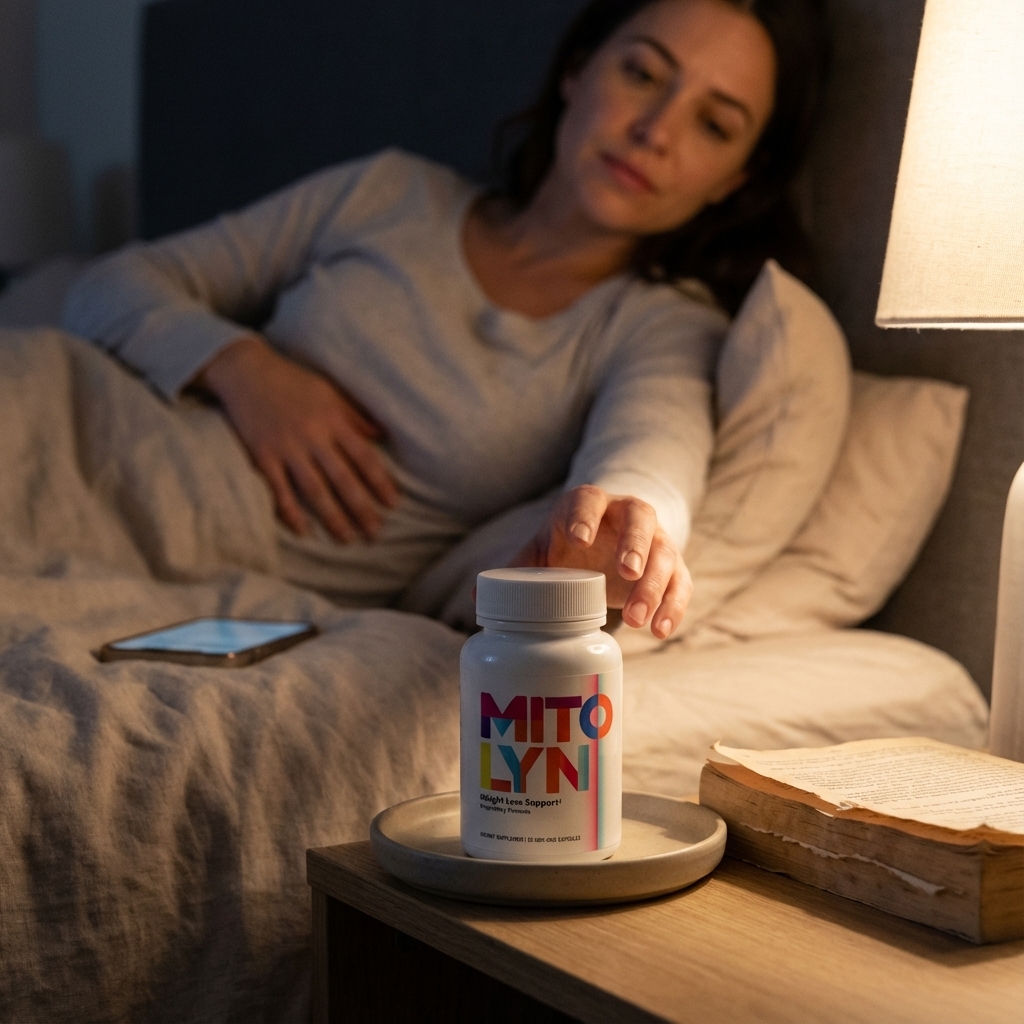
Get Mitolyn. Stay Steady.
When your cycle slows everything down, add one simple daily support
Mitolyn is an easy, repeatable step for women who want less guesswork in their month. Add it to your morning routine to support everyday digestive comfort and a steadier feel—especially when you’re prone to heavy, sluggish days.
-
Feels simpler than “trying everything”
-
Helps you stay calm and consistent
-
Supports a more even daily rhythm
I wasn’t chasing a cure. I was chasing consistency.
The first week, I didn’t feel miraculous. I felt normal. Which, honestly, was the miracle.
I kept it on the counter next to my vitamins. Took it in the morning. Didn’t think about it much after that.
But here’s what I noticed over time:
The heavy days didn’t disappear, but they got quieter. My energy felt less volatile. I wasn’t waking up dreading my own digestive system.
It wasn’t that Mitolyn “solved” constipation. It was that it helped me stop living on high alert.
And that shift—from bracing to breathing—made everything else easier.
⸻
Hormonal constipation relief as a practice, not a fix
Here’s what I wish someone had told me earlier:
Hormonal constipation relief isn’t about perfection. It’s about patterns.
When I stopped treating each episode like a crisis and started treating it like weather, I got better at preparation. I knew what to keep in the pantry. I knew when to say no to plans that would leave me uncomfortable. I knew when to be gentle with myself instead of demanding.
My routine now looks simple:
- Warm, soft breakfasts during the second half of my cycle
- Movement that feels like stretching, not striving
- Water throughout the day, not just when I remember
- Fiber that builds gradually, not aggressively
- Mitolyn in the rotation because it became part of the steadiness I was building
Not because any single thing was magic. Because together, they gave me a baseline I could trust.
The thing about PMS bloating nobody mentions

Sometimes the bloating isn’t even about digestion.
It’s about how you hold yourself when you feel uncomfortable in your own skin.
I used to stand differently during that week. Suck in. Hold my breath. Try to make my body smaller, quieter, less noticeable.
And that tension made everything worse.
Now, when the heaviness starts, I do the opposite.
I soften my belly. Drop my shoulders. Breathe into the discomfort instead of away from it.
It sounds too simple to matter. But it does.
Because fighting your own body takes energy you don’t have when PMS is already draining you.
When relief looks like knowing what’s coming
After a few months of this, something shifted.
The constipation didn’t vanish. But the panic did.
I stopped googling emergency solutions at midnight. I stopped adding random supplements in desperation. I stopped treating my gut like a puzzle I’d failed to solve.
I just returned to what I knew worked.

Keep Mitolyn In Rotation
For slow-week days, don’t start from scratch—start with support
Mitolyn is made for routines that need to hold up in real life. Take it daily to support a more comfortable, steady-feeling baseline—so you can make plans, get dressed, and show up without bracing for your body first.
-
Supports everyday digestive comfort
-
Easier mornings, less second-guessing
-
A calmer “I’ve got this” feeling
And Mitolyn stayed in the background—not as a headline, but as one reliable piece of a larger routine. Like knowing which shoes won’t hurt by the end of the day. Like keeping ibuprofen in your bag just in case.
That’s what hormonal constipation relief actually looks like: less drama, more rhythm.
Because when you stop reacting and start anticipating, your brain gets a break. And that break matters.
Steadiness is underrated.
Questions I don’t ask myself anymore
“Why is this happening to me?”
Because it’s not personal. It’s hormonal. And once I stopped taking it personally, I stopped feeling broken.
“Should I try something more extreme?”
Maybe. But extreme rarely feels sustainable. I’d rather have something I can do for years than something I can tolerate for three weeks.
“Does it really matter if it’s only a few days?”
Yes. Because those few days were determining what I wore, where I went, and how much of myself I brought to my own life. That matters.
⸻
The permission you might need
If you’re stuck in that familiar loop—constipation before period, bloating, the mental load of wondering if today will be one of the difficult ones—here’s what I’d tell you:
- You’re allowed to stop experimenting and start stabilizing.
- You’re allowed to choose routines that feel boring if they help you feel steady.
- You’re allowed to notice patterns without shame.
- And you’re allowed to find hormonal constipation relief that doesn’t look like a transformation story—just a body that feels easier to live in.
For me, Mitolyn became part of that ease. Not because it changed everything overnight, but because it helped me stop white-knuckling my way through the hard days.
And honestly? That’s all I wanted. Not perfection. Just a little more space to breathe.
⸻
Written by Liora Menden — for those who seek steadiness.
Related reading
- The Perimenopause Symptoms Guide I Needed When My Body Started Speaking a Language I Didn’t Understand
- Perimenopause Night Sweats and Brain Fog: When Your Body Rewrites the Rules at 2 A.M.
- When Your Body Starts Speaking a Language You Don’t Recognize: Signs of Hormonal Imbalance
- Your Body’s Hidden Balance System and Menopause Relief