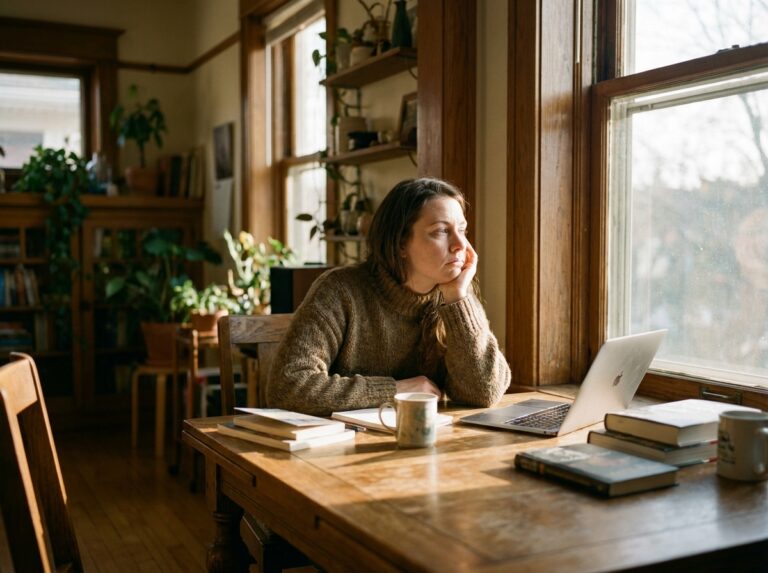
There’s this thing that happens around three o’clock.
You’re sitting there, doing your work, responding to emails, looking completely normal from the outside. And then your body decides to stage a quiet rebellion.
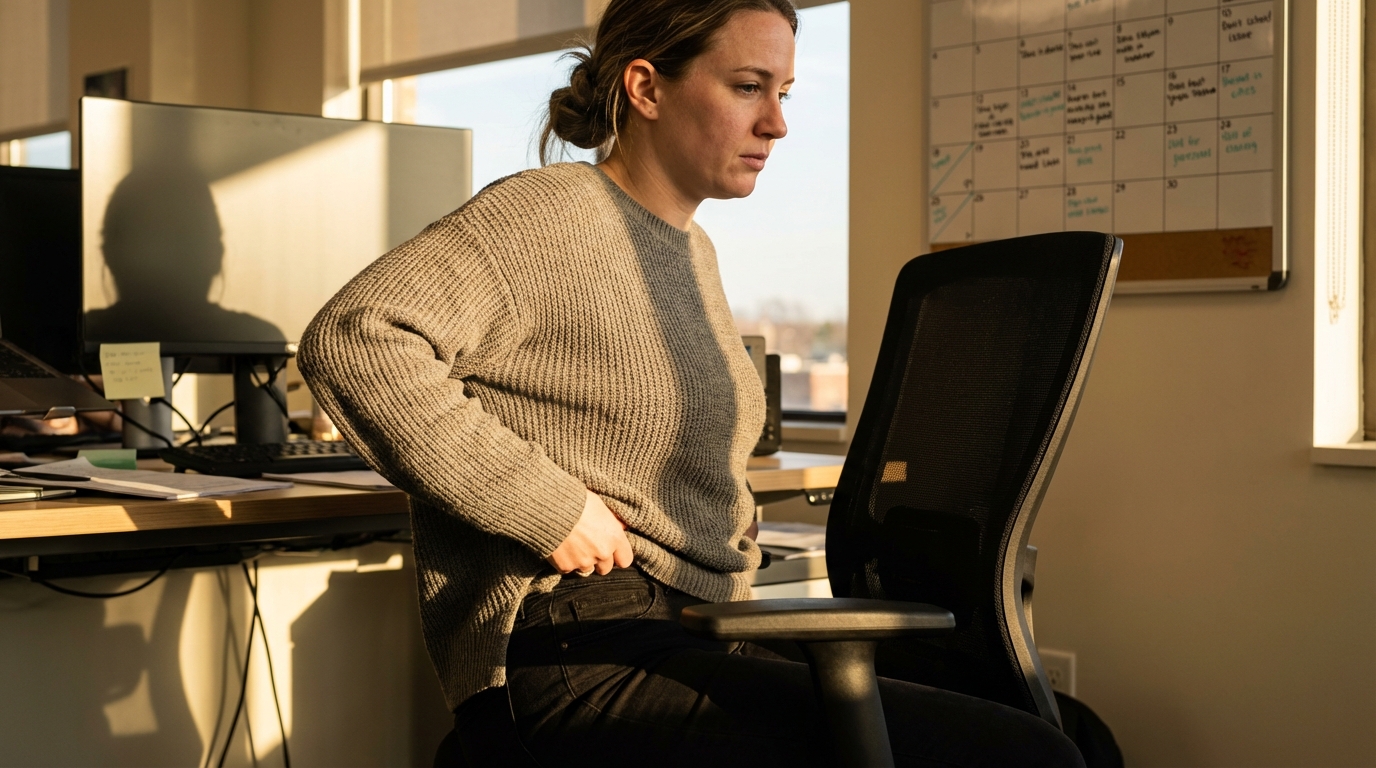
Your belly starts expanding like someone’s inflating it from the inside. Your waistband digs in. You catch yourself holding your breath, trying to make it less obvious, even though no one’s looking.
I spent months in this weird afternoon limbo—functioning fine on the surface while secretly uncomfortable in my own skin. The bloating would show up right on schedule, like it had been waiting all day for its moment.
I wasn’t looking for a miracle. I just wanted to understand why my stomach kept ambushing me when I had three more hours of work to get through.
What I learned changed how I think about afternoon bloating causes and solutions—not as some mysterious body failure, but as a puzzle I could actually solve.
⸻
It wasn’t happening to me. It was happening because of me.
The hardest thing to accept was that my 3 p.m. bloat had a backstory.
It didn’t just appear out of nowhere. It was the natural consequence of everything I’d done since breakfast.
Most afternoons follow a pattern: energy drops, focus gets fuzzy, your body starts running on fumes. Digestion slows down during this dip—it’s biology, not a personal failing.
But then I’d layer my habits on top of that natural slowdown:
- Wolfing down lunch like I was late for something
- Drinking multiple coffees to power through
- Sitting hunched over my keyboard for hours straight
- Carrying stress in my shoulders and stomach without realizing it
Each choice seemed harmless by itself. Together, they created the perfect conditions for my belly to revolt.
Once I understood I was building toward the bloat all day long, I stopped feeling like a victim of my own body.
⸻
The hidden triggers I didn’t see coming
Speed-eating turned every meal into a problem
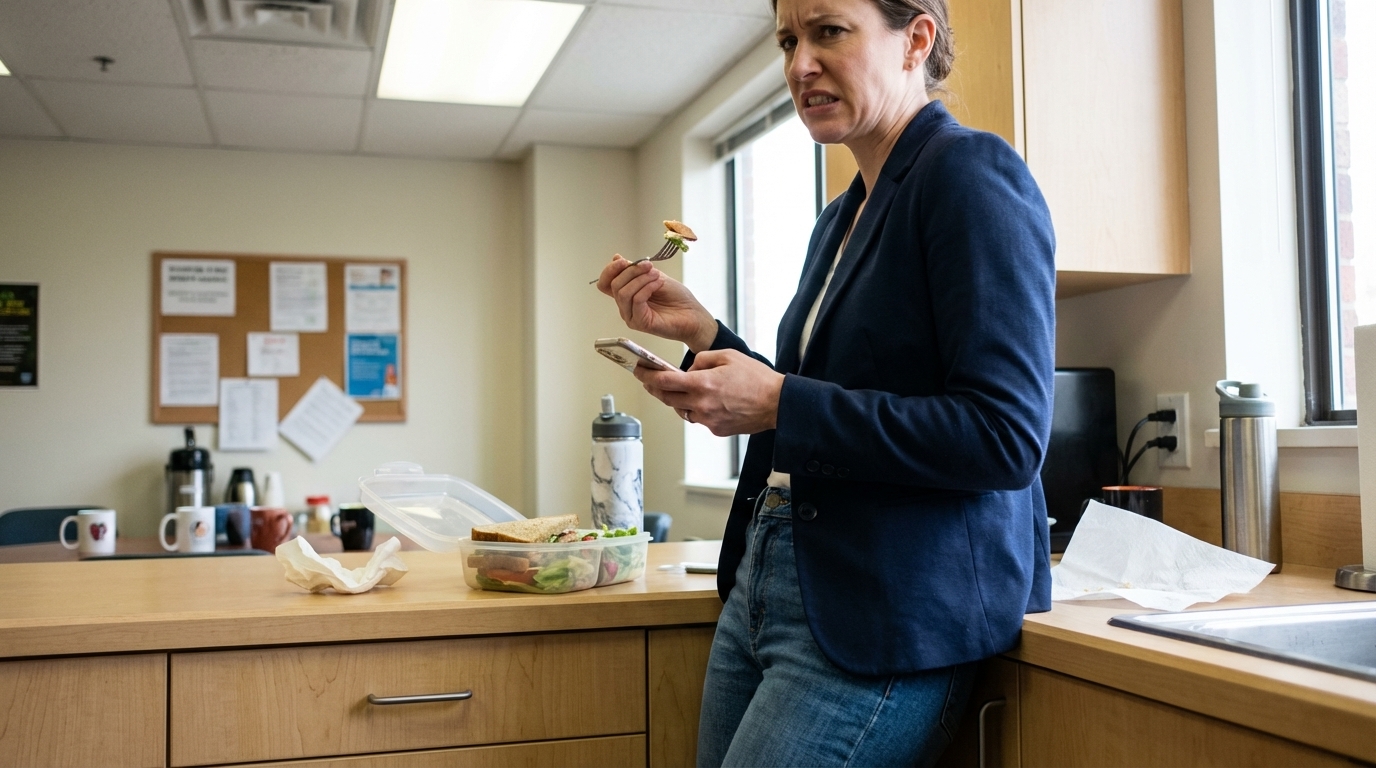
I’d sit down with my lunch and somehow finish it in seven minutes flat.
Not because I was savoring it. Because my brain was already three tasks ahead, and eating was just another box to check.
The issue isn’t complicated: when you eat that fast, you swallow air. Your stomach doesn’t get the signal that food is coming. Everything lands in a jumbled rush.
I didn’t become some zen lunch meditator. I just stopped treating meals like speed runs.
That one shift—eating at a human pace instead of a panic pace—changed how my stomach handled the afternoon.
My lunch choices felt fine until they didn’t
I’d grab whatever seemed reasonable: a sandwich, maybe chips, something sweet to finish. Nothing crazy. Nothing that screamed “this will wreck you later.”
But by mid-afternoon, my body would send a clear message: that meal was too much.
Not too many calories. Too much work. Too dense, too heavy, too complicated for my system to process while I sat motionless for hours.
I started building lunches around a different question: Will I still feel light three hours from now?
- Protein that doesn’t sit like a rock
- Cooked vegetables instead of raw bulk
- Smaller portions that leave room to breathe
- Foods that feel gentle, not punishing
The goal was simple: make lunch something my afternoon self would thank me for.
Coffee was masking a bigger problem
Every time I felt the afternoon drag starting, I’d reach for more coffee.
And every time, I’d end up feeling wired but puffy—like my body was running on empty and pretending otherwise.
Midday bloating wasn’t always about food. Sometimes it was about being chronically dehydrated and over-caffeinated, stuck in a cycle where coffee replaced water and rest.
I didn’t quit coffee. I just stopped asking it to do jobs it wasn’t designed for.
My desk posture was slowly suffocating my digestion
This one took me forever to notice.
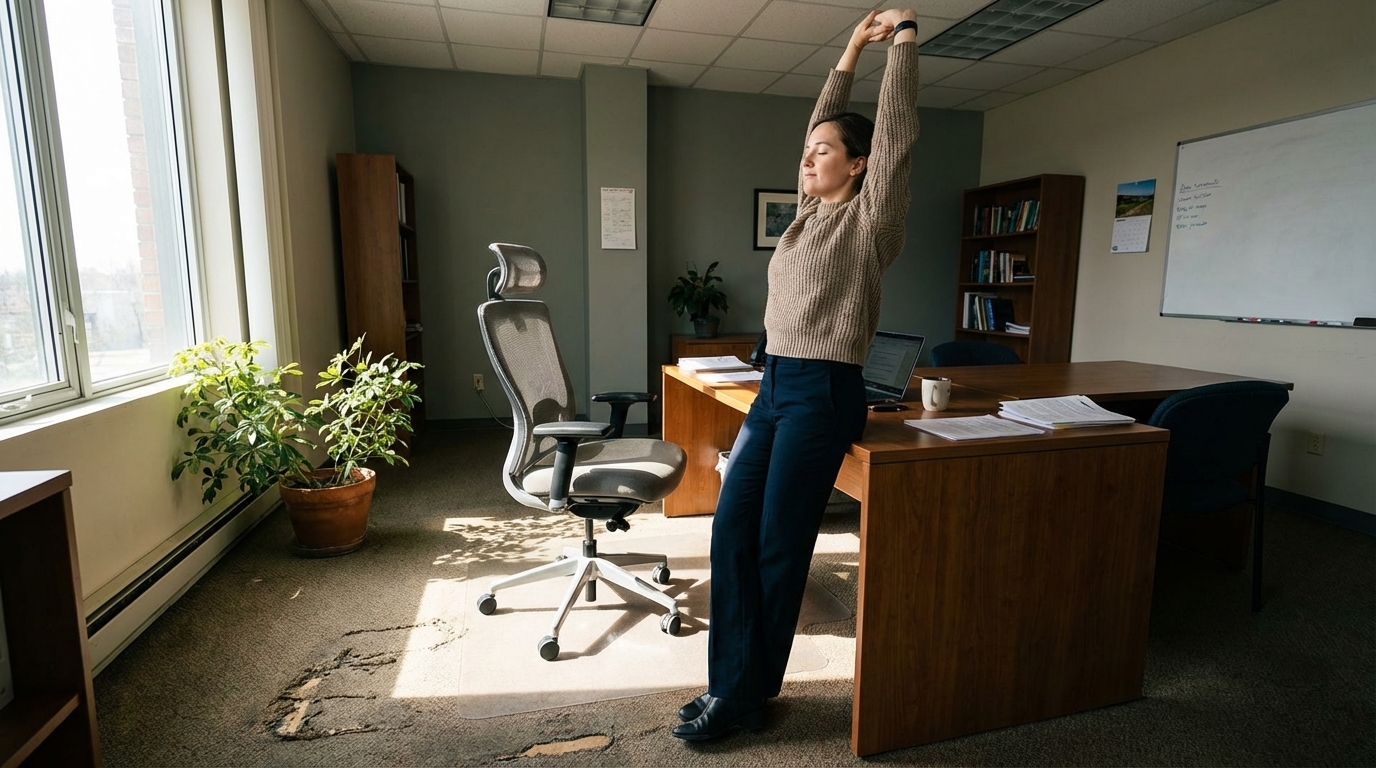
I’d sit with my torso folded, my belly compressed, my hips locked at ninety degrees—for five, six, seven hours straight.
Imagine trying to digest a meal while someone’s gently squeezing your midsection the entire time. That’s what I was doing to myself.
A short walk after eating. Standing for a few minutes. Stretching my arms up and opening my chest. Nothing intense—just giving my body permission to unfold.
It sounds too simple to matter. But my stomach started cooperating more once it had room to work.
⸻
The lunch strategy that ended the afternoon crash
I kept trying to find the “perfect meal” that would prevent bloating.
But the real breakthrough wasn’t about what I ate. It was about how I ate it.
Three changes made the difference:
- I scaled back portion size.
Not drastically. Just enough that I wasn’t forcing my body into overtime. - I chewed more deliberately.
My stomach doesn’t have teeth. If I don’t break food down upfront, I’m asking my gut to do extra labor. - I moved my body afterward.
Even ten minutes of gentle movement kept digestion from stalling out completely.
None of this required discipline or willpower. It just required paying attention to cause and effect.
And my afternoons got noticeably calmer.
⸻
What bloating actually steals from you

Here’s what no one talks about: the discomfort is only part of it.
The bigger loss is mental.
When your belly is distended and uncomfortable, you spend the afternoon half-present—monitoring yourself, adjusting your clothes, wondering if it’s noticeable, wishing you could fast-forward to evening.
It’s not about vanity. It’s about losing access to your own focus and confidence because your body won’t let you forget it’s there.
So when I say I found afternoon bloating causes and solutions that worked, I don’t just mean my stomach felt better.
I mean I got my afternoons back. My attention back. The ability to sit in a meeting without thinking about my waistband.
That’s what was actually at stake.
⸻
The two-meal approach that stopped the trapped feeling
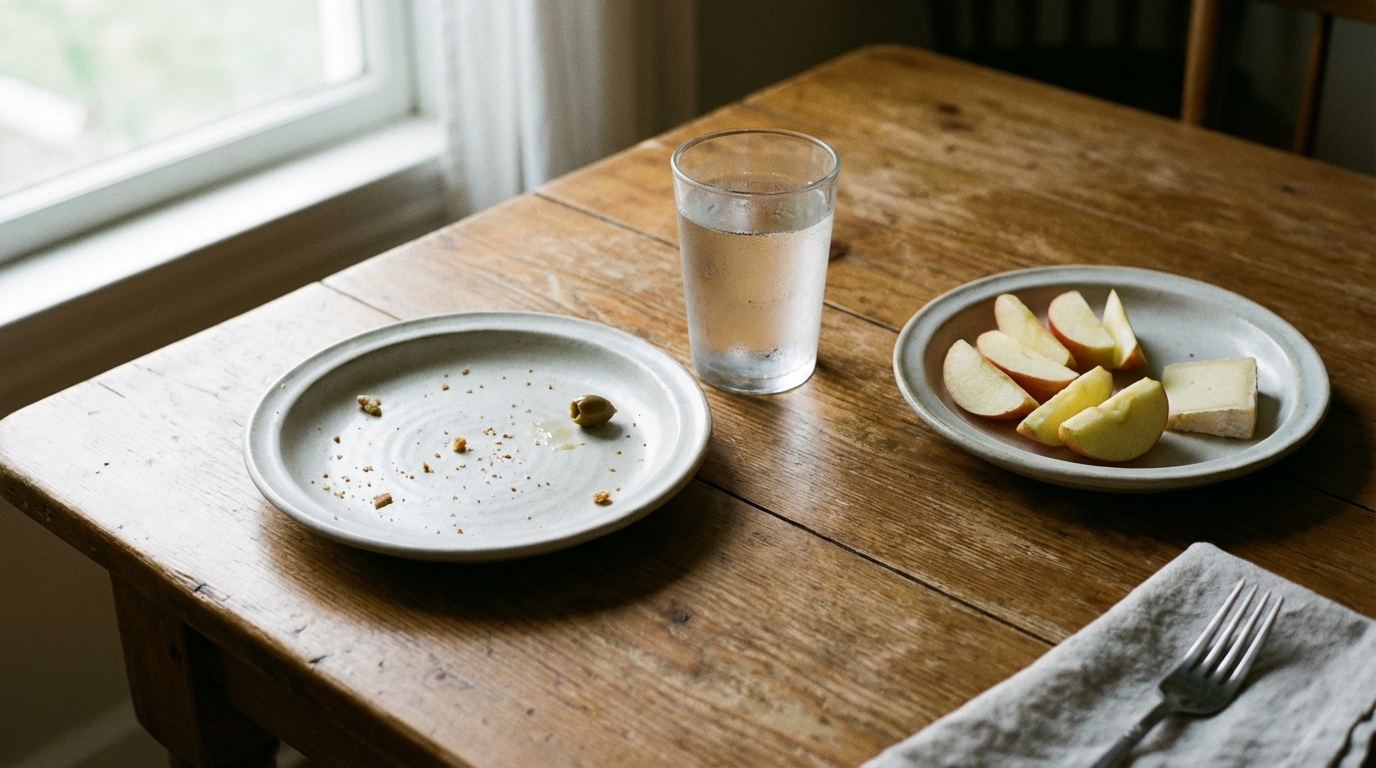
One shift changed everything: I stopped trying to cram all my midday calories into one sitting.
Instead, I’d eat a moderate lunch that felt manageable, and if I got hungry later, I’d have a small snack ready—something simple and easy.
When I ate one big meal, my afternoon felt like a slog. My body was busy processing food instead of helping me think clearly.
When I split things up, the pressure lifted. My energy stayed steadier. And I didn’t feel like I was trapped under the weight of my own lunch.
This also helped with bloating in the afternoon that felt tied to overeating without realizing it.
It gave my digestive system breathing room.
⸻
Small supports that didn’t require a lifestyle overhaul
Even with better habits, some days were just harder.
Stress levels varied. Sleep wasn’t always great. Schedules got chaotic.
So I kept a few gentle tools on hand that didn’t demand perfection:
- Peppermint tea for when things felt gassy.
- Ginger when my stomach felt sluggish.
- Water—more of it, more consistently—because dehydration made everything worse.
And then there was LeanBiome, which I started taking almost as an experiment.

Stop Dreading 3 p.m.
If afternoons always feel “tight,” start here
LeanBiome is my daily probiotic support for calmer afternoons. Take it consistently and let it do quiet background work while you keep life moving—lunch meetings, stress spikes, imperfect hydration and all. If you want less belly drama without a new personality, LeanBiome fits.
-
Feels lighter after lunch
-
Less distracted by your body
-
Easier to stay consistent
The first thing I noticed wasn’t dramatic. It was the absence of the usual afternoon drama.
A few weeks in, I realized my stomach wasn’t staging its daily protest anymore. I wasn’t unbuttoning anything under my desk. I wasn’t doing that subtle chair-shift trying to find a position that didn’t hurt.
LeanBiome didn’t “fix” me because I wasn’t broken. It just gave my digestive system a little more resilience—like it could handle my imperfect days without falling apart.
That mattered because I needed something that worked in real life, not just in theory.
⸻
The simple stack that made afternoons bearable again
If you want the short version of what actually helped, here it is:
- Eating without rushing, even when I wanted to
- Chewing properly instead of barely
- Building lighter lunches that didn’t demand so much from my body
- Moving briefly after meals so digestion didn’t get stuck
- Drinking water throughout the day instead of playing catch-up
- Noticing when stress was settling into my gut
- Using LeanBiome as steady support instead of a last resort
None of this was complicated. None of it required being perfect.
It just required being honest about what my body was trying to tell me.
And the honesty wasn’t harsh. It was practical. Like: Okay, this habit creates this outcome. Let’s try something different.
⸻
The questions I used to panic about (answered)
“Why does bloating only hit me in the afternoon?”
Because that’s when the day’s choices accumulate. Your digestion slows naturally in the mid-afternoon, and if your habits are working against it, that’s when you’ll feel it.
“Can I keep drinking coffee without making things worse?”
Yes. Just balance it with water, don’t use it as a substitute for rest, and pace it instead of gulping it down.
“Should I try digestive enzymes or probiotics?”
Probiotics worked for me in the form of LeanBiome. But the foundation has to be there first—slower eating, manageable portions, movement after meals.

Make Afternoons Feel Easier
Your routine can be simple—and still work
Add LeanBiome to your daily routine and stop relying on “perfect” days to feel comfortable. It’s an easy, repeatable probiotic support you can take consistently—especially when lunch is fast, meetings stack, and stress sneaks in. If you want steadier afternoons, start with LeanBiome.
-
More comfortable workdays
-
Less “puffy and distracted”
-
A habit you can keep
⸻
The afternoon I realized something had shifted
A few months after making these changes, I had a typically stressful day.
Rushed morning. Grabbed lunch quickly. Meetings stacked back-to-back.
And then I looked at the clock—3:47 p.m.—and realized I felt… normal.
Not perfect. Not like I’d never be bloated again. Just comfortable.
The biggest change wasn’t physical, though. It was psychological.
I wasn’t bracing for discomfort. I wasn’t planning my afternoon around managing my stomach. I wasn’t thinking about how I looked or felt in my chair.
I was just working. Just living. Just present.
That’s what good afternoon bloating causes and solutions actually give you. Not a perfect body—a functional one. Not zero discomfort—fewer interruptions.
And most importantly: your attention back.
⸻
You’re not broken. You’re just in a pattern.
If your stomach consistently swells up mid-afternoon, you’re not defective.
You’re caught in a cycle that your habits built. And cycles can be interrupted.
A slower lunch. Some movement. Better hydration. Less compression. And for me, LeanBiome as that quiet background support that helped my gut stay calm through normal chaos.
Because the goal isn’t perfection. It’s just getting through 3 p.m. without having to negotiate with your own body.
And that’s completely possible.
Written by Liora Menden — for those who seek rhythm.
Related reading
- Why Your Energy Tanks Every Afternoon — And the One Thing That Finally Fixed Mine
- When Your Stomach Hijacks Your Calendar (And How I Got My Days Back)
- How I Finally Learned to Support Hormones for Weight Loss (and Stopped Fighting My Body)
- Can You Actually Build Immunity Naturally Over Time? Here’s What Finally Changed for Me