You’re googling at 2 AM again. Maybe it’s “why do I wake up sweating,” or “sudden anxiety for no reason,” or “am I losing my mind or is this hormones.” You’ve been high-functioning your entire adult life—handled pressure, juggled impossible schedules, kept it together when things fell apart around you.
So why does your own body suddenly feel like a stranger?
I know that specific flavor of scared—the kind you don’t say out loud because admitting it makes it real. The kind that sits in your chest at 3 AM while everyone else sleeps and you’re wide awake, heart pounding, wondering when you became someone who can’t even trust her own nervous system. For me, it started as a “rough patch.” Then it became my new normal.
And it wasn’t until I found a real perimenopause symptoms guide—one that felt like reading my own diary—that I finally understood what was happening. And it wasn’t until I started taking MenoRescue that I stopped white-knuckling my way through every single day. Not as an experiment. As a lifeline.
⸻
The signs I explained away because I’m supposed to handle things

Here’s what I told myself for months:
- The night sweats? My apartment runs hot.
- The sudden tears during a work meeting? I’m just tired.
- The snapping at my partner over something tiny? Bad day, I’ll apologize later.
- The walking into rooms and forgetting why? Everyone does that.
I had an excuse for everything because I didn’t want to be the person who “falls apart” over nothing. Except it wasn’t nothing. My body was trying to get my attention in a dozen small ways:
- Heat rising through my chest and neck like a wave I couldn’t predict or control
- Irritability that felt chemical, not situational—like my patience had physically thinned
- Exhaustion that sleep didn’t fix, the kind that lives in your bones
- A brain that worked slower, like trying to think through fog
- Cycles that shifted, shortened, or disappeared for months
And the worst part? The variability. Some days I felt completely normal. Other days I felt like I was operating my own body from the outside, like I’d forgotten how to be comfortable in my own skin. I kept waiting for it to pass. I kept thinking, Once this project ends. Once I get more sleep. Once things calm down. But my body wasn’t waiting for my schedule to clear.
What nobody tells you about how perimenopause actually lands
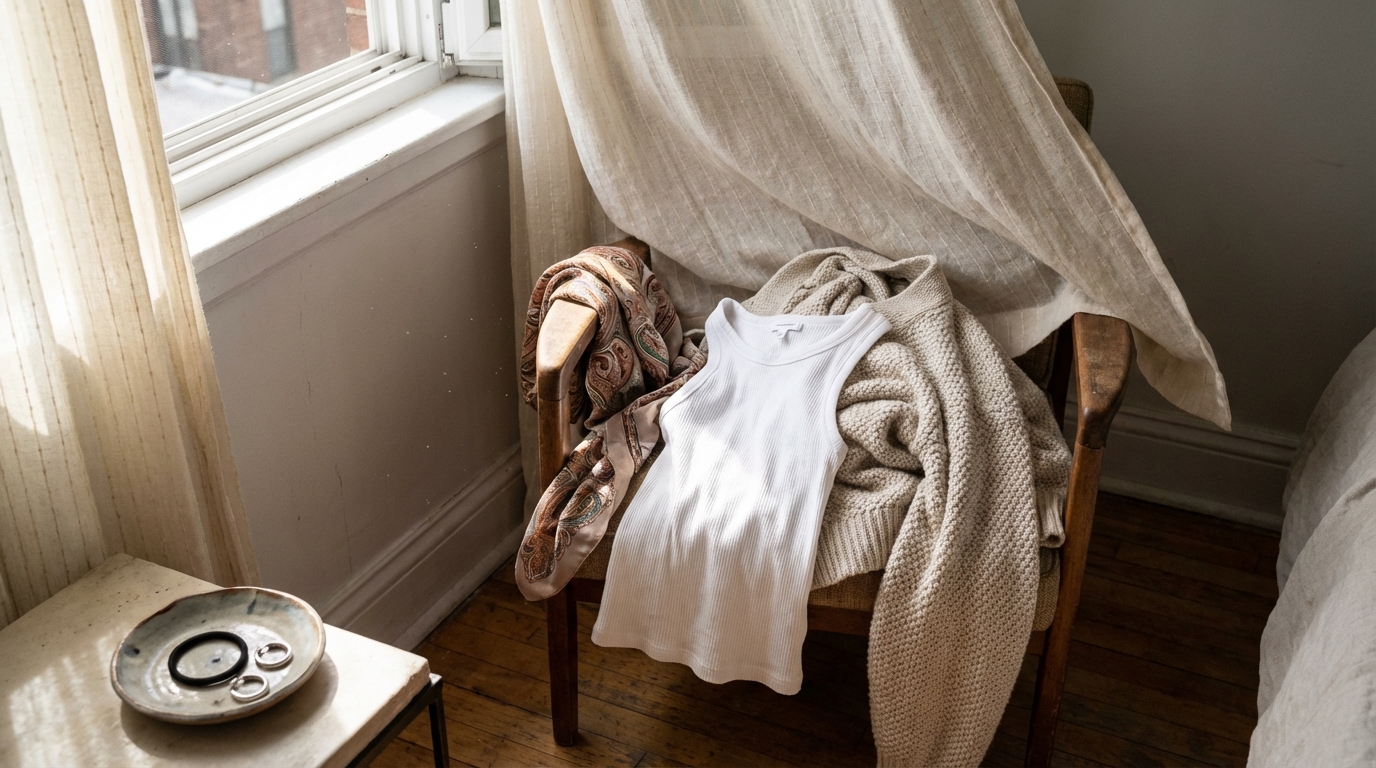
Perimenopause doesn’t announce itself. It doesn’t arrive with a manual or a start date or a clear diagnosis. It sneaks in sideways, dressed up as a hundred other things: stress, aging, poor sleep habits, maybe you need to exercise more, maybe you’re drinking too much coffee, maybe you’re just not handling life as well as you used to.
And because it’s inconsistent—because you can feel fine one week and unraveled the next—it’s easy to dismiss. But here’s what it actually felt like from the inside:
Like my emotional thermostat broke. Small frustrations felt enormous. Tiny disappointments crushed me. I’d cry, then feel embarrassed for crying, then feel angry that I felt embarrassed.
Like my brain needed more time to do simple things. I’d lose words mid-sentence. Forget names of people I’ve known for years. Reread the same email three times and still not retain it.
Like sleep became a negotiation instead of a given. Even when I was exhausted, my body refused to stay asleep. I’d wake up hot, anxious, buzzing with thoughts that made no sense at 3 AM but felt urgent anyway.
Like I was performing “being myself” instead of actually being myself.
That last one scared me the most. Because I’ve always been steady. Capable. The person people lean on. And suddenly I wasn’t sure I could trust my own reactions anymore.
⸻
The night I stopped pretending I was fine
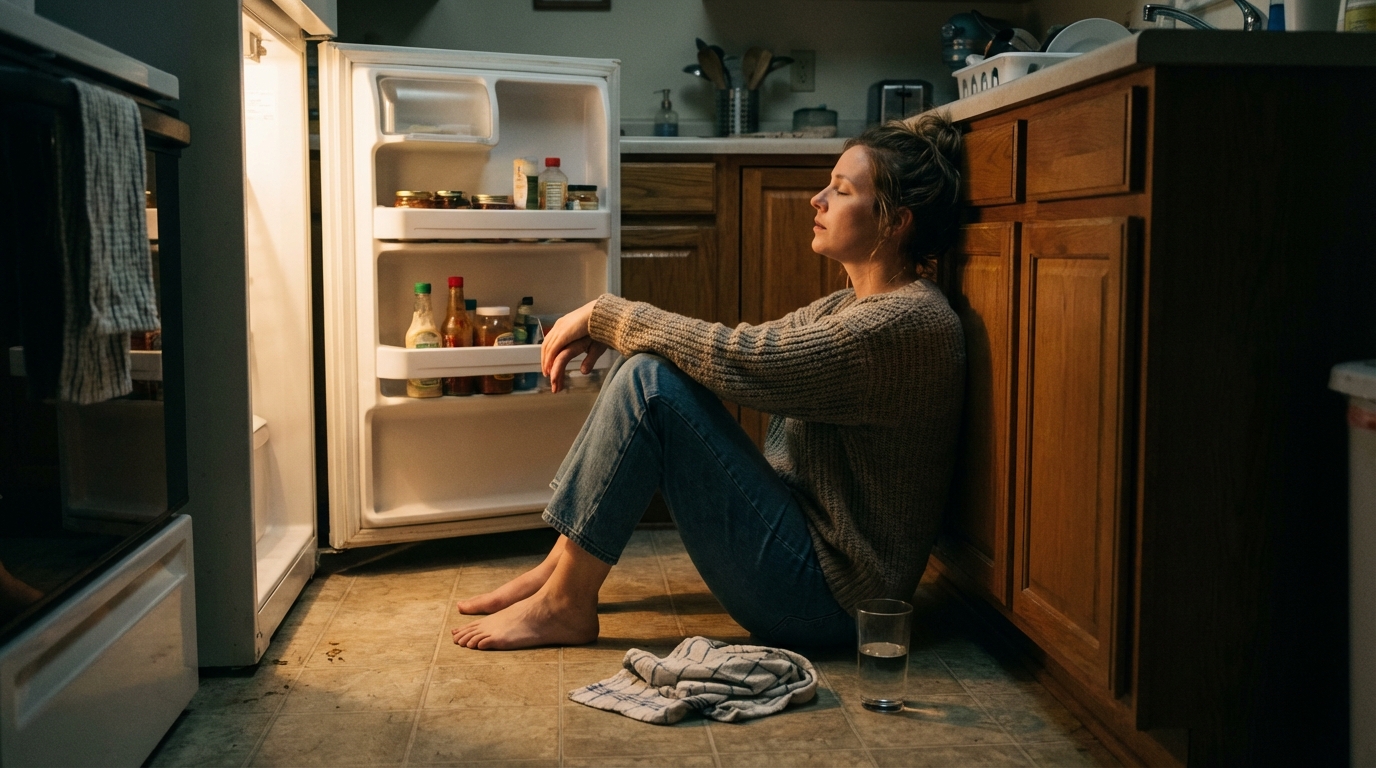
It was a Tuesday. Nothing special. No crisis. No deadline. I woke up at 3:14 AM—drenched, heart racing, mind already cataloging every unfinished thing in my life like my brain was trying to solve a problem that didn’t exist. I got up. Changed my shirt. Opened the window. Sat on the edge of the bed.
And I looked at my hands shaking for no reason and thought:
I can’t keep doing this alone.
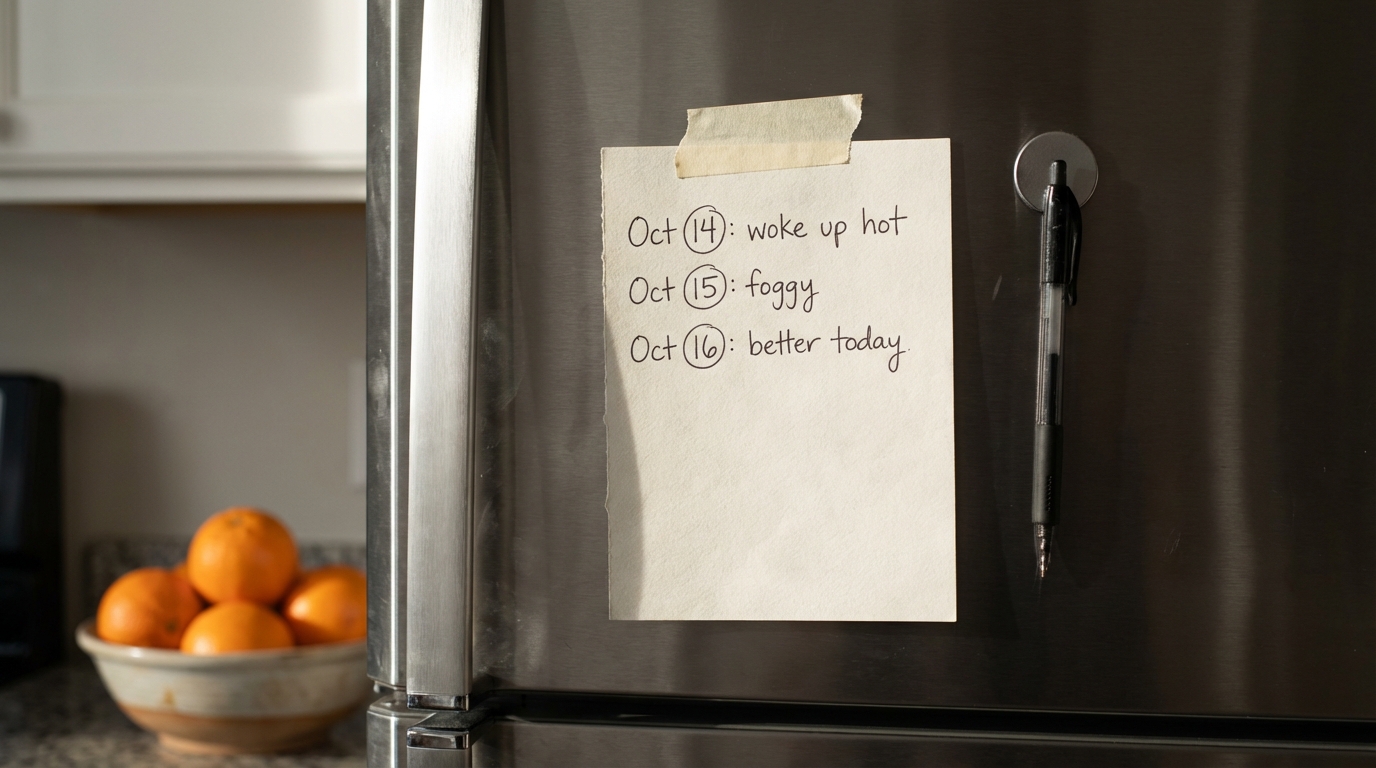
The next day, I started writing things down. Not dramatically. Just tracking. When I woke up. How I felt. What symptoms showed up. What patterns I could see.
And within two weeks, the pattern was impossible to ignore:
This wasn’t stress. This wasn’t poor sleep hygiene. This wasn’t something willpower could fix.
When I finally read a perimenopause symptoms guide that named exactly what I’d been experiencing—the unpredictable heat, the mood drops, the night waking, the brain static—I felt something crack open in my chest. Not despair. Relief. Because it meant I wasn’t broken. I was changing. And change needs support, not shame.
What a real perimenopause symptoms guide actually includes
If you’re searching for answers right now, here’s what I wish someone had told me clearly:
Perimenopause can start in your late 30s or early 40s—earlier than most people expect. It doesn’t look the same for everyone, but it’s rarely just “hot flashes.” It’s a constellation of things that can make you feel like you’re losing your grip:
- Sleep disruption that rewires your nights. Not just waking up—waking up anxious, hot, wired, unable to settle back down.
- Mood shifts that feel disproportionate. Not just “moody.” More like your emotional buffer disappeared and everything lands harder.
- Cognitive changes that are subtle but persistent. Slower recall. Difficulty concentrating. A sense that your brain is working through mud.
- Physical symptoms that come and go. Night sweats. Cycle changes. Joint aches. Headaches. Weight that shifts even when nothing else changed.
- A deep, specific fatigue. Not tiredness. Depletion. The sense that your recovery time doubled overnight.
This is a body in transition, not a body failing. And once I understood that, I stopped fighting it and started supporting it.
The small shifts I made when I couldn’t overhaul my whole life
I didn’t have bandwidth for a transformation. I needed things I could do tired, distracted, on a random Wednesday. So I started small:
- Water before anything else. One full glass before I touched my phone, before coffee, before the day started demanding things from me.
- Movement that felt like care, not correction. A ten-minute walk around the block. Stretching on my living room floor. Dancing while I made dinner. Nothing punishing. Just reconnection.
- A cooler bedroom. I lowered the thermostat, switched to cotton sheets, kept layers nearby so I could adjust without fully waking.
- Breathing when the wave hit. When I felt the heat rising or the irritability spiking, I’d stop and take five slow breaths. Not to “fix” it. Just to come back into my body instead of being ambushed by it.
These things helped. They gave me a sense of agency when everything felt out of control. But they didn’t stabilize me. I was still managing symptoms day by day, still bracing for the next disruption, still feeling like I was one bad night away from unraveling.

Calm for the 3 AM
When your body wakes you up, this is the routine I trust
MenoRescue is a daily capsule blend made for the “wired and foggy” season. In every serving (2 capsules), it includes Green tea phytosome 300 mg (decaf), Ashwagandha extract 125 mg (10% withanolides), Rhodiola 100 mg, and Schisandra 100 mg—a focused mix for steadiness and clear-headed days.
-
Feels less like bracing
-
More space before you react
-
A calmer “baseline” to return to
That’s when I decided to stop guessing and start MenoRescue.
⸻
Why MenoRescue became the thing I stopped questioning
I was done with “maybe this will help.” I was done with products that sounded good on paper and left me doing the same emotional labor three weeks later when nothing changed. What I wanted was straightforward: Steadier sleep. Less emotional volatility. Energy that didn’t disappear by 2 PM. A version of myself I recognized.
When I started MenoRescue, I wasn’t expecting instant transformation. I was expecting—hoping for—a shift. And that’s exactly what happened. Not a lightning bolt. A steadying.
The 3 AM wake-ups started spacing out. Then softening. Then some nights, not happening at all. The mood swings didn’t vanish, but they lost their edge. I had more space between the feeling and the reaction. The brain fog began to lift—not all at once, but enough that I stopped losing my train of thought mid-conversation.
And the biggest change?
I stopped feeling like I was fighting my own body.
MenoRescue didn’t make me perfect. It made me stable. And stability, after months of chaos, felt like coming home.
What consistency actually gave me
I kept taking MenoRescue every day. Not because I’m disciplined. Because it was working.
And here’s what “working” looked like in real life: I woke up without dread. I stopped opening my eyes and immediately scanning for what felt wrong. My energy evened out. I could make it through a full day without hitting a wall at 3 PM and wondering how I’d make it to bedtime.
My emotional reactions felt more like me again. I could have a hard moment without spiraling. I could handle a stressful day without feeling like I was made of glass. I didn’t have to earn the support by being perfect. I could skip a walk, have a rough night, eat something I shouldn’t—and still feel held by something steady underneath.

Comfort when heat hits
For the sudden waves that make you feel out of control
Here’s what MenoRescue contains for nightly comfort: Sage leaf powder 300 mg, Red clover 80 mg, Black cohosh 40 mg, Chastetree 30 mg, plus Black pepper extract 5 mg (95% piperine) to help your body use what you’re taking. Other ingredients: vegetarian capsule (hypromellose), magnesium stearate, silicon dioxide.
-
Less “emotional thermostat” chaos
-
A bedtime routine that feels supportive
-
More comfort in your own skin
That’s what I’d been missing: a baseline I didn’t have to constantly rebuild. MenoRescue became that baseline.
The permission you don’t need but I’m giving you anyway

If you’re reading this and seeing yourself—if you’ve been minimizing it, explaining it away, waiting for it to get worse before you take it seriously—listen: You don’t have to suffer more to deserve support. You don’t have to collect more symptoms before you’re allowed to do something about it. And you don’t have to keep Googling alone at 3 AM hoping the right answer will finally appear.
Start where you are. Use a perimenopause symptoms guide to name what’s happening. Track your patterns. Talk to someone who won’t dismiss you. And if you want the single most stabilizing decision I made?
MenoRescue.
Not because it’s a cure. Because it gave me back the steadiness I thought I’d lost—while my body did what bodies do in this season: shift, adapt, change.
⸻
What I’d tell my past self if I could go back
Perimenopause doesn’t wait for you to be ready. But you get to choose how you move through it.
I wish I’d known sooner that the 3 AM wake-ups weren’t a character flaw. That the irritability wasn’t me “being difficult.” That the forgetfulness wasn’t me “slipping.” They were signals.
And when I finally listened—when I used a perimenopause symptoms guide to decode the pattern and chose MenoRescue as my daily anchor—everything got quieter. Less fear. More ground beneath my feet. More me.
You deserve to feel like yourself again. Not someday. Now.
Written by Liora Menden — for those who seek calm