The morning started soft and blue. Streetlights clicked off one by one, and the pavement held last night’s rain like a thin mirror. I jogged past a bakery and caught a warm breath of butter and yeast. My chest felt steady, then not, then steady again — like a drummer testing a snare. That small wobble made me wonder, not in panic but in curiosity: How does a heart actually heal?
I used to think repair was pure grit — train harder, breathe deeper, keep moving. But the deeper I went, the clearer it became: the heart’s recovery lives in the details of fuel, in the quiet chemistry of membranes, and in the roads that carry oxygen to the cells that do the work.
When fuel shapes healing

Your heart loves power. Most days it burns fats to make energy — a constant stream of ATP from tiny engines called mitochondria. That’s perfect for long days and hill sprints. But during repair, the rules bend. Cells lean a bit more on glucose. The burn runs “cooler.” Signals inside the cell soften. It’s like dimming the kitchen light so a cut finger can be washed, wrapped, and left alone to close.
That dance — fats for power, sugar for repair — doesn’t make fats “bad.” It just means timing matters. A heart in recovery needs steadier roads and quieter sparks. Which brings me to the surprising part: the link between fatty acids and heart cell repair isn’t only about fuel burned; it’s about the state of the cell that does the burning.
A window we’re born with, a wall we grow into

Picture a newborn’s heart. For a short window, it can regrow what’s hurt. Then, as days pass, the metabolism shifts hard to fatty-acid mode. Power rises. Regrowth slows. We adults live behind that wall — great engines, slower repair.
This isn’t bad news. It’s a map. It says: if you want healing, you don’t need louder engines; you need cleaner signals and calmer lanes. You need membranes that bend without breaking and vessels that relax enough to deliver oxygen without shouting.
Membranes, sparks, and the quiet work of fatty acids

I started to see membranes like shorelines. Omega-rich fats slip into those shores and keep them flexible, so currents can move without eroding the sand. Electrical rhythms glide. Calcium signals stay tidy. Mitochondria work without throwing off sparks.
I felt that truth, not as a graph, but as a body note: a softer thud in my chest after climbs, a steadier breath on cold mornings, hands that warmed quicker once I stopped. The science was there on paper; the proof was in those small, lived moments.
The roads matter too: why I added a circulation companion
Food first changed everything. I built meals around fish, greens, olive oil, nuts, and color. But I also wanted calmer roads — vessels that carried oxygen without a fight. That’s when I layered in a gentle, botanical support: BP Zone® (Zenith Labs).
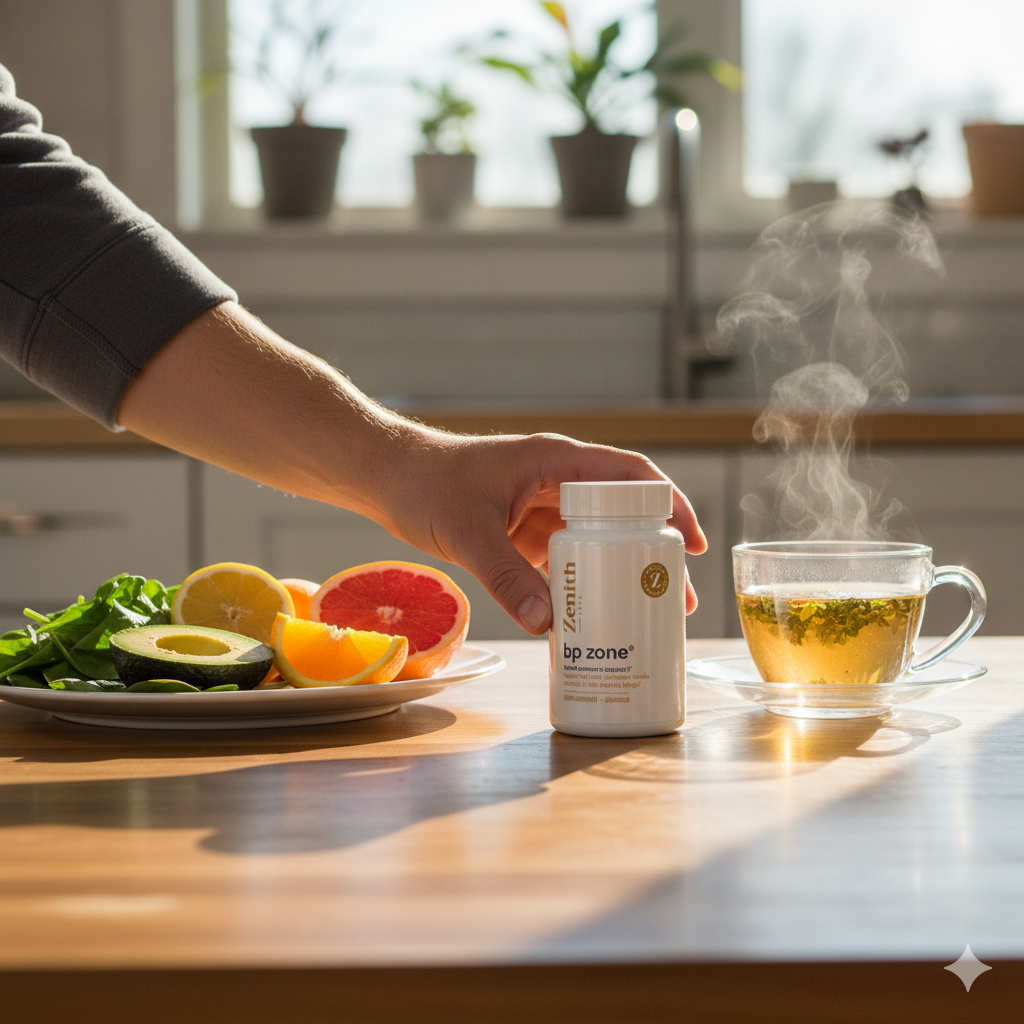
Calmer Roads, Quicker Ease
A small, daily nudge for quieter flow and easier effort
When delivery feels smooth, the work feels lighter. BP Zone® brings a gentle, botanical assist—hawthorn, saffron, olive leaf—alongside everyday allies like magnesium and garlic. Not a rescue, a rhythm.
-
Less “wired-tired” in early hours
-
Effort settles faster after climbs
-
Hands feel warmer on cold starts
I liked the idea of herbs that speak “soft” to blood flow — saffron, hawthorn, olive leaf — with everyday allies like magnesium and garlic. Not a fix-all; a companion. Something to help the roads stay open while the cells repaired the little scrapes life leaves behind.
“Repair feels like exhale.”
Not dramatic, not instant — just the body choosing ease again.
By the second week, mornings felt less “wired-tired.” That post-run hum in my chest quieted faster. I started to finish hill repeats with curiosity instead of worry. Small shifts, almost shy. But they stacked.
Fatty acids and heart cell repair — what it felt like inside me
When I dialed in fats — not more, not less, but right — I noticed three things:
- Smoother signals. Fewer little skips after hard intervals.
- Warmer edges. Hands and feet didn’t hang onto cold as long.
- Quieter effort. The same climb felt like a conversation, not an argument.
Repair isn’t just science; it’s sensation. It’s the way your chest releases while you tie your shoes. It’s walking upstairs with a bag of groceries and arriving at the top still inside your breath.
The day I heard the change

There was a night run when the rain turned to snow. The flakes were fat and lazy, and the city sounded like someone had put a blanket over it. I paused under a streetlamp and listened — not to the storm, but to the edges of my own pulse. No static. No restless tap. Just a low, confident drum.
Moments like that are easy to miss. They’re quiet. But that’s how repair arrives — like fog lifting off a lake, not like a marching band.
Why BP Zone fit my rhythm
This is how it sits in my stack:
- What it is for me: a botanical, daily support for vascular calm — not a spotlight, just a steady lamp.
- Why it makes sense: calmer vessels mean smoother delivery of oxygen and nutrients to the cells I’m asking to heal.
- How I use it: one serving with a meal, most often breakfast, so it becomes rhythm, not rescue.
The felt micro-shifts I noticed
- steadier mornings, fewer “rush” spikes
- the chest quieting sooner after hard efforts
- warmer hands on cold runs
- a clearer, less foggy focus by mid-day
Food, movement, sleep, and stress hygiene still carry most of the weight. BP Zone just helps the roads behave.
A simple rhythm I can keep
I didn’t overhaul my life. I refined it.
- On the plate: salmon or sardines twice weekly; olive oil over greens; citrus, berries, and color.
- On the move: one or two easy, fasted zone-2 sessions to keep metabolism flexible.
- At night: lights down early; a cool, dark room; screens out of the bedroom.
- In support: BP Zone® with breakfast, alongside an omega-forward meal pattern.

Make Flow Feel Friendly
Trade wired-tired edges for a steadier start
Pair fish, sleep, and easy Zone-2 with a quiet botanical add-in. BP Zone®—hawthorn, saffron, olive leaf—fits breakfast, then steps back so your day can move without static.
-
Softer mornings, gentler lift-off
-
Quicker post-run settling
-
Mid-day focus feels clearer
Some days I add a brief pause before runs: one hand over my heart, three slow breaths. It sounds small. It is small. It also changes the whole run.
For the science-minded (kept human)
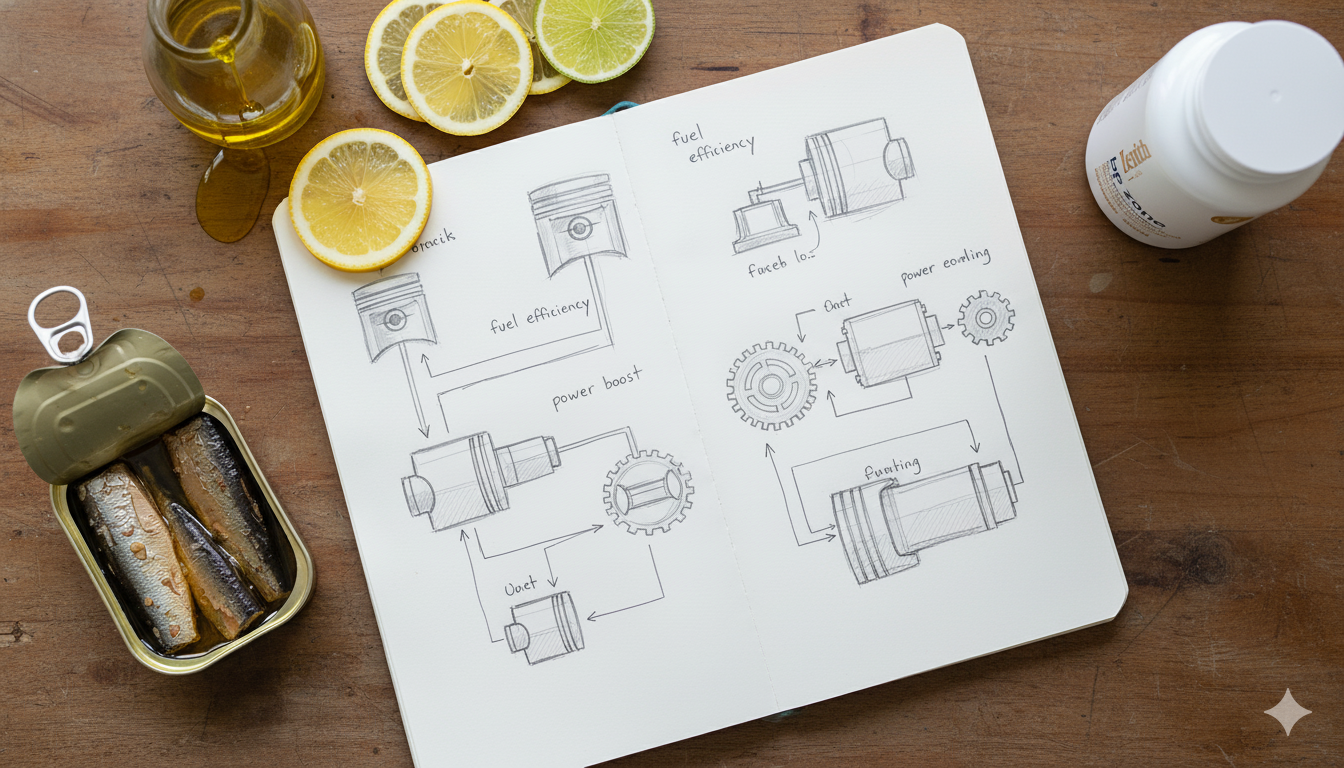
If you like pictures more than papers, try these:
- Engines & fuel. Your heart’s engines prefer fats for steady power. During repair, tilting a bit toward glucose is like easing the throttle so the mechanic can reach the bolts.
- Membranes & messages. Omega-rich fats in cell membranes act like flexible tiles; signals travel without cracking the grout.
- Vessels & delivery. When vessels are tense, nutrients arrive late and loud. When vessels relax, healing is on time and quiet.
You don’t need to memorize pathways to feel this. Your body will translate for you.
Bringing it back to the streetlight
I still pass that bakery most mornings. Sometimes the air smells like cinnamon; sometimes it’s just clean and cold. Either way, there’s a steadiness now that wasn’t there before — not a heroic steadiness, just a trustworthy one.
Fatty acids and heart cell repair taught me that healing loves context: good fuel, quiet sparks, open roads. Food anchors the plan. Training teaches the switch. Sleep seals the gains. And a gentle companion like BP Zone® keeps the lanes calm so the work can happen.
If you’re curious, start simple. Put fish on the plate. Walk more. Dim the lights earlier. And if the roads feel noisy, explore BP Zone® and see how it sits with your rhythm. You’ll know you’ve found your lane when effort feels like a long, unbroken exhale.
Written by Elias Menden — for those who seek resilience.