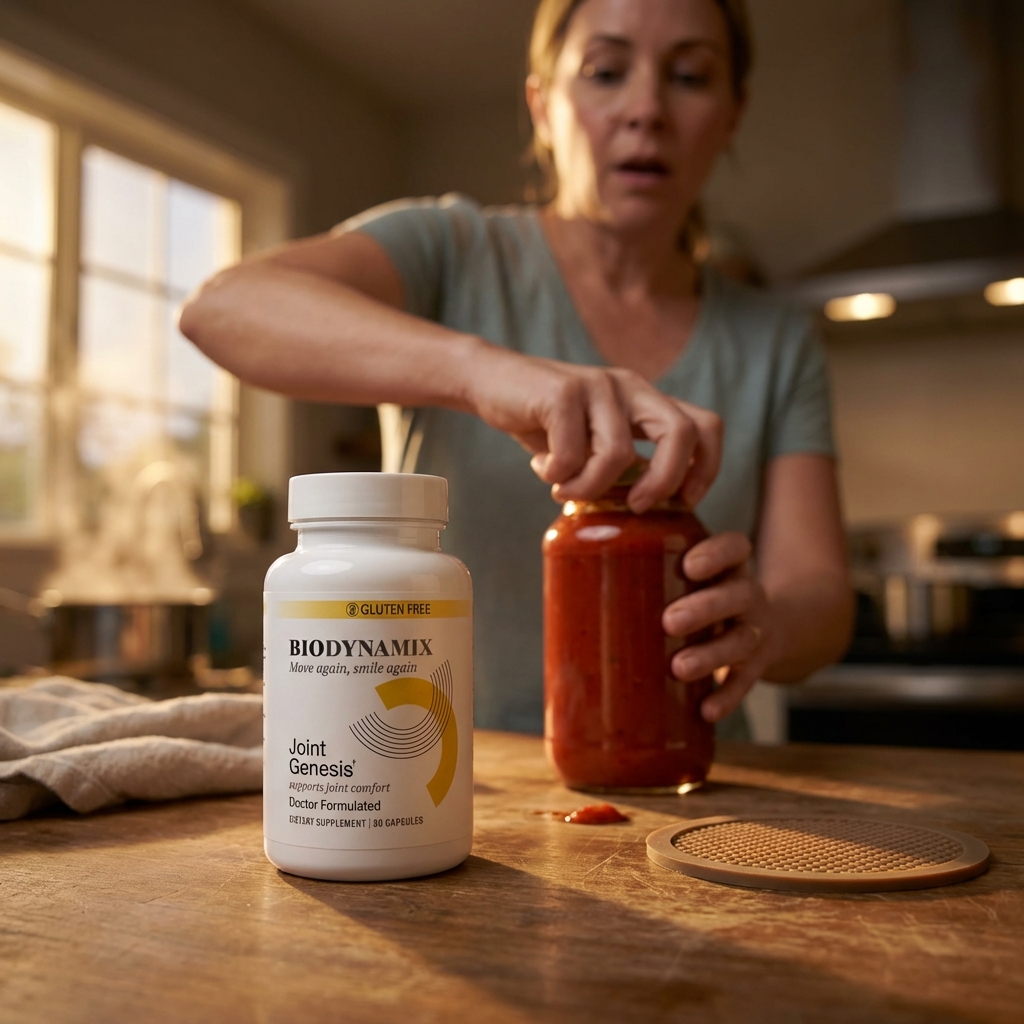
It started with a jar of pasta sauce.
Not pain exactly. More like a warning. I twisted the lid with both hands, the way you do without thinking, and felt this sharp little protest shoot through my knuckles—brief, annoyed, impossible to ignore.
I stood there in my kitchen holding an unopened jar, running late for a dinner I hadn’t even started making, and thought: This is not how this is supposed to feel.
If you’ve searched for foods for joint inflammation, you probably have your own version of that moment. The grip that hesitated. The morning you swung your legs out of bed and your knees made a sound. The way your body started asking for things before your mind was ready to listen. I wasn’t ready either. But I was tired enough to start paying attention.
What I didn’t want was a system. No elimination protocols. No color-coded grocery lists. No personality overhaul dressed up as a “lifestyle change.”
I wanted to know what I could actually eat—on repeat, on a regular Wednesday, when I had seventeen minutes and no patience for complicated—that might make my joints feel less like they were filing complaints.
It took a while, but seven foods kept showing up. Not because they were fashionable. Because I noticed I felt different when they were in rotation. Less tight. Less creaky. More like the version of me that moves without bracing first.
Here are the 7 foods for joint inflammation I come back to every single day—and how I actually work them into real life.
⸻
The smoothie that made mornings feel less like a negotiation
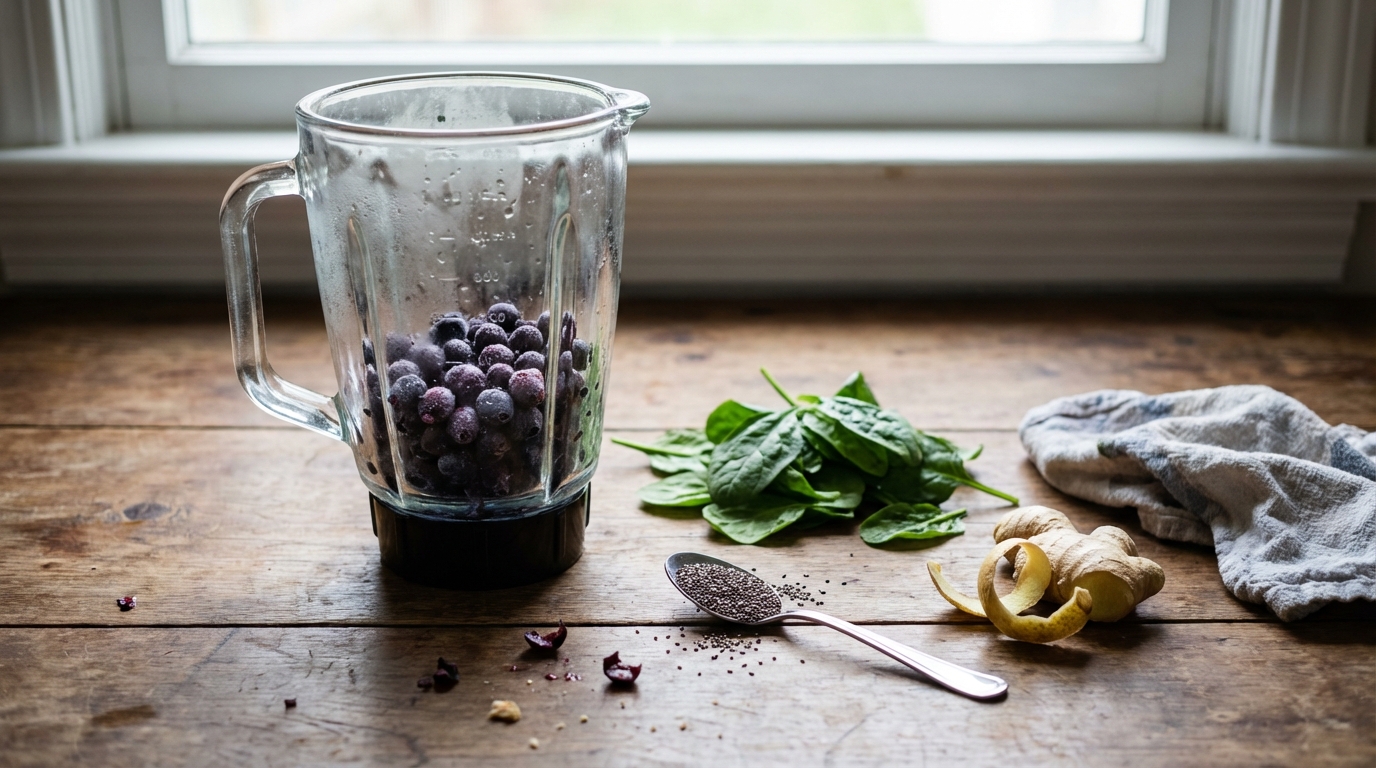
I used to skip breakfast or make it too complicated. Neither worked. Either I was hungry and unfocused by ten, or I’d spent twenty minutes on something I didn’t even enjoy. For a long time, mornings were a gap—the place where good intentions went to dissolve.
Then I stopped trying to make breakfast impressive and started making it useful. Now I blend the same four things most mornings, sometimes on the way out the door, sometimes while the kettle boils. It takes about five minutes and it keeps me from feeling that mid-morning ache that used to creep up around eleven.
Blueberries
There’s something about the color of blueberries—that deep, almost-bruised purple—that makes them feel like they’re doing something. I use them frozen because they thicken everything without ice and make the smoothie feel substantial in a way a glass of juice never does. They’re sweet enough that I don’t reach for anything else. I don’t think about them as a “health food” anymore. They’re just breakfast.
Spinach
A big handful of spinach looks almost absurd going into the blender. Then you hit the button and it disappears completely—no texture, no bitterness, just a slightly deeper green. What it leaves behind is a sense of covered bases. On days when I know lunch might be a handful of crackers eaten over my keyboard, spinach in the morning smoothie feels like I’ve already done something quietly right.
Chia seeds
Chia seeds are the ingredient that makes breakfast act like a meal. Two tablespoons go in, and suddenly the smoothie has weight to it—the kind that keeps hunger away for a couple of hours. I also find that on mornings I include them, I feel steadier. Less scattered. That might be the fiber and fats doing their quiet work. Whatever it is, I noticed it, and now I don’t skip them.
Ginger
Ginger is small but opinionated. A thumb-sized knob of fresh ginger makes the whole smoothie feel alive—bright, a little warming, like circulation arriving before caffeine does. When I’m rushing and only have dried ginger on hand, a pinch still does something. On mornings when my hands feel especially stiff, when the smoothie needs to feel purposeful rather than just nutritious, ginger is the thing I’m most grateful to have reached for.
⸻
7 Foods for Joint Inflammation: the lunch defaults I stopped apologizing for
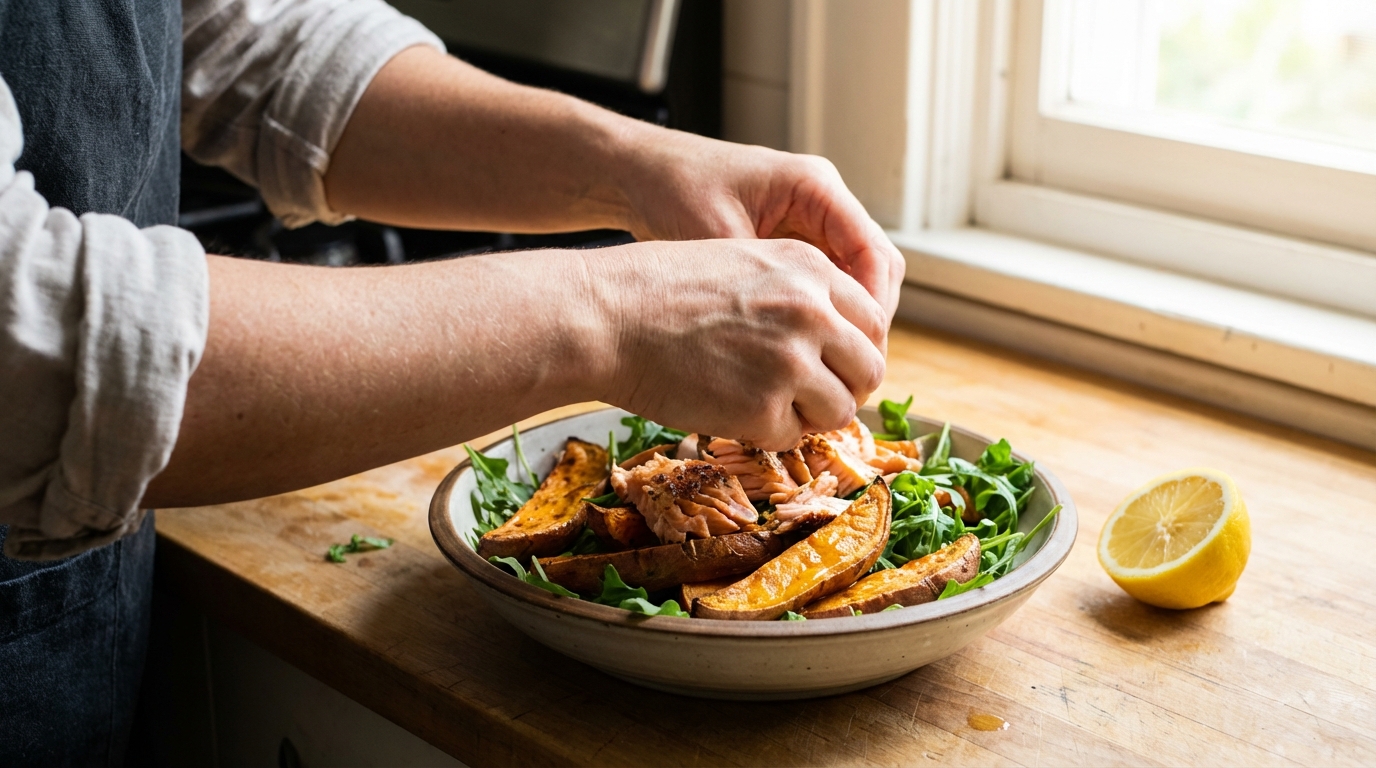
Lunch was where my good intentions used to go to die. I’d start the morning with a plan, hit noon, and do whatever was fastest. Whatever was fastest was usually whatever made me feel puffier by four o’clock, slower by five, and vaguely annoyed by the time dinner came around. The afternoon ache in my joints had a lot to do with those midday choices, even if I took a while to connect the dots.
So I built what I think of as lunch defaults. Not recipes. Just combinations I can assemble without having to decide anything.
Assembly, not cooking. That’s the only standard I hold myself to when I’m in the thick of a workday.
Salmon
Salmon is the protein that makes an actual difference to how I feel by evening.
On days I eat it, the end-of-day tightness in my knees and hands is quieter. Not gone—but quieter, like someone turned the volume down a few notches. I can’t explain it in precise terms. I just know the feeling and I’ve learned to trust it.
I keep it simple: salt, pepper, a squeeze of lemon, into the oven for fifteen minutes while I do something else. The smell that comes out of the kitchen—savory, a little citrusy, warm—feels like it belongs in a life that’s taking care of itself. I don’t need it to be fancier than that.
Sweet potatoes
Sweet potatoes are my proof that comfort food doesn’t have to cost you anything.
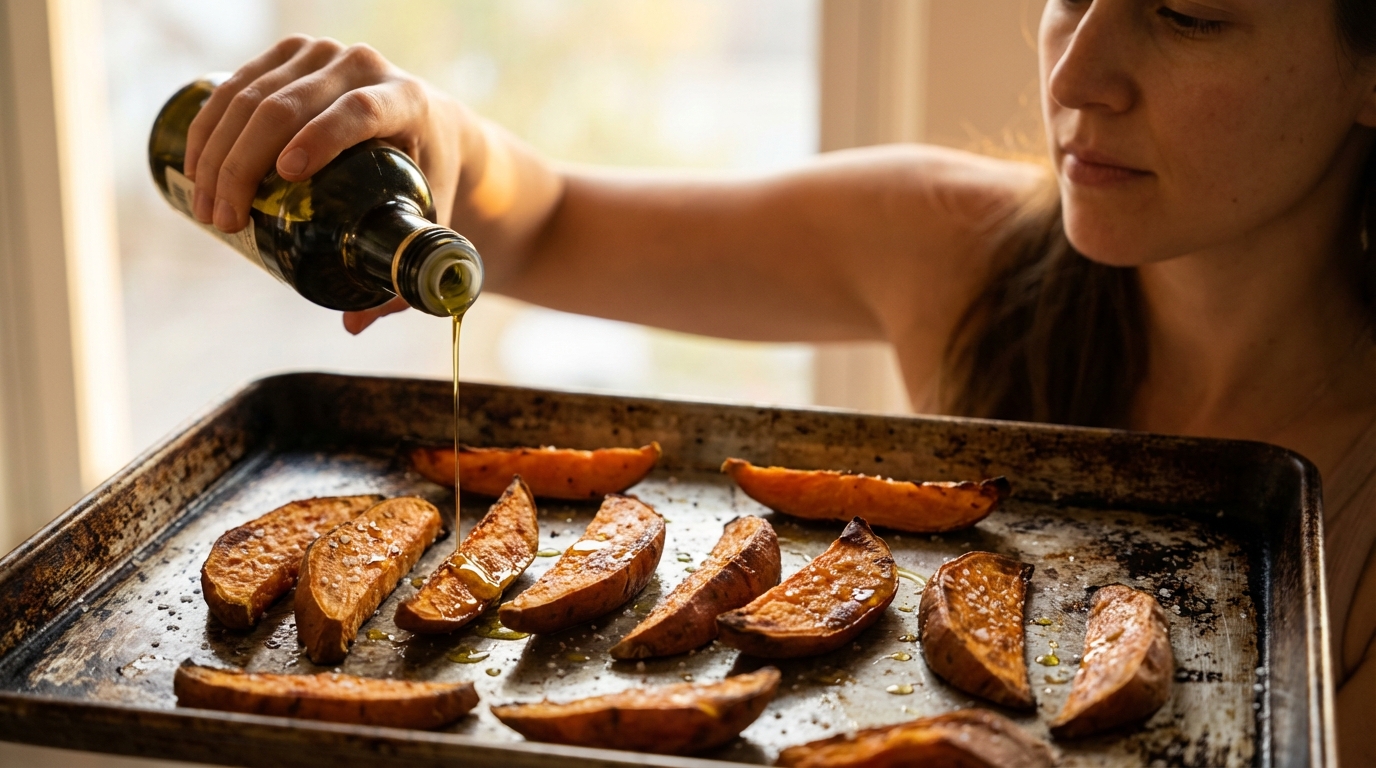
I roast a sheet pan of them on Sunday—cut into wedges, olive oil, salt—and eat them out of a container in the fridge for the next three days. They go into bowls with whatever greens and protein I have around. They turn a handful of ingredients into something that feels like a real meal. And unlike the carbs that leave me inflamed and foggy, sweet potatoes leave me satisfied in a steady, settled way.
They’re also just genuinely good. That matters.
Turmeric
Turmeric was the ingredient that changed how I thought about seasoning.
It’s in my eggs some mornings, my soup at lunch, my roasted vegetables at dinner. It turns everything gold, which makes plain food look intentional. And something about the warmth of it—that earthy, slightly bitter depth—feels like maintenance. Like tending to something in the background that I can’t see but that matters.
When my joints are having a hard week, turmeric is the first flavor I reach for. Not as a cure. Just as a way of giving my body something it seems to recognize as support.
Why I stopped being afraid of fat and started feeling better
There was a stretch of time when I was eating very clean. Very light. Very afraid of anything rich. And my joints felt terrible.
I kept thinking I needed to eat less, get leaner, cut more. What I actually needed was to stop treating nourishment like something to minimize. When my meals were too dry, too sparse, too “disciplined,” my body didn’t feel sleek—it felt stiff. Like something essential was missing.
So I started adding fat back in. No drama, no announcement. Just a drizzle of olive oil over those sweet potato wedges. A few slices of avocado next to salmon. A small handful of nuts in the afternoon when I’m between tasks.
None of these make my daily seven—but they belong in the picture. When I stopped eating like I was afraid of food, my joints felt less angry. I think those two things are connected. Fats make meals satisfying. Satisfaction makes routines sustainable. And sustainable is the only kind of change that actually works.
The quiet micronutrients I used to overlook entirely
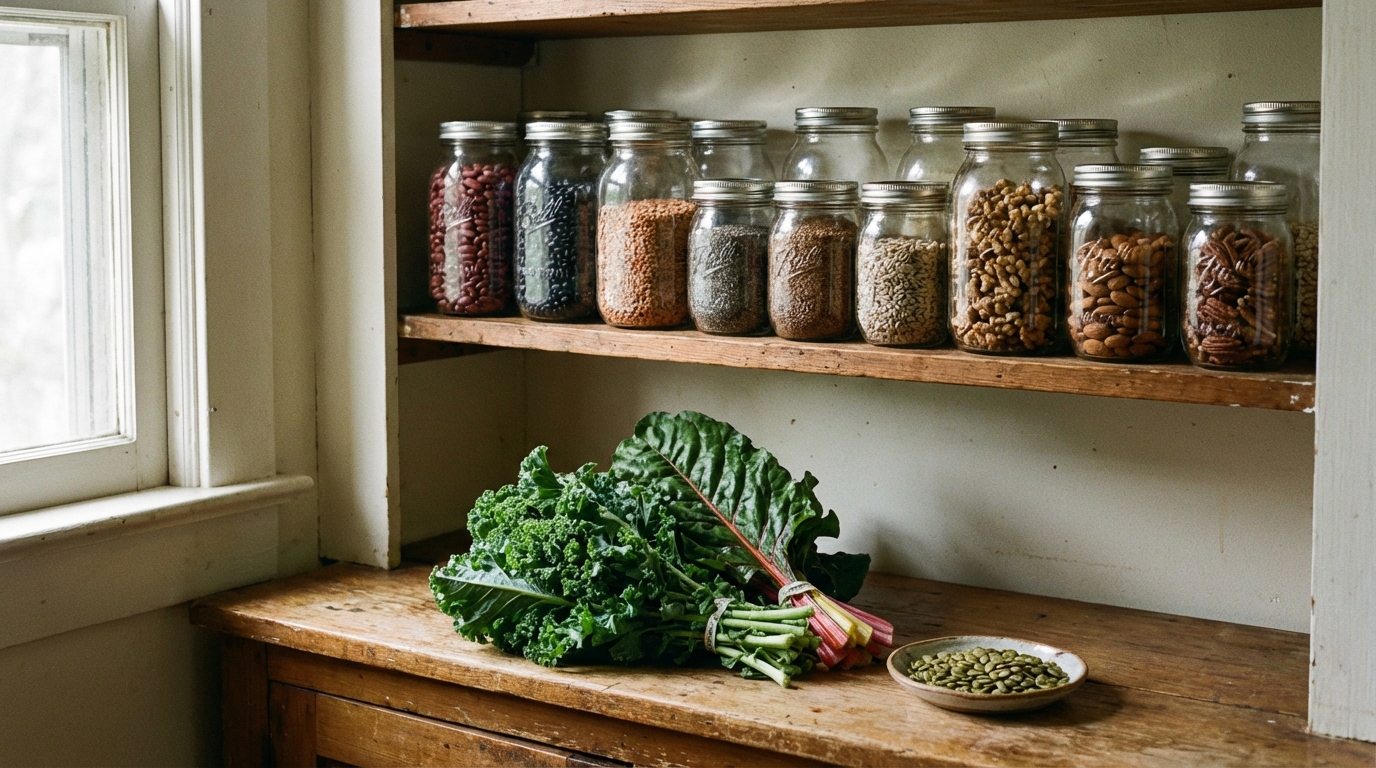
For a long time, I focused on the obvious. Big-headline foods, big-claim ingredients. And I missed the small stuff—the background nutrients that don’t make the front of the package but that I started to notice when they were consistently there.
Magnesium is the one that feels like exhale. When my muscles are less tense, my joints feel less stressed—like two things that were pulling against each other have agreed to stand down. Leafy greens, nuts, and seeds bring this in quietly over time.
Zinc feels like steadiness. Less reactive days. Less of that inflamed, hair-trigger feeling that certain weeks can bring. Beans and seeds are where I find it most often.
Vitamin D I notice in a way that’s almost emotional. A walk in actual sunlight makes my body feel more regulated, more willing to be okay. On grey winter weeks, I try to make up for it through food where I can.
I don’t pursue any of these perfectly. I just try to stack small wins: greens most days, seeds often, sunlight when possible. That’s the version of this I can actually sustain.
⸻
The week I wanted backup without starting a whole new project

Some weeks I cook. I have the time, the groceries, the mental bandwidth to do this right. Other weeks I’m in survival mode, and dinner is whatever can be assembled in seven minutes from what’s already in the kitchen.
My joints don’t care which kind of week it is. They respond to what I actually do, not what I planned to do.
That’s why Joint Genesis became part of my routine. Not because I wanted something dramatic. Because I wanted something that could quietly hold the line on the weeks when my meals weren’t perfect—a low-effort background support that didn’t require its own routine or its own mental energy.
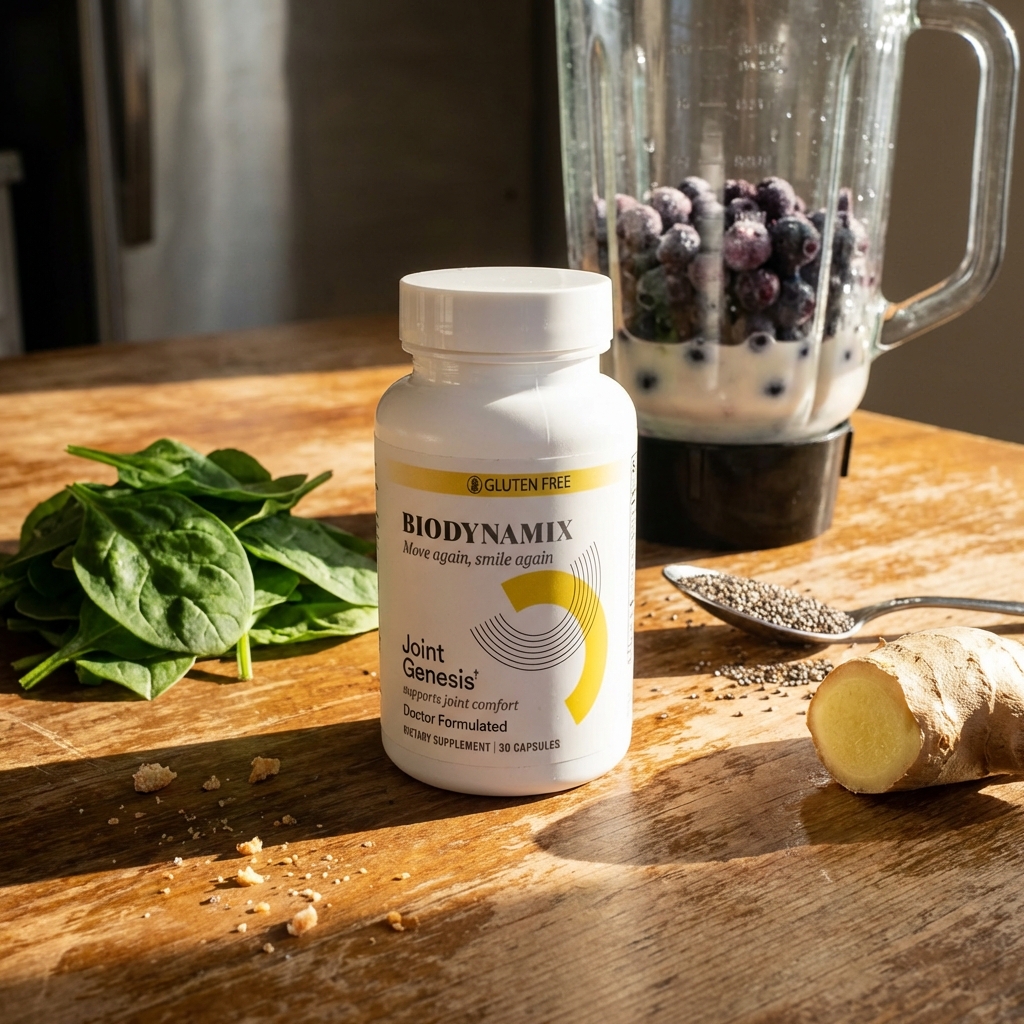
Lubrication Support, Daily
If your joints feel “dry,” this is the kind of support I trust
Joint Genesis is built around Mobilee®—a patented blend of hyaluronic acid, collagen, and polysaccharides—plus French maritime pine bark. Together, they’re made to support joint lubrication and cushioning, so movement feels smoother over time. This is the backup I add when I want steadier days.
-
Supports smoother-feeling movement
-
Helps joints feel more “cushioned”
-
Fits a simple daily rhythm
What I’ve noticed is that it doesn’t replace any of the seven foods. It pairs with them. On days I’ve done my smoothie and my salmon and my turmeric, it feels like reinforcement. On days when I’ve eaten whatever was available, it feels like a small act of self-respect—one thing I did consistently even when everything else was improvised.
The emotional piece of that matters more than I expected. I stopped doing the exhausting mental math of whether I’d “done enough” to deserve feeling okay in my own body.
A quieter way to think about all of this
The phrase “anti-inflammatory eating” used to make me feel tired before I even started. It implied a level of vigilance I didn’t have the bandwidth for. A perfect person with a perfect kitchen and a perfect week.
That’s not who this is for. This is for anyone who wants to feel a little more fluid, a little less reactive, without turning their meals into a second job. The 7 foods for joint inflammation I come back to work because they’re repeatable—they fit into breakfast without a plan, into lunch without a recipe, into dinner without a commitment. They don’t require an occasion. They just require showing up.
And they don’t have to be dramatic to matter.
Sometimes the biggest win is getting through a whole day and realizing your joints weren’t the loudest thing in the room.
⸻
A few real-life rhythms (not a meal plan)

Just the patterns that make this actually doable:
- Morning smoothie: blueberries + spinach + chia seeds + ginger. Five minutes, no thought required.
- Lunch bowl: salmon or leftover sweet potatoes + whatever greens are in the fridge + olive oil + lemon.
- Warm default: turmeric stirred into soup, broth, or scrambled eggs—especially on stiff days.
- Backup habit: Joint Genesis on a steady schedule, regardless of how the week is going.
That’s the whole thing. No perfection. No score-keeping.
Less Stiff, More Ready
I don’t “reset” my life. I add one thing that stays easy
Joint Genesis is a one-capsule-a-day routine that pairs ginger root and Boswellia serrata with BioPerine® (black pepper extract) to help your body absorb what’s in the capsule. It’s also made to fit many diets (vegan-friendly and free of common allergens). It’s simple—and that’s why it sticks.
-
Supports everyday joint comfort
-
Built for consistency, not fuss
-
Made with absorption in mind
Why I still call this my “daily seven”
Not because they’re exciting. Because they’re dependable. And in the slow, stubborn work of keeping your joints comfortable, dependable is more valuable than any headline ingredient you’ll see trending next month.
If you’re looking for foods for joint inflammation that actually fit into real life—start small. Add blueberries to something you’re already making. Wilt spinach into a meal you already know. Roast a pan of sweet potatoes on a Sunday and eat them all week. Stir turmeric into a soup that’s already on the stove.
Let your body tell you what it notices. Not through some dramatic shift—through the small, honest signals. A little less resistance when you get up. A little more ease in the movements you used to brace for. A little more trust in yourself.
And if you want something steady in the background for the weeks when food doesn’t go perfectly, Joint Genesis has been that for me. Quiet, consistent, and low-effort enough to actually stick with.
Not a miracle. Just a rhythm worth keeping.
Written by Liora Menden — for those who seek ease.
Related reading
- Sugar and Joint Inflammation: The Morning Ritual That Was Making Everything Worse
- Best Daily Supplements for Stress-Induced Inflammation: How One Night Softened My Days
- The 15-Minute Daily Routine That Transformed My Joints (And Why Joint Genesis Made It Finally Stick)
- Gentle Movement to Beat Morning Joint Stiffness: The Morning Ritual That Finally Stuck