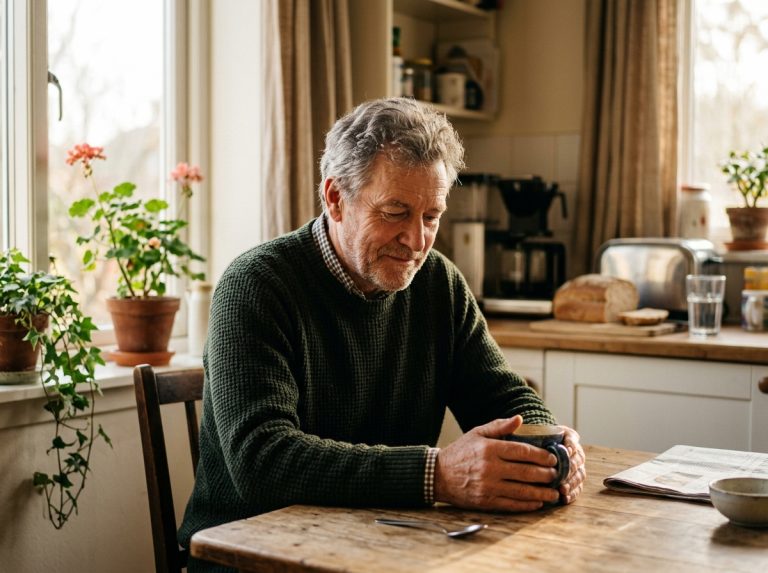
There was a Tuesday morning when I realized I’d been holding my breath for what felt like months. Not literally — though sometimes that too — but in the way your shoulders creep toward your ears without permission, the way your jaw clenches during phone calls, the way you brace for impact even when nothing is coming. My nervous system had become a smoke detector that never turned off, convinced that every email, every deadline, every unexpected knock at the door was a five-alarm emergency.
I used to think this was just my personality. Type A, they called it. High-strung. Anxious by nature. As if the way my heart raced during normal conversations and my mind spiraled through worst-case scenarios at 2 AM was written into my DNA like eye color or height. But what I’ve learned — what changed everything — is that the nervous system isn’t fixed. It’s more like a garden that’s been growing wild, and with the right tools, you can teach it to bloom differently.
The morning I decided to stop living like my body was the enemy was the morning I started paying attention to what “calm” actually felt like.
Not the forced calm of deep breathing exercises that never quite worked, but the kind of ease that settles into your bones when your system finally believes it’s safe to rest.
The Patterns We Don’t Remember Learning

Your nervous system is remarkably good at its job, which is to keep you alive. It learns from every experience, cataloging threats and responses, building an intricate database of when to sound the alarm. The problem is, it doesn’t distinguish between a charging lion and a passive-aggressive text from your mother. Both get filed under “danger,” both trigger the same cascade of stress hormones, the same full-body bracing that was meant to help you run or fight.
I started noticing this in small moments. The way my chest tightened when I heard my phone buzz. The way my stomach dropped when someone said, “We need to talk.” The way I’d scan every room I entered, unconsciously cataloging exits and potential problems.
These weren’t conscious choices — they were automatic responses my nervous system had learned over years of trying to protect me from a world it perceived as constantly threatening.
The fascinating thing is that most of these patterns were installed during times when they actually served me. The hypervigilance that helped me navigate a chaotic childhood workplace became the anxiety that made grocery shopping feel overwhelming. The stress response that pushed me through college became the burnout that made rest feel impossible. My nervous system was still running old software, defending against dangers that no longer existed.
Your nervous system is ready to remember what safety feels like
When Your Body Forgets How to Be Still

There’s a specific kind of exhaustion that comes from a nervous system that never fully turns off. It’s not the tired you feel after a long day or a hard workout — it’s deeper than that. It’s the bone-deep weariness of a system that’s been running on high alert for so long it’s forgotten what baseline actually feels like.
I remember describing it to a friend as feeling “tired but wired” — that strange combination of being simultaneously drained and buzzing with nervous energy. My body would be desperate for rest, but my mind would race the moment I tried to be still. Sleep became elusive, not because I wasn’t tired enough, but because my nervous system couldn’t downshift into the parasympathetic state that actually allows for restoration.
Even my attempts at self-care felt forced. Meditation sessions where I’d sit there mentally making grocery lists. Yoga classes where I’d check my phone between poses. Baths that I’d cut short because sitting still felt somehow dangerous, like I was neglecting some urgent but unnamed responsibility. I was going through the motions of relaxation while my nervous system remained convinced that letting my guard down was a luxury I couldn’t afford.
What if calm wasn’t something to achieve but something to return to
The Science of Rewiring

Here’s what I wish someone had told me earlier: your nervous system can learn new patterns. Neuroplasticity — the brain’s ability to form new neural connections — doesn’t stop in childhood. The same mechanism that installed those protective stress responses can be used to create new pathways, ones that default to calm instead of crisis.
But rewiring isn’t just about mindset or willpower. It’s deeply biochemical. Your stress response is orchestrated by a complex interplay of hormones, neurotransmitters, and neural circuits. Cortisol, your primary stress hormone, plays a particularly crucial role. When it’s chronically elevated or poorly regulated, it keeps your nervous system locked in a state of perceived threat, making it nearly impossible to access the deeper states of rest and restoration your body needs to heal.
The breakthrough came when I started supporting this process from multiple angles — not just the mental and emotional work, but the physiological foundations that make nervous system change possible.
It wasn’t enough to tell my body to relax; I needed to create the biochemical conditions where relaxation became the natural default rather than a struggle against my own biology.
Support your body’s natural wisdom with targeted nervous system care
The Morning That Changed Everything

I still remember the first morning I woke up without that familiar knot of anxiety in my chest. It wasn’t dramatic — no sudden revelation or life-altering moment. It was quieter than that, like noticing that a sound that’s been humming in the background for years has finally stopped.
I’d been working with Cortisol AM for several weeks by then, supporting my body’s natural stress response rhythms and giving my HPA axis the adaptogenic support it needed to recalibrate. What I noticed wasn’t an absence of stress — life still had its challenges — but rather a different relationship with it. My nervous system had learned a new default setting, one where calm wasn’t something I had to achieve but something I could return to.
The difference was in the small moments. Standing in line at the grocery store without my shoulders creeping up toward my ears. Hearing my phone ring without that immediate spike of adrenaline. Falling asleep without running through tomorrow’s anxieties. These weren’t conscious changes I was making — they were the natural result of a nervous system that had remembered how to feel safe in my own body.
Give your HPA axis the adaptogenic support it needs to recalibrate
What Nervous System Healing Actually Feels Like

People talk about feeling “zen” or “at peace,” but those phrases always felt too abstract to me. What I’ve discovered is that nervous system healing has a very specific texture. It feels like having permission to be present. It feels like your body trusting you enough to let its guard down. It feels like the difference between holding your breath and breathing deeply without thinking about it.
One of the most surprising changes was how it affected my relationships. When you’re not constantly scanning for threats, you can actually listen to what people are saying. When your nervous system isn’t interpreting every interaction as potentially dangerous, you can respond instead of react. I found myself having conversations instead of negotiations, connecting instead of defending.
Even my creativity changed. There’s something about a nervous system in balance that allows for the kind of soft focus where ideas can actually emerge. I started writing again, not from a place of should or pressure, but from genuine curiosity and joy. I began taking walks without destination, cooking without recipes, having conversations without agenda. These weren’t things I decided to do — they were natural expressions of a system that finally felt safe enough to play.

Recalibrate Your Stress Response
When your nervous system learns to trust again, everything changes.
Cortisol AM supports your body’s natural stress hormone rhythms, helping your nervous system remember its baseline. Adaptogenic herbs and targeted nutrients work synergistically to promote healthy cortisol patterns, allowing your system to respond rather than react. Experience the difference between surviving and truly living.
- ✓ Wake without that familiar knot of anxiety
- ✓ Find your way back to calm more quickly
- ✓ Trust your body’s natural capacity for peace
The Ripple Effects Nobody Warns You About

What they don’t tell you about healing your nervous system is how it changes everything else. Sleep becomes restorative instead of restless. Digestion improves because your body isn’t constantly diverting resources to manage perceived threats. Your skin clears up because chronic stress isn’t flooding your system with inflammatory hormones. Even your appetite normalizes because you’re not reaching for quick energy fixes to fuel a system running on constant alert.
But perhaps the most profound shift is in how you move through the world. There’s a quality of presence that emerges when your nervous system isn’t constantly preparing for the next crisis. Colors seem more vivid, textures more interesting, moments more spacious. It’s as if you’ve been living behind glass and suddenly discovered it was a window that could be opened.
I started noticing things I’d been too activated to see before.
The way light changes throughout the day. The subtle expressions on people’s faces. The sound of my own footsteps. It wasn’t that the world had changed — it was that I finally had the nervous system bandwidth to actually inhabit it instead of just surviving it.
Transform survival mode into a life of authentic presence and ease
Learning to Trust Your Own Rhythm

The journey of nervous system healing isn’t linear. There are days when old patterns resurface, when stress hits and your body responds with familiar intensity. But what’s different now is the recovery time. Instead of staying activated for days or weeks, my system has learned how to come back to baseline more quickly. It’s like having a nervous system with better suspension — I still feel the bumps in the road, but they don’t throw me off course.
I’ve learned to work with my body’s natural rhythms instead of against them. Morning cortisol support helps my system start the day from a place of readiness rather than reactivity. Evening routines that honor my need for gradual downshifting instead of expecting an instant switch from high gear to rest. Small adjustments that acknowledge the reality of how nervous systems actually function rather than how we think they should function.
The most important lesson has been learning to trust my body’s capacity for healing. Your nervous system wants to feel safe — that’s its natural state. When you give it the support it needs, both biochemically and environmentally, it will find its way back to balance. Not the forced calm of suppressed emotions, but the genuine ease of a system that knows it’s held and supported.
Your journey back to yourself is waiting for this first step
The Gift of Coming Home to Yourself

These days, when people ask me how I’m doing, I have a different answer. Not the automatic “fine” or the overwhelmed recounting of everything on my plate, but something closer to the truth: I’m here. Present in my body, available to this moment, connected to the quiet strength that emerges when your nervous system remembers how to rest.
The work of rewiring your nervous system is perhaps the most important investment you can make in your own wellbeing. It’s the foundation that makes everything else possible — better sleep, clearer thinking, deeper relationships, more authentic creativity. It’s the difference between surviving your life and actually living it.
Your nervous system has been doing its best to protect you, sometimes in ways that no longer serve. But with patience, support, and the right tools, it can learn new patterns. It can remember that safety is possible, that calm is your birthright, that your body is not your enemy but your most faithful ally. The journey back to yourself is always available. You just have to be willing to take the first step.
Written by Liora Menden — for those who seek inner peace
Ready to feel the difference this formula makes?