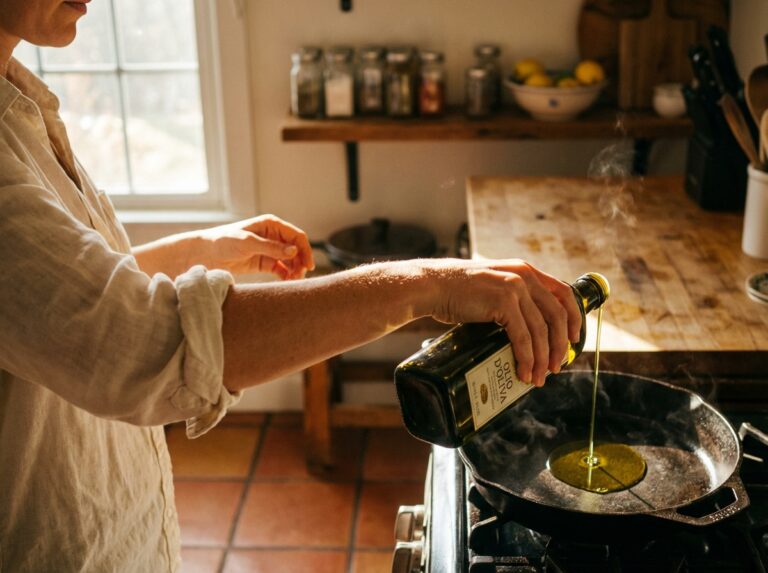
There’s a particular kind of silence that shows up when your knees start talking louder than you do.
Not the dramatic kind. Not a fall, not a snap. Just a stiffness that greets you before the coffee does. A tightness in your fingers when you reach for the door handle in the morning. A dull ache that rides along behind your kneecaps on the stairs, like a passenger you never invited.
For a supplement-focused next step, see the guide to best supplements for joint pain and mobility.
I remember the exact moment I stopped pretending it wasn’t there. I was in the garden — late April, the kind of afternoon that smells like wet soil and cut grass — and I knelt down to pull a weed near the fence post. Getting down was fine. Getting back up was a negotiation. My right knee locked. My hip barked. And I stood there, half-crouched, one hand gripping the fence rail, thinking: When did this happen to me?
That was the beginning of something. Not a breakdown. Something quieter.
A reckoning with the fact that my body had been whispering for months — maybe years — and I’d been turning up the volume on everything else. What followed was my slow, unplanned education in natural joint pain relief — not from a book, but from paying attention.
⸻
What Joint Pain Actually Is (Once You Stop Ignoring It)

Here’s what nobody tells you about natural joint pain relief: the first step isn’t a supplement or an exercise. It’s paying attention.
For a long time, I treated my joints the way most people do — I expected them to work, and when they didn’t, I reached for ibuprofen. Two tablets. Glass of water. Move on. It was mechanical. The same way you’d tighten a bolt that keeps coming loose without ever asking why.
But pain is rarely random. What I eventually learned — slowly, through reading and a lot of honest mornings — is that joint discomfort often starts at a level you can’t see. Inside your joints, there’s a thick, clear fluid called synovial fluid. It’s the body’s own cushion. It coats the cartilage, absorbs shock, delivers nutrients.
When you’re young and your joints feel invisible, synovial fluid is doing its job so well you never think about it. That’s the whole point.
But as years pass, that fluid can thin. The cushion gets less generous. Cartilage that used to glide starts to grind. And what reaches your brain as “stiffness” or “morning joint stiffness” is actually your body saying: I’m running dry in here.
That reframe changed everything for me. My joints weren’t breaking down. They were asking to be replenished.
⸻
The Kitchen Before the Medicine Cabinet

Once I understood that inflammation and fluid loss were driving the ache — not just “getting older” — I looked at my kitchen differently.
I didn’t overhaul everything overnight. I’m not that person. But I started small.
- I swapped my afternoon crackers for a handful of walnuts.
- I added wild salmon twice a week.
- I started dropping frozen berries into my morning oatmeal — blueberries mostly, sometimes tart cherries when I could find them.
The science behind it is simple enough to feel true: omega-3 fatty acids, found in fish and certain seeds, help calm inflammatory signals in the body. Berries carry anthocyanins — compounds that work like quiet little firefighters inside your tissues. Turmeric, which I started grating fresh into soups, contains curcumin, one of the most studied natural anti-inflammatory compounds on the planet. Even green tea, which I drank more out of habit than strategy, turned out to carry compounds that support cartilage resilience.
I won’t pretend the changes were instant. They weren’t. But after about six weeks of eating this way — more color on the plate, more fat from real sources, less processed noise — something shifted. Not in a fireworks way. In a “huh, my hands don’t feel like fists when I wake up” way.
Anti-inflammatory foods for joints aren’t a cure. They’re a conversation. You give your body better raw materials, and it starts to rebuild with what you’ve offered.
⸻
Moving When Everything Says Don’t

The hardest part wasn’t the food. It was moving.
When your joints hurt, your instincts scream at you to stop. Sit down. Rest. Protect. And there’s a place for rest — I’m not arguing with that. But what I discovered, uncomfortably, is that stillness was making me worse.
The first time I tried a twenty-minute walk after two days of couch rest, I felt it immediately. My knees were stiffer than they’d been before I sat down. My ankles felt like they’d been packed in concrete. And I thought: I’ve been resting wrong.
Movement, it turns out, is what pumps synovial fluid through your joints. Without it, the fluid stagnates. Cartilage doesn’t get fed. Muscles around the joint weaken, leaving the joint to absorb forces it was never meant to carry alone.
So I started building a joint mobility routine. Nothing aggressive.
- Range-of-motion circles — ankles, wrists, shoulders — first thing in the morning while the kettle boiled.
- Then gentle walks, stretching from ten minutes to thirty.
- Swimming once a week.
- Tai chi on Saturdays — not because I’m spiritual about it, but because the slow, deliberate weight shifts taught my legs to trust themselves again.
The turning point came about two months in. I was walking through the grocery store parking lot, and I realized I hadn’t thought about my knees in forty-five minutes. Not once.
That absence of pain felt louder than the pain itself ever had.
The Supplement That Didn’t Promise Me the Moon
I want to be careful here, because I know how this part usually reads. Someone tells you about their miracle pill. The clouds part. Angels sing. You roll your eyes.
This isn’t that.
I’d been eating better, moving more, sleeping with more intention. And the improvements were real — undeniable, actually. But mornings were still rough. That first hour after waking, when my fingers wouldn’t fully close and my knees felt like they needed a warm-up lap before I could walk to the bathroom — that hadn’t fully budged.
A friend mentioned Joint Genesis. Not in a salesy way. More in a “this is what I’ve been taking, and my mornings are different now” way. She didn’t explain the science. She just said her hands felt like her hands again.
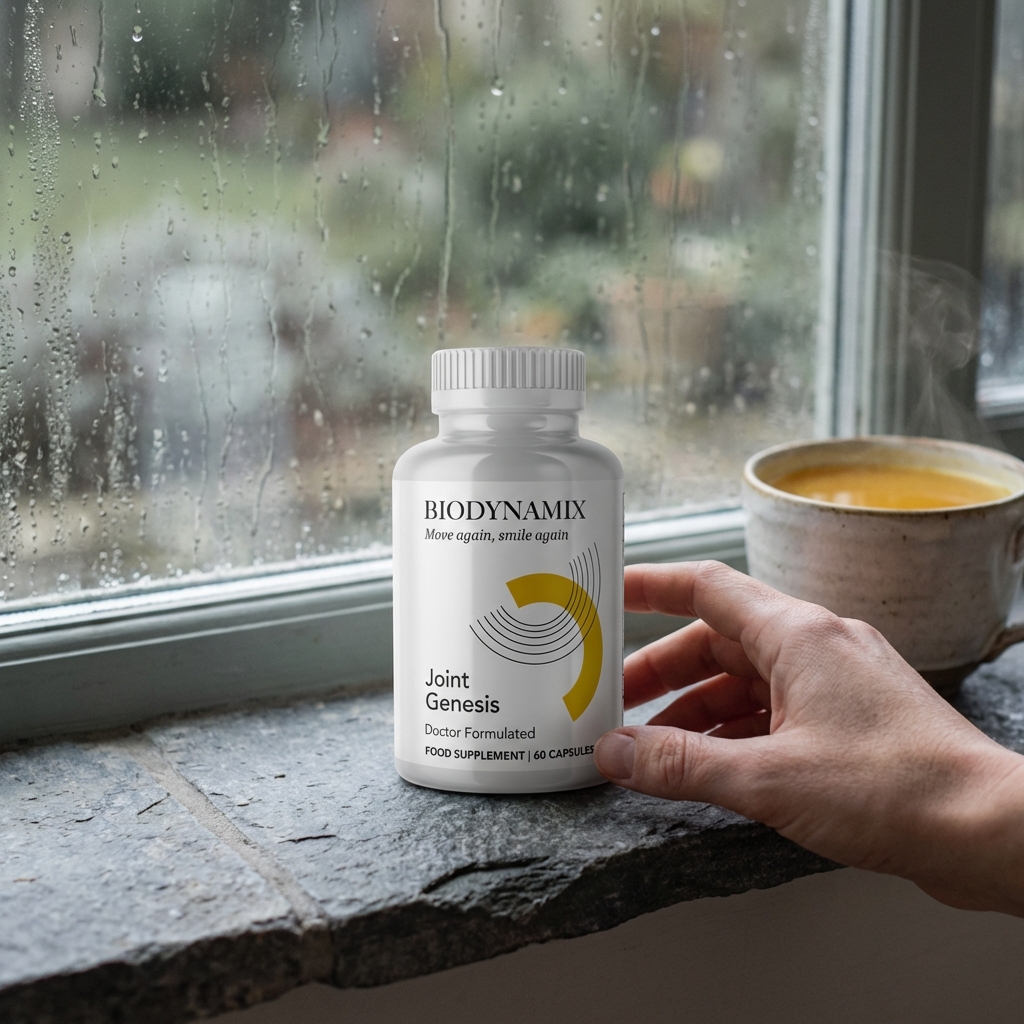
Mornings That Move Again
When better food and longer walks still leave your fingers stiff at sunrise — there’s a gap worth filling
Joint Genesis was designed to support the synovial fluid your joints depend on — the built-in cushion that thins over time. Instead of masking discomfort, it works with your body’s own repair system. One capsule, folded into the mornings you’re already building. No overhaul required. Just one quiet addition to a routine that’s already working.
-
Supports the fluid your cartilage needs to glide, not grind
-
Designed to ease that stubborn first-hour stiffness
-
Works alongside the food, movement, and sleep already helping you heal
I looked into it. Joint Genesis is built around supporting the body’s own synovial fluid — the same cushioning system I’d been reading about. The idea made sense to me in a way that most supplement pitches don’t: instead of masking pain, it was designed to help restore what the joint actually needs to move well.
I started taking it quietly. No announcement. No expectations. Just folded it into my morning alongside the oatmeal and the green tea.
⸻
What Three Months of Paying Attention Looked Like

I kept a notebook. Not a fancy journal — a dollar-store spiral pad I left on the nightstand. Every morning, I’d rate my stiffness from one to ten and scribble a sentence or two about how I felt.
The first two weeks, not much changed. Fives and sixes. Some mornings a seven. I almost stopped writing.
But around week three, I noticed something I hadn’t expected. It wasn’t that the pain vanished. It was that the lag shortened. The time between waking up and feeling like a functioning person went from an hour to maybe twenty minutes. Then fifteen. Then one morning, I got out of bed, walked to the kitchen, and poured water into the kettle without thinking about my hands at all.
By month two, my walks got longer without me planning it. I just… kept going. Past the mailbox, past the park bench where I used to stop, all the way to the creek path and back. My knees didn’t ask me to negotiate anymore.
By month three, I knelt in the garden again. Same fence post. Same patch of weeds. And when I stood up, I stood up. No grip on the railing. No locked knee. Just a body doing what it was asked to do.
I stood there for a second, holding a fistful of dandelions, and felt something I can only describe as relief so deep it was almost grief — grief for all the months I’d spent thinking this was just how it would be now.
What Natural Joint Pain Relief Actually Looks Like
Here’s what I wish someone had told me earlier: natural joint pain relief isn’t one thing. It’s a layering. Food that calms inflammation. Movement that feeds the joint. Sleep that lets repair happen. And sometimes — not always, but sometimes — a supplement that supports what your body can’t quite do on its own anymore.
Joint Genesis didn’t replace the walking or the salmon or the tai chi. It filled a gap I couldn’t reach with effort alone. It was the piece that made the mornings livable, and livable mornings made everything else possible.
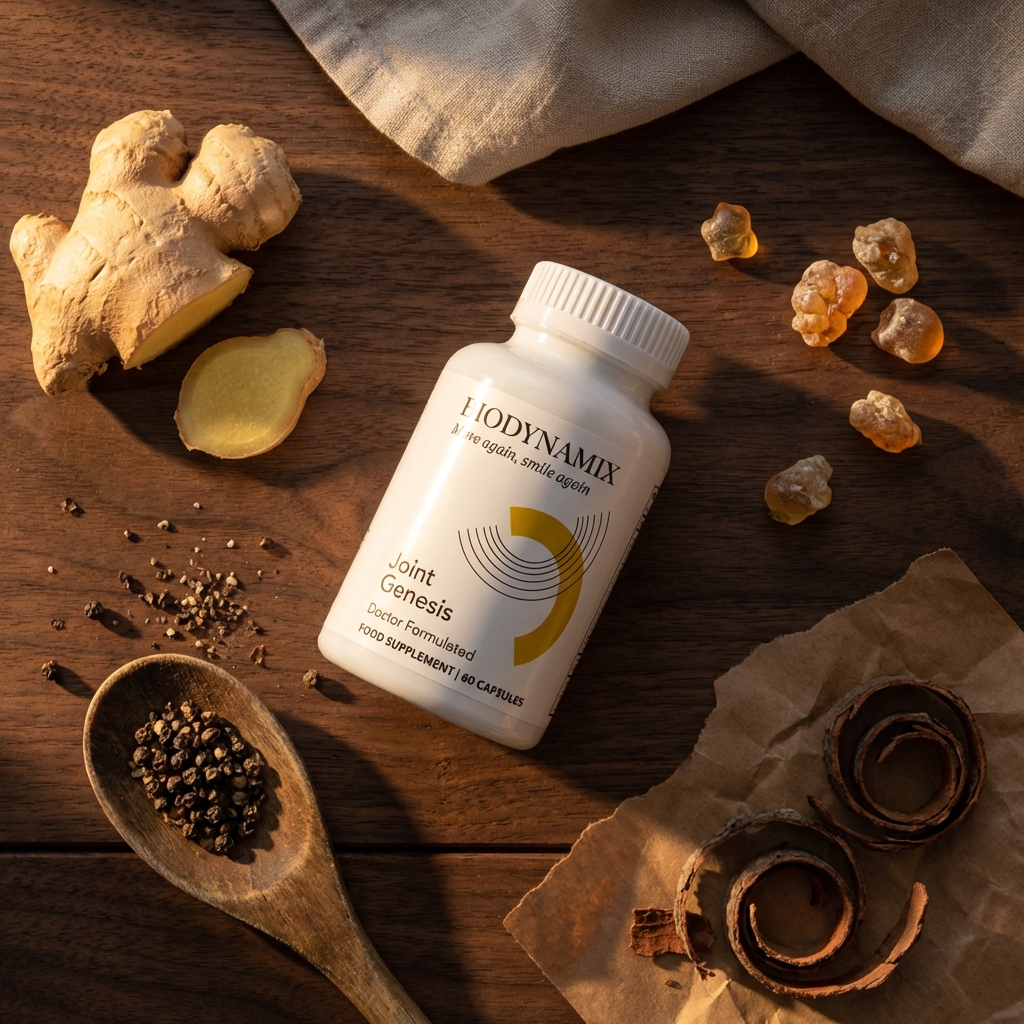
The Gap You Can’t Walk Off
Food calms the fire. Movement feeds the fluid. But some mornings still need one more layer
Joint Genesis is built to support synovial fluid — the body’s own joint cushion that thins with time. It doesn’t replace the walks, the berries, or the tai chi. It fills the space between effort and ease. The part that lets you kneel in the garden and stand back up without gripping the fence.
-
Targets the synovial fluid your joints rely on for smooth, comfortable movement
-
Fills the recovery gap that food and exercise can’t always close
-
One daily capsule that fits a routine already built on intention
I don’t say that to sell you anything. I say it because I spent a long time believing I had to choose between powering through the pain or surrendering to it. Turns out there was a third option: listening to what my body was actually asking for, and then — patiently, gently — giving it exactly that.
⸻
What I’d Tell Someone Who’s Where I Was

If your mornings start with stiff fingers and a mental calculation of how many stairs stand between you and the kitchen, I see you. That low-grade ache you’ve started planning your life around — it doesn’t have to be permanent furniture.
Start where you are. One walk. One handful of walnuts. One morning where you move your ankles in slow circles before your feet hit the floor. Build from there.
The body is remarkable in what it can rebuild when you stop ignoring it and start cooperating with it. Synovial fluid replenishes. Muscles re-engage. Inflammation, given the right signals, steps back.
If something like Joint Genesis can help that process along — quietly, steadily — it’s worth knowing about.
You don’t have to earn your way back to comfort through suffering. Sometimes you just have to pay attention, and then be willing to try one more thing.
Your joints carried you this far. Maybe it’s time to carry them back.
Written by Elias Menden — for those who seek strength in stillness, and motion in patience.