Some mornings used to hit me like a wall.
I’d wake up with heavy eyes, a puffy face, and a brain that felt one step behind. I’d find myself craving some kind of “reset” — a 3-day cleanse, a harsh detox tea, anything that promised a clean slate.
But the more I learned, the more obvious it became:
my body already has a detox system. It wasn’t broken.
It was just asking for better support.
This is where the real relief started for me — not in extreme cleanses, but in understanding how my natural detox pathways actually work, and how a few steady habits (and one smart mitochondrial supplement) could help them do their job with less struggle and more ease.
Your Natural Detox Pathways Are Already Working

Right now, as you read this, your body is quietly sorting, filtering, and escorting out what it doesn’t need. That’s what we mean by natural detox pathways — the built-in routes your body uses to transform and move out waste.
Think of it like a small, well-run city:
- Your liver is the main processing plant.
It takes fat-soluble compounds, modifies them (often called Phase I), and then attaches things like sulfur, amino acids, or other molecules in Phase II so they can become water-soluble and easier to excrete. - Your kidneys act like constant filters.
They pull waste and extra water out of your blood and send it to your bladder as urine so it can leave the body. - Your skin and lungs help too.
Heat, sweat, and breath all play smaller but meaningful roles in letting go of byproducts and keeping circulation moving.
When these systems feel supported, there’s a quiet sense of lightness — less internal “clutter,” more room to breathe, literally and emotionally.
Early on, I used to think I needed to force detox. Now I see it differently: my job is to give these organs what they need so they can keep doing what they’re already wired to do.
The Cellular Side of Detox (Energy, Mitochondria, and Calm)
Zoom in even further, past organs, down into your cells.
Inside each cell are tiny structures called mitochondria — your energy makers. When they have the nutrients and oxygen they need, they create the fuel that powers everything from muscle contraction to brain focus to, yes, detoxification work.
Detox isn’t just “flushing things out.” It’s a series of energy-heavy reactions:
- transforming compounds
- tagging them for removal
- moving them into bile, urine, or stool
If mitochondrial energy is low, those steps can feel slower. You might notice it as foggier thinking, heavier afternoons, or that “stuck” sensation in your body even when you’re eating fairly well.
A gentle boost: mitochondria-focused support
When my own energy felt stuck — especially in the late afternoon — I added one simple experiment: a mitochondria-support supplement called Mitolyn.

Turn On Your Cell Power
When your cells have better fuel, your whole day can feel lighter, clearer, and less “crash-prone.”
Mitolyn is a mitochondria-focused daily capsule you take with your first glass of water. Its targeted blend is crafted to support cellular energy, so afternoons feel smoother, walks feel more doable, and your detox-support habits don’t depend on willpower alone.
-
Helps smooth out those heavy afternoon slumps
-
Backs up your body’s natural detox work
-
Supports the steady energy you need to move and think clearly
I take it in the morning with a big glass of water, before my first protein-rich meal. Its key ingredients (like PQQ, CoQ10, berberine, L-carnitine, and resveratrol) have all been studied for their roles in cellular energy, mitochondrial function, and antioxidant support.
What I noticed wasn’t some dramatic overnight change. It was more subtle:
- My “crash” softened into a simple dip.
- Walking after lunch felt doable instead of exhausting.
- My mind had a bit more clarity, like someone opened a window and let fresh air in.
That extra spark made it easier to show up for the other habits I knew helped my natural detox pathways — especially food, movement, and sleep.
Nutrients That Quietly Support Cellular Detox
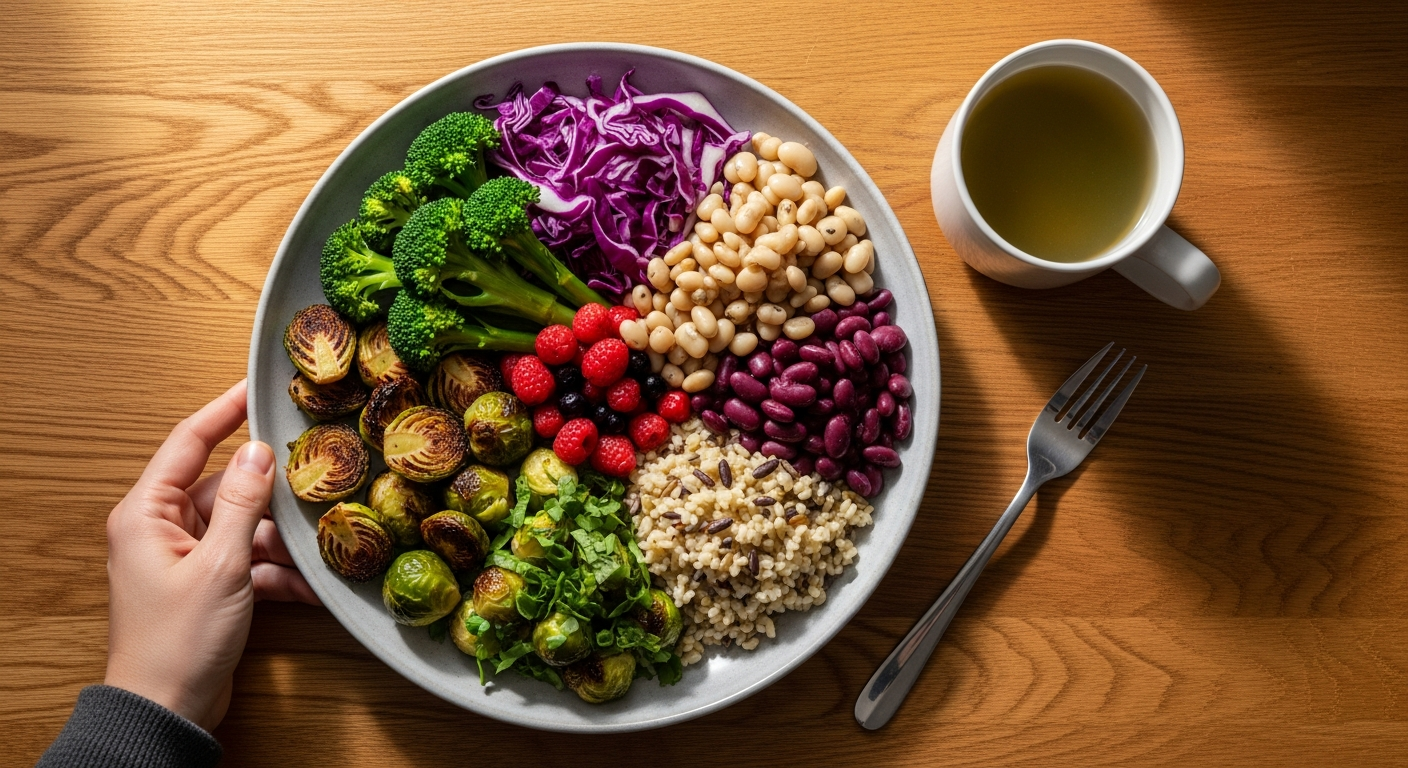
You don’t have to overhaul your entire diet. A few strategic food shifts can give your detox pathways steady support.
Here are some of my go-tos:
Cruciferous vegetables
Broccoli, Brussels sprouts, kale, cauliflower, cabbage. These are rich in sulfur-containing compounds that your liver uses in Phase II detox, and in sulforaphane, which helps regulate antioxidant and detox enzymes inside cells.
Fiber-rich foods
Oats, beans, chia, flax, berries, and a variety of vegetables. Fiber helps move waste through the gut and can even bind certain unwanted compounds, keeping them from being reabsorbed and helping them leave via stool.
Polyphenol-rich plants
Dark berries, green tea, colorful veggies, herbs, and spices. Polyphenols act as antioxidants and have been linked to better liver health and support for healthy metabolism.
Think of each meal as a chance to send your detox system a little love: a handful of greens here, an extra scoop of beans there, some berries on top of your yogurt.
Daily Habits That Keep Natural Detox Pathways Clear
The biggest relief for me was realizing that supporting detox doesn’t have to look dramatic. It can feel quiet, repeatable, almost boring — in a good way.
Hydration that actually helps

Instead of chugging a huge bottle of water once or twice, I sip steadily through the day. Water helps carry nutrients to the liver and kidneys and supports the removal of waste through urine.
One thing that helped:
I fill a large glass at night and leave it by the sink. In the morning, as the kitchen light comes on and the kettle hums, I drink that glass before anything else. Then I take my Mitolyn and start breakfast prep. That first simple ritual tells my body, “We’re clearing space today.”
Food that works with your detox system
You don’t need perfection. Start with:
- at least one cruciferous vegetable most days
- a source of fiber in most meals (beans, whole grains, seeds, or veggies)
- something colorful and plant-based on every plate
These small anchors send your liver, gut, and cells the raw materials they need to keep detox pathways flowing.
Movement that moves everything

Gentle daily movement — walking, light strength training, stretching — increases circulation and supports your lymphatic system, which works alongside your immune system to move fluids and filter out unwanted materials.
You don’t need an intense workout. A 10-minute walk after meals, a few body-weight exercises at home, or an evening stretch session can all help your body feel less “stuck” and more fluid.
Sleep: the nighttime deep clean

While you sleep, your brain uses a special waste-clearing system (often called the glymphatic system) to move out metabolic byproducts. Research suggests this system is much more active during sleep and may help with clearing certain proteins and other waste from the brain.
On the nights I protect my sleep — dimmer lights, screens off earlier, cooler room — I wake up feeling like my mind has had a quiet rinse. My thoughts are sharper. My mood is steadier. And my body feels less inflamed and reactive.
When It Starts to Click
By week two of layering these habits — morning water + Mitolyn, more crucifers and fiber, short walks, stricter sleep boundaries — I noticed something subtle but real:
- The 3 p.m. brain fog softened.
- My skin looked a little less dull.
- My belly felt less puffy at night.
It wasn’t perfection. It was progress. A gentle loosening of the internal heaviness I’d carried for years.
And maybe most importantly, my nervous system felt calmer. I didn’t feel like I was at war with my body anymore.
Long-Term Detox Is About Rhythm, Not Perfection
There’s a kind of peace that arrives when you stop chasing “instant detox” and start trusting your biology.
Your body doesn’t need punishment.
It needs rhythm.
Here’s the rhythm that has anchored me:
- Morning:
Big glass of water, Mitolyn, protein-rich breakfast, something green. - Daytime:
Regular meals with fiber and color, movement breaks instead of long sitting marathons, steady hydration. - Evening:
Lighter dinner, gentle walk or stretch, screens down earlier, a bedroom that feels cool, dark, and quiet.

Make Detox Support Automatic
One small bottle on your nightstand can turn “good intentions” into a rhythm your body can trust
Mitolyn gives your mitochondria daily support so your simple rhythm — water, colorful food, movement, sleep — has real backing. Keep the bottle where you’ll see it, take it once a day, and let that steady habit help your detox-support routine stick for the long haul.
-
Helps your detox rhythm feel consistent, not on-and-off
-
Supports the energy behind better food, movement, and sleep
-
Simple, once-daily step that fits any routine
Some days it all flows. Other days I miss pieces. That’s okay. Natural detox pathways respond to patterns over time, not one perfect day.
Mitolyn fits into this as a quiet amplifier — a way to give my mitochondria a bit more of what they need so the rest of my habits can land with more impact. It doesn’t replace food, movement, or rest. It supports them.
Let Your Natural Detox Pathways Lead the Way
If you’re tired of starting over with every new cleanse, here’s the shift I’d offer:
Instead of asking,
“How do I force my body to detox?”
try asking,
“How do I support the detox work my body is already doing?”
- Feed your liver with crucifers, fiber, and colorful plants.
- Keep your kidneys happy with gentle, consistent hydration.
- Move your body so blood and lymph keep flowing.
- Protect your sleep so your brain gets its nightly clean-up.
- And, if it feels aligned, consider a mitochondria-focused supplement like Mitolyn as part of your morning rhythm, to support the cellular energy that underpins all of this work.
Over time, the heaviness lifts. Your chest feels less tight. Your mind feels clearer. You exhale and realize:
Your body was never the enemy.
It was always trying to help you — it just needed you to partner with it.
Written by Elias Menden — for those who seek renewal.