There’s a specific kind of tired that comes from managing something quietly for so long you forget it’s not supposed to be normal.
For me, it was my stomach.
Not sick. Not broken. Just… loud. Unpredictable. Always in the background of every decision I made.
I’d turn down lunch invites because I couldn’t predict how my body would react. I’d wear looser clothes on days I knew would be stressful. I’d eat the same three “safe” meals on repeat because variety felt like risk.
And when someone asked how I was, I’d say “fine” because what else do you say when nothing’s technically wrong—just uncomfortable all the time?
That’s the headspace I was in when I first heard the phrase prebiotics vs probiotics.
I thought maybe I’d been missing something obvious. That one of them was the answer and I just needed to pick the right one.
But the truth I learned was quieter than that.
⸻
The difference that actually mattered to me
It took a while to find an explanation that didn’t sound like a biology lecture.
Here’s what finally clicked:
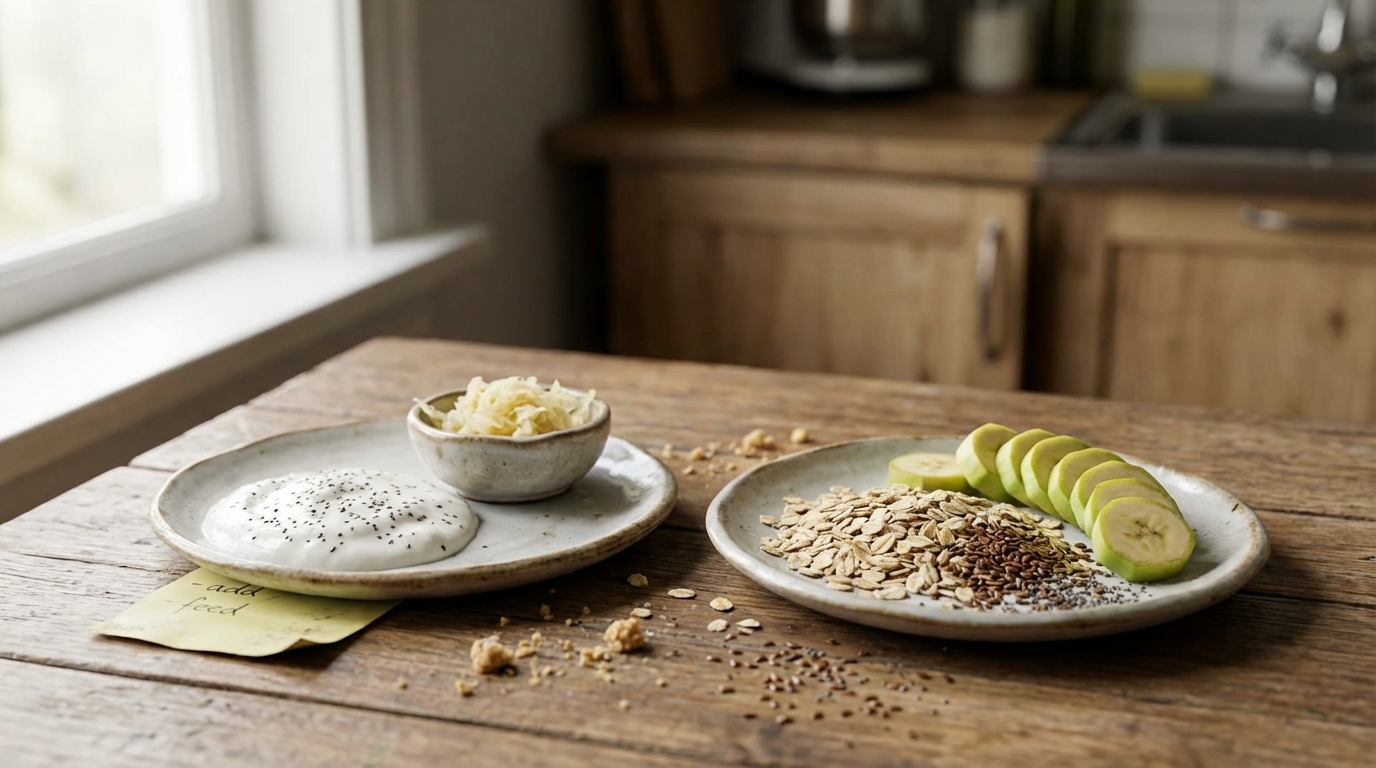
Probiotics are the live bacteria you add to your system.
Think fermented foods. Cultured dairy. Certain supplements. You’re bringing in strains your gut might need more of.
Prebiotics are the fuel those bacteria need to survive.
Specific plant fibers your body can’t fully break down—but your gut bacteria can. So they feed on it, and that helps them thrive.
The simplest framing I found: add vs feed.
Once I stopped thinking of it as “which one is better” and started thinking of it as two parts of the same system, everything got less confusing.
The foods I actually started eating
Probiotic sources that worked into my life:
- kefir (I liked the tang)
- plain yogurt with live cultures
- sauerkraut or kimchi on the side
- miso in soup
Prebiotic sources that didn’t feel like a project:
- oats
- apples
- chia and flax
- garlic and onions
- lentils
- asparagus
- bananas on the greener side
Not exotic. Not expensive. Just real food I could find without hunting.
⸻
The mistake I made first (and wish I’d skipped)

I went all-in too fast.
Loaded up on fiber. Added fermented foods to every meal. Figured if some was good, more must be better.
My gut rebelled immediately.
More bloating. More discomfort. More days where I couldn’t button my jeans by 3 p.m.
I almost gave up entirely—decided the whole thing was overhyped wellness noise.
But what I actually needed wasn’t to quit. It was to slow down.
When I added fiber gradually—just a little more each week—my body had time to adjust. When I stopped forcing fermented foods into every single day, my gut stopped fighting back.
The shift wasn’t instant. But it was real.
- Fewer bloated afternoons.
- Mornings that felt more predictable.
- Less indigestion after meals that weren’t perfectly “clean.”
- A steadier baseline I hadn’t felt in years.
⸻
Where stress kept showing up (even when I didn’t want to admit it)

I wanted the solution to be simple: eat the right foods, take the right supplement, fix the problem.
But my body kept insisting on something harder to measure.
The worst digestive days weren’t always about what I ate.
They were about how I felt when I ate it.
Rushed mornings where I stood at the counter shoveling food in. Tight deadlines that left my shoulders locked and my breathing shallow. Days when I moved through the world clenched without realizing it.
On those days, my stomach got reactive. Sensitive. Like it was responding to my nervous system more than my breakfast.
So I started adding small resets—things that didn’t feel like “self-care performance art”:
- One slow breath before eating
- A short walk after dinner
- Stretching while I waited for the kettle
- One meal a day without my phone in my hand
Tiny shifts. But my digestion seemed to recognize them as signals that it was safe to relax.
And when I paired that calmer baseline with the fiber and fermented foods, everything felt less fragile.
⸻
Prebiotics vs probiotics: the real answer for me was both
I tried focusing on just probiotics for a while.
It helped—but inconsistently. Like I’d notice a shift for a few days, then everything would fade back to baseline.
When I leaned hard into prebiotics instead, the improvement was steadier—but slower.
What finally worked was using them together.
Probiotics brought in the strains. Prebiotics gave them something to live on. Together, my gut stopped acting so reactive.
Less noise. Less guessing. More predictability.
Some people call the combination “synbiotics.” I just call it the first approach that didn’t make me feel like I was starting over every week.
⸻
When supplements became part of the rhythm
Food built the foundation.
That’s the part I can’t skip over—real meals, repeated often enough that my body learned to trust the pattern.
But supplements became useful when life got messy.
Travel. Back-to-back busy weeks. The times when meal prep fell apart and I could feel myself sliding back into the grab-and-go chaos my gut never handles well.
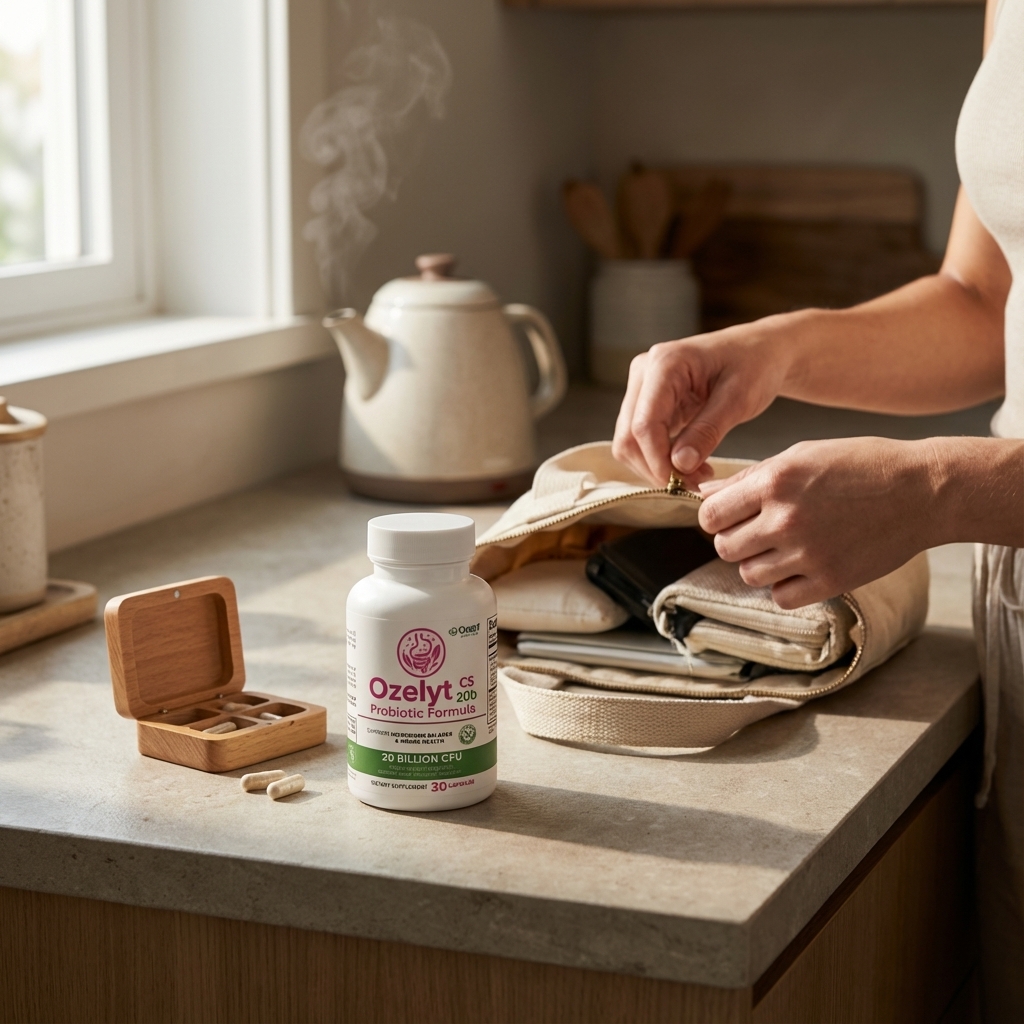
That’s where Ozelyt CS 20b – Women’s Probiotic for Gut & Vaginal Balance fit into my routine.
Ozelyt That Holds Steady
Keep your daily support even when life gets chaotic
Ozelyt CS 20b is a women-focused probiotic made to fit real schedules. Add it to your morning and let it stay in place through travel, busy weeks, and off-routine meals—so your day feels less fragile.
-
Built for women’s daily rhythm
-
Easy to keep consistent
-
Quiet support when routines slip
Not as a miracle fix. Just as a steady, reliable constant—especially when my schedule didn’t leave room for perfectly balanced meals.
It wasn’t another thing to overthink. It was the thing that made keeping my routine easier.
Ozelyt became background support: quiet, consistent, easy to fold into the day without adding more mental load.
⸻
The breakfast I keep coming back to
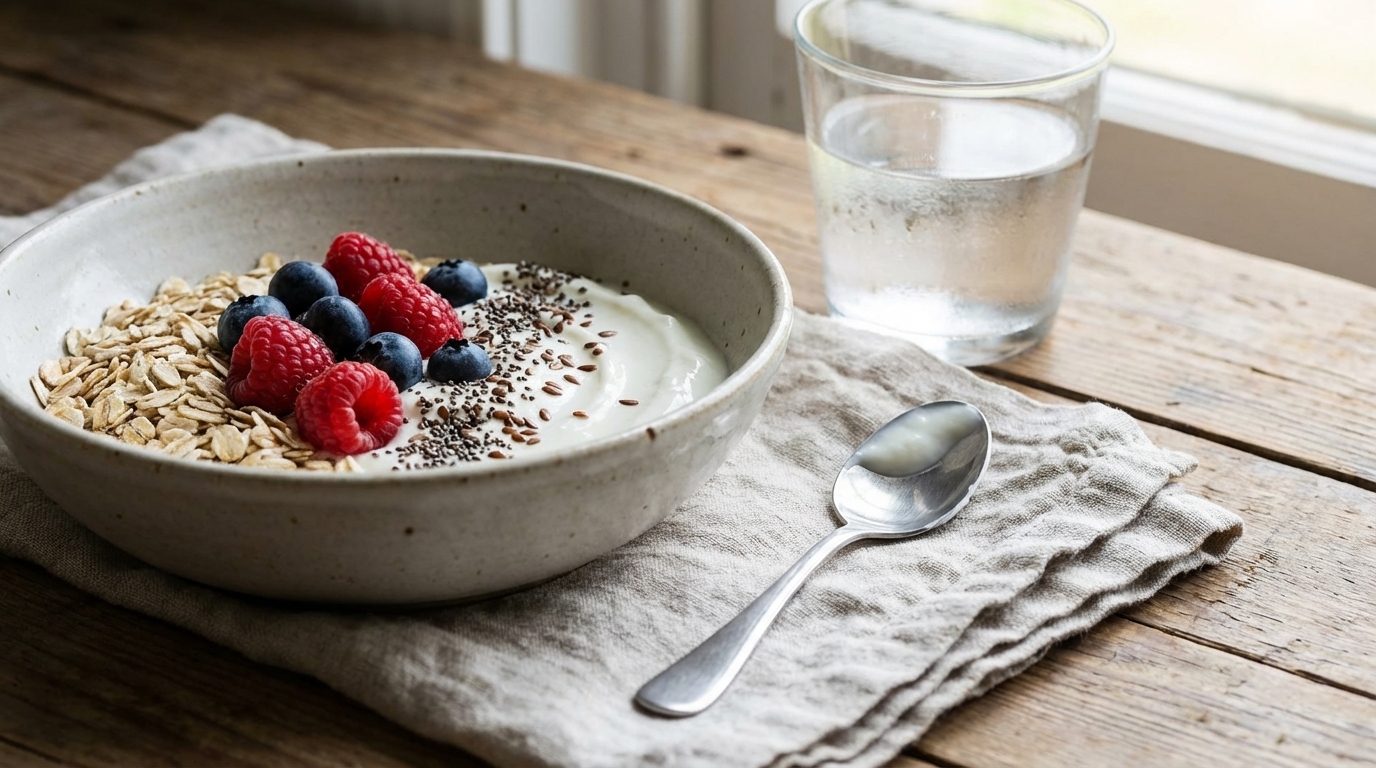
Most mornings, I eat some version of this:
- plain Greek yogurt or kefir
- chia seeds or ground flax
- berries or a banana
- a small handful of oats
It’s simple. Soft. Mildly sweet. My gut seems to recognize it.
Some days I sit with it. Other days I blend it into a smoothie and walk out the door.
And on the weeks when my routine falls apart—when I can’t guarantee fermented foods or enough fiber every single day—Ozelyt CS 20b stays in the pattern. Not as a rescue plan. As a baseline. A quiet anchor.
⸻
The small truths I learned by trial and error
- Increasing fiber too quickly can cause temporary bloating. Slow and steady worked better than aggressive overhauls.
- You don’t need fermented foods every single day. A few times a week still made a noticeable difference.
- Consistency matters more than intensity. My gut didn’t reward big dramatic changes. It rewarded gentle repetition over time.

Make Ozelyt Your Baseline
Stop starting over—keep one thing steady
Ozelyt CS 20b – Women’s Probiotic for Gut & Vaginal Balance is the daily support you can actually stick with. Pair it with the foods you already trust, or lean on it when your week gets messy. Simple, consistent, and built to fit your life.
-
A daily probiotic made for women
-
Supports a steadier routine
-
Easy to fold into mornings
⸻
What I’d tell someone stuck in the same loop
If you’re caught in the prebiotics vs probiotics debate—trying to figure out which one is “the answer”—here’s what helped me most:
Start with prebiotic fiber you can actually sustain.
Add probiotic foods when it feels natural.
And if life gets chaotic and you’re tired of losing progress every time your routine slips, having a steady probiotic like Ozelyt CS 20b – Women’s Probiotic for Gut & Vaginal Balance can keep your gut from swinging back into chaos mode.
The goal isn’t perfection.
The goal is a body that feels quieter.
A day that feels steadier.
And the relief of not having to negotiate with your stomach every single hour.
Honestly… I could use that.
And I finally have it.
⸻
Written by Liora Menden — for those who seek steadiness.
Related reading
- How I Finally Learned to Support Hormones for Weight Loss (and Stopped Fighting My Body)
- My Daily Immune Routine: Morning to Night (The One That Finally Stuck)
- Best Gut Health Supplements: The 5 Types That Finally Made My Gut Feel Normal
- I Stopped Getting Sick All the Time When I Fixed My Gut with Neotonics