You used to wake up and just go. No negotiation with the alarm. No fog sitting heavy behind your eyes for the first forty minutes. You’d roll out of bed, hit the floor, and your body was already there — present, fueled, ready.
Now there’s a delay. A lag between intention and energy. You still move. You still show up. But something underneath has shifted, and no amount of coffee or early nights seems to reach it.
That thing you’re feeling — that slow, interior dimming — isn’t burnout. It isn’t poor sleep hygiene or low iron or a bad week. It’s deeper than all of that. It’s happening inside your cells, in the tiny structures most people never think about. Your mitochondria are aging. And when they go quiet, everything else starts to follow.
I spent a long time trying to solve that feeling on the surface. Better food. More movement. Stricter routines. And I’ll be honest — none of it touched the thing I was actually losing. It wasn’t until I found Longevity Activator that something genuinely changed. Not overnight. Not dramatically. But in the kind of way you notice after a couple of weeks, when you realize you stopped bracing yourself just to get through the afternoon.
⸻
What Mitochondria Actually Do — and Why It Matters More After 40

Most people hear “mitochondria” and think of a biology textbook. But here’s what that word really means in your daily life: mitochondria are the energy plants inside almost every cell in your body. They take what you eat and breathe and convert it into usable fuel. Every heartbeat, every thought, every muscle contraction depends on them doing their job well.
When you’re young, they do it effortlessly. You have billions of them, working at full capacity, clearing out damage, rebuilding themselves. But somewhere around your mid-thirties, that system starts to slow. Mitochondria accumulate damage. They produce more waste — reactive oxygen species that corrode the very structures they live inside. Old, broken mitochondria stick around instead of being replaced. And the energy output drops.
Not all at once. That’s what makes it so hard to catch. It’s not like flipping a switch. It’s more like a dimmer being turned down one degree at a time, so slowly you almost don’t notice — until one morning you realize you’re tired before the day has even started.
This is what scientists call mitochondrial dysfunction, and it sits at the center of nearly every age-related decline you can name:
- Brain fog
- Joint stiffness
- Slower recovery
- Skin that doesn’t bounce back
- That vague, hard-to-describe feeling that your body just doesn’t run the way it used to
The Gap Between What You’re Doing and What Your Cells Need

Here’s the part that frustrated me the most. I was doing the right things. I was eating clean. I was sleeping. I was exercising consistently. And yet I still felt like I was losing ground.
That’s because lifestyle alone can’t fully reverse mitochondrial aging. Your cells need targeted support — specific nutrients that help protect mitochondrial membranes, clear out damaged cells, and reactivate the pathways that keep cellular energy production humming. Without that support, you’re essentially running a machine on yesterday’s fuel with rusting parts.
This is exactly where Longevity Activator stepped in for me. It wasn’t another multivitamin. It wasn’t a stimulant dressed up in wellness language. It was formulated specifically around the mechanisms that drive cellular aging — telomere protection, mitochondrial membrane integrity, and the activation of longevity-related pathways like AMPK that your body relies on to clean house at the cellular level.
I didn’t have to overhaul my life. I just had to give my cells what they’d been missing.
⸻
Why Mitochondria and Aging Are Inseparable

Researchers have known for decades that mitochondrial health tracks almost perfectly with biological age. Not your calendar age — your real age, the one measured in how well your cells function.
As mitochondria degrade, they leak more oxidative stress into the cell. That stress damages DNA, accelerates telomere shortening, and triggers inflammatory cascades that ripple outward into every system. Your joints ache not because you’re “getting old” but because the cells lining those joints don’t have the energy to repair themselves. Your skin thins not because of time but because the fibroblasts responsible for collagen are running on fumes.

Fuel the Machinery Again
Your cells aren’t waiting for more willpower — they need what’s been missing
Longevity Activator was built for the gap between effort and result. It supports mitochondrial membrane integrity, activates cellular cleanup pathways, and helps protect telomere length — so your body can finally use the good habits you’ve already built.
-
Steady, clean energy that lasts past the afternoon wall
-
Cellular support your lifestyle alone can’t deliver
-
Built around the biology of how your body actually ages
The phrase “aging is a disease of energy” isn’t poetic. It’s biological. When your mitochondria can’t produce enough ATP — the molecule your cells use as currency — everything downstream suffers. Immunity slows. Cognition dulls. Recovery takes longer. And the body starts allocating its shrinking energy budget to survival rather than vitality.
This is why surface-level fixes never felt like enough. You can’t outrun mitochondrial decline with a better diet alone. The machinery itself needs repair.
What Changed When I Stopped Searching

I’ll tell you what Longevity Activator actually felt like, because that matters more than any ingredient list.
The first thing I noticed — maybe ten days in — was that the afternoons stopped collapsing. I wasn’t hitting that wall at two o’clock where my brain just checked out and my body wanted to fold. The energy wasn’t buzzy or artificial. It was just… steady. Like the floor had come back under me.
By week three, my mornings had shifted. I was waking up closer to alert than I had in years. Not wired — just present. Like my cells had remembered what it felt like to be properly fueled.
And here’s the thing no one tells you about mitochondrial support: when your cells have energy again, everything else gets easier. Sleep improves because your circadian biology has the resources to regulate itself. Mental clarity comes back because your neurons aren’t starving. Even your mood shifts, because cellular energy and emotional resilience are more connected than most people realize.
I stopped searching after that. Not because I’d given up, but because I’d found the thing that was actually working at the right level.
Longevity Activator wasn’t a patch. It was the missing input my biology had been waiting for.
⸻
The Science Your Body Already Knows

You don’t need a biochemistry degree to understand what’s happening here. Your body already tells you.
When mitochondria are struggling, you feel it as heaviness. As fog. As the inability to recover from a bad night’s sleep the way you used to. As looking in the mirror and seeing someone who looks more tired than they should.
Feel It Before You Name It
Your body already knows the difference — steadiness instead of survival mode
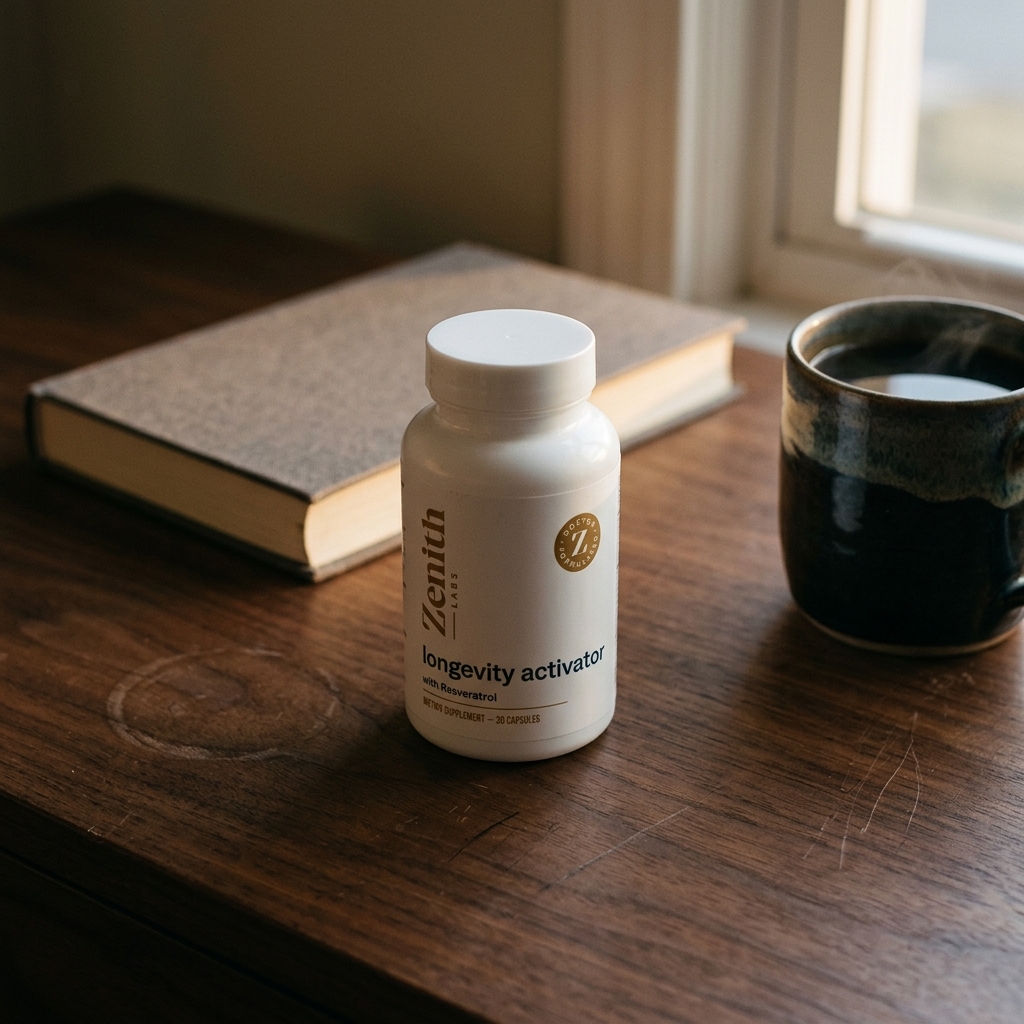
Longevity Activator works where you feel it first: in the fog that lifts, the afternoon that holds, the mornings that stop feeling like a negotiation. It targets the cellular machinery behind your energy, not the symptoms sitting on top of it.
-
Mornings that arrive without the familiar drag
-
Afternoons that hold steady instead of collapsing
-
The kind of energy your body recognizes as real
When mitochondria are supported — when they have the raw materials to protect their membranes, clear oxidative damage, and maintain the telomere length that keeps cells dividing properly — you feel that too. It shows up as steadiness. As waking up without dread. As having enough left at the end of the day to be present with the people you care about.
That’s not a sales pitch. That’s biology working the way it’s supposed to when you stop ignoring what your cells actually need.
Mitochondria and Aging: The Shift You Don’t Have to Wait For

The hardest part of aging isn’t the physical changes. It’s the resignation. The quiet acceptance that this is just how it goes now — less energy, more effort, diminishing returns on everything you do.
But mitochondrial aging isn’t inevitable in the way most people assume. The science is clear: with the right cellular support, mitochondrial function can be stabilized. Telomere degradation can be slowed. The inflammatory cascades that accelerate biological aging can be dialed back.
Longevity Activator gave me that. Not as a miracle, but as a steady, reliable foundation that my body could actually use. And once I felt the difference — once I stopped waking up already behind — I understood something I wish I’d known years earlier: the problem was never willpower, or discipline, or age itself. The problem was that my cells were running out of power, and nothing I was doing on the surface could reach them.
If that sounds like where you are right now — doing everything right and still losing ground — then you already know what I’m describing.
And you already know that the answer isn’t another hack or another habit. It’s giving your mitochondria what they need to do their job again.
Longevity Activator is where I landed. And I haven’t looked back.
Written by Elias Menden — for those who seek steady, cellular strength.