You used to be the person who said yes to everything. The weekend hike. The late dinner. The early gym session before anyone else was awake. Now you sit on the edge of the bed at 6:45 a.m. and wait — not for anything in particular, just for enough energy to stand up and start the day.

It’s not dramatic. It’s not illness. It’s something quieter and more frustrating than that. A dullness that showed up around forty-one or forty-two and never really left. You still function. You still perform. But the margin between functioning and collapsing has gotten thinner every year, and lately you’ve started canceling things you used to look forward to because the idea of doing one more thing feels physically impossible.
You blame the obvious. Poor sleep. Stress. Too many responsibilities. Maybe iron. Maybe thyroid. Maybe you’re just getting old.
But here’s the thing most people never hear, and the thing that changed everything for me: your exhaustion isn’t happening in your muscles or your mind. It’s happening inside your cells — and it’s connected to something you’re doing every single night without realizing it’s broken.
⸻
The Tiny Engines That Stopped Repairing Themselves

Every cell in your body contains small structures called mitochondria. They produce something called ATP — the raw energy currency your body runs on. Your heartbeat, your thoughts, your digestion, your ability to hold a conversation at the end of a long day — all of it is powered by mitochondria.
When you’re young, these engines run hot and clean. But they take damage every single day — from oxidative stress, from metabolic byproducts, from the ordinary wear of being alive. And the body has a built-in system for repairing that damage. It’s called mitochondrial biogenesis — the process of rebuilding and replacing worn-out mitochondria with fresh, efficient ones.
Here’s the part nobody talks about: that repair process doesn’t happen during the day. It happens almost entirely during deep sleep.
Slow-wave sleep — the deepest, most restorative phase of your sleep cycle — is when your body triggers the cellular cleanup and regeneration that keeps mitochondria functioning. Growth hormone surges. Damaged proteins get cleared. New mitochondria are built to replace the ones that have worn down.
And after forty, most people’s deep sleep collapses. Not total sleep — you might still get seven or eight hours. But the architecture changes. The deep phases get shorter. The repair window shrinks. And your mitochondria, taking damage every day with less and less time to recover, start falling behind.
This is what fatigue over 40 actually is. Not laziness. Not aging in some vague, inevitable way. A measurable breakdown in the nightly repair cycle that keeps your cellular engines running.
When I first understood this, I felt two things at once: relief that my exhaustion had a real, physical explanation — and frustration that I’d spent years trying to fix it from the wrong direction.
⸻
What I Tried Before I Found What Actually Worked
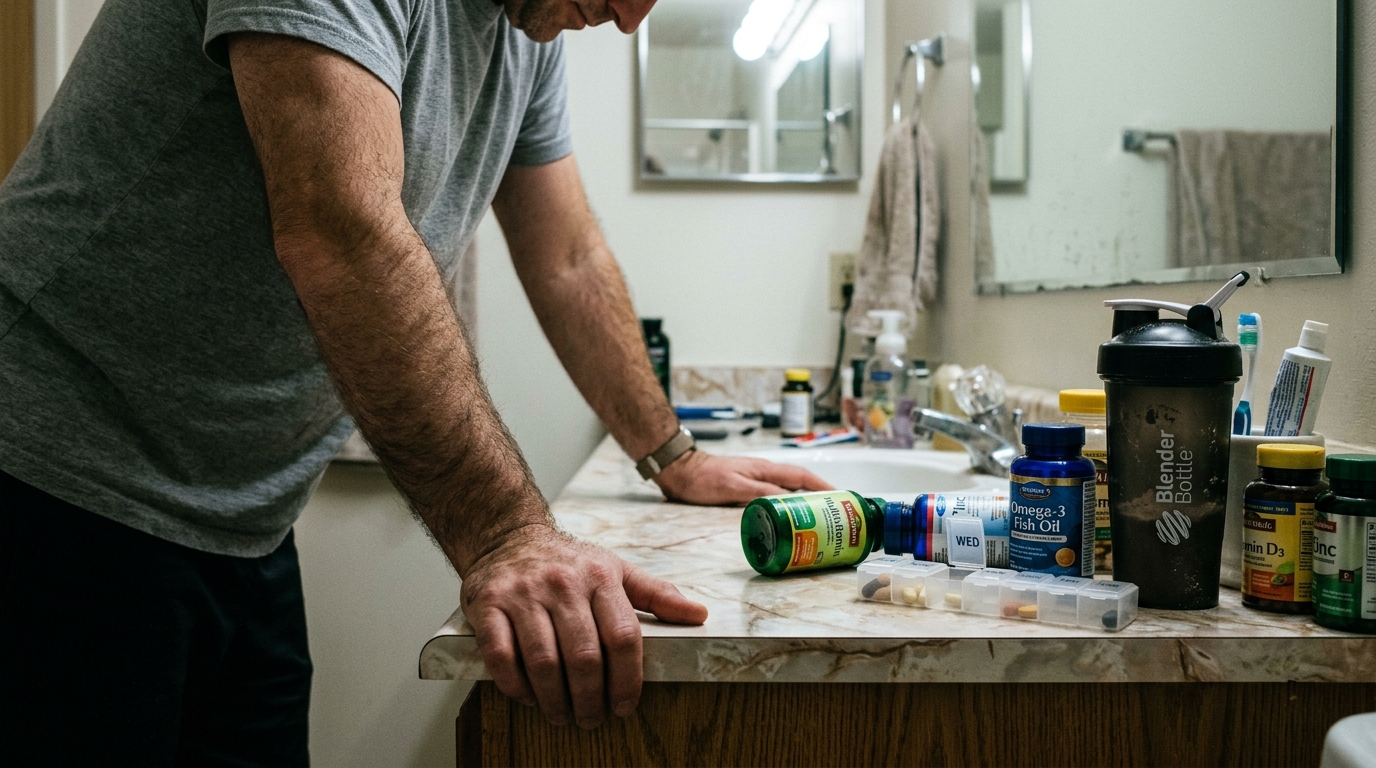
I did the standard tour. I tracked my macros. I cut sugar, then gluten, then dairy. I bought a red light panel. I tried magnesium, B-vitamins, CoQ10, ashwagandha. I started lifting heavier. I drank green juice that tasted like lawn clippings and pretended it made me feel alive.
Some of it helped at the edges. Better nutrition gave me a slightly less brutal morning. Exercise kept my mood from cratering. But none of it touched the deep fatigue — the one that lived underneath the surface improvements, the one that made everything feel like it was costing twice as much effort as it should.
Because none of it was addressing the actual problem. I was trying to fuel engines that weren’t being repaired. I was pouring premium gas into a machine with a broken maintenance cycle.
That’s when I found Renew.
The Shift I Wasn’t Expecting

Renew is built around one idea that most supplements completely ignore: supporting the deep sleep phases where cellular regeneration actually happens. Not knocking you out. Not sedating you with melatonin or valerian. Targeting the metabolic and hormonal conditions that allow your body to enter and sustain the slow-wave sleep your mitochondria depend on.
The formulation brings together ingredients like ashwagandha, L-theanine, 5-HTP, magnesium, and zinc — chosen specifically for their relationship to deep sleep architecture, growth hormone release, and overnight cellular repair. It’s not a sleep aid in the way most people think of sleep aids. It’s a regeneration support system designed to restore the nightly repair window your body has been losing.
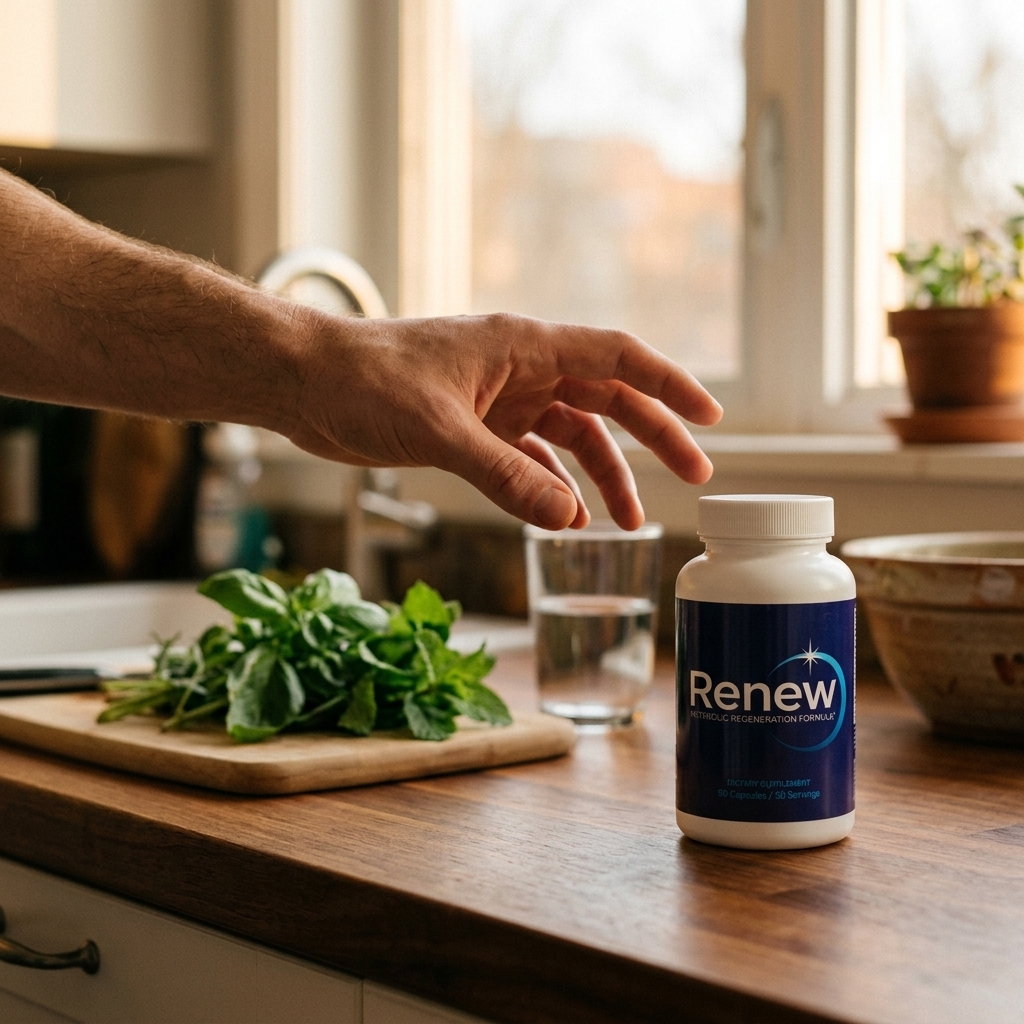
Energy That Lasts Past Noon
That evening lightness you forgot existed — it starts while you sleep
Renew supports the deep sleep phases where your cells rebuild overnight. Not a stimulant. Not a sedative. A nightly formula designed to restore the repair window your body has been losing — so you wake up with energy that actually holds through dinner.
-
Wake up feeling genuinely lighter, not just “rested”
-
Watch the afternoon wall quietly disappear
-
Feel present at the end of the day instead of counting down
I’ll be honest — I didn’t feel anything dramatic the first few nights. My sleep didn’t suddenly feel different. But around day nine or ten, I noticed something I hadn’t felt in years. I woke up and my body felt lighter. Not rested in the “I slept well” sense. Lighter, like something heavy had been quietly removed overnight.
By week two, the afternoons changed. The 2 p.m. wall — that gravitational pull toward the couch that had been part of my life for years — stopped showing up. I got home from work and I didn’t sit down immediately. I stood in the kitchen, talking to my wife, and then I started cooking. Not because I forced myself. Because I had the energy to do it.
That might sound small. But if you’re living in the kind of fatigue I was living in, you know it’s not small at all.
It’s the difference between surviving the day and actually living through it.
⸻
Why Renew Felt Different From Everything Else

Most supplements I’d tried were working on symptoms. More magnesium to relax. More B-vitamins to support methylation. More caffeine to override the drag. Renew wasn’t doing any of that. It was working underneath all of it — restoring the conditions where my body could do what it already knew how to do: repair its own mitochondria during the hours I was asleep.
And that distinction matters more than I can describe. Because when your deep sleep phases lengthen again and your mitochondria start getting the nightly maintenance they’ve been missing, you don’t just get energy back. You get:
- Clarity back
- Patience
- Motivation
- The ability to be present at the end of the day instead of running on fumes and counting the minutes until you can close your eyes
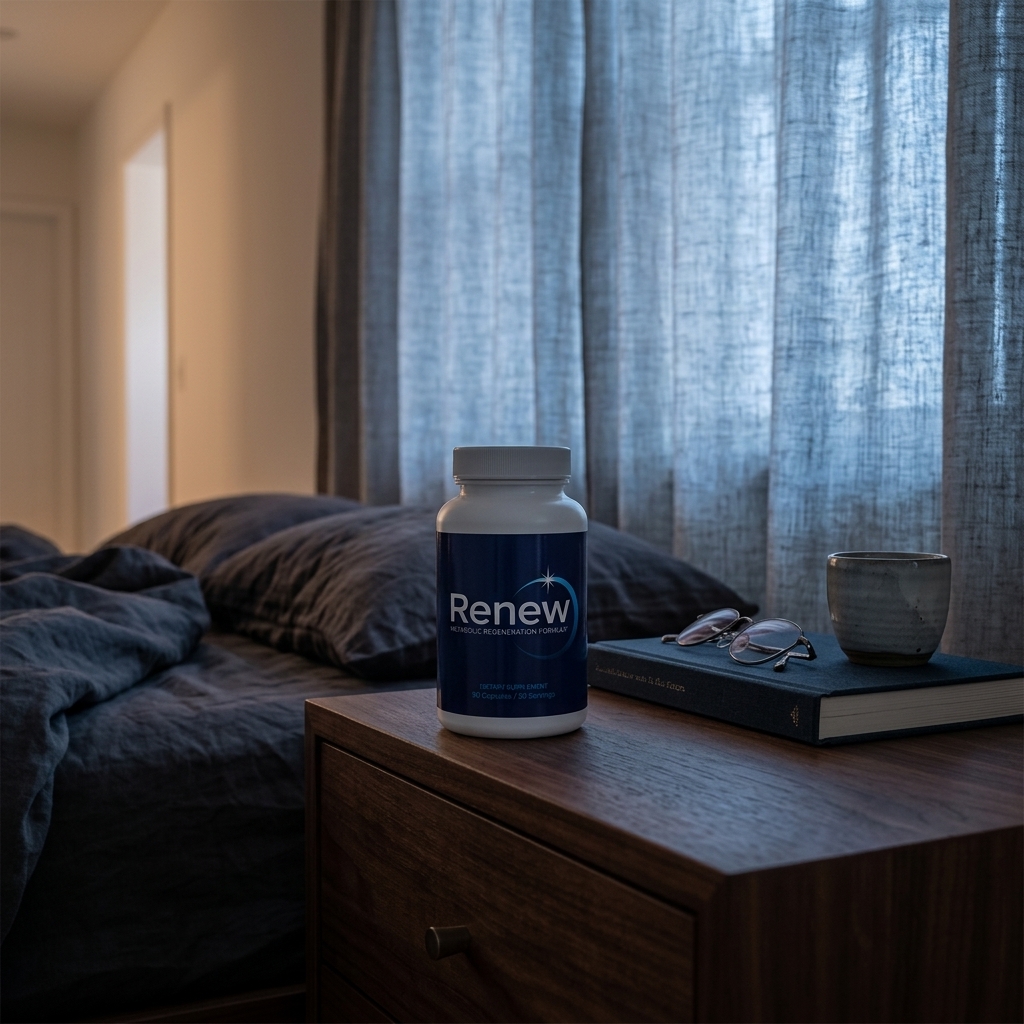
Rebuild While You Rest
Your cells already know how to repair — they just need the right conditions
Renew’s formula targets the slow-wave sleep phases where mitochondrial regeneration actually happens. Ashwagandha, L-theanine, 5-HTP, magnesium, and zinc — working together to support the overnight window your body depends on. Not another Band-Aid. A foundation.
-
Support the deep sleep phases your body has been losing
-
Let your cells do the repair work they were built for
-
Build a baseline of energy, not a borrowed spike
Three weeks in, I stopped needing my second coffee. A month in, I went for a run on a Saturday morning — something I hadn’t done in over a year. Not because I was chasing a goal. Because I felt like it. Because my body had enough.
That’s what Renew gave me. Not a spike. A floor. A baseline of energy that didn’t collapse by mid-afternoon. A cellular steadiness I didn’t even know I’d lost until I got it back — rebuilt quietly, every night, while I slept.
The Thing Nobody Tells You About Fatigue Over 40

Here’s what I wish someone had told me years ago: fatigue over 40 is not a character flaw and it is not inevitable. It’s a signal from your cells that something foundational has shifted — that the deep sleep window where your mitochondria get repaired has shortened, and your energy production has gone down with it.
You can exercise and eat well and get eight hours a night and still feel exhausted, because it’s not the quantity of sleep that matters most. It’s the depth. And when that depth erodes — when the slow-wave phases shrink and the regeneration window closes — your mitochondria accumulate damage faster than they can heal.
Renew addresses that directly. That’s why it worked when nothing else did. That’s why I stopped searching after I found it. Not because I gave up — because I didn’t need to keep looking. The energy came back. The fog lifted. The heaviness that had settled into my bones for years started to ease, and for the first time in a long time, I recognized the person looking back at me in the mirror.
What I’d Say to You Right Now

If you’re reading this and it sounds like your life — if you’re the person who’s holding it together on the outside while quietly falling apart on the inside, who’s blamed yourself for being tired, who’s wondered if this is just what forty feels like — I want you to know that it doesn’t have to be.
Your mitochondria are waiting to be repaired. Your deep sleep can be restored. The energy you remember isn’t gone forever — it’s been buried under a nightly repair deficit that has a real, specific, targeted answer.
Renew was that answer for me. Not a miracle. Not a hack. A daily practice that met my body where it actually needed help — in the deep sleep phases where cellular energy is reborn every single night.
I don’t overthink it anymore. I just take it, and I wake up feeling like the version of myself I thought I’d lost.
You deserve that too.
Written by Elias Menden — for those who seek steady, honest energy.