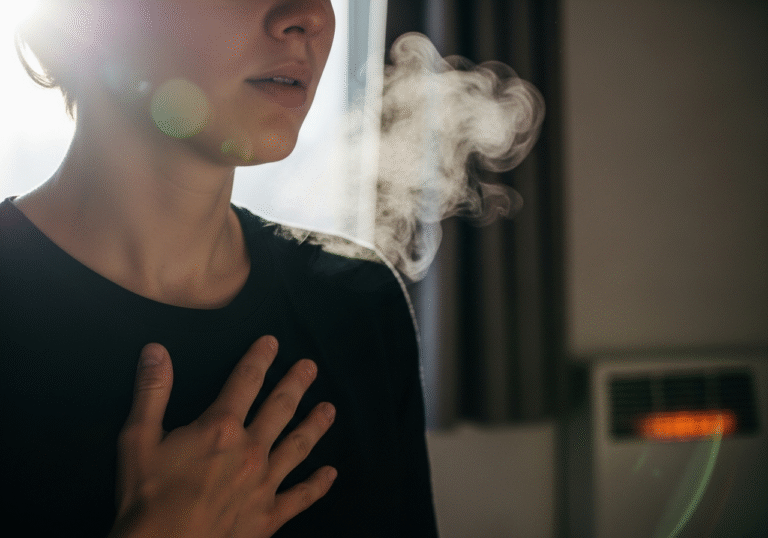
You know you slept. The clock proves it—seven hours, eight hours, sometimes nine if you’re lucky. But when the alarm goes off, there’s no surge of readiness. Just a dull awareness that you have to get up anyway.
If you’re always tired even after a full night’s sleep, the confusion is its own kind of exhausting. You start bargaining with yourself: maybe I need darker curtains, maybe I need magnesium, maybe I should stop looking at my phone before bed. You try everything that promises to “optimize” rest, and still—every morning feels like you’re climbing out of a hole.
That was my life for two years. I kept thinking I was doing something wrong, that I needed to try harder, sleep smarter, be better at rest.
Then I realized: the problem wasn’t that I wasn’t sleeping enough. The problem was that my body couldn’t use the sleep I was getting.
What finally shifted that pattern—and I mean actually shifted it, not just made me feel slightly less awful for a few days—was MenoRescue.
Not as a replacement for the other changes I needed to make. But as the foundation that made those changes actually stick. Without it, I was just rearranging deck chairs.
⸻
The morning I knew something was deeply off

I’d gotten a full night. No interruptions. No stress dreams. I should’ve woken up restored.
Instead, I felt like I’d been filled with wet sand.
I went through the motions—coffee, shower, makeup that tried to convince the mirror I was fine. But by the time I was making breakfast, my arms felt heavy just holding the pan. My thoughts kept snagging on simple decisions. Toast or eggs? Both felt impossible.
By mid-afternoon, I’d hit that point where even my eyelids ached. Not sleepy, exactly—more like my whole system was being asked to run on fumes. My temper got short. My focus scattered. I’d snap at my kids over something minor, then feel guilty, then too tired to even process the guilt properly.
And here’s what made it so maddening:
I was doing all the things you’re supposed to do. I had a sleep schedule. I exercised. I tried to eat well. I wasn’t staying up until 2 a.m. scrolling Instagram.
So why did I feel like my body had forgotten how to recharge?
Because sleep, I eventually learned, is only part of the equation. If your hormones are dysregulated—especially during the perimenopause and menopause years—your body can lie still for eight hours and still never drop into true recovery mode.
⸻
When you’re always tired even after a full night’s sleep, your hormones are probably screaming
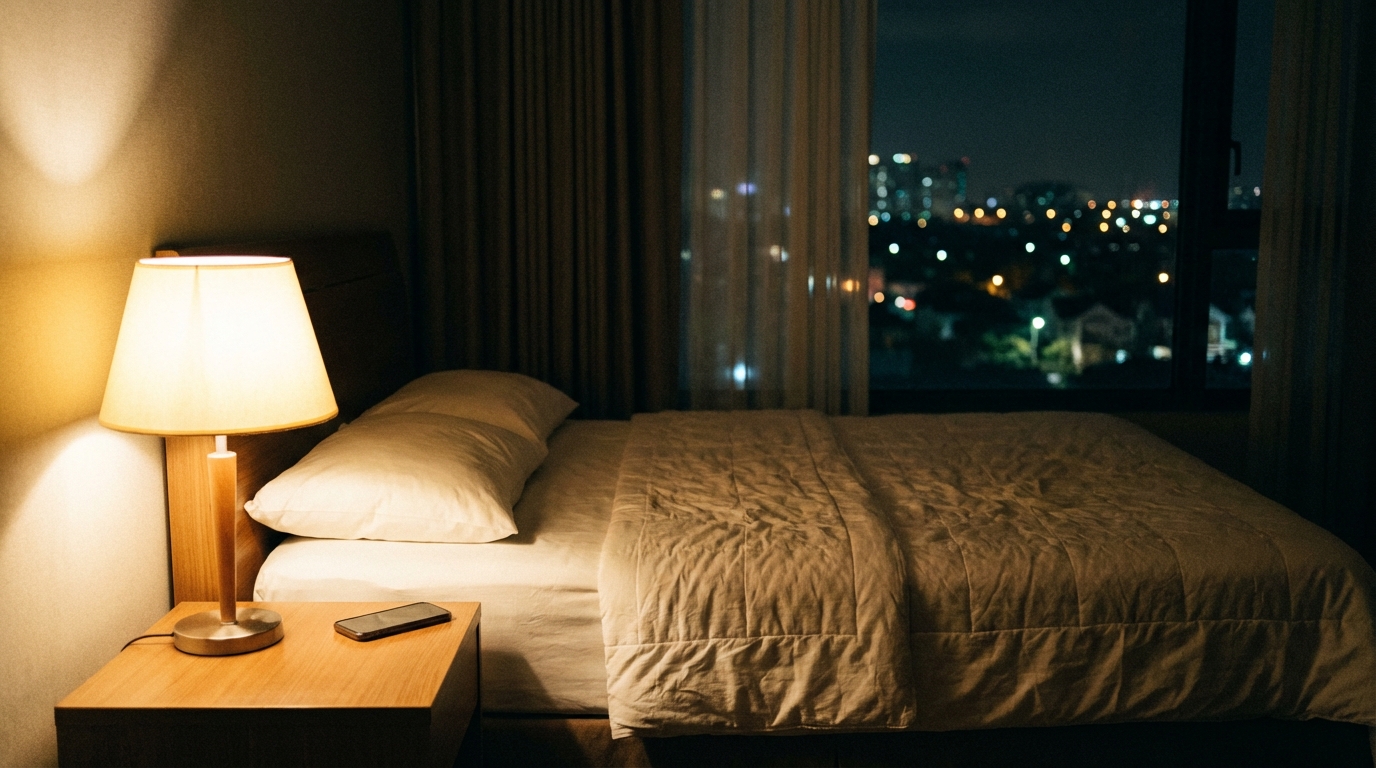
This is the part most women don’t hear until way too late: exhaustion isn’t about willpower or discipline. It’s about signals.
Your body doesn’t run on motivation. It runs on chemical messengers that tell every cell when to be alert, when to rest, when to repair, when to produce energy. When those messengers get scrambled, you can do everything “right” and still feel chronically drained.
The main culprits that keep women locked in that tired-but-can’t-truly-rest cycle:
Cortisol
This is your stress hormone, but it’s also your “wake up and function” hormone. In a healthy rhythm, it peaks in the morning to get you going, then gradually declines so you can wind down at night. But chronic stress—the kind that comes from juggling too much, caring too much, never quite catching up—throws that rhythm into chaos. You end up with cortisol surging at 10 p.m. when you’re trying to sleep, then bottoming out at 7 a.m. when you need to get up. The result: wired at night, dead in the morning.
Thyroid function
Your thyroid controls your metabolic tempo—how quickly your body converts food into usable energy. When it’s sluggish, everything moves like you’re wading through syrup. Your thoughts take longer to form. Your body temperature runs cold. Even simple tasks feel effortful.
Blood sugar crashes
If you’re running on coffee and granola bars and whatever you can grab between meetings, your energy levels look like a sine wave. You spike, you crash, you reach for another quick fix. Repeat until you’re so exhausted you can’t tell if you’re hungry or just depleted.
Here’s what took me way too long to accept: you cannot caffeinate your way out of a hormonal problem. You just can’t. The coffee might mask it for a few hours, but the underlying issue stays put.
⸻
The three hidden drains that make hormonal fatigue in women so persistent
Even once you understand that hormones are involved, there are subtler forces at work—quiet, chronic, cumulative—that keep exhaustion locked in place:
1) Inflammation you can’t see
Not the kind that makes your joints swell or your skin red. The low-grade kind that hums in the background, making everything feel slightly harder than it should be. Your immune system stays on low alert, burning through resources, never fully standing down.
2) A nervous system that never downshifts
You might stop working, but your brain doesn’t stop processing. The emails keep looping. The mental to-do list keeps scrolling. You’re “relaxing” on the couch, but your shoulders are still up by your ears. Your body can’t repair what it thinks is still under threat.
3) Recovery debt you can’t see on a Fitbit
You’re getting hours of sleep, sure. But if you’re not dropping into deep, restorative sleep—if your nervous system is stuck in a low-level surveillance mode all night—those hours don’t count the way they’re supposed to. You’re lying down, but you’re not actually recovering.
That was my trifecta. I had all three, and they fed each other in a loop I couldn’t break on my own.
I wasn’t failing at rest. I was trying to rest in a body that had forgotten how.
⸻
The first changes I made (and why they helped but didn’t solve it)
I didn’t overhaul my entire life overnight. I just started making small, sustainable adjustments.
Mornings: I stopped skipping breakfast and started eating protein first thing—eggs, Greek yogurt, leftovers from dinner. It sounds so basic, but I noticed that when I started my day with real food instead of just coffee, my blood sugar stayed more even. My focus held longer. The 3 p.m. crash wasn’t as brutal.
I started getting outside early, even just for ten minutes. The morning light helped—something about natural light hitting your eyes early signals to your brain that it’s time to be awake. I wasn’t bouncing out of bed, but I was less foggy.
Evenings: I built in a wind-down buffer. Dimmed the lights an hour before bed. Put my phone on the other side of the room. Read instead of scrolled. Not every night, but most nights.
These changes made a difference. I’d say they took me from a 3 out of 10 to maybe a 5.
But I was still tired. Still dragging. Still waking up feeling like I hadn’t really slept.
That’s when I realized: my habits were good, but my body wasn’t in a state to use them. I was trying to charge a phone with a broken charging port.
I needed something that would help my system actually receive the support I was giving it.
That’s where MenoRescue came in—and why I’m so certain about recommending it now.
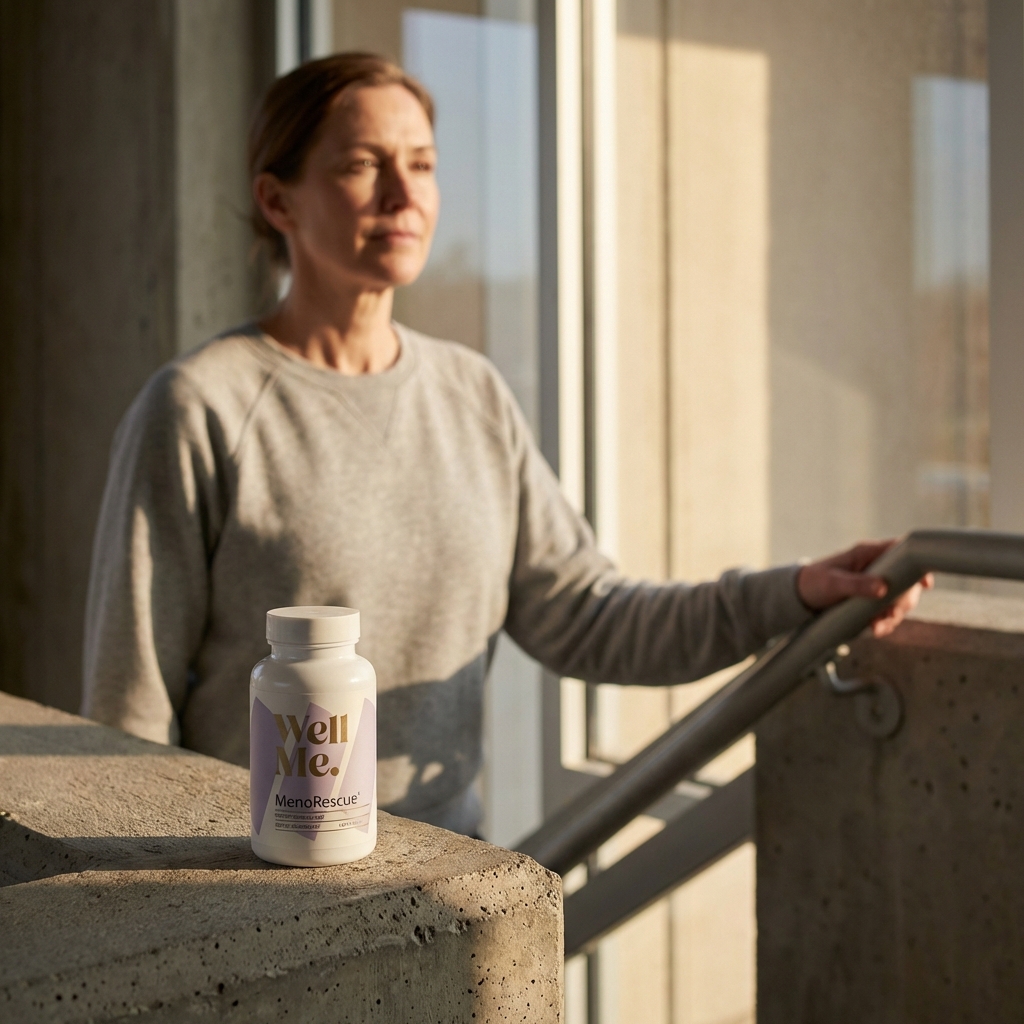
This Is Why You’re Exhausted
If your cortisol is off, sleep won’t fix it
MenoRescue works by helping your body regulate cortisol — the stress hormone that decides whether you feel calm or constantly “on.”
It uses adaptogenic botanicals and targeted nutrients designed to support a healthier stress response, so your nervous system can finally stand down instead of staying stuck in fight-or-flight.
-
Less wired at night
-
More functional in the morning
-
Energy that doesn’t come from panic
⸻
MenoRescue was what finally made my body cooperate
If you’re in perimenopause or menopause, you know the feeling: your body starts behaving like it’s running on different firmware.
The same habits that used to work don’t work anymore. The same stressors hit twice as hard. The same amount of sleep leaves you more drained than rested.
I chose MenoRescue because it targets the thing I finally understood was at the root of my exhaustion: dysregulated cortisol.
When cortisol is out of rhythm, everything downstream gets messy. Your sleep quality suffers. Your energy crashes. Your mood swings. Your body interprets everything as a low-level emergency, and you never fully come down from that state.
MenoRescue is designed to support healthier cortisol patterns—to help your system stop living in constant fight-or-flight mode. And when that happens, everything else gets easier. Your sleep deepens. Your energy steadies. Your body finally has space to do what it’s supposed to do: repair itself.
Here’s the truth I wish someone had told me a year earlier:
MenoRescue is what changed the game.
It’s what made my mornings feel like actual mornings instead of just “conscious but not functional.” It’s what took the edge off the afternoon crash. It’s what let me stop white-knuckling my way through every day, constantly wondering if I’d make it to bedtime without losing my patience or my mind.
I didn’t feel jittery. I didn’t feel artificially pumped up. I just felt… steady. Like my body and I were finally on the same team again.
And when you’ve been exhausted for months or years, steadiness feels like a miracle.
⸻
What “better” actually looked like (the details people skip)

People describe getting their energy back like it’s some dramatic transformation—like you wake up one day and suddenly feel 25 again.
That’s not what happened for me.
What happened was subtler, but more meaningful:
I stopped waking up and immediately calculating how much coffee I’d need to survive the day.
My brain fog lifted enough that I could actually finish thoughts without losing the thread halfway through.
My patience came back. I didn’t snap at my kids over small stuff. I didn’t resent every request for my time.
My evenings stopped feeling like a forced march to bedtime. I had enough left in the tank to actually enjoy dinner, or read, or have a real conversation with my husband.
The biggest shift, though?
I stopped feeling like I needed to micromanage my own energy every second.
That’s the exhaustion underneath exhaustion—the constant mental load of rationing yourself, pacing yourself, negotiating with your own body just to get through a normal day.
MenoRescue didn’t just give me more energy. It gave me back the mental space I’d been using to manage my lack of energy.
I stopped googling “why am I so tired all the time.”
I stopped reading articles about adrenal fatigue and mitochondrial dysfunction.
I stopped feeling like I was one bad night away from total collapse.

Sleep Isn’t Recovery
Your body has to know how to recharge
MenoRescue supports the systems that decide whether rest actually restores you.
By helping regulate stress chemistry and supporting metabolic balance, it allows your body to use the sleep you’re already getting — instead of waking up depleted no matter how long you were in bed.
-
Fewer afternoon crashes
-
Clearer thinking without caffeine stacking
-
Energy that lasts into the evening
⸻
The rhythm I’ve settled into now (without making it my whole personality)
I’m not tracking macros. I’m not logging my sleep data. I’m not living like I’m training for something.
My daily rhythm is simple:
Morning: real breakfast (protein-centered), some sunlight, gentle movement—even just stretching or a short walk.
Midday: another solid meal, not just snacks. Staying hydrated. Not skipping lunch because I’m busy.
Evening: winding down earlier. Less screen time. Softer lighting. Letting my nervous system know it’s safe to relax.
And every day: MenoRescue, which keeps my cortisol from spiraling and my system from slipping back into that wired-but-exhausted state.
That’s it. Not complicated. Not restrictive. Just consistent.
And consistency actually works when your body is finally capable of responding.
⸻
If you’re exhausted even after sleeping, remember this
If you’re always tired even after a full night’s sleep, it doesn’t mean you’re weak. It doesn’t mean you’re doing it wrong. It usually means your body’s internal signaling system is out of sync—and you’ve been trying to override it with sheer force of will.
Start with the basics, absolutely. Clean up your sleep hygiene. Eat real food. Move your body. Get light in the morning.
But if you’re in the perimenopausal or menopausal window and you recognize that awful “wired but tired” pattern—if you’re dragging yourself through days that should feel manageable—don’t ignore the hormone piece.
MenoRescue is the most direct, effective step I’ve found for that specific kind of fatigue.
Not because it replaces good habits. Because it makes your good habits finally work the way they’re supposed to.
⸻
Frequently asked questions
Why do I feel tired even after 8 hours?
Because sleep duration isn’t the same as sleep quality or recovery. If your stress hormones are elevated or your blood sugar is unstable, you can lie in bed for eight hours and never drop into the deep restorative sleep your body needs to actually recharge.
What does hormonal fatigue in women feel like?
It feels like running on empty even when you “shouldn’t” be. Like your brain is foggy, your body is heavy, and you’re somehow both exhausted and restless at the same time. It’s especially common in perimenopause and menopause, when estrogen and progesterone fluctuations throw cortisol and other hormones off balance.
What’s the simplest place to start?
Get your mornings and evenings dialed in first: protein at breakfast, light exposure early, a calm wind-down at night. Then add MenoRescue to address the underlying cortisol dysregulation that’s keeping you stuck in that tired-all-the-time loop.
⸻
Why you’re always tired even after a full night’s sleep—and what actually helps
If you’re always tired even after a full night’s sleep, stop blaming your sleep habits alone. The real issue is usually your body’s internal rhythm—the hormonal signals that decide whether you wake up energized or drained, whether you coast through the afternoon or crash hard.
For me, MenoRescue was the turning point.
It’s what made all my other efforts finally pay off.
It’s what gave me back the kind of steady, reliable energy I’d forgotten was even possible.
Once you experience that steadiness, you realize how much of your life you’d been spending just trying to keep your head above water.
Written by Liora Menden — for those who seek calm
Related reading
- Maintaining Bone Density After 35: What Works When Your Joints Won’t Let You Show Up
- Hormone Balance After 35: A Real-Life Guide to Feeling Like Yourself Again
- Perimenopause Night Sweats and Brain Fog: When Your Body Rewrites the Rules at 2 A.M.
- The Menopause Sleep Supplement That Gave Me My Nights Back