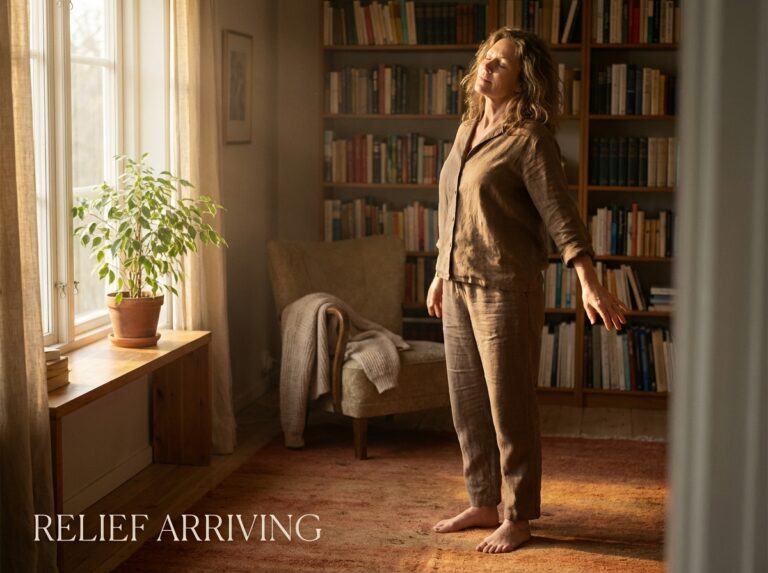
The kitchen was quiet. Pale light on the counter. Cuff on, squeeze, release: 145/92. I told myself it was a fluke. Next morning: 140/90. Same tight band under my left collarbone, like a seat belt that wouldn’t loosen. That’s when chronic stress heart health stopped being something I skimmed online and became the story my body was telling me — clearly, and out loud.
I’d blamed headaches on coffee, tight shoulders on my chair, and restless sleep on “one more email.” But stress isn’t just a mood; it changes how your body behaves. When stress lingers, blood vessels can stay a little tighter, sleep frays, and blood pressure trends up. The American Heart Association puts it simply: chronic stress can contribute to high blood pressure, raising risk over time — and everyday habits like movement, sleep, and stress skills help.
The loop I missed (and you might be living in): stress → hormones → pressure → inflammation

Here’s the picture that finally clicked. Stress flips on fight-or-flight. Adrenaline and cortisol rise. In short bursts, that’s useful. But when the “on” switch sticks, vessel tone stays high and recovery runs low. Harvard’s plain-language summary is blunt: repeated adrenaline surges can damage vessels and nudge blood pressure upward.
That’s also where low-grade inflammation sneaks in. A lab marker called high-sensitivity C-reactive protein (hs-CRP) offers a rough read on that background “hum.” Many clinical references group hs-CRP like this: <1 mg/L (low), 1–3 mg/L (intermediate), >3 mg/L (higher). It isn’t destiny, but it is a signal worth listening to.
My numbers, my wake-up call
Two honest weeks told the story.
- Blood pressure: averaging 142/94
- hs-CRP: 3.8 mg/LA calmer weekly fasting add-in habit
- Morning cortisol: high for me
Seeing them on the same page ended the denial. I wasn’t “just busy.” I was living braced.
What actually helped (and what didn’t)
I tried the usual quick fixes. Less caffeine. More water. Fine — not enough. Real change showed up when I lowered the noise floor of my days.
A morning moment before the world wakes me

Ten minutes of slow, paced breathing (inhale 4, exhale 6). It softened the “go now” impulse and gave my system a brake pedal. Reviews of slow, structured breathing show modest but meaningful drops in blood pressure when practiced regularly. A short walk after made the calm stick.
The calm-heart basics I could repeat

- Daily walks — two brisk loops between meetings count.
- Light strength three days a week — push, pull, squat, hinge.
- A frictionless wind-down — dim lights, phone parked, one simple ritual I look forward to.
None of it is flashy. That’s why it works.
Early anchor: a simple intermittent-fasting blueprint
Decision fatigue was wrecking my evenings. I’d mean to cook, then scroll and snack. I needed a plan that reduced friction and matched my goal: steadier energy, calmer nights, friendlier numbers.

A Weekly Rhythm That Calms
Warm mug, quiet counter, and a plan that makes evenings simpler
Eat Stop Eat gives you a clear, flexible cadence for IF. It trims decision fatigue, pairs easily with walks and breathing, and keeps nights gentler. No hype — just a repeatable structure that fits real life and helps you keep promises to yourself.
-
Evenings feel less rushed
-
Mornings land steadier
-
A routine you can actually keep
I chose Eat Stop Eat — a straightforward intermittent-fasting guide — as my blueprint. I eased in with longer overnight gaps and a consistent eating window on busy days, then worked up to the program’s simple weekly rhythm. What I liked most wasn’t hype; it was clarity. The plan gave me a repeatable structure I could keep when life got loud.
By week two, mornings felt wider. The dull afternoon ache eased. Not perfect — steadier.
Why this lane fits the biology (in human words)
- Time-restricted eating (TRE) and other IF approaches have been shown to modestly improve systolic blood pressure in meta-analyses, with mixed but encouraging findings across studies.
- Intermittent fasting can lower inflammatory markers like CRP, particularly alongside weight change, according to systematic reviews and recent network meta-analysis.
- None of this is a miracle. It’s mechanics — a gentler metabolic rhythm that pairs well with movement, sleep, and stress skills.
Chronic stress heart health — the changes I actually felt
I keep tools boring on purpose — because boring is repeatable.
- Eat Stop Eat as my weekly structure.
Micro-benefits I noticed: fewer “tired-but-wired” nights, steadier mornings, less 9 p.m. rummaging, easier walks the next day. - Paced breathing most mornings; three 60–90-second resets before tough calls.
- Walk + light strength most days — just enough to feel alive, not drained.

Evenings, Finally Quieter
Lamp light, phone parked, one steady plan that makes stopping feel easy
Use Eat Stop Eat as a weekly anchor. Keep meals simple, pair with short walks, and let your nights unclench. It’s a low-effort framework that supports better choices when you’re tired — the kind you’ll actually keep.
-
Less 9 p.m. rummaging
-
Bedtime feels closer
-
Next-day energy comes easier
My calm-heart protocol (kept human)

Morning
- Three lines: gratitude, one clear priority, one release
- Ten minutes of slow breathing
- Cuff check twice a week — same time, same arm
Midday
- Ten-minute walk or stretch
- One sentence when rush spikes: I choose calm over speed.
Evening
- Screens parked 30–45 minutes before bed
- Gentle floor stretches
- Stick to the day’s Eat Stop Eat rhythm without making it a circus
Weekly
- Glance at trends — pressure, sleep quality, mood
- Remove one non-essential thing
- Add one restoring thing (two pages of a novel, bath, call a friend)
How the science and the story meet
- Stress management matters. AHA guidance ties chronic stress with higher blood pressure and highlights everyday levers — movement, sleep, and stress skills — as part of the path back to steady.
- Fasting as a framework. Meta-analyses indicate TRE/IF can reduce systolic blood pressure and may lower CRP over time; results vary, but the direction is hopeful — especially when paired with better sleep and movement.
Quick answers I kept getting from friends
How do I know if stress is touching my heart?
Watch patterns: sleep that won’t land, tension you wake up with, and creeping readings over a couple of weeks — even on “normal” days. Those are signals, not sentence.
What moved first — feelings or numbers?
Feelings. Quieter evenings showed up before the cuff shifted. Then the numbers followed.
Where does hs-CRP fit in?
It’s one clue among many. Broadly, <1, 1–3, >3 mg/L map to low, intermediate, and higher risk categories. Use it as context alongside other factors and trends.
Closing the loop
A month after that 145/92 morning, I ran the same ritual: dawn light, kettle hiss, cuff on. 128/82. More than the reading, it was the feeling — like someone turned down the background buzz inside my body. That’s the life I want to build around my heart.
If chronic stress heart health has been on your mind, try this for four weeks. Keep it gentle. Stack breath, short walks, and a simple intermittent-fasting blueprint — Eat Stop Eat is the one I used because it’s clear and flexible. Let the calm compound. Your heart will feel the difference.
—
Written by Elias Menden — for those who seek calm and steadiness.
Why the numbers moved when they did
The numbers didn’t move when I changed my diet. They didn’t move when I started the supplement. They moved when I stopped defending my schedule from the changes I knew I needed to make. The workout got earlier. The phone got turned off at 9 p.m. The Sunday evening that used to be a soft work night became a genuinely empty one. That was the shift. The body responds to the schedule we actually live, not the one we intend to live, and once I stopped negotiating with mine, the blood pressure and the sleep and the morning calm all moved together.
What I’d tell anyone reading this with the same numbers
If you’re reading this with numbers that look like mine did, don’t start with the supplement. Start with one hour of your week you stop giving to the thing that’s draining you — the late meeting, the doomscroll, the side project that only pays out in cortisol. That hour is the highest-leverage intervention you have. The numbers follow the calendar, not the other way around. It took me years to believe that. Your body already knows.
Related reading
- Why I Added Meditation and 7 Minute Mindfulness to My Morning Routine for Heart Health
- Can a Supplement Really Help with Heart Stress? My Experience
- Stress Gut Health Balance: How Finessa Became My Daily Gut Anchor When Pressure Made Everything Unpredictable
- Sleep and Heart Health: How I Use Nightly Rest to Repair My Heart