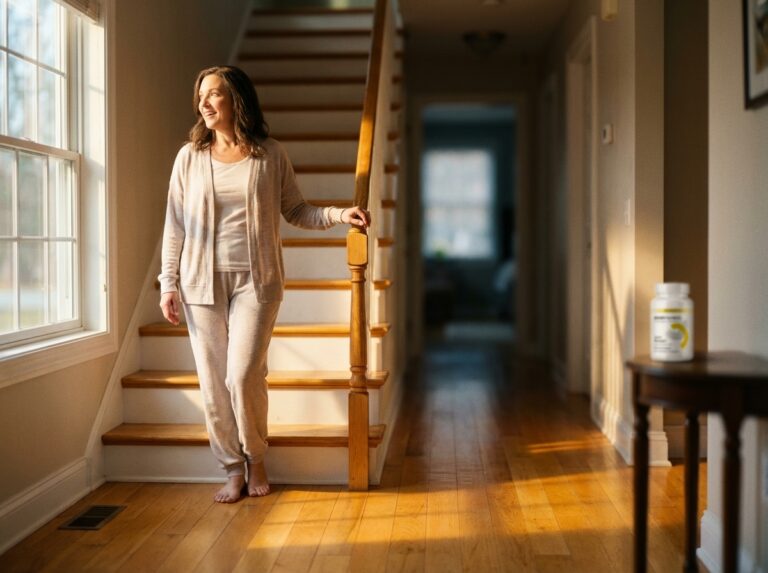
My mother used to take stairs two at a time.
I remember watching her when I was small—the quick rhythm of her feet, the way she’d arrive at the top slightly breathless but laughing, carrying laundry or groceries or whatever needed moving. She treated stairs like they were nothing. Just part of the house.
Now she holds the railing with both hands. Plans her route. Sometimes chooses a different path entirely if there’s an elevator nearby.
The change happened so gradually I almost missed it. A small stumble one winter that she laughed off. A comment about her balance being “off” that I nodded at without really hearing. Then one afternoon I watched her pause at the bottom of a staircase—just pause, hand hovering over the banister, her whole body gathering itself—and something in my chest went tight.
She didn’t fall. She made it up fine. But the hesitation stayed with me.
Because I recognized it.
I’d started doing the same thing. Not as pronounced, but there. A slight caution stepping off curbs. A mental note about which shoes had better grip. The kind of small adjustments you don’t announce to anyone, including yourself.
I’d been treating bone health like a distant concern—something to think about later, when life slowed down. But watching my mother renegotiate her relationship with her own body, I realized: life doesn’t slow down. And bones don’t wait for convenient moments.
So I started building something I could actually sustain. Not a dramatic overhaul. Just steady practices I could repeat when I was tired, distracted, or completely uninspired.
bones respond to what you do consistently, not what you do perfectly.
This is what preventing osteoporosis naturally looks like in my real life. Small signals—food, movement, targeted support—that add up to the thing I wanted most: the ability to move through my day without hesitation.
⸻
What osteoporosis actually feels like (before it feels like anything)
Most people picture osteoporosis as something sudden—a fall, a fracture, a diagnosis that arrives out of nowhere.
But for most of us, it’s quieter. It’s bone remodeling that tilts slowly toward breakdown instead of rebuilding. You can feel completely fine, live your normal life, and still have your skeleton quietly changing underneath everything.
That’s the uncomfortable part. There’s no alarm. No warning light.
What helped me stop spiraling was reframing it:
Bone isn’t just structure. It’s alive.
It listens. It adapts to the signals you send—what you eat, how you move, whether your muscles are strong enough to protect it, whether your daily routine supports rebuilding or just… doesn’t.
And that’s actually good news. Because it means a natural approach isn’t just possible—it’s the most sustainable path.
If you’ve caught yourself thinking:
- I don’t feel as sturdy as I used to.
- My posture’s shifting and I’m not sure why.
- I’m avoiding certain movements now because they feel risky.
You’re not overreacting. You’re paying attention. And that attention gives you something rare: a chance to support your bone density before you’re forced to.
Building a bone-supportive diet without making it weird
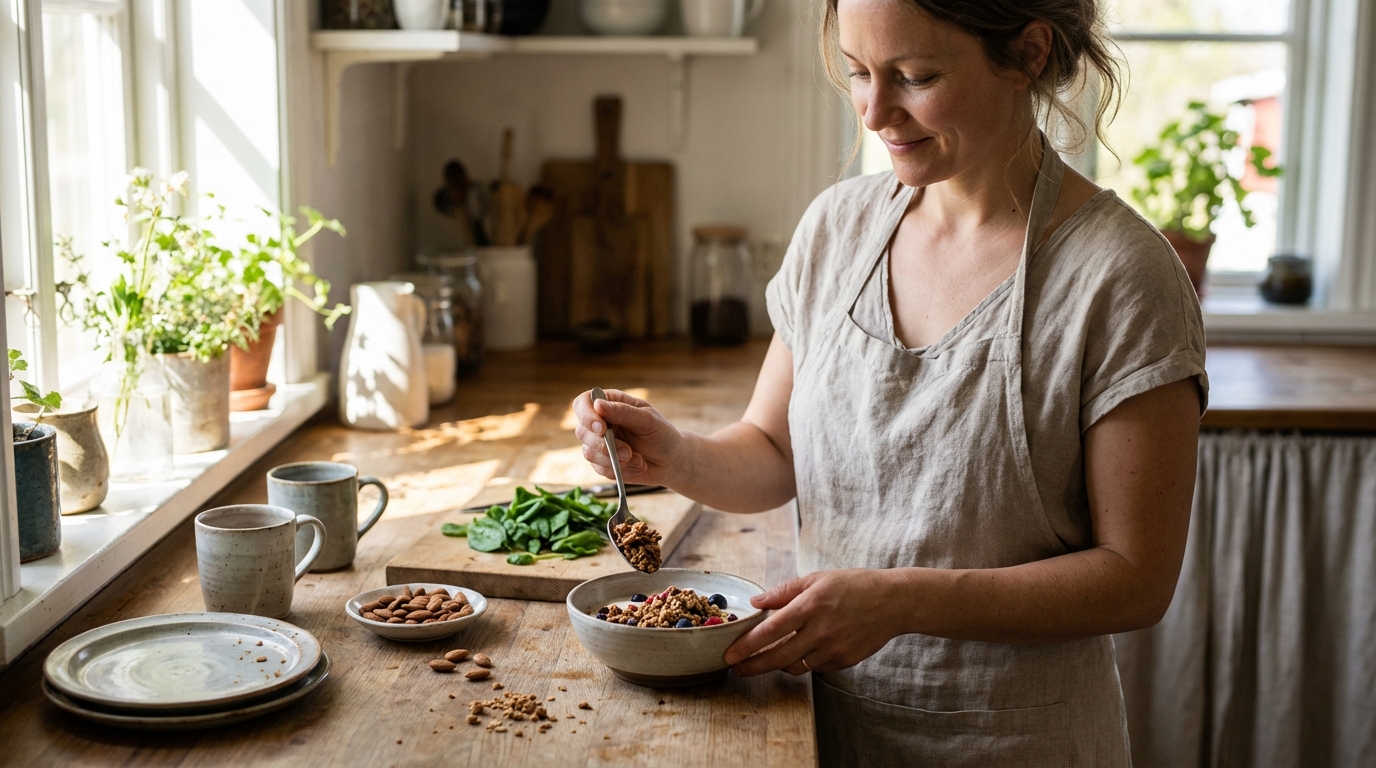
I used to think “bone health” meant choking down a glass of milk every morning and hoping for the best.
Now I know it’s less about one magic food and more about steady ingredients, repeated often enough that your body stops waiting for them and starts expecting them.
Calcium works when it shows up regularly
Instead of trying to cram all my calcium into one meal, I started treating it like small deposits throughout the day.
Not complicated. Just frequent.
Some ways I do that without thinking too hard:
- Yogurt or kefir with breakfast
- Leafy greens folded into eggs or stirred into soup
- Canned salmon or sardines a few times a week
- Tofu or white beans in a grain bowl
- A little cheese on the side, not the main event
It’s not about hitting a perfect number. It’s about giving your body enough chances to say, yes, we have what we need today.
Vitamin D is what makes calcium work
Vitamin D helps your body actually use the calcium you’re eating. For me, this became less about supplements and more about honest questions:
- Am I getting daylight regularly?
- Do I spend most of my day indoors?
- Does my routine shift completely in winter?
If you’re not outside much—or you live somewhere with long gray stretches—it’s worth noticing.
Protein is the quiet builder nobody talks about
This surprised me. Protein isn’t just for muscles. It supports the framework that bone minerals build onto. And it helps you stay strong—which matters, because strong muscles protect your skeleton from impact.
When I started anchoring each meal with solid protein, something shifted emotionally. I felt less fragile. Not invincible. Just… less breakable in my own head.
Easy protein anchors I lean on:
- Eggs
- Greek yogurt
- Beans and lentils
- Fish
- Chicken or turkey
- Tofu or tempeh
The supporting cast that makes everything hold together
A bone-supportive diet tends to work better when it isn’t laser-focused on calcium alone. I started thinking in terms of whole-body nourishment—because bone health doesn’t exist in isolation.
Foods that make my baseline feel solid:
- Nuts and seeds (especially when stress is high)
- Dark leafy greens
- Beans
- Colorful vegetables
- Olive oil and other whole-food fats
I also made one quiet change that mattered more than I expected: I stopped defaulting to ultra-processed snacks when I was tired. Not because those foods are evil—because my body felt calmer when my regular meals were built from real ingredients.
Calmer body, better routine, more consistency. That’s the foundation of preventing osteoporosis naturally.
Weight-bearing exercise: the signal your bones understand
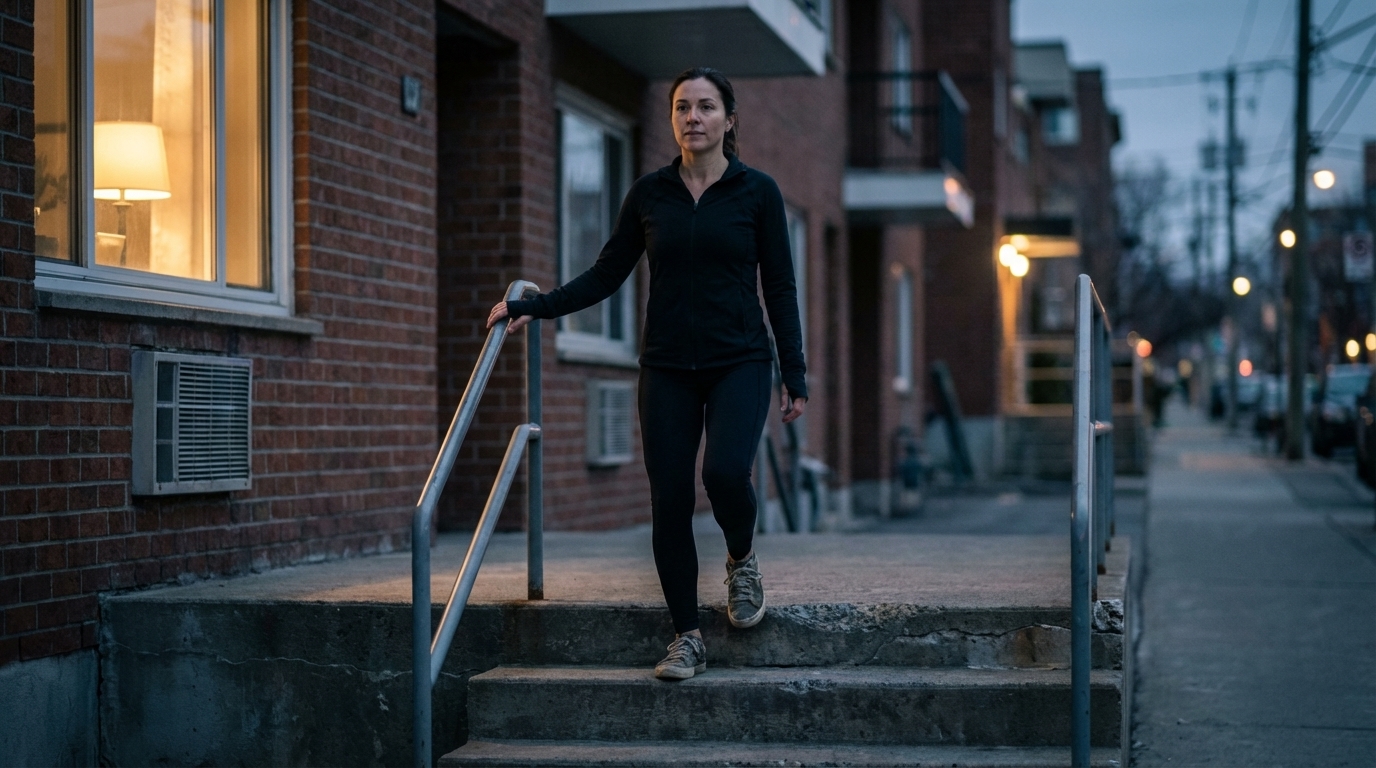
Your skeleton needs a reason to stay strong
Weight-bearing exercise is you telling your body: We still live in gravity. We still need to hold ourselves up.
I didn’t start with anything ambitious. I started with what I could actually do on a Tuesday.
Walking counts. Stairs count. Hiking counts. Dancing in your kitchen counts. Even carrying groceries counts if you’re mindful and balanced.
The key is that it’s regular.
Some days my “bone walk” is just a quick loop around the block, breathing cold air with my jacket zipped up. Other days it’s ten minutes on the stairs while dinner reheats. The size of the effort doesn’t matter as much as the repeating message you’re sending.
Strength training is where confidence rebuilds
I used to think strength training was for people who belonged in gyms. Now I see it differently: it’s how you build the muscle support that makes your skeleton feel protected.
I keep it simple. Movements that make daily life easier:
- Squats or chair squats
- Step-ups
- Hip hinges (learning to lift things without wrecking your back)
- Wall push-ups or counter push-ups
- Resistance band rows
I like slow reps. I like focusing on form. I like finishing a session feeling capable, not destroyed.
Because this isn’t punishment. It’s rebuilding.
Balance practice is the piece people skip
Bone density matters. But so does not falling. That’s just reality.
Balance work doesn’t require a whole routine. I slip it into ordinary moments:
- Standing on one foot while the kettle boils
- Slow heel-to-toe walking down the hallway
- Gentle side steps while brushing my teeth
These tiny practices shift how you relate to your own body. You stop feeling like you’re “managing risk” and start feeling like you’re training steadiness.
And steadiness—that’s the emotional goal.
⸻
Supplements: when real life has gaps
If food and movement are the foundation, supplements are the support beams you add when life isn’t perfectly designed for your goals.
I don’t love having a counter full of bottles. It makes health feel like homework. So I ask myself one question:
What gap keeps showing up in my actual life?
Sometimes it’s vitamin D in winter. Sometimes it’s calcium when my meals don’t align. Sometimes it’s magnesium when I’m tense and my body feels locked up.
And sometimes—this is the one I didn’t see coming—it’s joint comfort.
Here’s the honest part: you can have perfect intentions for weight-bearing exercise, but if your joints feel cranky, you start avoiding movement without even realizing it. You walk less. You skip stairs. You move cautiously. And your bones stop getting the signal they need.
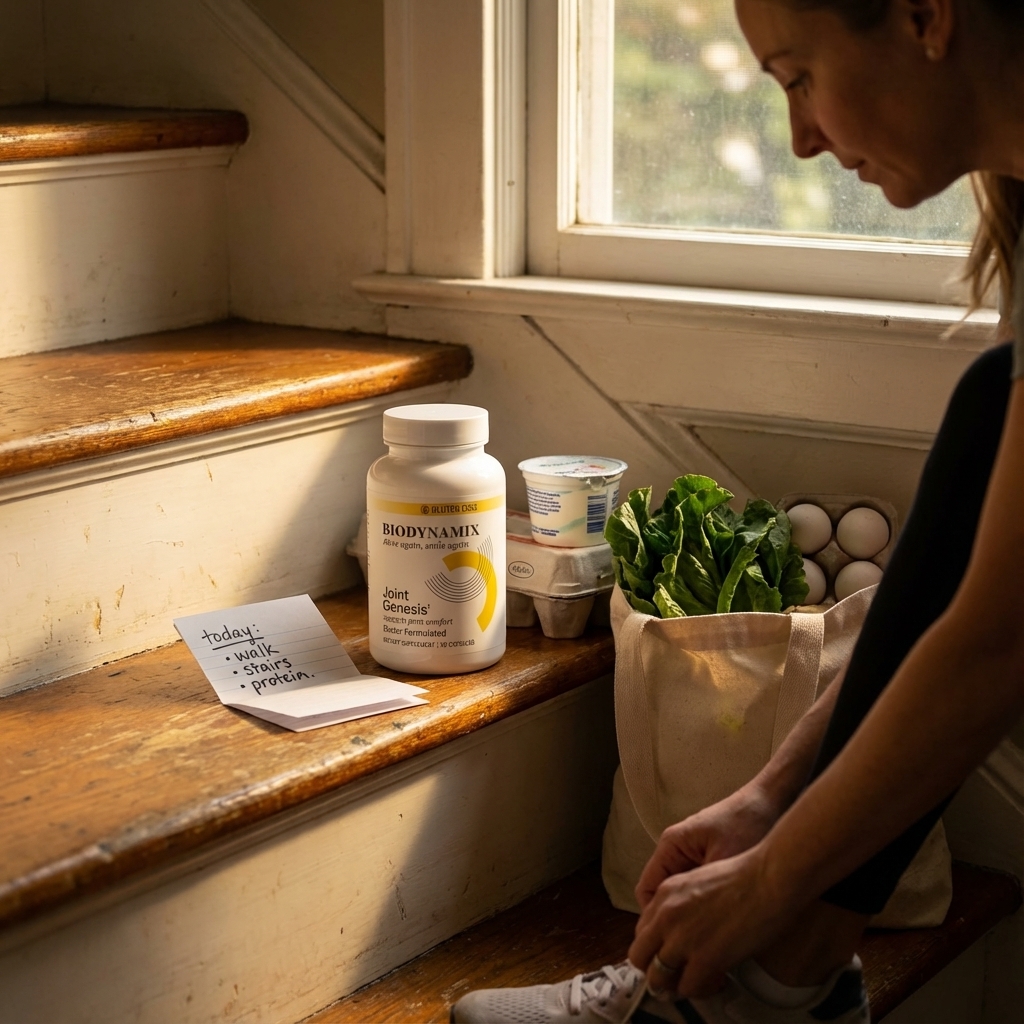
Smoother Steps Start Here
If stairs feel “iffy,” you stop moving without meaning to
Joint Genesis is built to support the synovial fluid that cushions your joints—so movement feels smoother and easier to repeat. Its star ingredient is Mobilee®, a hyaluronic-acid matrix made of hyaluronic acid + collagen + polysaccharides—the combo your joints use for that “well-oiled hinge” feel.
-
Helps stairs feel less like a negotiation
-
Supports smoother, easier daily motion
-
Makes your walks feel more doable
That was my wake-up moment.
I didn’t want something dramatic. I wanted something that made movement feel easier to come back to—like oiling a hinge so the door swings smooth again.
That’s when I added Joint Genesis. Not as a miracle. As a quiet support that helped my movement habits feel sustainable—so I could keep doing the things that actually support bone density over time.
A rhythm you can repeat when life gets messy
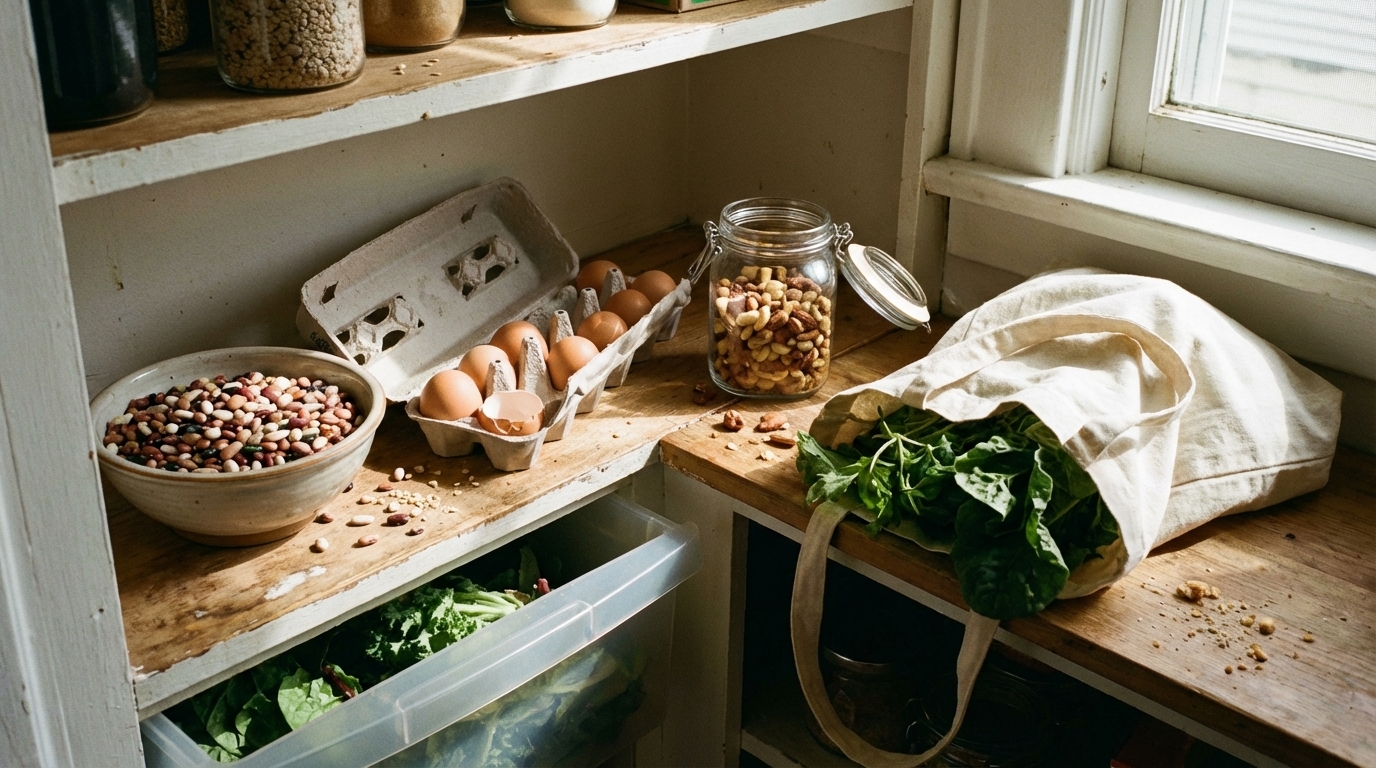
The best plan is the one you can follow when you’re busy, exhausted, or completely uninspired.
Here’s the rhythm I aim for. Not rigid rules—just a map I can return to:
- Steady calcium pattern across the day (small deposits, not one big push)
- Enough protein to support muscle and bone structure
- Regular weight-bearing exercise (walking, stairs, dancing—whatever fits)
- Strength training a few times a week, simple and repeatable
- Balance practice woven into everyday moments
- Supportive supplements only where real-life gaps exist
I also watch for the things that quietly work against me—too much alcohol, smoking, irregular sleep, long stress spirals where I stop eating and moving like myself.
I don’t chase perfection. I chase the feeling of coming back to baseline.
⸻
The part nobody says out loud: the mental weight of “doing health right”
A lot of people don’t fail because they don’t care.
They fail because the constant decision-making is exhausting.
What should I eat? Did I get enough calcium? Did I move today? Was that the right workout? Is this supplement worth it? Why does everything feel like a project?
Preventing osteoporosis naturally got easier when I stopped trying to solve it like a math problem and started treating it like brushing my teeth.
A little. Often. Without drama.
That’s also why Joint Genesis stayed in my routine. It wasn’t a production. It was just one less thing to rethink—one quiet support that helped me keep showing up for movement without negotiating with my knees or hips every single day.
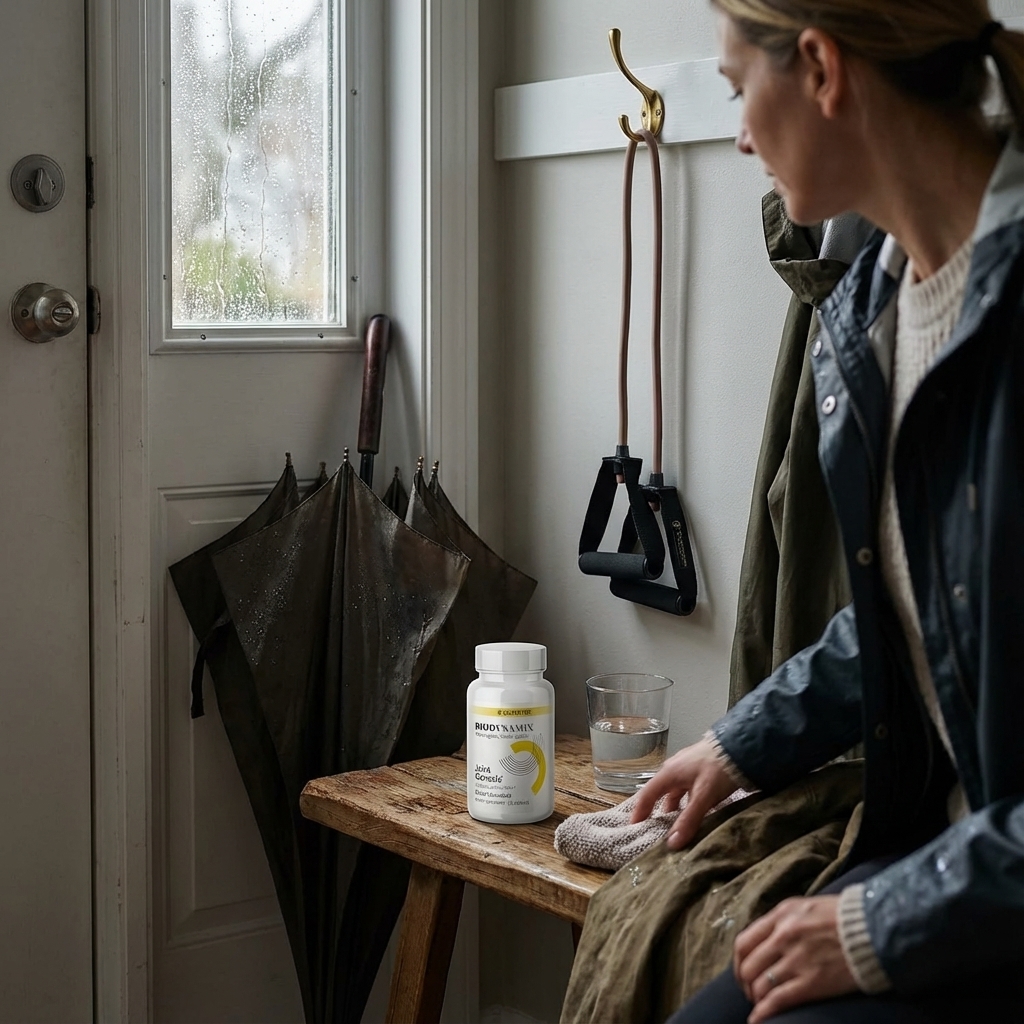
Keep Your Body Saying Yes
The plan only works if you can keep doing it
Joint Genesis pairs its core joint support with a tight “support team” of ingredients: Pycnogenol® (French maritime pine bark) for antioxidant support, ginger root and Boswellia serrata to support a healthy inflammatory response, plus BioPerine® (black pepper extract, standardized for high piperine) to boost ingredient absorption.
-
Helps your joints feel less fussy
-
Supports flexible, comfortable motion
-
Makes consistency feel simpler
That kind of steadiness matters more than people admit.
Questions I hear (and the real answers)
“When should I start?”
Earlier than you think. Not because you’re behind—because maintaining is always easier than rebuilding.
“Do I have to rely on supplements?”
No. But they’re useful when your real life doesn’t consistently deliver what your body needs.
“What if I’ve never lifted weights?”
Start where you are. Chair squats. Wall push-ups. A resistance band row. The win is consistency, not intensity.
“What if I’m already careful because I’ve watched someone lose mobility?”
That carefulness makes sense. The goal isn’t to ignore it—it’s to slowly replace fear with strength, one repeatable habit at a time.
The future this creates

I think about my mother sometimes when I’m walking upstairs. Not with sadness—with purpose.
I think about the version of me that could move through the world the way she used to. Quick. Confident. Not scanning for danger.
That’s not about denying reality or pretending age doesn’t matter. It’s about refusing to let caution become my default setting before it needs to be.
I want to carry groceries without mapping the route in my head. Step off curbs without bracing. Stand taller because my back feels supported. Feel like my body is on my side.
That’s what preventing osteoporosis naturally is really about: building a body you can trust.
And if joint comfort is the small obstacle keeping you from staying consistent with weight-bearing exercise, Joint Genesis can be one of those low-drama supports that helps your routine feel possible again—so you can keep sending your bones the signal they understand: we’re still here, we’re still moving, we’re still strong.
Written by Liora Menden — for those who seek steadiness.
Related reading
- How to Improve Mitochondrial Function Naturally: A Daily Rhythm for Steady Energy
- Best Gut Health Supplements: The 5 Types That Finally Made My Gut Feel Normal
- Best Supplements for Chronic Fatigue That Helped Me Find My Energy Again
- Omega-3 for immunity vs. odd-chain fats: what actually helps you feel steadier