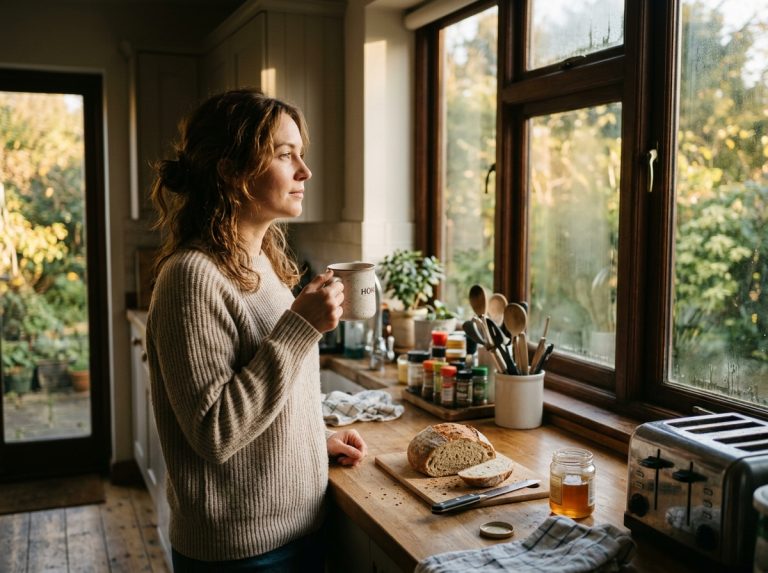
The fluorescent lights always made it worse. Standing in the cereal aisle at 7 PM, heart racing for no reason I could name, I’d grip the cart handle and wonder why something as simple as choosing dinner felt impossible. My nervous system lived in a constant state of readiness — ready for what, I couldn’t say. Ready for everything, apparently.
It took months of feeling like I was drowning in my own skin before I began to understand: anxiety isn’t just emotional weather that passes through. It’s a physical state that requires physical tending. And sometimes, the most radical act of self-care happens not in a therapist’s office or a meditation cushion, but in the produce section.
What I discovered was this: certain foods became my nervous system’s allies. Not because they were “superfoods” or miracle cures, but because they offered my body the raw materials it needed to remember how to be calm. My grocery cart transformed from a collection of random conveniences into a deliberate practice of nourishment.
The Magnesium Revelation

I learned about magnesium the way most people do — from a friend who looked visibly more relaxed than she had in years. “It’s not magic,” she said, “but it’s close.” That weekend, I filled my cart with dark leafy greens: spinach that wilted beautifully into morning eggs, Swiss chard that added earthy sweetness to soups, kale that crisped perfectly with olive oil and sea salt. The change was subtle at first. My shoulders dropped half an inch. The tightness in my jaw loosened during conversations.
Sleep came without the usual hour of mental spiraling.
Magnesium, it turns out, is nature’s muscle relaxant — and anxiety lives as much in tense muscles as it does in racing thoughts. Pumpkin seeds became my afternoon snack, their quiet crunch replacing the nervous energy I’d been carrying. Almonds in my desk drawer. Dark chocolate — real chocolate, not sugar masquerading as comfort — as an evening ritual.
These weren’t restrictions or rules. They were invitations for my nervous system to remember what ease felt like.
Your nervous system deserves this level of support and care.
Omega-3s and the Language of Inflammation
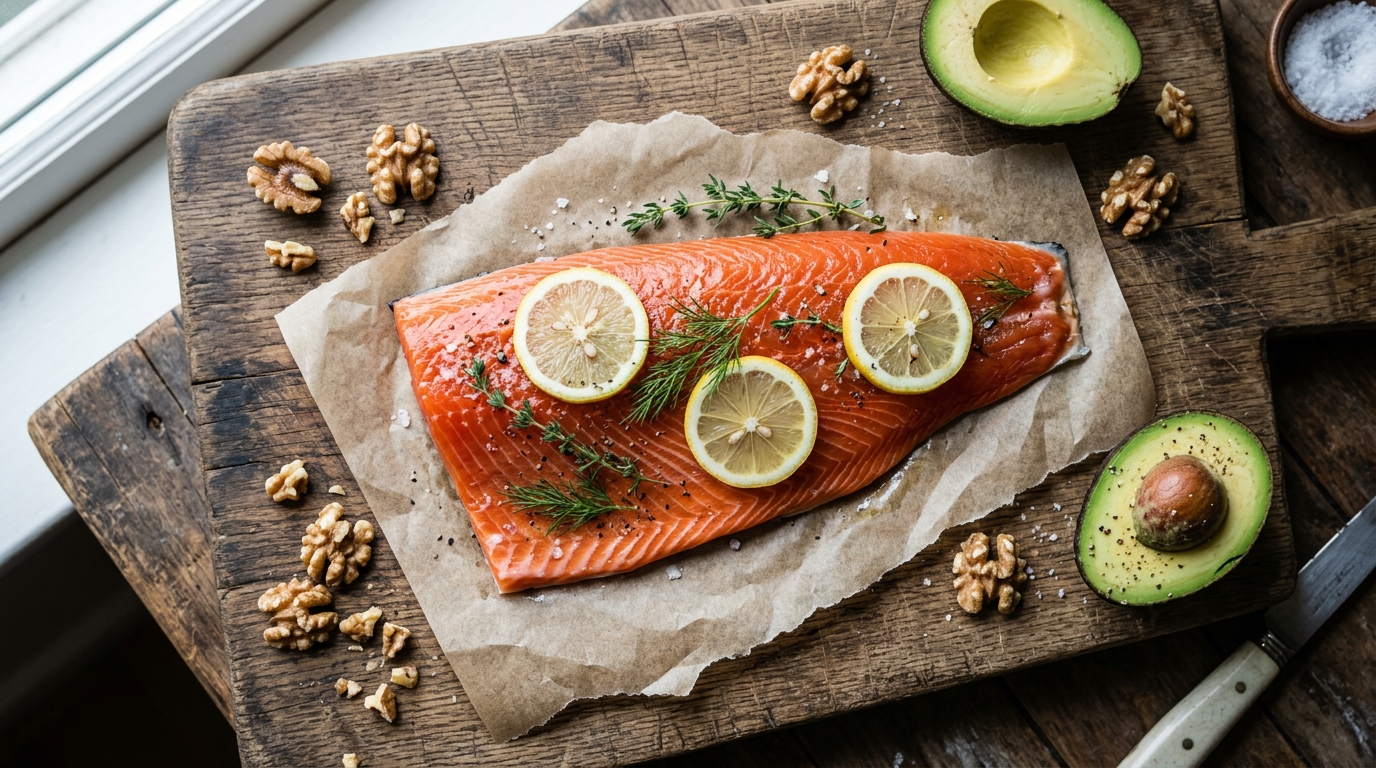
The connection between inflammation and anxiety felt abstract until I started paying attention to how I felt after certain meals. Heavy, processed foods left me foggy and on edge. But salmon — wild-caught, simply prepared with lemon and herbs — seemed to quiet something deeper. The anxious buzz that usually accompanied my thoughts grew softer.
I began to understand that chronic stress creates chronic inflammation, and chronic inflammation feeds anxiety in ways we’re only beginning to understand. Walnuts found their way into my morning oatmeal. Sardines, despite my initial resistance, became a surprisingly satisfying lunch on sourdough toast. Flaxseeds disappeared into smoothies, adding omega-3s without fanfare.
The grocery list expanded: avocados for their creamy richness and healthy fats, olive oil that tasted like liquid sunshine, hemp seeds that added subtle nuttiness to salads. Each choice felt like a small vote for the version of myself who could exist without constant internal alarm bells.
Discover what balanced stress hormones can feel like in your daily life.
The Gut-Brain Highway
Anxiety, I discovered, doesn’t live only in my head. It travels the intricate highway between my gut and brain, sending signals in both directions. When my digestion was disrupted, my mind followed suit. When I tended to my gut health, mental clarity emerged like sunlight through clearing fog.
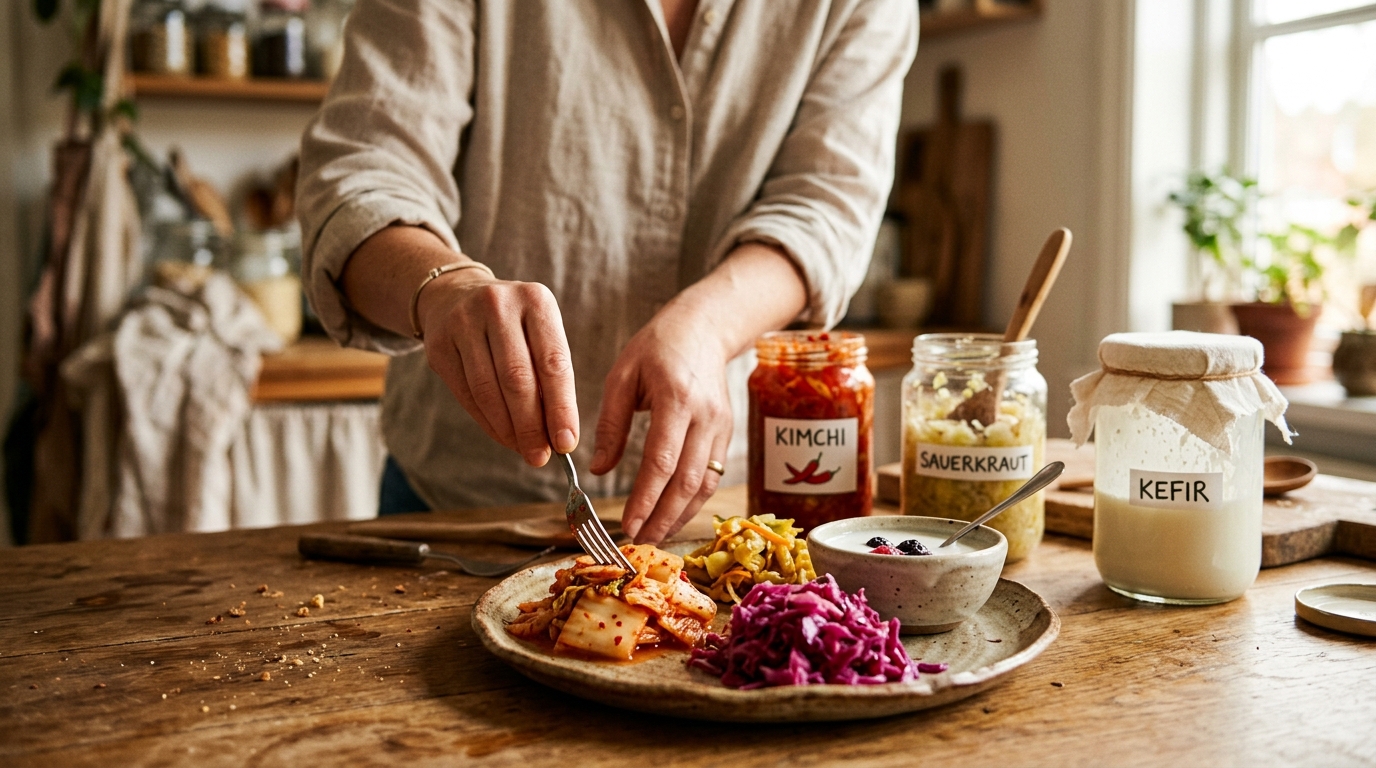
Fermented foods became non-negotiables: kimchi that added bright heat to rice bowls, sauerkraut that transformed simple sandwiches, kefir that made morning smoothies both creamy and alive with beneficial bacteria. Greek yogurt with its protein and probiotics. Miso paste that created instant, soothing broths.
The produce section yielded prebiotic treasures — asparagus, artichokes, garlic, onions — foods that fed the beneficial bacteria already working to support my mental equilibrium. Jerusalem artichokes, when I could find them, became roasted side dishes that supported digestive harmony. Each meal became an opportunity to strengthen the gut-brain partnership that anxiety had been disrupting.
Ready to break free from chronic stress cycles that exhaust you?
Protein as Neurotransmitter Building Blocks
Somewhere in my anxious months, I’d fallen into the trap of grazing — crackers, fruit, coffee, repeat. My blood sugar rode a rollercoaster that my nervous system interpreted as constant crisis. Understanding that neurotransmitters are built from amino acids changed everything about how I approached protein.
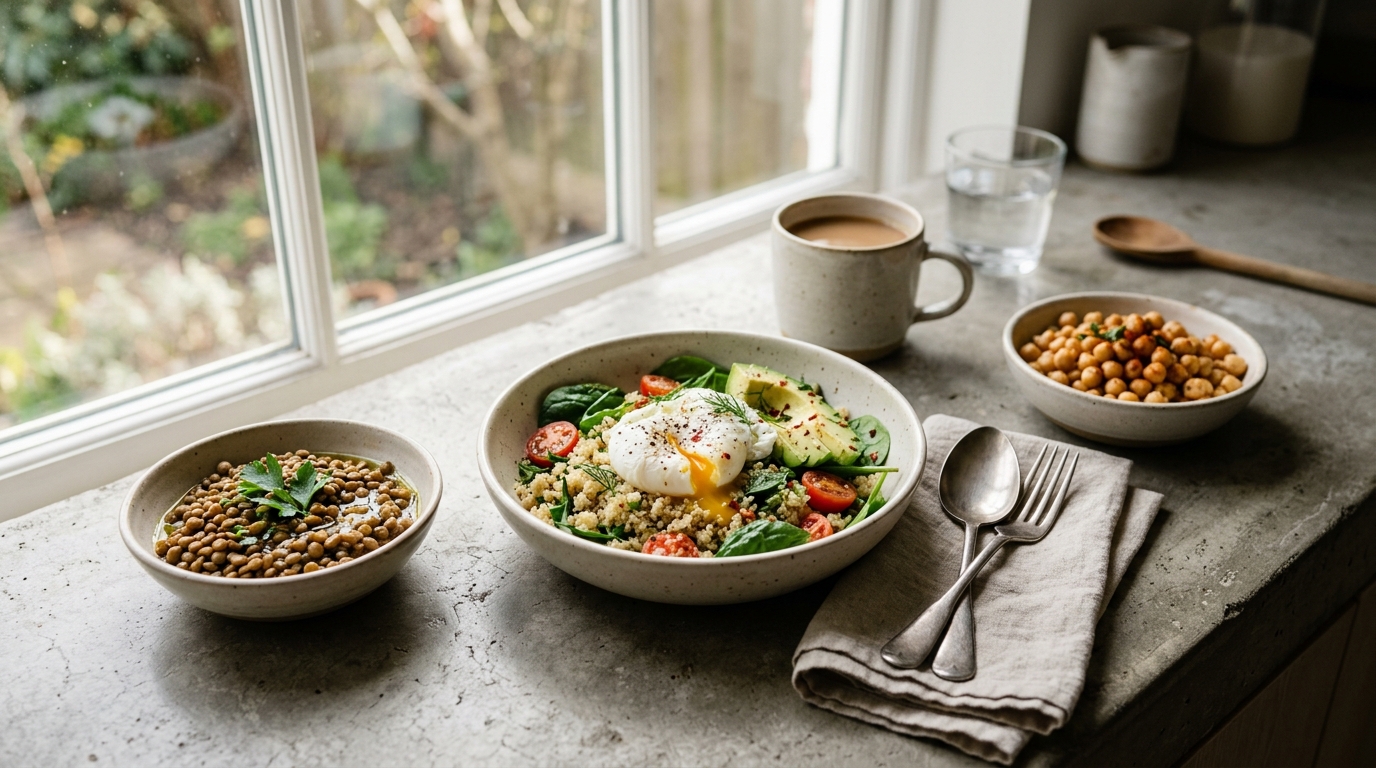
Eggs became morning anchors, their complete amino acid profile supporting steady energy and stable mood.
Turkey, rich in tryptophan, found its way into lunch salads and evening stir-fries. Legumes — lentils, chickpeas, black beans — offered plant-based protein alongside fiber that kept blood sugar steady. I learned to pair proteins with complex carbohydrates: quinoa bowls topped with roasted vegetables and tahini, sweet potatoes stuffed with black beans and avocado, oatmeal enriched with almond butter and hemp seeds.
These combinations supported sustained energy rather than the spike-and-crash cycles that had been fueling my anxiety.
Give your body the hormonal support food alone cannot provide.
The Ritual of Preparation

Shopping became meditation. I moved slowly through each section, checking in with my body about what felt nourishing versus what felt like obligation. The act of choosing foods that supported my nervous system became a form of self-advocacy I’d never practiced before.
Meal preparation transformed from chore to ceremony. Washing greens became mindful practice. Chopping vegetables became rhythmic grounding. The kitchen filled with scents that signaled safety to my nervous system: garlic sautéing in olive oil, herbs releasing their essential oils, broths simmering with healing intention.
I discovered that the twenty minutes I spent preparing dinner often calmed my mind more effectively than the twenty minutes I’d previously spent scrolling through my phone. My hands were busy with purposeful work. My attention was fully present. The anxious mental chatter found no foothold in the simple focus required to nourish myself well.

Balance Your Stress Hormones
When food isn’t enough, support your cortisol rhythms naturally.
While nutritious foods provide the foundation for nervous system health, sometimes your body needs targeted support for the hormonal patterns underlying chronic stress. Cortisol AM works with your natural rhythms to help regulate stress response, creating space for the calm your nervous system remembers. Because true wellness happens when nutrition and hormonal balance work together.
- ✓ Morning energy without afternoon crashes
- ✓ Deeper sleep without racing thoughts
- ✓ Steady calm that lasts all day
What My Body Needed Beyond Food

Food became the foundation, but I recognized it couldn’t carry the full weight of healing my relationship with stress. My nervous system needed more than nutritional support — it needed hormonal regulation, particularly around cortisol, the stress hormone that had been running my life from behind the scenes.
That’s where Cortisol AM entered my routine, a gentle daily support that helped regulate my body’s natural stress response patterns. While my grocery choices provided the nutritional building blocks for calm, this supplement addressed the deeper hormonal rhythms that food alone couldn’t fully rebalance.
The combination felt complete in a way that neither approach had achieved alone. Food nourished my nervous system meal by meal. The supplement supported the underlying cortisol patterns that determined whether I woke up feeling ready for the day or already overwhelmed by it. Together, they created space for my natural equilibrium to emerge.
Transform morning overwhelm into steady, sustainable energy throughout your day.
Small Shifts, Profound Changes

Six months later, my grocery cart tells a different story. It’s filled with foods that support rather than stress my system. Colorful vegetables, quality proteins, healthy fats, fermented foods, nuts and seeds that provide minerals my body craves. The fluorescent lights still flicker overhead, but they no longer trigger that familiar surge of overwhelm.
My nervous system learned to trust that it would be consistently nourished rather than abandoned to survive on caffeine and willpower.
The constant low-level anxiety that had been my baseline began to fade, replaced by something I’d forgotten was possible: ease in my own body. The changes rippled outward in ways I hadn’t expected. Conversations became more enjoyable when I wasn’t fighting internal static. Work felt more manageable when my energy remained stable throughout the day.
Sleep arrived naturally when my body wasn’t caught in chronic stress cycles.
You’ve taken the first steps with food, now support deeper healing.
The Grocery Store as Sanctuary

These days, I approach grocery shopping with something approaching reverence. Not because food is everything, but because it’s something — a tangible way to care for the nervous system that carries me through each day. My anti-anxiety grocery list isn’t rigid or perfect. It’s responsive, seasonal, intuitive. Sometimes it includes dark chocolate and herbal tea for gentle evening comfort. Sometimes it’s rich bone broth and root vegetables for deep nourishment.
Always, it includes choices that signal to my body: you are worth feeding well. You deserve to feel calm in your own skin.
The produce section no longer feels overwhelming. It feels abundant with possibility — each item a potential ally in the ongoing practice of nervous system care. My cart fills with intention rather than anxiety, with foods that support the version of myself I’m growing into: someone who can move through the world with grace rather than constant vigilance.
What began as survival — finding foods that might quiet the internal alarm — became a form of love. The most practical kind of self-compassion, practiced three times a day, one nourishing choice at a time.
Written by Liora Menden — for those who seek calm
Ready to feel the difference this formula makes?