You know that specific kind of hunger that has nothing to do with your stomach?
The one that shows up mid-afternoon when you’ve been “good” all day—when you’ve followed the plan, logged the meals, pushed through—but suddenly your hands feel shaky and your brain starts scanning for something, anything, to take the edge off?
That was my 3 p.m. reality for years. I’d sit at my desk with my jaw tight, willing myself past the sensation. I’d drink another glass of water. I’d scroll my phone to distract myself. I’d tell myself I just needed to make it to dinner, that this was what discipline looked like.
But here’s what I didn’t understand then: my body wasn’t testing my willpower. It was asking for safety.
Every time I slashed calories and pushed through hunger, my system interpreted it the same way—as threat. And when your body feels threatened day after day, your hormones don’t quietly cooperate. They fight back. I didn’t need another eating plan that worked for two weeks and left me more exhausted than before. I needed to support hormones for weight loss in a way that felt like care, not control.
⸻
Crash diets worked—until they completely stopped working

For a long time, I chased the initial win. Those first few pounds. The jeans that fit better. The feeling of being “back on track.”
Then the pattern would reveal itself:
- Energy that never quite recovered, even with nine hours of sleep
- A mood so thin that small frustrations felt enormous
- Thinking about food constantly—planning it, avoiding it, negotiating with it
- Wild swings between feeling fine and needing to eat everything in sight
I thought something was wrong with me. That I lacked discipline. That I kept failing. Now I see it as biology doing exactly what it’s designed to do.
When you restrict hard, your body doesn’t celebrate your restraint—it prepares for famine. It amplifies hunger signals. It becomes more efficient with the fuel you give it. It gets better at holding on instead of letting go. This is where hormones and weight gain stop being abstract and start being lived experience.
⸻
The three hormones I wish I’d understood sooner
I used to think hormones were mysterious forces I couldn’t influence—things that just “happened” to people.
Then I learned they’re messengers. And what they’re saying depends entirely on the signals you’re sending.
Ghrelin tells you when to seek food.
When you diet aggressively, ghrelin rises—because your system believes survival depends on it.
Leptin tells you when you’ve had enough.
When leptin is working smoothly, satisfaction feels natural. When it’s not (often called leptin resistance), you can finish a meal and still feel like something’s missing.
Insulin helps move energy where it needs to go.
Insulin isn’t the problem—it’s doing its job. But when your days are chaotic, your meals irregular, and your stress high, your cells can start responding differently over time (this is what people mean by insulin resistance).
The revelation for me: crash dieting didn’t fix any of this. It made everything louder. My body wasn’t just “burning fat.” It was trying to navigate constant uncertainty.
And bodies hate uncertainty.
⸻
Metabolic health became my actual goal—not a smaller size

Once I stopped treating my body as the enemy, I started paying attention to metabolic health—not as a concept, but as a feeling.
Metabolic health is the quiet hum underneath your day:
- Does energy feel steady between meals, or do you hit sudden walls?
- Does hunger arrive gradually, or does it feel urgent and demanding?
- Do you crash after eating certain foods?
- Do you wake up ravenous, wired, or some confusing mix of both?
When my metabolic health was unstable, everything felt loud. Food felt like the only lever I had. My patience ran thin. My mood felt unpredictable.
And no motivational quote could fix a system that felt under siege.
How I started to support hormones for weight loss without starving myself
This is where my approach changed—not because I read something new, but because I got tired of fighting. I stopped asking: How do I eat less? And started asking: How do I help my body feel safe enough to release weight?
I built meals around steadiness instead of restriction
Not perfect meals. Not tiny, virtuous meals. Meals that didn’t leave me hunting for snacks an hour later.
I focused on plates that included:
- Protein (for sustained energy and stable blood sugar)
- Fiber-rich vegetables (for lasting fullness)
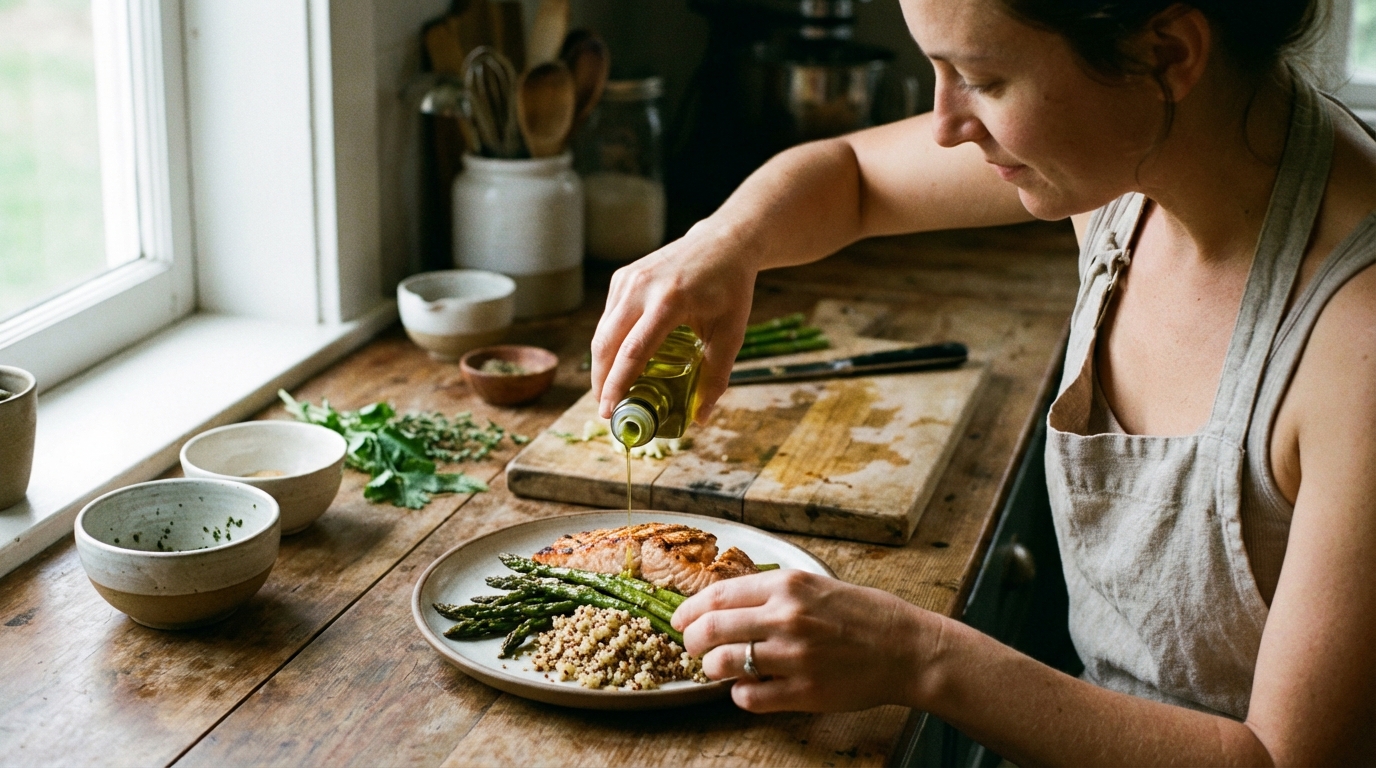
- Healthy fats (for satisfaction and hormone production)
- Carbs I could actually tolerate (because depriving myself always led to a pendulum swing)
The first time I added real olive oil to my vegetables—enough to taste it, enough to make the food actually satisfying—I felt something shift. Like my body stopped bracing.
We’ve been taught to fear fat for so long. But your body needs certain fats to build hormones, to support cell membranes, to signal fullness. The right kinds help regulate appetite and mood.
And honestly? They make meals feel complete again.
I stopped treating meal timing like a test of character
Some mornings I wake up hungry. Some mornings I don’t.
I learned to treat hunger as data—not as something to outsmart or suppress.
If I’m genuinely hungry, I eat. If I’m restless and reaching for food out of habit, I pause and ask:
- Am I actually thirsty?
- Is this tension or boredom?
- Did I eat enough protein earlier?
- Am I tired and mistaking it for hunger?
Sometimes the answer is food. Sometimes it’s a short walk. Sometimes it’s just standing outside for a minute and letting my nervous system reset. This shift—from reacting to responding—changed how I related to hormones and weight gain. My choices stopped feeling frantic.
I took stress seriously, because cortisol doesn’t care about willpower

This is the part no one wants to hear, because it’s less exciting than a new meal plan.
But stress rewires appetite. It disrupts sleep. It changes what cravings feel like. It alters the sensation of “enough.”
When my days felt relentless and my evenings blurred together, I noticed something: I wasn’t just craving sugar. I was craving relief.
This is why “cortisol and belly fat” is such a common search—people can feel how stress reshapes their body and their hunger.
So I built small rituals that sent a different signal:
- Two minutes of slow breathing before eating
- Stretching while the water boils
- A short walk after lunch, even when it feels pointless
- Softer lighting in the evening to help my brain downshift
Nothing dramatic. But cumulative.
The unexpected shift: fats helped my mood, not just my hunger
I expected healthier fats to make meals more satisfying.
I didn’t expect them to make me emotionally steadier.
But when I made space for avocado, chia seeds, walnuts, eggs, salmon, and olive oil, something changed. My cravings didn’t vanish—but they stopped feeling desperate. That frantic, edgy feeling that whispers if I don’t eat something sweet right now I might lose it—it softened.
When my meals became genuinely satisfying, my brain stopped searching the day for a reward. I felt less snacky. Less reactive. Less like I was negotiating with myself every hour.
That’s part of hormone balance too: not just the hormones themselves, but the environment you create for them to function.
⸻
The quiet layer of support I added when habits alone weren’t enough
There came a point where my meals were balanced, my stress was lower, my routines were gentler—but I still felt like I wanted something simple and consistent that didn’t demand more effort.
That’s when I tried BioVanish, a powdered drink mix I could stir into water.
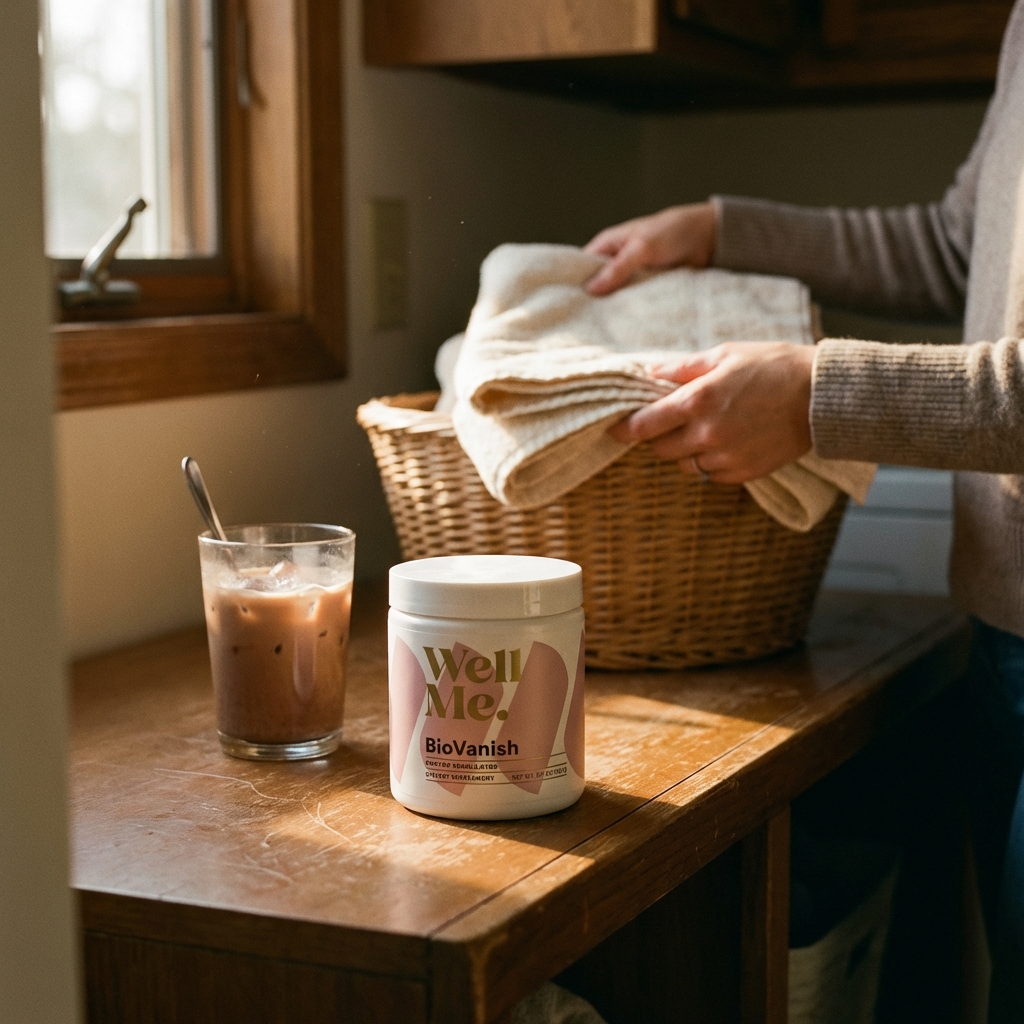
Turn Down the Urge
When 3 p.m. hits hard, steadiness matters more than “discipline.”
BioVanish is a cocoa drink mix made to support BHB—your body’s fat-fuel signal—without cutting carbs. Each scoop includes 5g MCT powder (from coconut oil), plus cocoa flavor, and it’s light: 15 calories with 3g sugar. Stir it into your routine when you want “safe and steady.”
-
Helps your day feel less jagged
-
Makes “balanced eating” easier to stick with
-
A simple anchor when life is loud
I didn’t approach it like a silver bullet. I approached it as a daily anchor—something I could count on when life got loud and I needed steadiness more than perfection.
What I noticed over time:
- Afternoons felt less jagged
- The urgent “I need a snack right now” sensation quieted down
- It became easier to stick with balanced eating because I wasn’t swinging so hard between extremes
Mostly, it gave me what I’d been searching for all along: a sense of steadiness.
Not rigid control. Just a feeling of being more even.
What shifted wasn’t just my weight—it was how I related to my body
I used to wake up and immediately start managing—planning what I’d eat, what I’d avoid, how I’d compensate if I messed up.
Now I wake up and check in. Like we’re collaborating.
Some days are smoother. Some days my appetite is bigger. Some days sleep is messy and stress hits hard and the old urges surface.
But the difference is this:
I don’t respond with punishment anymore.
I respond with curiosity. With support.
And that’s why support hormones for weight loss has become my foundation—not because it’s trendy, but because it’s the first approach that didn’t require me to go to war with myself.
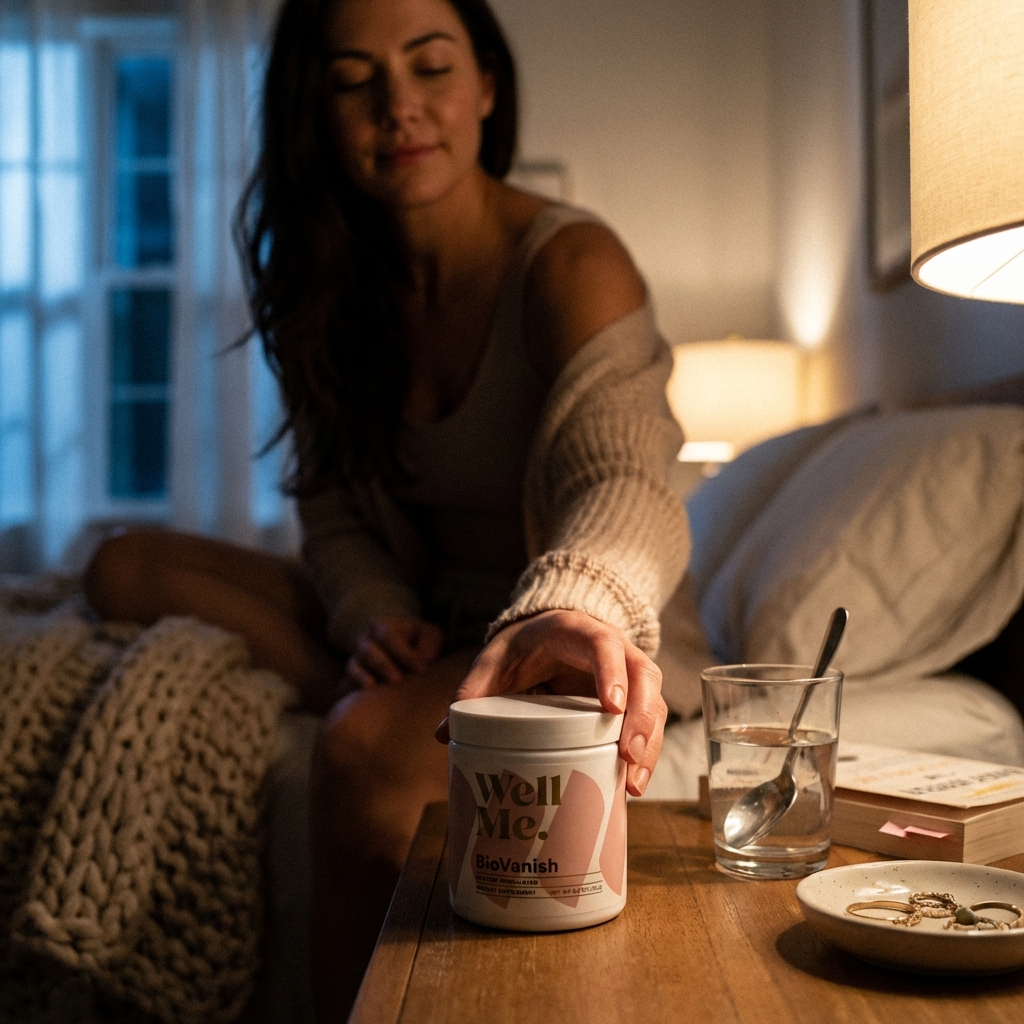
Calm Support You Repeat
If stress makes you snacky, start by calming the signal
BioVanish doesn’t just “feel nice”—it’s built for steadiness. One scoop contains 200 mg L-theanine (a calm-focus amino acid) plus a B-vitamin blend: Thiamine 100 mg, Folate 1333 mcg DFE, and Vitamin B12 800 mcg to support everyday energy use. It’s a simple daily choice that matches your kinder approach.
-
Helps cravings feel less emotional
-
Supports focus without the “wired” vibe
-
Keeps your plan gentle enough to last
⸻
If you’re stuck in the crash-diet loop, start with one question
Instead of asking: How do I control my body?
Try asking: What would help my body feel safe today?
Safe might look like:
- Eating enough at breakfast so lunch doesn’t feel like an emergency
- Adding fats that make meals actually satisfying
- Choosing protein that keeps you steady
- Taking stress seriously, even in small, unglamorous ways
- Keeping your plan gentle enough that you can sustain it
Because the goal isn’t to dominate the week.
The goal is to stop losing yourself in the cycle.
And if you’re looking for an extra layer of support alongside your meals and daily rhythms, BioVanish might be worth considering—especially if what you’re craving most is that calm, even-keeled feeling where food stops dictating your day.
This is what hormone balance feels like to me now: quieter. Kinder. More sustainable.
And yes—still real life. Just without the constant fight.
Written by Liora Menden — for those who seek ease.
Related reading
- Hormones and Weight Gain: The Day I Stopped Treating My Body Like a Math Problem
- Balance Hormones for Energy: What Changed When I Stopped Fighting My Body’s Calendar
- Fatty Acids for Adrenal Support: What I Learned When My Body Wouldn’t Cooperate
- The Cellular Energy Secret: How Mitochondrial Support Changes Weight Loss