There were fourteen bottles on my bathroom counter the morning I almost quit.
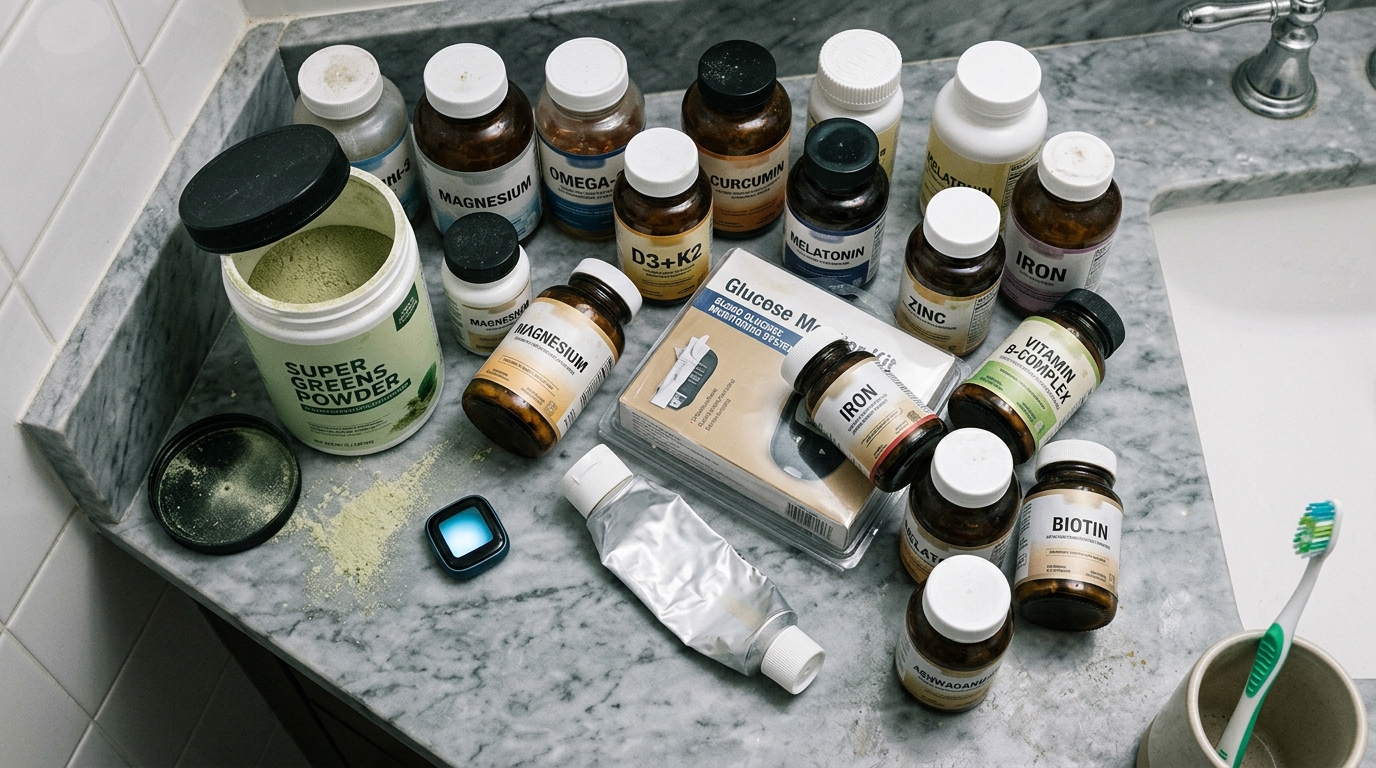
Not the dramatic kind of quitting — no breakdown, no crisis. Just a Tuesday in February, standing barefoot on cold tile, staring at a row of capsules I couldn’t remember the purpose of. Two adaptogens. A greens powder. Something for telomeres. Something else for NAD+. A sleep tracker glowing blue on the nightstand. A glucose monitor taped to the back of my arm. And underneath all of it, the same flat tiredness I’d been trying to biohack my way out of for years.
I’d been chasing biohacking longevity like it was a puzzle I could solve with the right combination of inputs. More data. More protocols. More stacks. And somehow, the more I optimized, the worse I felt.
That Tuesday was the start of something different. Not a new protocol — the opposite. A slow, honest undoing.
⸻
When “Doing Everything” Becomes the Problem

Here’s what nobody tells you when you fall down the longevity rabbit hole: the information itself becomes a source of stress.
You read about autophagy, so you fast. You read about zone 2 cardio, so you walk. You hear about cold exposure and circadian rhythm and methylation and suddenly your morning routine takes ninety minutes and you’re monitoring your heart rate variability while brushing your teeth. I know because I lived it. My phone had six health apps. My grocery list read like a research paper. I was spending more time tracking my sleep than actually sleeping.
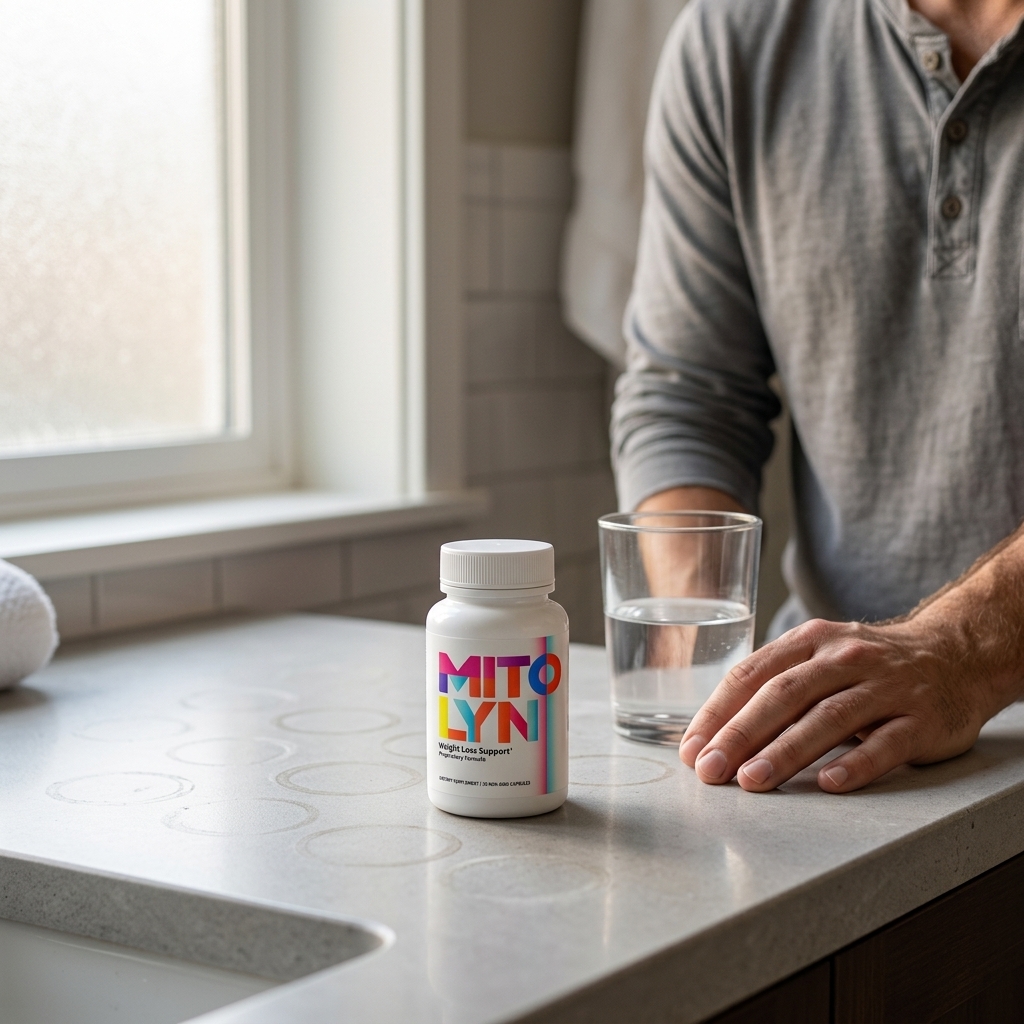
Less Noise. More Energy
Your cells don’t need fourteen bottles — they need the right on
Mitolyn is a plant-based formula built to support your mitochondria — the engines inside your cells that turn food into real, usable energy. No stimulants. No caffeine. Six targeted ingredients including Rhodiola, Maqui Berry, and Schisandra that protect your cellular engines and help them do what they already know how to do — just better.
-
Steady, clear energy without the jittery crash
-
Plant-based support your mitochondria actually recognize
-
One capsule that replaces the guesswork
And my body was telling me something I didn’t want to hear. The afternoon crashes were still there. The brain fog still rolled in around 2 PM like weather I couldn’t outrun. My skin looked dull. My joints ached when I got out of bed. All that effort, and my cells didn’t seem to care.
Stripping It Back to What the Body Actually Wants

Three weeks in, I sat on the edge of my bed and asked myself a question I’d been avoiding: What if I’m overcomplicating this?
Not as a slogan. As a real reckoning.
So I cleared the counter. All of it. I deleted three apps. I put the glucose monitor in a drawer. And I started over with just four commitments — things I could feel, not just measure.
Sleep at the same time every night. Not perfect sleep — just consistent. Lights dimmed by nine. Phone in another room. Sheets cool. No alarm when I could help it. Seven to eight hours became non-negotiable — not because a tracker told me to, but because I noticed how different a Thursday felt when I’d slept well Monday through Wednesday.
Eat in a window. I settled into a 16:8 intermittent fasting rhythm — noon to eight, most days. No calorie counting. No obsessing. Just giving my body a longer stretch of quiet so it could do the repair work it already knows how to do. Autophagy isn’t something you force. It’s something you stop interrupting.
Move with purpose, not punishment. Four sessions a week — two strength, two long walks. Not HIIT-till-you-collapse. Not tracking every rep. Just enough resistance to remind my muscles they matter, and enough walking to let my thoughts unspool.
One supplement I could trust. This was the hardest part, because I’d tried so many. But I kept coming back to a question that none of my random nootropic stacks had ever answered: what if the problem wasn’t what I was putting in — but how my cells were using it? That’s when I found Mitolyn. A plant-based formula built around something I’d read about but never directly supported — my mitochondria. The actual engines inside my cells that turn food into usable energy. No stimulants. No caffeine. Just six ingredients designed to help those engines run the way they’re supposed to.
I almost didn’t try it. I was so tired of trying things.
But I did. And it became the quietest, most consistent part of the whole experiment.
⸻
What Happened Inside Those 90 Days

The first two weeks felt like nothing. That’s important to say, because most of us quit things that don’t deliver instant feedback. We mistake silence for failure.
But somewhere around day eighteen, I noticed something I wasn’t expecting. Not energy in the bouncing, jittery sense — more like steadiness. I was getting through the afternoon without reaching for coffee. My thoughts felt less like a browser with forty tabs open and more like a single, clear window.
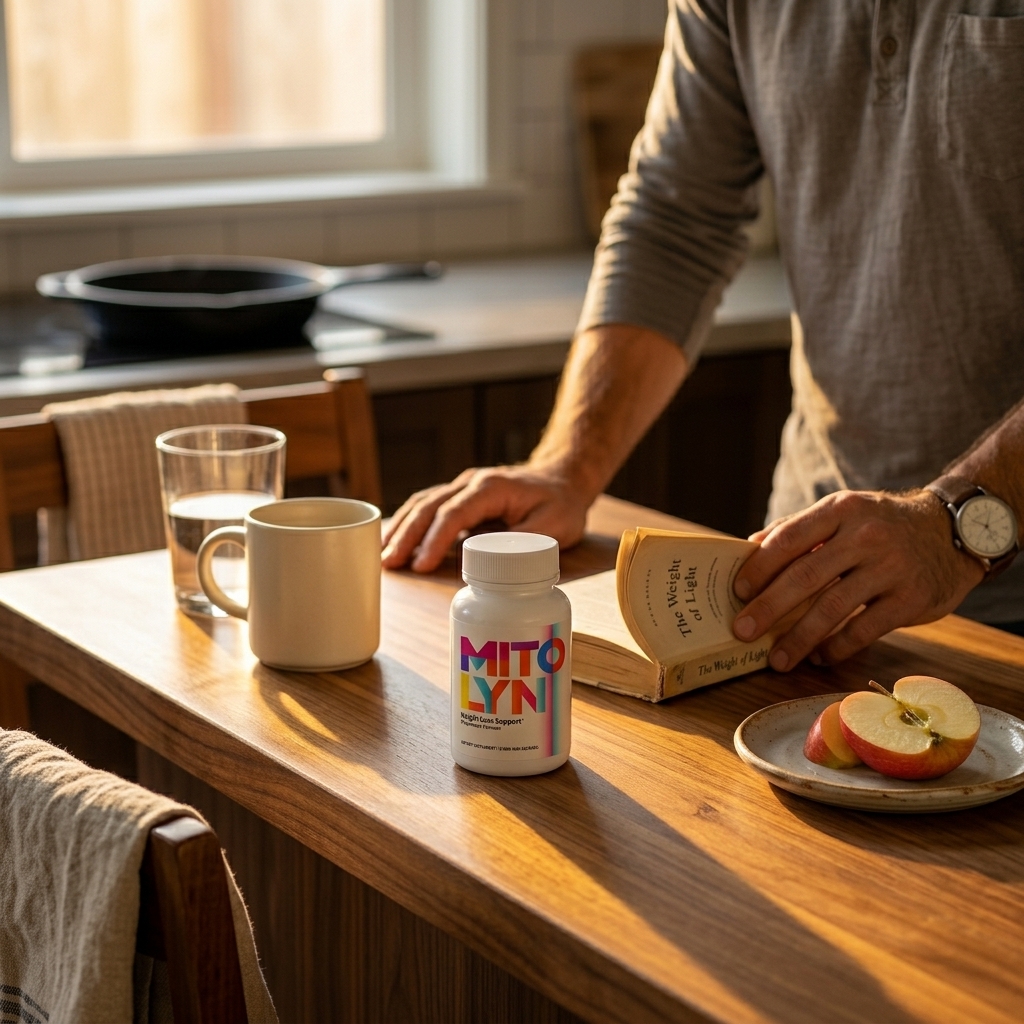
Steady Runs Deeper Than Strong
Not a spike. Not a buzz. Just your body with enough of what it needs
Mitolyn supports ATP production — the energy currency every cell in your body runs on. Ingredients like Astaxanthin and Cacao protect your mitochondria from daily oxidative wear while Rhodiola helps your system stay balanced under pressure. The result isn’t a feeling you chase. It’s a feeling that stays.
-
Afternoons that carry themselves without a crutch
-
Cellular support that compounds quietly over weeks
-
A formula built for the long game, not the quick fix
By week four, my skin started to shift. Not overnight-glow-up, but something subtler. The dullness was lifting. There was color in my face again, warmth under my cheekbones in the morning light. A friend asked if I’d been on vacation. I hadn’t. I’d just been sleeping.
By week six, my resting heart rate had dropped five beats per minute. I wasn’t craving sugar the way I used to — that tight, urgent pull in the late afternoon. My joints didn’t ache as much. I could sit cross-legged on the floor without wincing when I stood up. And the thing I couldn’t quite explain — Mitolyn was the one piece I never skipped. Not because someone told me to. Because on the mornings I took it, there was a settledness in my chest by mid-morning. Not a buzz. Not a spike. Just presence. Like my body had enough of what it needed to stop running on fumes.
The Science I Wish Someone Had Explained Simply

Here’s what I learned about biohacking longevity that actually mattered — not from podcasts, but from paying attention to my own body.
Your mitochondria are the energy engines inside nearly every cell. When they’re sluggish, everything downstream suffers — your focus, your recovery, your mood, your skin. You don’t feel “sick.” You just feel less alive. Less sharp. Like the volume on everything has been turned down.
Intermittent fasting gives your cells time to clean house. When you’re not constantly digesting, your body shifts into maintenance mode — recycling damaged parts, strengthening what’s left. That’s autophagy in plain language. It’s not starvation. It’s breathing room.
Sleep is where the real repair happens. Not the kind you squeeze in around a Netflix episode — the deep, unbroken kind that lets your brain flush out waste and your tissues rebuild. Most of the cellular work longevity researchers talk about happens when you’re unconscious. Which means the best biohack might be doing absolutely nothing, consistently.
And mitochondrial support — real, targeted support — works because it meets the cell where it actually needs help. Not with stimulants. Not with a megadose of something your body can’t absorb. Mitolyn uses ingredients like Rhodiola, Maqui Berry, and Schisandra — plant compounds that protect mitochondria from oxidative stress and support the production of ATP, the energy currency your body runs on. It’s not complicated. It’s just specific.
⸻
What Stayed and What I Let Go

Ninety days in, my counter had four things on it. Down from fourteen. And I felt better than I had in years.
What stayed was simple:
- A regular sleep rhythm — not optimized, just honored
- Intermittent fasting twice during the workweek, because it suited my schedule and made my afternoons calmer
- Strength training and walking, because they made me feel capable, not exhausted
- And one Mitolyn capsule every morning with water, before anything else
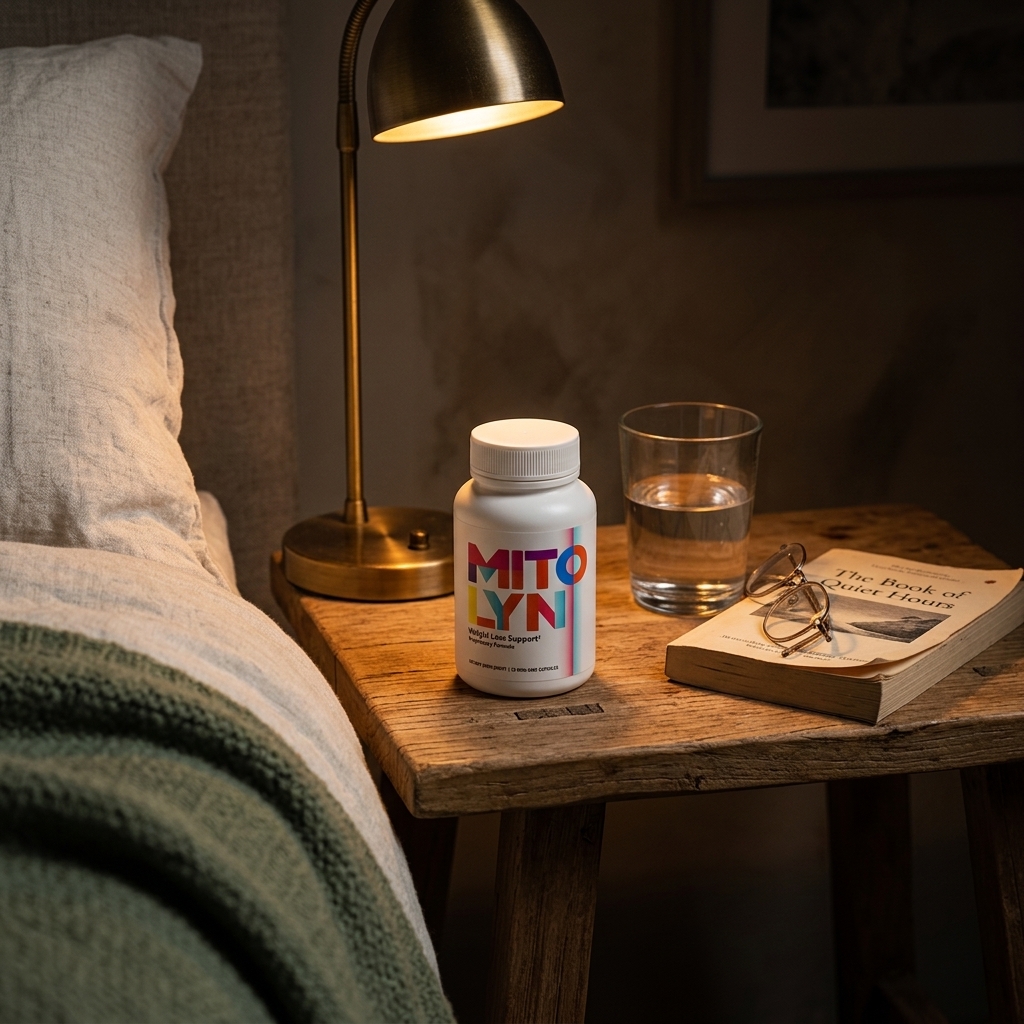
What Stays When the Rest Falls Away
Fourteen bottles became one. And the one was the only one that mattered
Mitolyn earned its place through consistency — not promises. A plant-based blend of six ingredients that support your mitochondria day after day. Maqui Berry and Amla for antioxidant protection. Schisandra for cellular resilience. One capsule, every morning, with water. No complicated protocol. Just something your body recognizes and responds to.
-
The supplement that replaced the entire stack
-
Backed by a 90-day guarantee so you can trust your own experience
-
Simple enough to keep — effective enough to notice
What I let go of was everything that only sounded like progress:
- Cold showers at dawn that left me clenched and anxious
- Random nootropics that mimicked caffeine and called it clarity
- Smart devices that gave me more data than insight
- The belief that doing more meant doing better
Letting go of all that wasn’t defeat. It was the first time my body didn’t feel like a project.
The Shift That Surprised Me Most

I thought the biggest win would be physical. More energy. Clearer skin. A few pounds lost. And yes, those things happened — slowly, modestly, in the way real change tends to arrive.
But the thing I didn’t expect was the quiet. The mental quiet. I stopped second-guessing my routine. I stopped comparing my protocol to someone else’s newsletter. I stopped scanning every new study for something I might be missing.
There’s a kind of relief that comes when you realize you’ve found the few things that actually work for your body — and you trust them. Not with blind faith. With lived experience. With mornings that feel different and evenings that don’t carry the weight of the day.
Mitolyn wasn’t a miracle. It was a steady thing in a sea of noise.
And maybe that’s what longevity actually looks like — not the perfect stack, not the optimal routine, but a handful of rhythms your body recognizes and responds to, day after day, without fanfare.
If you’ve been where I was — counter full, apps pinging, still tired — maybe the experiment isn’t adding one more thing. Maybe it’s finding the few things worth keeping, and letting the rest fall away.
You’ll feel the difference. Not all at once. But you’ll feel it.
Written by Elias Menden — for those who seek clarity in the noise.