The night everything finally caught up with me

It didn’t start with a dramatic burnout.
It started in the middle of a sentence.
I was on a call, explaining a simple idea I’d shared a hundred times before… and the words just evaporated. My mind went blank. My heart did that small panic jump. I laughed it off, but inside, it scared me.
That week, I noticed other glitches:
- rereading the same email three times
- snapping at tiny annoyances
- feeling weirdly low for no obvious reason
I kept telling myself, I just need to push through. More caffeine. Another productivity hack. A new to-do app.
But under all of that, there was one thing I kept avoiding: how little I was actually sleeping.
When I finally looked it up, I learned that more than 50 million people in the United States live with a sleep disorder, and over 100 million don’t get enough sleep. Suddenly, my “random” fog and mood swings didn’t feel so random anymore.
That was the night I stopped asking, “What’s wrong with my brain?” and started asking, “What if it’s just exhausted?”
The sleep–focus–mood loop (that was running my life)
Here’s what finally clicked for me: sleep, focus, and mood aren’t three separate problems. They’re a loop.
- When my sleep was short or choppy, my focus the next day was shaky.
- When my focus was shaky, I felt behind.
- When I felt behind, my mood dipped into irritability and self-criticism.
- That stress made it harder to fall asleep… and the loop kept spinning.
Researchers have seen the same pattern: poor or insufficient sleep tends to intensify negative emotions and make everyday stress feel heavier. I didn’t need a study to tell me that—my mornings were already proof.
Once I saw this loop, I stopped trying to “fix” my productivity and started with the weak link: my nights.
The three anchors that changed everything
I didn’t overhaul my entire life. I changed three things and let everything else orbit around them.
1. Night: teaching my body when the day is over
I used to scroll my way to sleep—phone inches from my face, mind buzzing with other people’s lives.
Now my nights are quieter on purpose.
- Same sleep window. I picked a realistic bedtime and wake-up time and stuck to them, even on weekends. That regular rhythm helps my internal clock know when to power down and when to wake up.
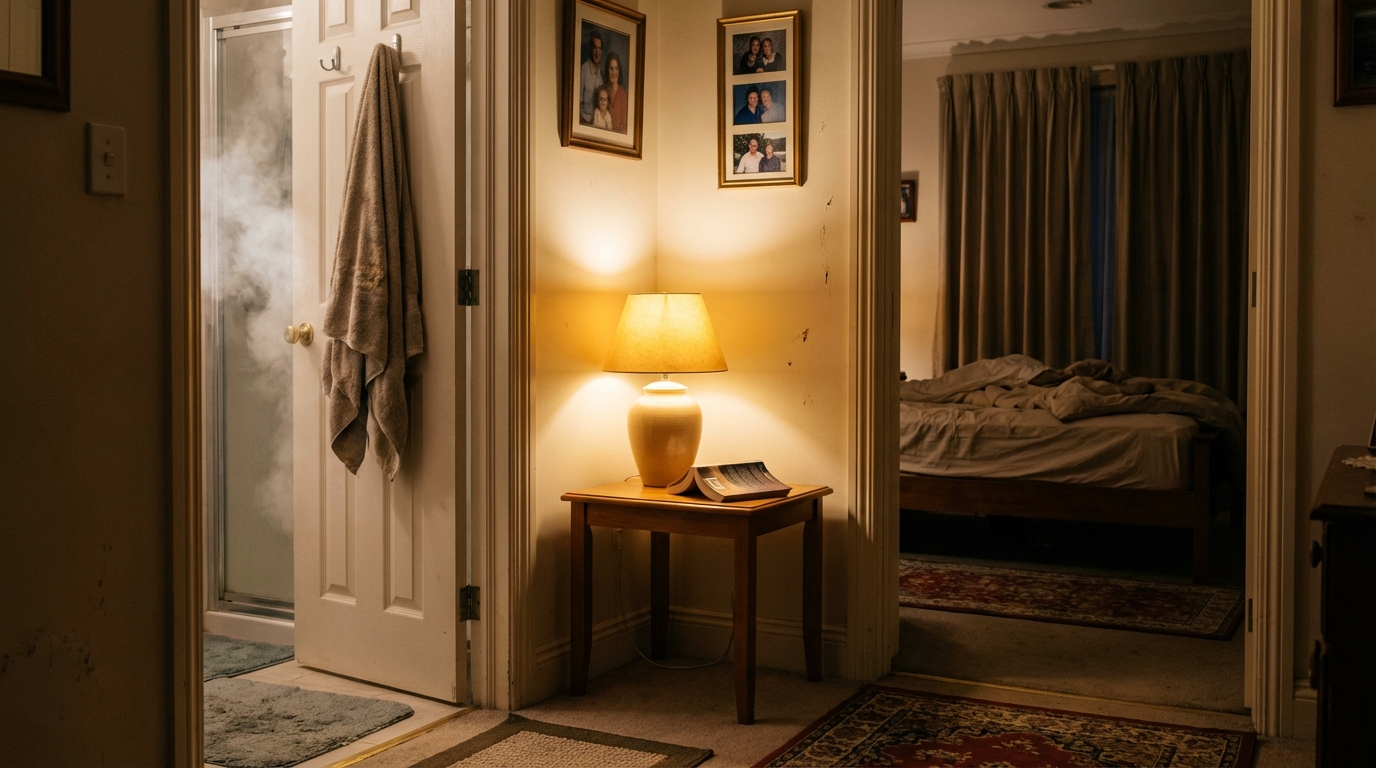
- Light down, brain down. About 45 minutes before bed, overhead lights go low. Screens go away. My brain started to associate this dimmer world with winding down.
- Tiny signals of safety. I don’t do anything elaborate—just a warm shower, skincare, and a short page or two of something gentle. The point isn’t perfection; it’s repetition.
The first week, nothing magical happened. I was tempted to say, “See? It doesn’t work.”
But around week two, I noticed I was waking up a little less during the night, and my thoughts weren’t racing quite as hard before sleep. That alone felt like progress.
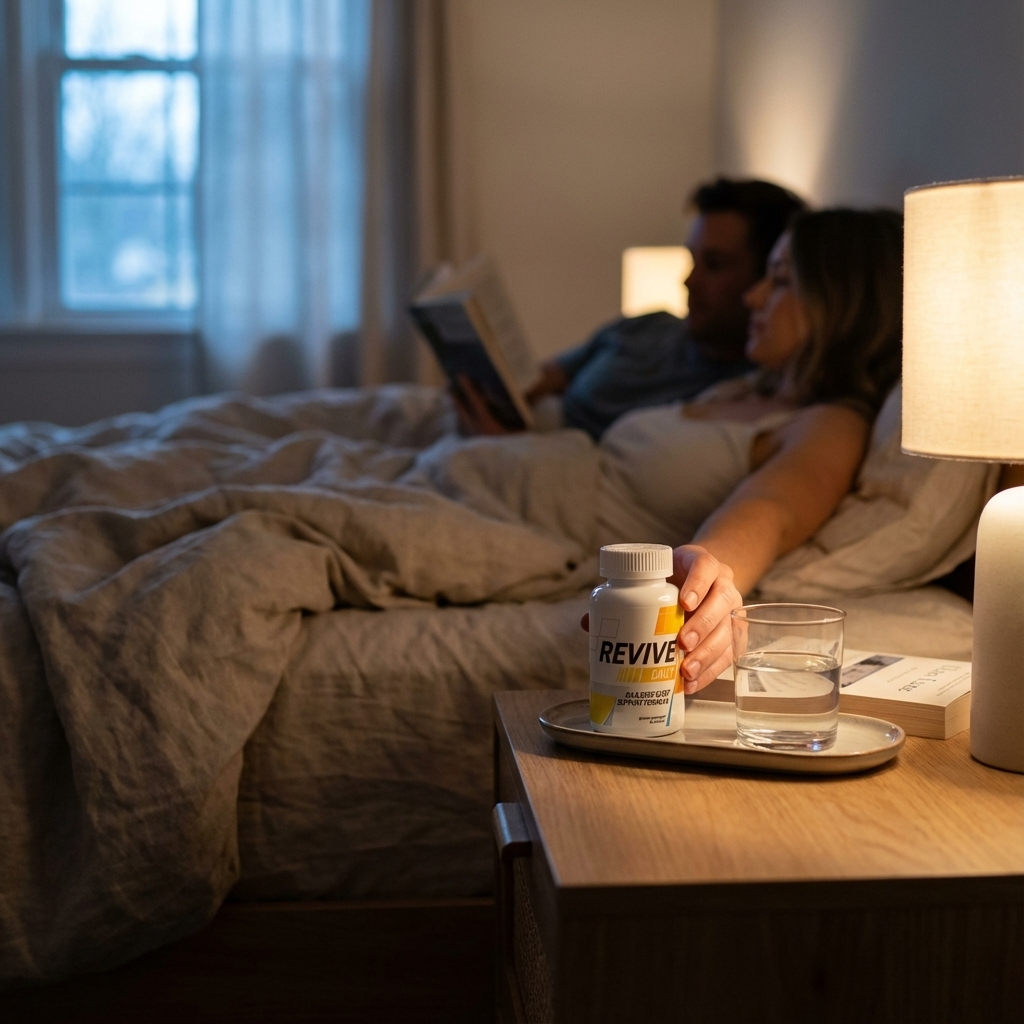
Claim Back Your Nights
Soft lamplight, slow breaths, and one small step that tells your body the day is really over
Revive Daily is a nightly capsule you can plug straight into the routine you’re rebuilding. Take it once before bed, alongside dim lights and your quiet rituals. It’s designed to support deeper-feeling rest and clearer mornings, so your sleep–focus–mood loop starts on your terms again.
-
Helps bedtime feel more like a gentle off-switch
-
Supports heavier, more satisfying nights of sleep
-
Pairs with your habits to lift morning clarity
2. Day: building focus into my environment
I used to treat focus like a personality trait: either you’re a “focused person” or you’re not.
What I’ve learned: focus is heavily shaped by what’s around you.
So I built a small “focus bubble”:
- a clear desk with only what I need for the next task
- soft instrumental music or white noise
- phone in another room for the first deep work block
I also started taking two or three short “pattern breaks” each day. No apps. No scrolling. Just:
- a glass of water
- a stretch
- 1–2 minutes of slow breathing
Those tiny breaks keep my mind from hitting that heavy, glazed-over wall.
3. Mood: treating emotions like vital signs
Before, I treated my mood like background noise—annoying but ignorable.
Now I see it as a daily check-in: Is my system overwhelmed?
When I feel myself slipping into that tight-chested, short-tempered state, I try to respond with something small and kind:
- a five-minute walk outside
- a quick journal line: “Right now I feel…”
- a voice note to a friend instead of doomscrolling
There’s science behind this, too. When we’re chronically sleep-deprived, our emotional centers go into overdrive, while the more rational, calming parts of the brain have a harder time stepping in. No wonder small things feel big.
Slowly, these three anchors—night rhythm, focus bubble, emotional check-ins—started to pull the whole sleep–focus–mood loop into better balance.
I’ve learned that real change usually starts with tiny, repeatable shifts, not dramatic overhauls.
Food, light, and the signals my brain actually listens to

Once the basics of my routine felt steadier, I started noticing something else: certain days felt easier, even with the same amount of sleep.
When I looked closer, two patterns stood out.
What I eat quietly shapes my sleep
On the days I skipped meals or lived on sugar and refined snacks, my energy felt like a roller coaster: jittery, then flat.
Research is catching up to what a lot of us feel—both what we eat and when we eat can influence sleep quality. Diets higher in fiber and more balanced overall tend to support better rest than diets loaded with sugar and saturated fat.
So I made a simple agreement with myself:
- build meals around protein, fiber, and healthy fats
- keep the ultra-sweet snacks for earlier in the day
- avoid going to bed either overly stuffed or ravenous
Nothing extreme. Just gentle consistency.
Morning light: the free “reset” button
There is one habit I underestimated for years: morning light.
Our circadian rhythm—the internal clock that tells us when to sleep, wake, and feel alert—responds strongly to light, especially bright, natural light early in the day.
Now, I try to:
- open the curtains as soon as I get up
- step outside for a few minutes of daylight, even if it’s cloudy
- get another short “light break” in the late afternoon
It’s subtle, but that combo of steady meals and consistent light cues has made my evenings feel less wired and my mornings less brutal.
The supplement that helped my nervous system exhale

For a long time, I was skeptical of sleep supplements. I didn’t want anything that would knock me out or leave me groggy. What I was craving was something gentler—more like support than sedation.
That’s when I came across Revive Daily, a sleep-support formula built around deep, restorative sleep and nighttime recovery. It uses a blend of ingredients like magnesium, ashwagandha extract, amino acids, zinc, and a small amount of melatonin—nutrients that have been studied for their roles in relaxation, hormone balance, and sleep depth.
Here’s how it fit into my routine:
- I only take it on nights when my mind feels particularly “on.”
- I treat it as part of my wind-down ritual, not a magic fix.
- I still keep my sleep window, low lights, and no late-night scrolling.

When “Off” Won’t Switch Off
Your body is tired, but your thoughts are still marching around the room like they forgot the memo
On those especially “on” nights, Revive Daily can be your cue that it’s okay to power down. A simple capsule, taken with your usual wind-down, supports the kind of rest that feels heavier and more complete—so mornings start with steadier energy instead of that foggy, overtaxed feeling.
-
Takes the edge off those wired, tired nights
-
Helps your sleep feel deeper and more continuous
-
Supports a more even, less reactive mood tomorrow
By the second week of using it this way, I noticed some quiet shifts:
- falling asleep felt less like a fight
- my sleep felt “heavier” in a good way, like my body was actually going offline
- my mornings had a cleaner kind of energy instead of that thick, foggy hangover
The biggest surprise was emotional: I felt more even. Less like I was balancing on the edge of irritation all day. It wasn’t dramatic. It was more like the volume on my stress dial turned down a few notches.
I still believe habits are the foundation—bedtime rhythm, light, food, movement. But having something like Revive Daily in the background has felt like giving my nervous system an extra layer of support on the nights I need it most.
What the loop feels like now

These days, my life doesn’t look “perfectly optimized.”
I still have late nights. I still have messy days. I still have moments when my mood dips or my thoughts scatter.
The difference is, I don’t feel trapped in it anymore.
Most mornings now:
- I wake up and actually feel like I slept.
- Work happens in focused stretches instead of one long, blurry marathon.
- When my mood wobbles, I notice sooner and respond faster—with a walk, a pause, or an earlier night.
The sleep–focus–mood loop is still there, but it runs in a kinder direction:
better sleep → clearer focus → steadier mood → easier sleep again.
And on the nights when my mind is buzzing and I can feel the old pattern trying to creep back, I have options: dim lights, familiar rituals, and, when I need it, that gentle nudge from a sleep-support supplement that’s become part of my toolkit.
If you’re standing where I was—tired, foggy, and a little worried that this is just your “new normal”—you’re not broken. Your loop is just asking for different inputs.
Start with one: a real bedtime, a walk in the daylight, a calmer wind-down, or a trusted sleep-support formula like Revive Daily to help your system remember how to rest.
Let the shifts be small. Let them be steady. Your brain will feel the difference long before your calendar does.
Quick answers about sleep, focus, and mood
Q: If I miss sleep during the week, can I just make it up on weekends?
Catching up a little can help, but chronic sleep loss still adds up in slower thinking, more mistakes, and heavier fatigue. A regular sleep schedule most days of the week tends to support clearer focus and better mood.
Q: I work late on a screen. Is all tech at night automatically bad?
Not automatically—but bright blue light close to your face makes it harder for your brain to start producing melatonin. If screens are non-negotiable, try dimming them, using warmer “night” settings, and taking breaks away from the glow before bed.
Q: I’m exhausted but still can’t fall asleep. What’s one gentle thing to try?
Pick a simple sequence you repeat every night—maybe a warm shower, a short stretch, a calming drink, then lights low and phone away. Over time, your brain learns: when we do this, sleep comes next. A supportive formula like Revive Daily can layer in as an extra signal that it’s safe to drift off.
Written by Liora Menden — for those who seek calm, clear, unhurried days.