There’s a specific dread I used to carry around noon. Not about the meeting itself. About what I’d eat before it. Because my stomach had opinions. Strong ones. And they rarely aligned with my schedule.
I’d stand in front of the fridge running calculations: Will a salad make me bloated by 2pm? Is soup safe? Should I skip it entirely and deal with the shakiness instead?
Food had become a negotiation with a body I couldn’t predict. And the exhausting part wasn’t just the discomfort—it was the constant vigilance. The mental energy spent managing something that used to be automatic.
That’s when I started piecing together what was actually happening: how inflammation affects digestion when your life runs faster than your nervous system can handle.
⸻
The tension I didn’t know I was carrying

Here’s what I missed for the longest time:
My gut wasn’t just sensitive to certain foods. It was sensitive to me—to the state I was in when I tried to eat. The rushing. The multitasking. The way I’d answer emails while standing over the counter, fork in one hand, phone in the other.
My body was processing more than lunch. It was processing urgency.
And inflammation? That’s what happens when urgency becomes your default setting.
Not the dramatic kind you read about in medical articles. The low-hum kind that makes everything feel slightly harder than it should be.
For me, that looked like:
- A belly that felt tender and reactive, even on “good” days
- Bloating that arrived like clockwork after midday meals
- Energy that drained instead of refueled after eating
- A gut that never quite settled, like it was waiting for the next problem
I kept treating it like a food problem.
Turns out, it was a tempo problem.
⸻
What inflammation actually does to your digestive rhythm
I used to picture inflammation as redness and swelling—something visible, acute, fixable with ice. But the inflammation that messes with digestion is quieter. It’s systemic. It changes how your whole digestive tract responds to the most ordinary things.
When your body’s running a low-grade stress response—because of lack of sleep, constant mental load, irregular eating patterns, or just never stopping—your gut interprets that as a signal.
Not “relax and digest.”
More like “brace for impact.”
And when your system is bracing, even gentle foods can feel like an imposition.
Fiber becomes harsh. Dairy feels heavy. A perfectly normal meal leaves you uncomfortable for hours.
The kicker? You start shrinking your world to accommodate it.
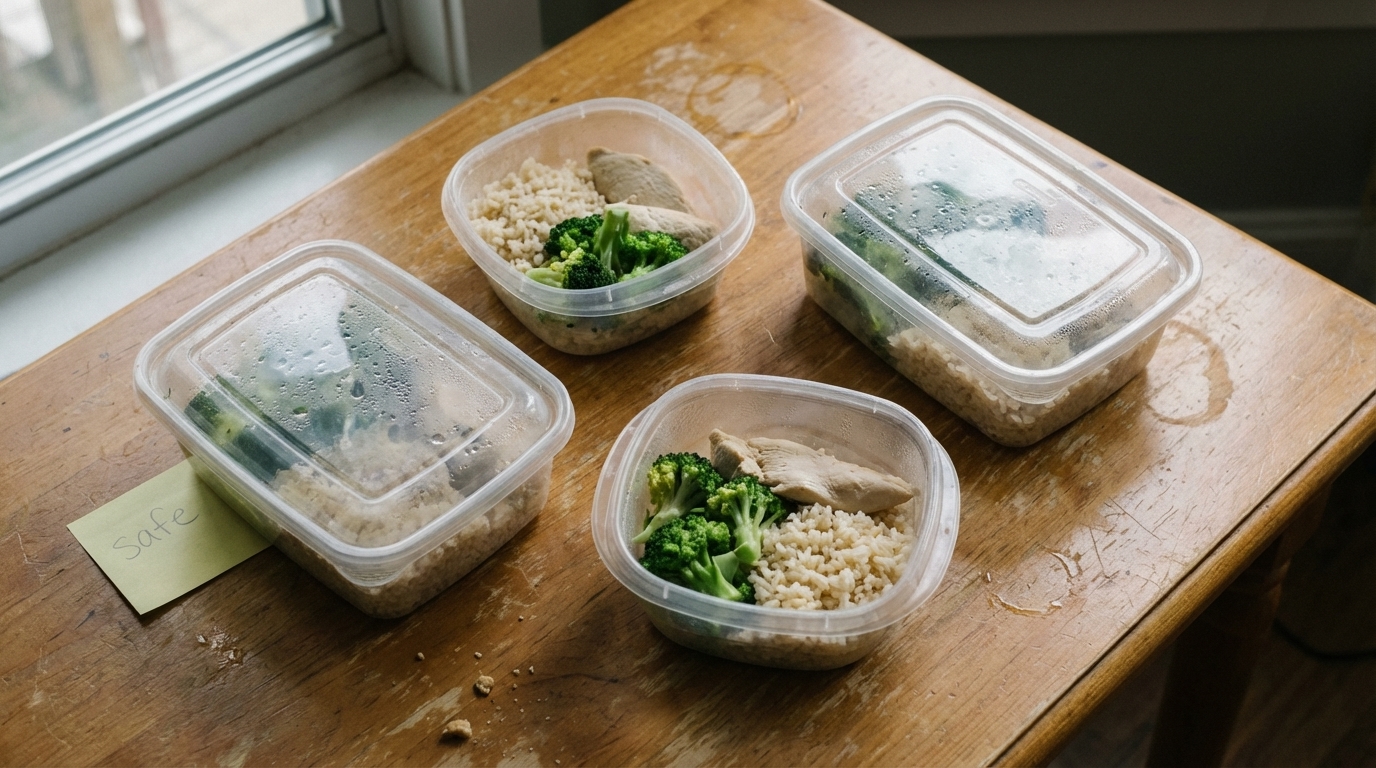
You eat the same three “safe” meals on repeat. You avoid plans that involve food. You hold your breath a little every time you sit down to eat.
That’s not living with digestion. That’s living around it.
⸻
The day I realized I was holding my breath through lunch

I was in back-to-back meetings, and I’d grabbed food between calls.
Halfway through, I noticed my chest was tight. My breathing was shallow. I was eating mechanically—bite, chew, swallow, repeat—while my brain was already three tasks ahead.
My body wasn’t even present for the meal.
And then I felt it: that familiar tightness starting to build in my abdomen. The slight nausea. The foggy, sluggish feeling creeping in.
I’d done this to myself. Again.
That was the moment I understood: how inflammation affects digestion isn’t just about what you eat. It’s about how your body feels when you eat it.
If your nervous system is wired, your digestion reflects that.
If your body’s inflamed from stress, lack of rest, and constant overdrive, your gut doesn’t get the memo that food is supposed to be fuel—not a threat.
⸻
The small recalibrations that changed everything

I didn’t overhaul my life. I just stopped ignoring the signals my body had been sending for months.
I gave meals actual space
Not a meditation practice. Not a gratitude journal.
Just… separation.
I started closing my laptop before eating. Putting my phone face-down. Sitting in an actual chair instead of hovering over the counter like I was in a race.
Some days, that meant five minutes of not doing anything else. That’s it.
And my gut? It responded almost immediately.
Less bloating. Less cramping. Less of that “why does my stomach hate me?” spiral.
I rebuilt my plate around steadiness
I stopped chasing trendy elimination diets and started asking a simpler question: What makes my body feel grounded?
The answer wasn’t complicated:
- Warm, cooked foods when my gut felt fragile (roasted vegetables, bone broth, gentle grains)
- Simple proteins that didn’t sit like rocks (fish, eggs, lentils)
- Healthy fats that kept me stable (nuts, seeds, olive oil drizzled generously)
- Hydration that happened all day, not all at once at 9pm
I didn’t eliminate foods I loved. I just stopped letting chaos decide my menu.
On high-stress days, I chose easier digestion over variety. On calmer days, I had more flexibility.
That rhythm alone reduced the inflammation flare-ups significantly.
I started paying attention to the very beginning
This was the piece I’d completely overlooked: digestion doesn’t start in your stomach.
It starts in your mouth.
And if your mouth is dry, tense, or neglected, everything downstream suffers.
I started drinking more water throughout the day—not just with meals. I started chewing more thoroughly instead of inhaling food like it might disappear.
And I added something small that became unexpectedly grounding: ProDentim.

ProDentim For Busy Mornings
Let one small habit set a calmer tone
ProDentim is a probiotic tablet that dissolves in your mouth—quick, simple, and easy to keep consistent. Add it to your morning routine before the rush starts. When your days are packed, ProDentim gives you a steady daily support you’ll actually use.
-
Easy daily step, no prep
-
Helps you stay consistent
-
A calmer start you can feel
It’s a probiotic that dissolves in your mouth, and at first I only noticed the surface-level stuff—fresher breath, a cleaner feeling.
But over a few weeks, I noticed something subtler.
It gave me a pause.
A moment in the morning where I wasn’t rushing. Where my mouth felt cared for. Where the beginning of my digestive process felt… intentional.
And when the start of digestion felt calmer, the rest of it followed suit. Not dramatically. Just steadily.
It became part of my routine—not because it was miraculous, but because it was easy, consistent, and quietly supportive.
I interrupted the stress loop with micro-breaks
I didn’t need an hour-long yoga session. I needed five-minute resets scattered throughout my day.
Things that told my nervous system: You’re not actually being chased.
- A walk around the block after eating
- Stretching my arms overhead and taking three deep breaths
- Lying on the floor for sixty seconds and letting my belly relax
- Stepping outside for sunlight and air between calls
These weren’t “wellness practices.” They were survival tactics.
And they worked because they were brief enough to actually happen.
⸻
What it feels like when your gut stops reacting to everything
The shift wasn’t instant. But it was cumulative.
First, I stopped clenching before meals. That constant background anxiety—will this wreck my afternoon?—started to fade.
Then the physical symptoms softened. Bloating became occasional instead of guaranteed. Cramps lost their edge. My energy after eating felt more even.
And eventually, something bigger changed:
I stopped thinking about my digestion all the time.
I could make plans without running contingency scenarios. I could eat at restaurants without pre-calculating risk. I could focus on conversations instead of my gut.
Food started feeling neutral again. Safe. Normal.
ProDentim stayed in the rotation—a small, steady constant in a routine that finally felt sustainable.

Keep ProDentim In Rotation
Steady days come from steady habits
ProDentim makes it easier to stick with a routine—even when your schedule is stacked. It’s fast, simple, and designed to fit into real mornings. If you want a daily support that doesn’t demand extra time, ProDentim is the one to start.
-
Fits packed schedules
-
Simple, repeatable routine
-
Support without extra effort
Not because it fixed everything on its own, but because it was part of a larger shift toward treating my body with a little more gentleness.
⸻
Living with a gut that doesn’t panic anymore

If I could go back and tell myself one thing, it would be this:
Your digestion isn’t broken. It’s just tired of being asked to perform under conditions that make relaxation impossible.
How inflammation affects digestion isn’t always about disease or damage. Sometimes it’s about a body that’s been running in survival mode for too long—and a gut that mirrors that tension right back at you.
You don’t need a perfect protocol.
You need a few reliable anchors:
- Space around meals
- Foods that feel grounding instead of aggravating
- A daily rhythm that doesn’t ask your body to sprint through everything
- Small supports that make consistency easier, not harder
For me, that combination turned things around.
Not overnight. Not perfectly.
But enough that I stopped living like my stomach was a ticking time bomb.
Enough that lunch stopped feeling like a gamble.
Enough that I could eat, breathe, and move through my day without that constant hum of dread in the background.
⸻
Written by Liora Menden — for those who seek steadiness in a body that’s tired of overreacting.
Related reading
- 7 Foods for Joint Inflammation I Reach for Every Single Day
- Why My Knees Hurt Every Morning — And What My Body Was Trying to Tell Me
- Best Daily Supplements for Stress-Induced Inflammation: How One Night Softened My Days
- The 15-Minute Daily Routine That Transformed My Joints (And Why Joint Genesis Made It Finally Stick)