There is something revealing about stairs. Flat ground lets you hide a lot. You can walk through a mild stiffness and tell yourself it is no big deal. But stairs ask a more honest question. They ask whether your knees, hips, and ankles trust the movement in front of them. They ask whether your body is cooperating or merely tolerating the day.
That is why I started paying more attention to the ache that showed up there. Not dramatic pain. Not an injury. Just enough resistance to make me notice every step. Just enough caution to make me grip the railing sometimes, shorten my stride, or think about movement that used to happen automatically.
At first I treated that sensation like a small annoyance. But small annoyances repeated often enough become a kind of lifestyle. They make you slower to say yes to walks, slower to get up after sitting, slower to trust your body when it should feel natural. The ache on the stairs was not just about the stairs. It was my body telling the truth about how supported it felt.
Why Stairs Expose What Sitting Hides
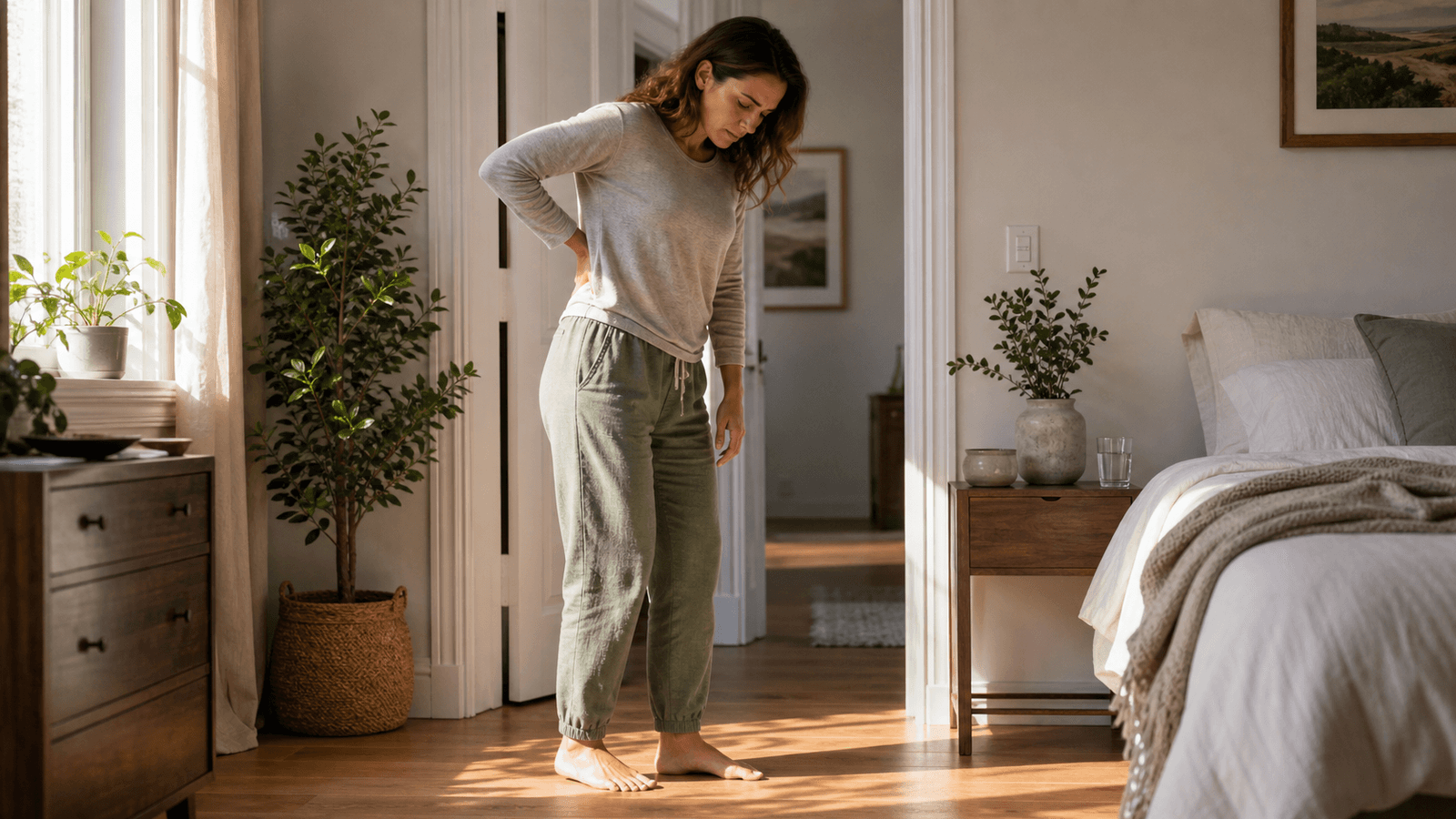
Long stretches of sitting can make a body feel normal right up until it has to restart. That is what made this pattern so easy to miss. I could be fine at the desk, fine in the car, fine while scrolling, and then suddenly not so fine the moment the next movement asked for range, strength, and confidence at the same time.
Stairs compress the issue. They take stiffness that feels vague on flat ground and turn it into something measurable. You feel it in the bend of the knee, the push through the foot, the effort it takes to lift instead of glide. That is why they become such a good diagnostic moment.
Once I understood that, I stopped resenting the stairs for exposing the issue and started appreciating them for clarifying it. They were not causing the problem. They were revealing the places where recovery, circulation, and mobility support needed more attention.
The Ache Was Changing More Than My Movement
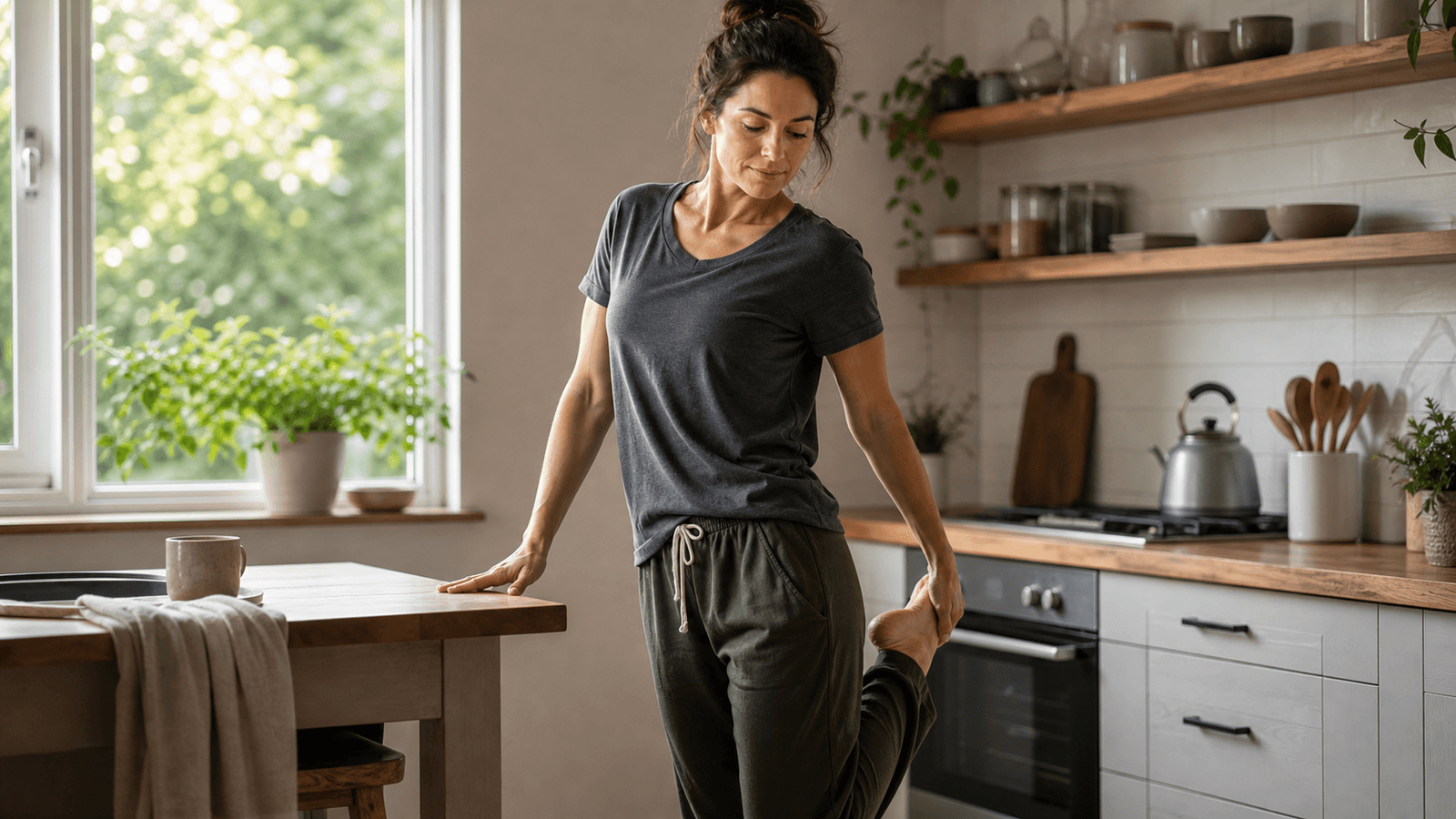
What surprised me most was how quickly physical hesitation became emotional hesitation. When your body feels uncertain on the stairs, you bring a little more caution into the rest of the day too. You move slower without meaning to. You become less spontaneous. You start mentally editing life around what might feel awkward later.
That is the part people do not always name. Joint discomfort rarely stays in one narrow lane. It changes confidence. It makes the day feel slightly less available. It turns ordinary movement into something you have to think about before you do it.
That is why I stopped framing mobility support as optional self-improvement. If stiffness is quietly shrinking the amount of life you feel like participating in, then getting ahead of it is practical, not indulgent.
The Pattern Often Started Before the Stairs
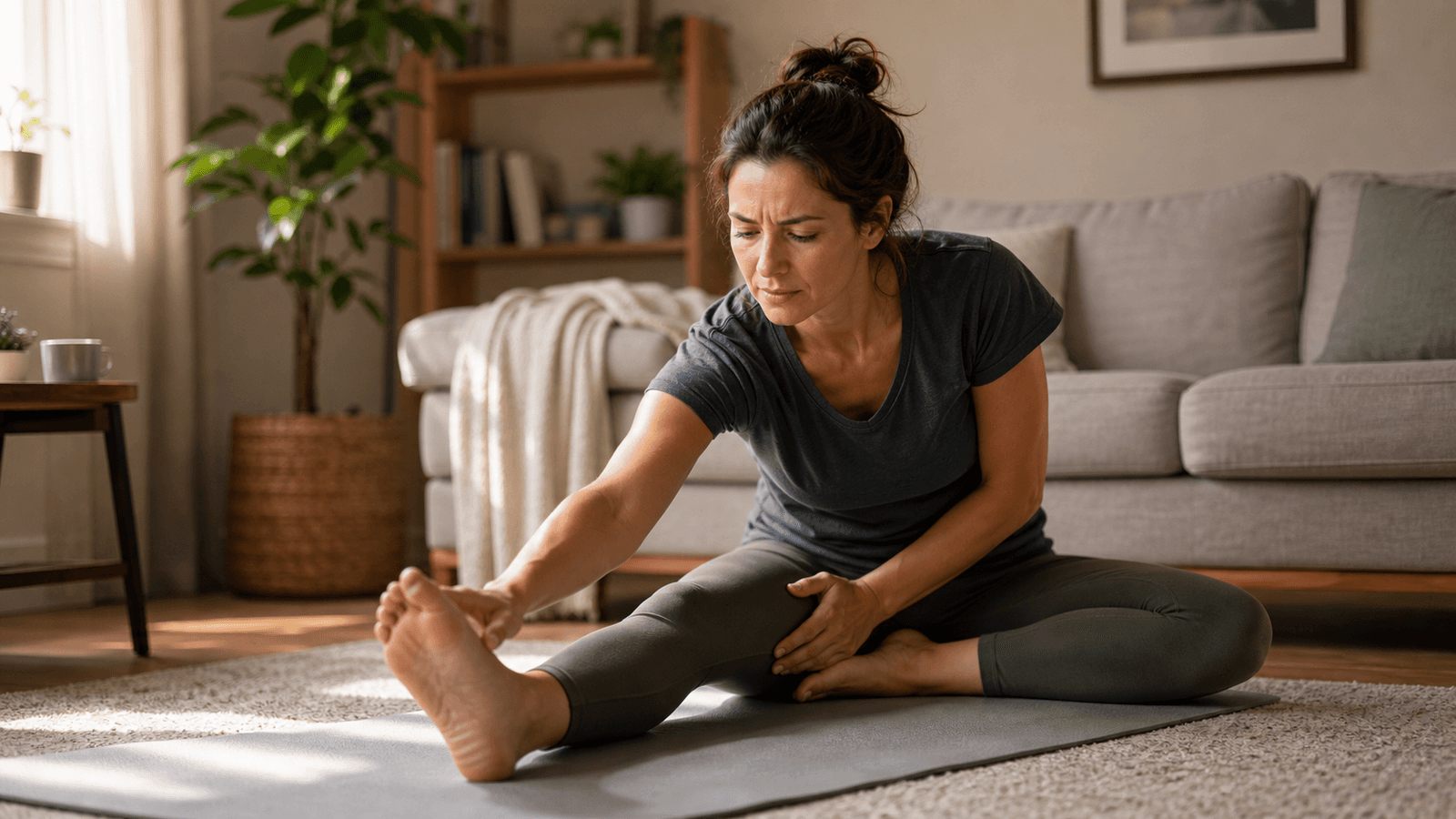
The ache on the stairs had roots earlier in the day. It showed up after too much sitting, after not drinking enough water, after skipping the small movements that keep the joints from getting locked into one position. It got louder when I was run-down and quieter when I was consistent.
That consistency mattered more than heroics. The body did not need me to become an athlete overnight. It needed more circulation. More gentle walking. A little more warmth. A little less expecting the joints to behave beautifully after being still for hours.
If you are sorting through the same issue, it helps to compare the broader mobility landscape too. I keep a guide to joint mobility support and a related article on morning stiffness patterns. This story is the everyday version: the body that tells the truth the moment the stairs ask for cooperation.
What Helped Was Gentle Enough to Repeat

The first improvements came from habits simple enough that I could actually keep them. Short walks instead of staying planted too long. Standing sooner. Heat when the joints felt especially stubborn. Less all-or-nothing thinking about exercise and more respect for the power of regular movement.
That changed the tone completely. Instead of pushing my body until it complained, I started giving it the small inputs that made it less likely to complain in the first place. The ache did not disappear because I judged it harder. It softened when I treated mobility like something to be maintained rather than demanded.
That made support feel more believable. When the routine is gentle enough to repeat, it has a chance to work. And joints love repetition far more than they love sudden ambition.
Where Joint Genesis Fits in a Mobility Plan
Joint Genesis made sense to me because it matched the real goal. I was not chasing an extreme outcome. I wanted the stairs to stop feeling like a test. I wanted the body to feel less guarded in ordinary moments that should not require strategy.
A mobility supplement should fit beside the basics rather than pretending to replace them. Better hydration, regular walking, warmth, and a less inflammatory daily rhythm still matter. But a product designed for joint comfort has a clear role when the pattern has become consistent enough to name.
That role is what I value. Not hype. Not false promises. Just support that belongs in the same conversation as easier mornings, steadier steps, and a body that feels more willing than resistant.

That is where Joint Genesis feels useful. It gives the reader a practical next move that matches the problem the stairs keep exposing.
Easier Steps Gave the Day More Room
The real reward was not a dramatic before-and-after story. It was more room inside ordinary life. Less bracing before I stood up. Less thinking about whether the next staircase would feel annoying. Less quiet frustration at how much energy caution can consume.
When movement gets easier, other parts of the day get easier too. You choose walks more often. You move around the house without narrating every ache. You spend less time negotiating with your own body and more time actually living inside it.
That is why mobility support can feel so emotional. Easier joints do not just change mechanics. They change willingness. They let you say yes faster. They let ordinary life stop feeling like something you have to calculate around.
The Goal Is Not to Move Like a Different Person. It Is to Move Like Yourself Again.
I do not need my body to pretend it has never been challenged. I just want it to feel cooperative again. Less friction. Less caution. Less of that private sense that every staircase is grading me.
If the ache keeps following you upward, listen to that. It may simply mean your joints want better recovery, more regular circulation, and support that takes the pattern seriously before it becomes a bigger interruption.
The body does not always ask loudly at first. Sometimes it asks through a single staircase. Sometimes that is enough.
Written by Elias Menden — for those who seek easier movement and steadier joints