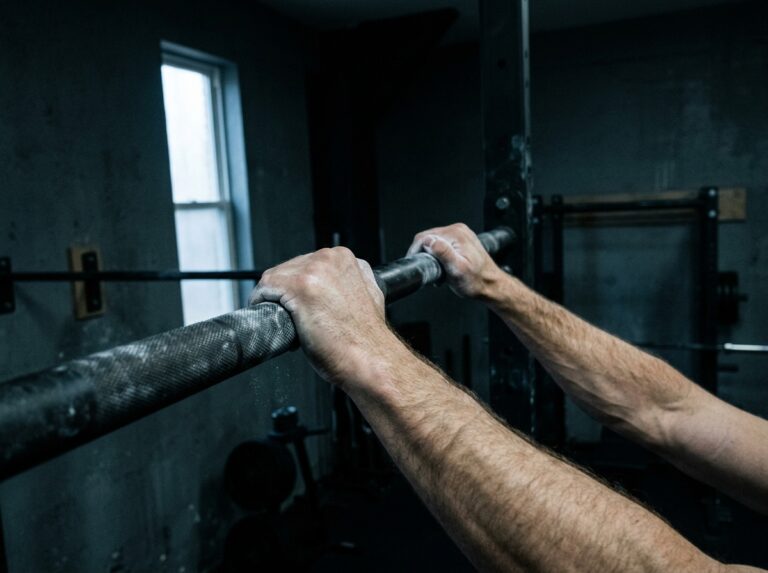
The sound my knees made before I even opened my eyes

That’s where it started for me. Not with a diagnosis. Not with an injury I could point to and say, “That’s when it broke.”
- Just a little pop when I swung my legs out of bed.
- A catch in my right shoulder when I reached for the alarm.
- Wrists that felt rusty when I twisted the coffee jar open.
- Hips that moved like they were full of sand.
I was 43. I had a desk job. I had kids who needed me to bend down and pick things up without wincing. And somewhere along the way, my body started answering before I even asked the question.
“Can I do this today?”
“Maybe. Let’s see.”
I got good at the negotiation. The internal bargaining. Just get me through breakfast. Just let me walk to the car without that thing my knee does. Just don’t punish me for sitting in a meeting for two hours.
I searched morning stiffness joint relief more times than I want to admit. I bought foam rollers. I tried YouTube mobility flows. I pushed through, because that’s what you do—until pushing through becomes the problem.
For a supplement-focused next step, see the guide to best supplements for joint pain and mobility.
That comparison page helped me see where a dedicated joint support formula actually fit into the bigger routine.

What changed wasn’t dramatic. It was something quieter: I stopped fighting my body and started building a joint pain recovery routine that actually held. And the thing that made it hold—the anchor that finally let me stop searching—was Joint Genesis.
Not instead of movement. Not instead of rest. With them. Because once I had all three working together, I stopped waking up already braced for the worst.
⸻
The part where I tried everything that didn’t stay
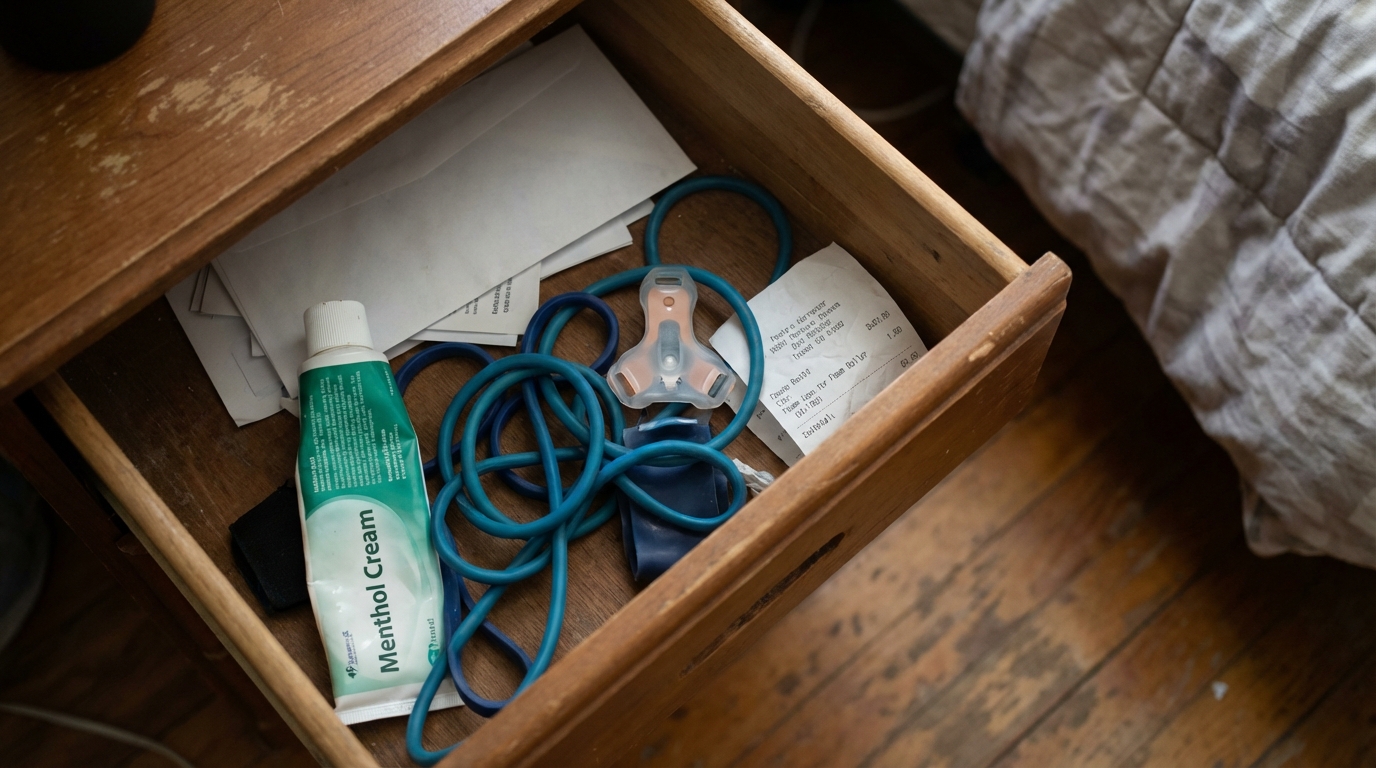
Let me guess where you are right now.
You’ve tried the stretches.
- The hot packs.
- The ice packs.
- The cream that smells like menthol and promises relief that evaporates by lunchtime.
You’ve bought the gadgets.
- The posture correctors.
- The expensive pillow.
- The ergonomic thing for your mouse.
And maybe some of it helped—for a little while. But nothing stayed. That was my problem too.
I’d get a good week. Maybe two. Then something would flare up again, and I’d be back on Google at midnight, typing why do my joints hurt after sitting like the internet was going to tell me something different this time.
The exhausting part wasn’t the pain itself. It was the uncertainty. I couldn’t trust my body to cooperate. I couldn’t make plans without that little mental asterisk: assuming my knees don’t betray me.
That’s the feeling I didn’t have words for until it finally lifted. And it lifted when I stopped chasing quick fixes and started building something steady—with Joint Genesis as the foundation.
The three-part system that finally made sense

Here’s what I figured out, slowly and stubbornly:
A joint pain recovery routine isn’t a hack. It’s not a single exercise or a magic supplement or a mindset shift.
It’s all three, working together, every single day.
For me, that looked like this:
- Movement — gentle, consistent, completely unsexy
- Mindset — treating rest like part of the work, not the opposite of it
- Joint Genesis — the joint support supplement that made the whole thing feel less fragile
And I’m going to tell you the truth about each one.
Movement: the kind your joints don’t punish you for
At first, walking was all I could manage without feeling worse the next day. So I walked. Not power walks. Not “crushing my step goal” walks. Just… walks. Around the block. In the cold. In my work clothes if that’s what it took.
I treated it like something non-negotiable, the way you don’t debate brushing your teeth. Then I added strength work—but the boring kind. The kind that doesn’t look impressive on Instagram.
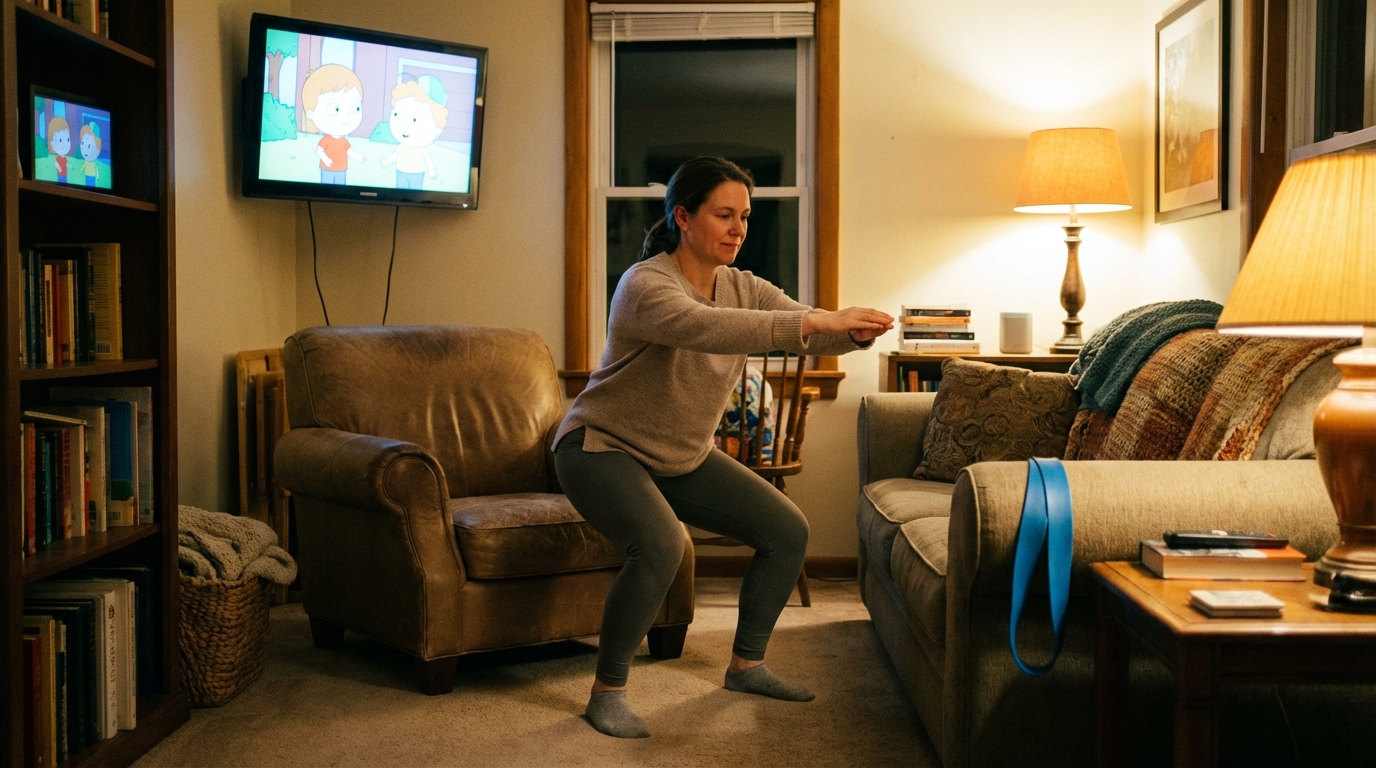
Chair squats. Wall push-ups. Resistance bands while I watched TV. Slow step-ups on the bottom stair. It felt too easy at first. Almost embarrassing.
But my body started responding in a way it hadn’t in years. Not with soreness. With cooperation. Like I was finally speaking a language it understood.
Mindset: the day I stopped treating my body like the enemy

The trap I fell into—and maybe you’re in it too—is thinking you have to earn relief.
So you skip rest days because they feel lazy.
You push through pain because stopping feels like giving up.
You force yourself into high-impact workouts because sitting still makes you anxious.
And your joints? They keep track. They remember.
I had to learn a different kind of discipline. I started tracking how I felt in the morning, not just what I did the day before. I celebrated wins like “stood up from the couch without grabbing the armrest.” I stopped treating soreness as proof that I worked hard enough.
And that shift—treating my body like something to support instead of something to fix—is what made Joint Genesis click into place. Because I wasn’t looking for intensity anymore. I was looking for steadiness.
Why Joint Genesis became the thing I didn’t skip
I’m going to be honest about this part.
Joint Genesis is what changed the game.
Not because it “cured” anything. Not because I could suddenly skip the work. But because it made the work easier to keep.
When I woke up and my body felt less cranky, I didn’t dread the morning walk. When my joints didn’t seize up after sitting, I didn’t talk myself out of strength training. When I could bend down to tie my shoes without that little rehearsal in my head first—that’s when I knew something fundamental had shifted.
Joint Genesis became the anchor. The one thing I didn’t debate. The one thing I didn’t forget. The one thing that made my routine feel less like a fragile experiment and more like a system that worked. And once I had that stability, I stopped searching for the next thing.

Lubrication You Can Feel
My mornings got easier when my joints stopped feeling “dry.”
Joint Genesis is a once-daily joint support capsule built around Mobilee®—a patented blend of hyaluronic acid, collagen, and polysaccharides designed to support synovial fluid (the cushiony “lubrication” inside your joints). When that support is steady, movement feels less like a gamble and more like a habit.
-
Supports joint lubrication for daily movement
-
Helps routines feel easier to keep
-
One capsule a day—simple enough for real mornings
⸻
The week that taught my body I was serious
I’m not going to hand you a rigid program, because life doesn’t work that way. But I will show you what my week looked like once I stopped guessing and started building.
- Monday was reset day: a 30-minute walk, nothing fancy. Hip stretches while I waited for my coffee to brew. Joint Genesis with breakfast, then I got on with my day.
- Tuesday meant strength—but gentle strength. Chair squats. Wall push-ups. Resistance band rows. I’d finish with five minutes of just breathing, teaching my nervous system that movement wasn’t a threat.
- Wednesday was joint kindness day: swimming if I had time, or a slow upper-body flow if I didn’t. I’d write two sentences in my notes app: What felt good. What didn’t. That tiny habit kept me from repeating my mistakes.
- Thursday brought the bands back—shoulders, arms, a little core work. Not for abs. For stability. I took Joint Genesis with lunch and noticed how much lighter I felt when my shoulders weren’t locked up all afternoon.
- Friday was active recovery: a walk, some stretching, a guided relaxation at night. I used to think this was wasted time. Now I think of it as repaying a debt—like I’m paying my body back for all the years I ignored it.
- Saturday used to be the day I overdid it. Now it’s the day I do something joint-friendly and fun: cycling, incline walking, a long walk with music. Sometimes a living-room dance session with my kids. It counts because my body is moving and smiling.
- Sunday is where the magic actually happens: full rest, or light foam rolling if I’m tight. I prep meals. I sit with my tea. I remind myself I’m the kind of person who follows through.
The point isn’t the exact schedule. The point is the identity shift.
I stopped being someone who “tries things.”
I became someone who has a joint pain recovery routine—and keeps it.
And Joint Genesis became part of that identity. The steady thing. The thing I don’t question.
What worked, what didn’t, and what finally felt like me again
Let me save you some trial and error.
What helped:
- Daily walking, even when it was only 15 minutes.
- Gentle strength training, even when it felt too easy.
- Rest days, even when they made me feel guilty.
- Tracking how my mornings felt instead of just logging workouts.
- Joint Genesis, because it made everything else less fragile.
What didn’t help:
- High-impact cardio that turned “a little stiff” into “why did I do that.”
- Skipping recovery because I thought it made me weak.
- Random intense sessions with long gaps between them.
- Treating my body like a machine that just needed the right input code.
The biggest win wasn’t that the pain disappeared. The biggest win was that I stopped waking up already annoyed at my joints. That shift alone changes your whole day. Your whole week. Your whole sense of what’s possible.
⸻
You don’t have to earn the right to feel capable
If you’re reading this and thinking, “But I’ve never been consistent”—listen.
You don’t need a new personality. You need a routine small enough to keep.
Start with ten minutes of walking. Add two gentle strength moves twice a week. Let rest be part of the plan, not the thing you do when you fail.
And if you’re tired of experimenting—tired of “maybe this will work”—tired of that lonely feeling where you’re doing everything right and still bracing yourself every time you stand up—
Try what finally made my routine feel real: Joint Genesis.
Because when you have an anchor, the rest stops feeling like a battle.
That’s the relief. That’s the moment you stop searching.
The future I’m building now isn’t perfect—it’s mine
I’m not trying to be 25 again. I’m trying to be capable in my actual life.
Getting up without negotiating with my knees.
Taking stairs without that little flash of fear.
Carrying groceries without feeling punished later.
Moving because it feels good, not because I’m trying to prove something.
That’s why I keep my joint pain recovery routine. That’s why I keep Joint Genesis. Because at 43, the win isn’t intensity. The win is steadiness.
And steadiness is what makes you feel younger than you did when you were stuck on the couch, googling morning stiffness joint relief at 6 a.m., wondering when your body became someone else’s problem.
It didn’t. It’s still yours. You just needed the right rhythm. And the right support.
⸻
Written by Elias Menden — for those who seek strength that lasts