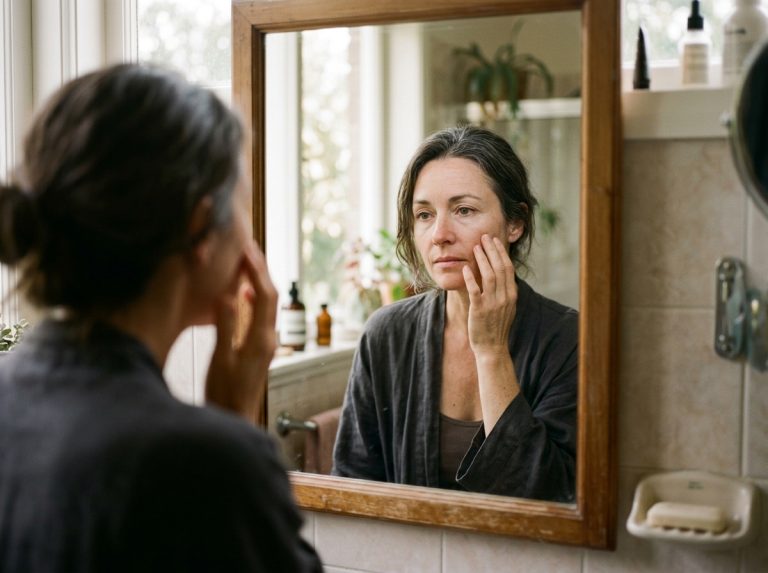
I used to answer tired-looking skin with more products. A richer cream, a brighter serum, another step at night, another promise in the mirror. Some of that helped a little. But the deeper pattern kept returning: on the weeks when digestion felt heavy, rushed, or unsettled, my face looked flatter too. It was as if my reflection knew what my body had been carrying before I had found words for it.
That realization changed the tone of the routine. Skin stopped feeling like a separate surface and started feeling like part of the same story as meals, sleep, stress, hydration, and inner steadiness. Once I saw that, the goal stopped being to overpower dullness. The goal became to support the whole system well enough that my face no longer looked like the most tired part of me.
A tired face is often less about vanity than about wanting your reflection to stop carrying the whole weight of a depleted routine.
Why Can Digestion Show Up in the Face?
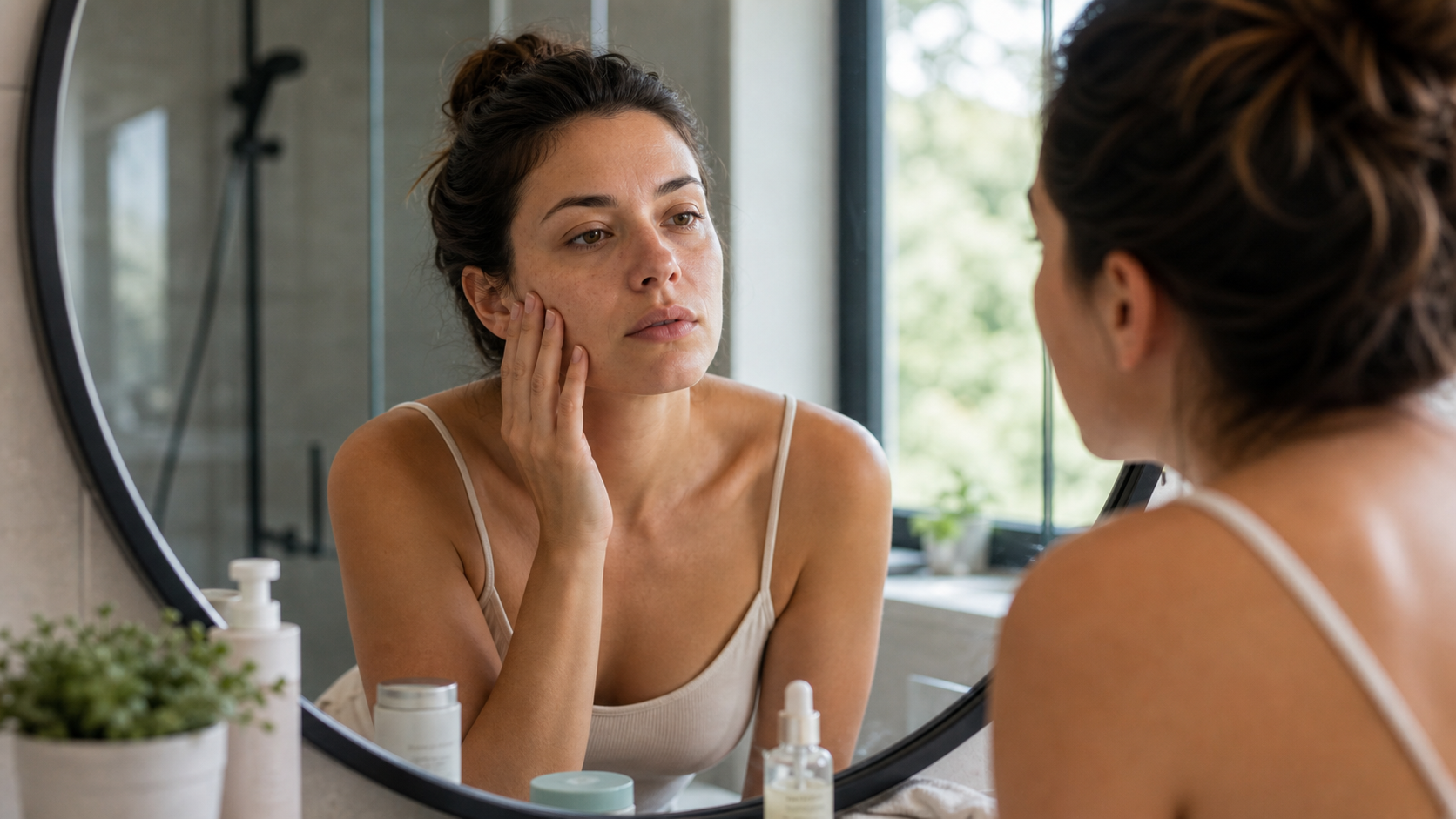
Because skin is not isolated from the body that feeds it. When digestion feels off, meals feel rushed, regularity slips, or stress keeps the whole system tense, the face can lose some of its softness. I noticed this most clearly when I was trying to fix the outside while living in a way that left the inside rushed, dry, and under-supported.
This does not mean every skin concern is secretly a gut issue. It means the connection is often closer than beauty marketing admits. The body does not split itself into departments the way our shopping habits do. Sleep, nourishment, digestion, and renewal keep showing up in the mirror whether we invite them there or not.
That is why a useful skin article should feel less accusatory and more interpretive. The face is not betraying you. It may simply be reporting on a routine that needs gentler support from underneath.
What Was My Skin Routine Missing?

Context. My routine had products, but it did not always have rhythm. It had intention, but not always nourishment. When I looked honestly, the missing pieces were not complicated: enough water, slower meals, less stress around food, a more consistent sleep window, and a routine that did not ask topical products to do emotional labor they were never built to do.
For readers who want the broader comparison path, IyoMend already has strong commercial pages at best anti-aging supplements for skin and best anti-aging skin supplements. This piece is different. It is the emotional translation for women who keep feeling that their skin looks tired when the deeper problem may be the rhythm beneath it.
- Support the morning with water before the day gets loud.
- Treat digestion as part of beauty instead of as a separate nuisance.
- Keep the skincare ritual, but ask it to work with the body instead of replacing it.
How Do You Make Beauty Support Feel Gentler?

By lowering the sense of emergency. A gentler routine begins when you stop reading every dull day as a crisis. In practice, that looked like warmer breakfasts, less rushing through meals, shorter ingredient wish lists, and more attention to whether my body felt settled enough to make good use of whatever care I was giving it.
Gentleness is strategic here. Harshness usually produces more frantic behavior: more product-hopping, more mirror-checking, more self-criticism. A calm routine gives the body a better chance to respond. It also makes beauty feel less like punishment and more like partnership.
If the internal-beauty angle resonates, the companion narrative at your skin routine cannot outrun your gut extends that same message from another direction.

Why Does Calm Digestion Often Look Better on the Outside?
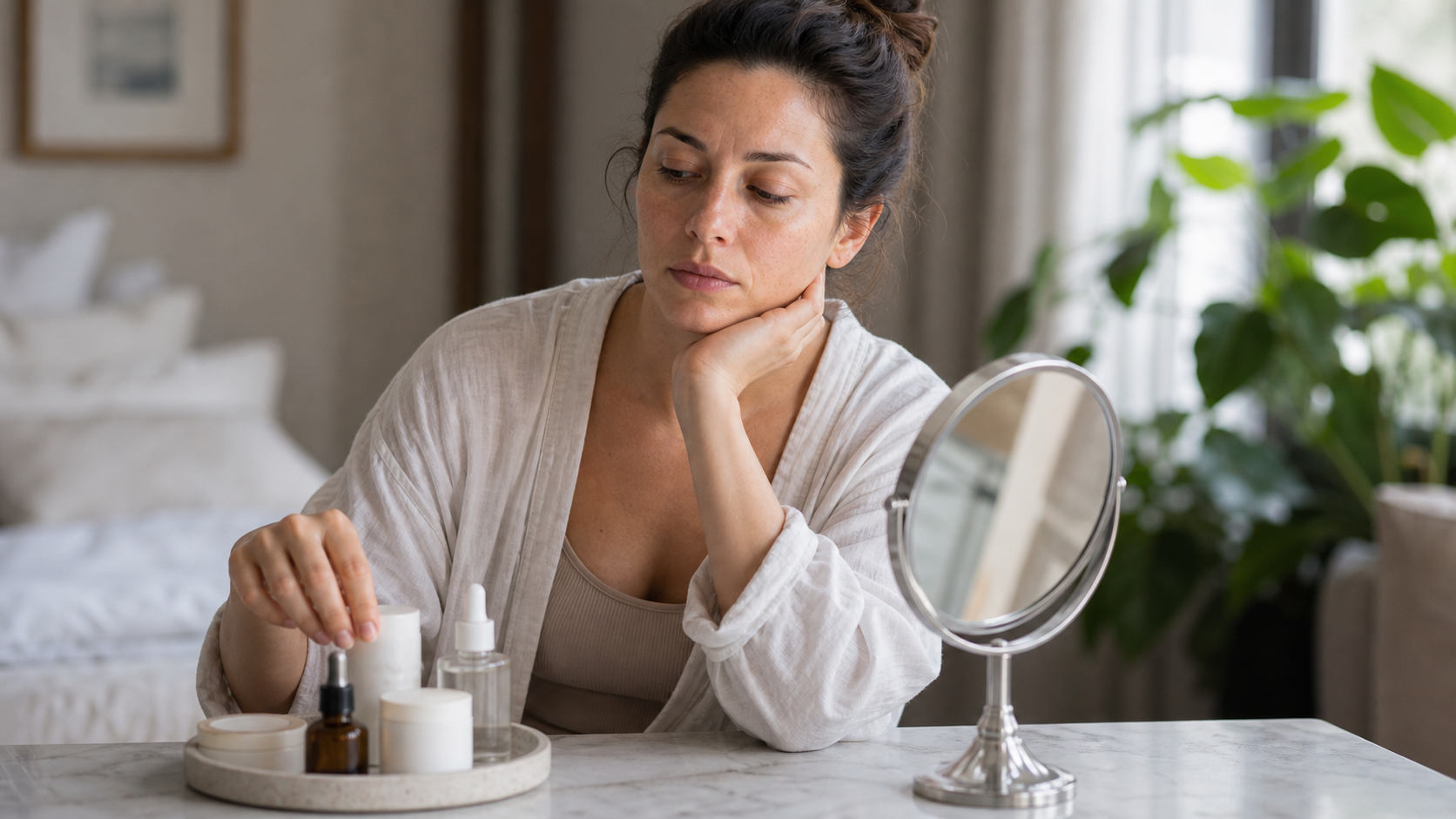
Because calmer systems usually look calmer. The face is expressive, but it is also responsive. When the body feels less inflamed, less rushed, less depleted, and more nourished, the overall impression often changes even before any dramatic result would show up on paper. I learned to look for that shift in softness rather than obsessing over perfection.
There is support for that broader aging perspective in mainstream guidance too. The National Institute on Aging overview on skin care and aging keeps the focus on realistic daily care, protection, and support rather than miracle thinking. That matches what most readers need: steadier habits, not louder claims.
When a beauty article aligns with that tone, it becomes more trustworthy. It gives a reader something usable instead of something theatrical.
What Should You Notice Before You Change Everything?
Notice your pattern first. Does the face look most tired after rushed days, heavy digestion, short sleep, or dehydration? Does it soften when breakfast is calmer, meals are more regular, or the evening is less frantic? Those clues matter because they tell you where beauty support should begin.
Notice your emotional rhythm too. Skin panic often pushes women into routines they cannot sustain. A sustainable routine is usually the better one for both the mirror and the nervous system. It is easier to repeat, easier to trust, and much less likely to become another source of stress.
That is the real power of noticing. It makes the next step more precise. It keeps you from spending money on noise when what you needed was a clearer pattern.
How Do You Come Back to Your Reflection With More Kindness?
By treating beauty as support instead of correction. The day your reflection stops feeling like a report card is the day the routine becomes more effective. You start helping the body instead of arguing with it. You allow digestion, nourishment, hydration, sleep, and supplementation to work as one conversation instead of six competing projects.
The face does not need to look perfect to look more alive. It needs less depletion, less urgency, and more steadiness underneath it. That is the outcome this article should promise: not a fantasy, but a softer, more believable return to yourself.
What Makes an Internal Beauty Routine Easier to Trust?
It becomes easier to trust when it feels less like an argument and more like a conversation with the body you actually live in. I stopped expecting one good night, one clean meal, or one expensive product to erase the signs of a depleted week. Instead, I started looking for steadier proof: softer mornings, less facial dullness after stressful stretches, more ease around digestion, and a beauty routine that no longer felt like a punishment for being human.
That change also made the mirror less dramatic. When you are no longer scanning your face for failure, you can finally see progress in gentler ways. The skin looks calmer. The eyes look less burdened. The whole expression seems less thirsty for rescue. Those are subtle changes, but subtle changes are often the earliest honest ones, and honest ones are what make a routine worth keeping.
There is also a stronger business case for this softer framing than people assume. Readers looking for anti-aging support are usually tired of exaggerated promises. They respond better when an article gives them a believable sequence: notice the pattern, support digestion and daily rhythm, keep skincare realistic, and use a product that fits the deeper goal. That path respects the reader and usually creates a better-qualified click.
So the final lesson here is not that digestion explains everything. It is that beauty often gets clearer when the body is supported more completely. Once I understood that, my face stopped feeling like an isolated project. It became part of a calmer, kinder system that I could actually maintain, and that made the reflection looking back at me feel more like my own again.
I also found it helpful to treat meals as part of visible care instead of as something separate from beauty. A slower breakfast, enough protein, and calmer digestion did not make me look different overnight, but they did make me feel less drained from the inside out. That inner difference changed the face gradually, and gradual changes are often the ones that last because they are rooted in daily life rather than quick intensity.
There is relief in realizing that beauty support does not have to become another impossible standard. It can be practical, warm, and forgiving. A woman can support digestion, skin, hydration, and renewal without turning the whole day into a project, and that is exactly why this kind of article converts with trust instead of pressure.
And once that cooperation starts to show, even in small ways, the routine becomes easier to believe in and easier to keep.
Written by Liora Menden — for those who seek beauty from within and calmer skin support