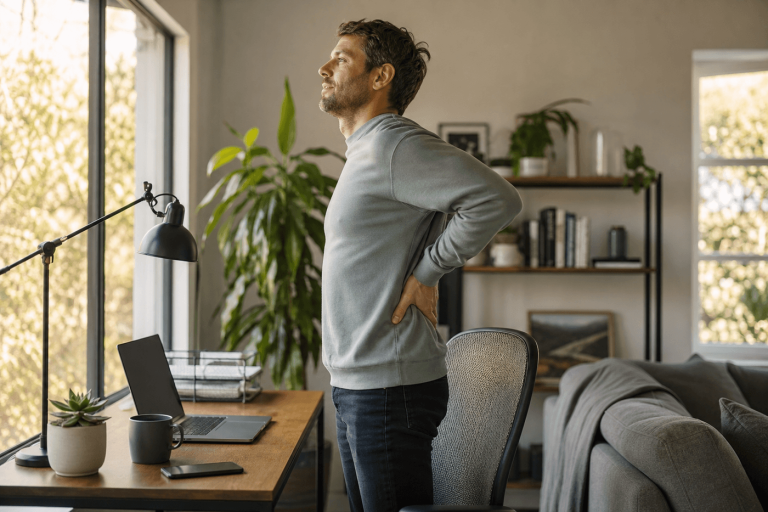
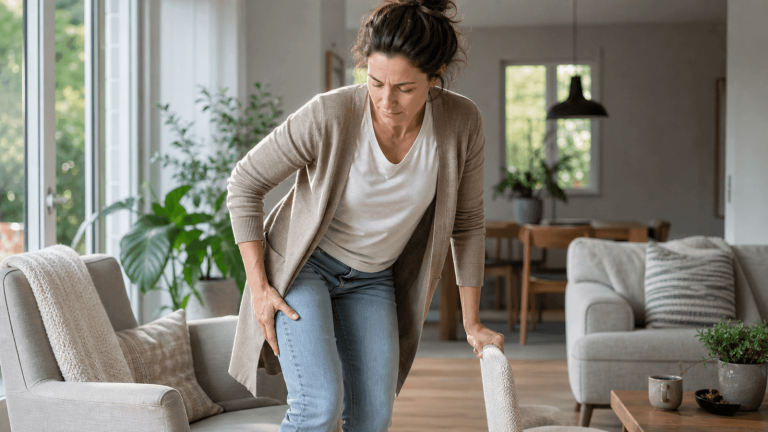
Some afternoons announce themselves through the stairs. I noticed it on the days when work stayed still for too long, water stayed too far away, and the body spent hours in the same angles without much relief. By the time I reached the steps, my joints were no longer background information. They had become the conversation.
That kind of stiffness can make a person feel older than the calendar says. It can also make movement feel optional in the worst possible way. You start calculating whether the trip upstairs is worth it, whether another errand is worth it, whether the evening walk is worth it. That shrinking is often the most exhausting part.
When stairs become a negotiation, the body is usually asking for a better daily relationship with movement and recovery, not a harder lecture.
Why Do Stairs Feel Harder Late in the Day?
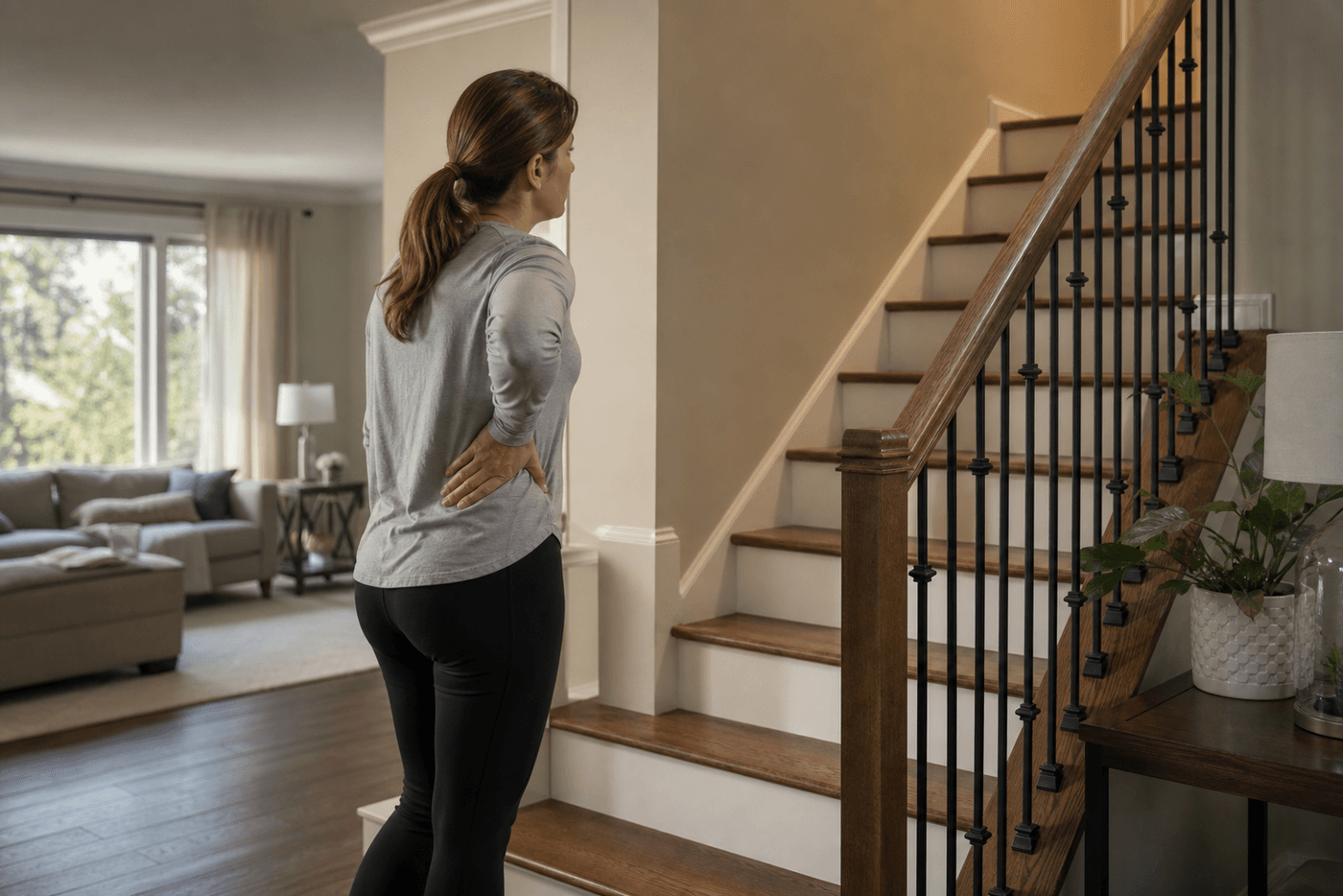
Because stiffness accumulates quietly. Long sitting changes the hips, knees, ankles, and lower back in ways that are easy to dismiss until the body suddenly has to produce range, balance, and trust all at once. I learned that the first hard stair was rarely about one weak moment. It was usually about a full day that had narrowed the body little by little.
The joints also feel the rest of the system. Poor sleep, low hydration, stress, skipped movement, and an all-or-nothing workout mindset can each make the afternoon heavier. That is why one stretch in the hallway often feels nice without truly changing the pattern.
The useful question is not, why am I failing at stairs? The useful question is, what has my day been teaching my body to expect? That shift in language alone made the problem feel less personal and more practical.
What Is the Body Really Asking For?
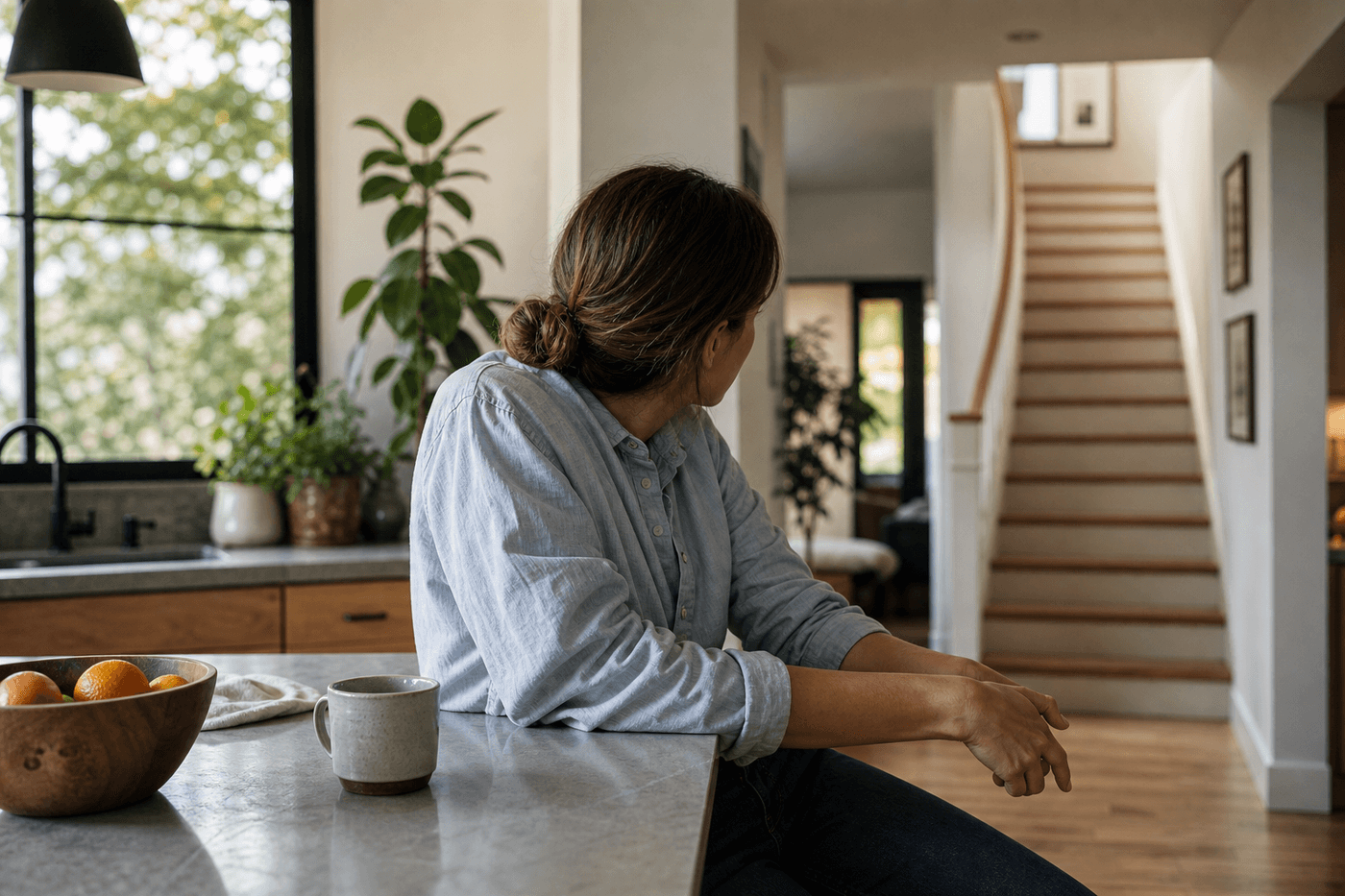
Usually, it is asking for interruption and circulation before it is asking for heroics. A short walk, a standing break, ankle movement under the desk, hip extension, water within reach, and a gentler transition from work into evening can all lower the amount of negotiation required later. These are ordinary habits, but ordinary habits are exactly what build or reduce stiffness.
If you want the broader comparison angle, IyoMend already has the stronger commercial pages at best supplements for joint pain and best supplements for joint mobility. This article is the symptom-story spoke. It meets the reader at the stair itself and then opens the path toward deeper support.
- Stand once each hour even if the break is brief.
- Walk after work before the couch becomes the default.
- Treat hydration and sleep as joint habits, not just general health habits.
How Can You Keep Sitting From Owning the Evening?
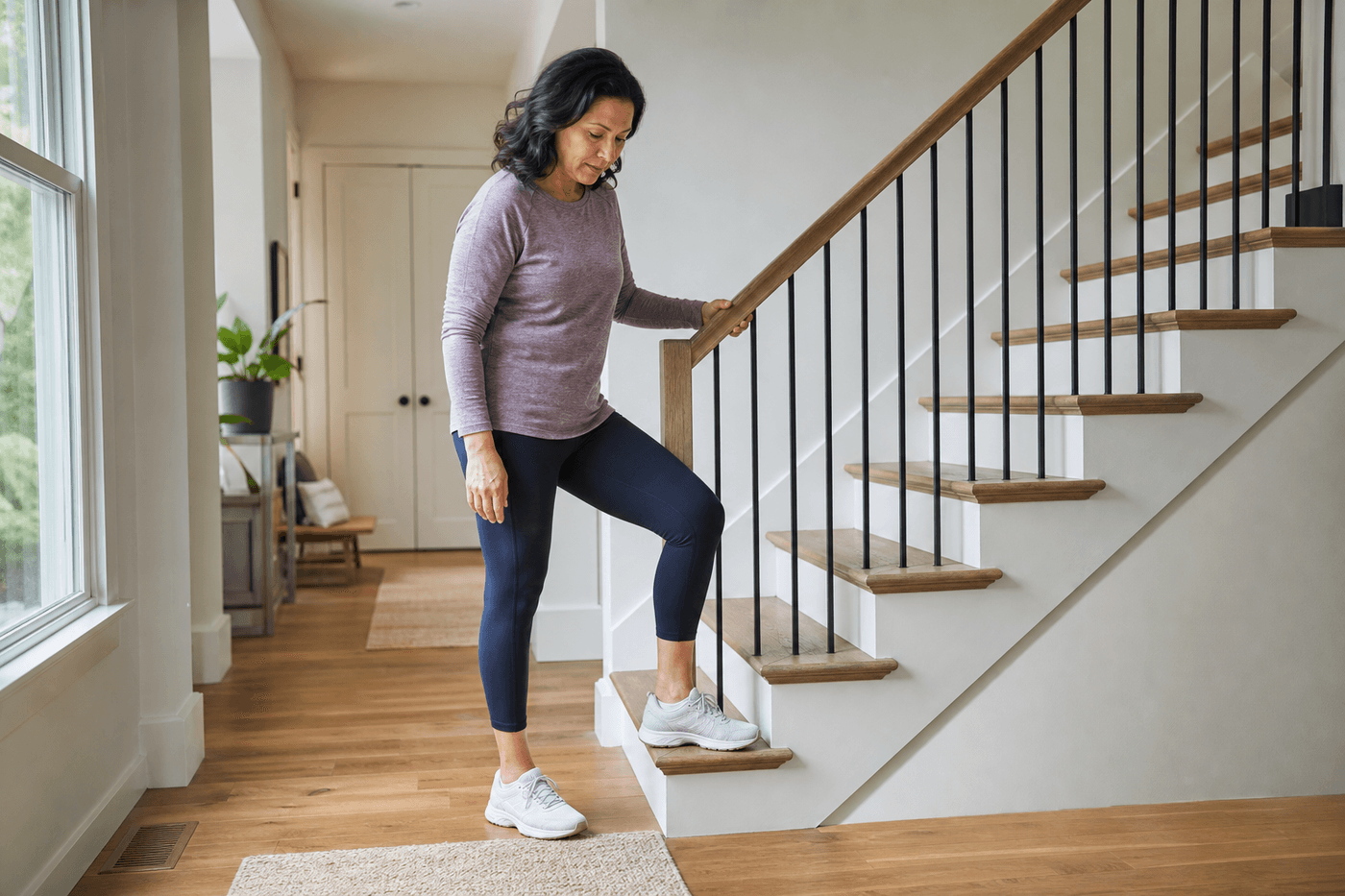
I got the most relief from reducing the size of the reset I needed. Instead of waiting until the body felt stubborn, I started changing position sooner. A lap during a phone call. A few calf raises while the kettle ran. A short walk before driving home. These are tiny decisions, but they stop stiffness from collecting interest all day.
The emotional shift matters too. When evening movement feels like punishment for a workday, it becomes easy to skip. When it feels like rescue, it becomes easier to protect. I had to learn that mobility support works better with kindness than with resentment.
That is also why I like connecting readers from this symptom to daily movement for joint health. The person who recognizes the stair problem usually needs a repeatable movement rhythm more than another motivational speech.

Why Does Recovery Start Before the Pain Gets Loud?
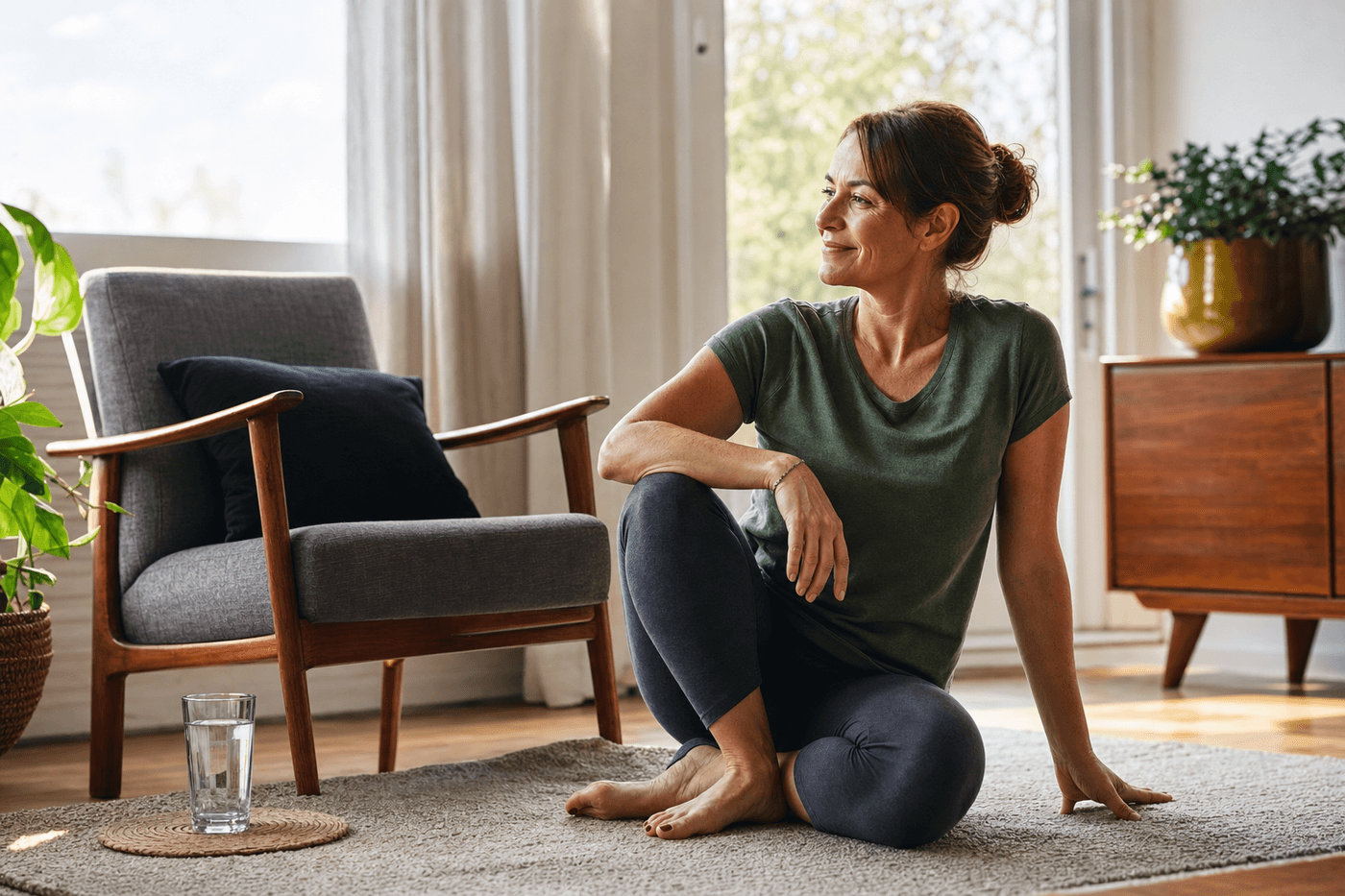
Because the body responds to preparation. When I slept better, drank enough water, and moved earlier, the stairs stopped feeling like a referendum on my age. They became ordinary again. That taught me that recovery is not only what happens after discomfort. Recovery is also what prevents the day from becoming one long setup for discomfort in the first place.
There is support for that perspective from mainstream joint-health guidance too. The overview from NIAMS on joint health keeps returning to regular movement, weight-bearing balance, and practical daily care rather than quick fixes. The advice is not glamorous, but it is durable.
That is reassuring for a reader. Durable advice is what helps a person trust the process enough to keep going past one good day.
What Should a Better Joint Routine Look Like?
It should look small enough to repeat and complete enough to matter. A little motion in the morning. Fewer long blocks of stillness. A short walk after work. Sleep that is treated like part of mobility. Strength work scaled to the body you have today, not the body you wish you could demand by tonight.
That routine also needs compassion. Stiff joints often teach people to brace against movement before movement even starts. A good plan lowers the threat level. It reminds the body that movement can feel safe, rhythmic, and useful again.
If the reader leaves with one clear feeling, I want it to be this: mobility is not restored by force. It is restored by enough support, repeated often enough that the body stops expecting a fight.
How Do You Get Back to Taking the Stairs Without Thinking?
By chasing less drama, not more. The goal is not a miraculous afternoon. The goal is a body that stays warmer, looser, and less suspicious of effort because you have been caring for it all day. That is what turns a negotiation back into a normal movement.
The return of trust is the real win. You climb the stairs because you need to, not because you are testing yourself. You take the evening walk because it sounds fine, not because it feels impossible. That is the kind of quiet freedom joint support is really about.
What Helps the Body Trust Movement Again?
Trust returns when the body is given enough evidence that movement will not always end in regret. For me, that meant respecting transitions. I stopped leaping from chair to errand as if my joints should be instantly ready for whatever my schedule wanted next. A short reset between work and evening, a little warmth, a little walking, and fewer long stretches of stillness made the body much less defensive by the time the stairs appeared.
I also learned to separate intensity from usefulness. Some days the most useful joint habit was a real workout. Other days it was a smaller series of motions that kept circulation, range, and confidence alive. That shift protected consistency. When the body no longer feared being asked for too much, it became easier to keep showing up for the simple things that actually reduce stiffness over time.
This is where good affiliate content can quietly outperform louder content. Instead of selling desperation, it sells clarity. It helps the reader understand that the right product is part of a broader mobility rhythm, not a last-minute substitute for sleep, hydration, or movement. That framing creates better clicks because it meets a reader who is ready to be practical, not just frustrated.
The goal is not to win a battle with the stairs one dramatic day. The goal is to make the whole afternoon less punishing so the stairs go back to being ordinary. That kind of ordinary ease is more valuable than hype because it restores something a stiff body slowly steals first: the assumption that movement can still belong to you.
Another lesson I learned was that joint comfort is influenced by what happens between the obvious moments. The body notices whether you sit with your feet tucked under the chair, whether you tense your shoulders for hours, whether you brace through stress, and whether you go straight from stillness into hurry. Tiny patterns become physical by late afternoon. Once I saw that, I had many more levers than just hoping the stairs would feel kinder.
That broader awareness also makes mobility progress easier to measure. A better day is not only less pain. It can be a looser first descent, less hesitation after meetings, or the willingness to take the long way to the car because movement no longer feels expensive. Those signals help the reader see progress before perfection arrives.
That is why I think of evening stiffness as a solvable accumulation problem. When enough small supports are present early enough, the body spends less time bracing and more time cooperating.
Even that small return of confidence can change the way a person uses the rest of the day, because easier stairs often lead to easier choices everywhere else.
Written by Elias Menden — for those who seek easier movement and steadier evenings