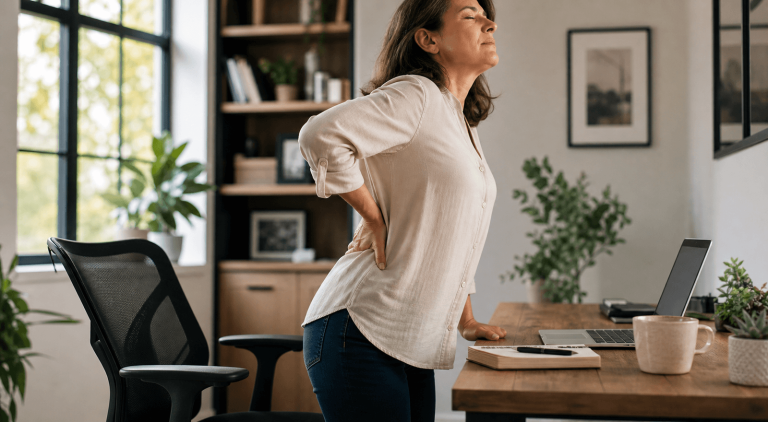
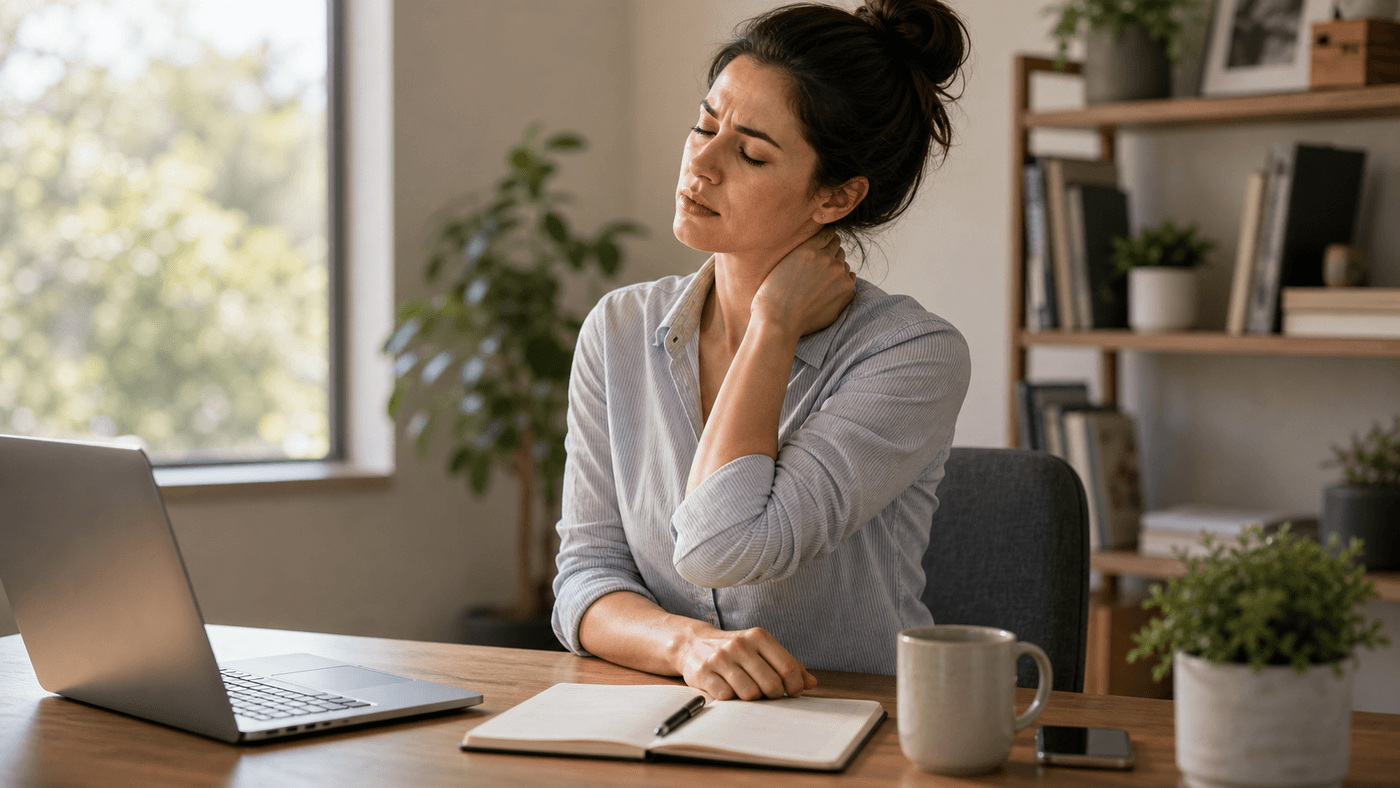
There is a certain kind of stiffness that does not announce itself until the workday is almost over. You stand up after the last meeting and suddenly your hips feel like they have been folded for too long. Your knees need a second before they trust the floor. Your shoulders come with you into the kitchen as if the desk chair never really let go. Nothing dramatic happened, yet your body behaves like it has been carrying a quiet burden all day.
That pattern used to confuse me because it seemed too ordinary to count as a real problem. I was not injured. I was just sitting, working, answering things, moving from one rectangle of responsibility to the next. But ordinary does not mean harmless. Hours of stillness add up in tissue, posture, circulation, and the way the joints prepare for movement. The body remembers what the day asked it not to do.
Once I stopped treating desk stiffness like a minor annoyance, it became easier to understand why evenings felt harder than they needed to. The issue was not age in some abstract sense. It was repetition. Too much time in one shape, not enough interruptions, and a daily pattern that kept asking movement to restart itself from cold.
Why Long Sitting Feels Bigger Than It Looks
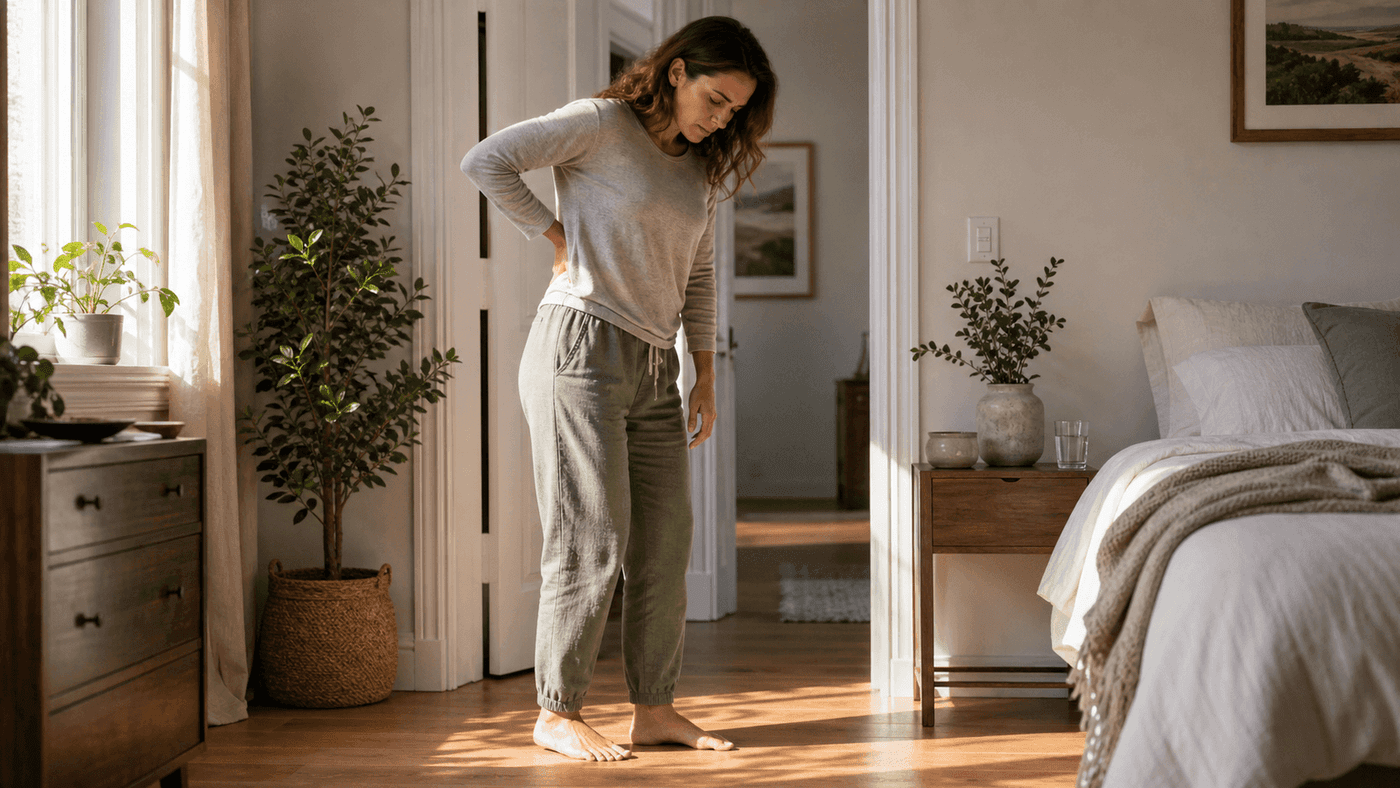
Sitting does not look demanding, which is partly why it is easy to underestimate. But stillness can tire the body in its own way. Hips stay shortened. Shoulders round forward. Circulation slows. The lower back starts absorbing more than it should. Even the simplest standing motion can feel like a negotiation when the body has been held in the same position for too long.
That is why stiffness after desk work often feels so disproportionate. The joints are not reacting to one dramatic event. They are reacting to the accumulation of small static hours. By the time you notice it, the body has already spent the entire day practicing not moving.
The encouraging part is that this kind of discomfort is often responsive to small changes. If repetition created it, repetition can also soften it.
The First Stiff Step Is a Useful Signal

The first few steps after a long sitting stretch tell the truth. They reveal what the body has been tolerating quietly. You may feel it in the hips when you stand, in the knees when you start the stairs, or in the lower back when you bend to pick something up. Those first moments are information, not failure.
I used to ignore them and assume I would loosen up eventually. Sometimes I did. But the more useful move was to treat them as feedback about the day itself. If the first steps are stiff every evening, the answer probably does not live only in the evening. It lives inside the workday too.
That realization made the whole problem feel less mysterious. I did not need a heroic fix. I needed to stop pretending that eight or more hours in one posture would have no consequences.
One Stretch Cannot Undo an Entire Workday
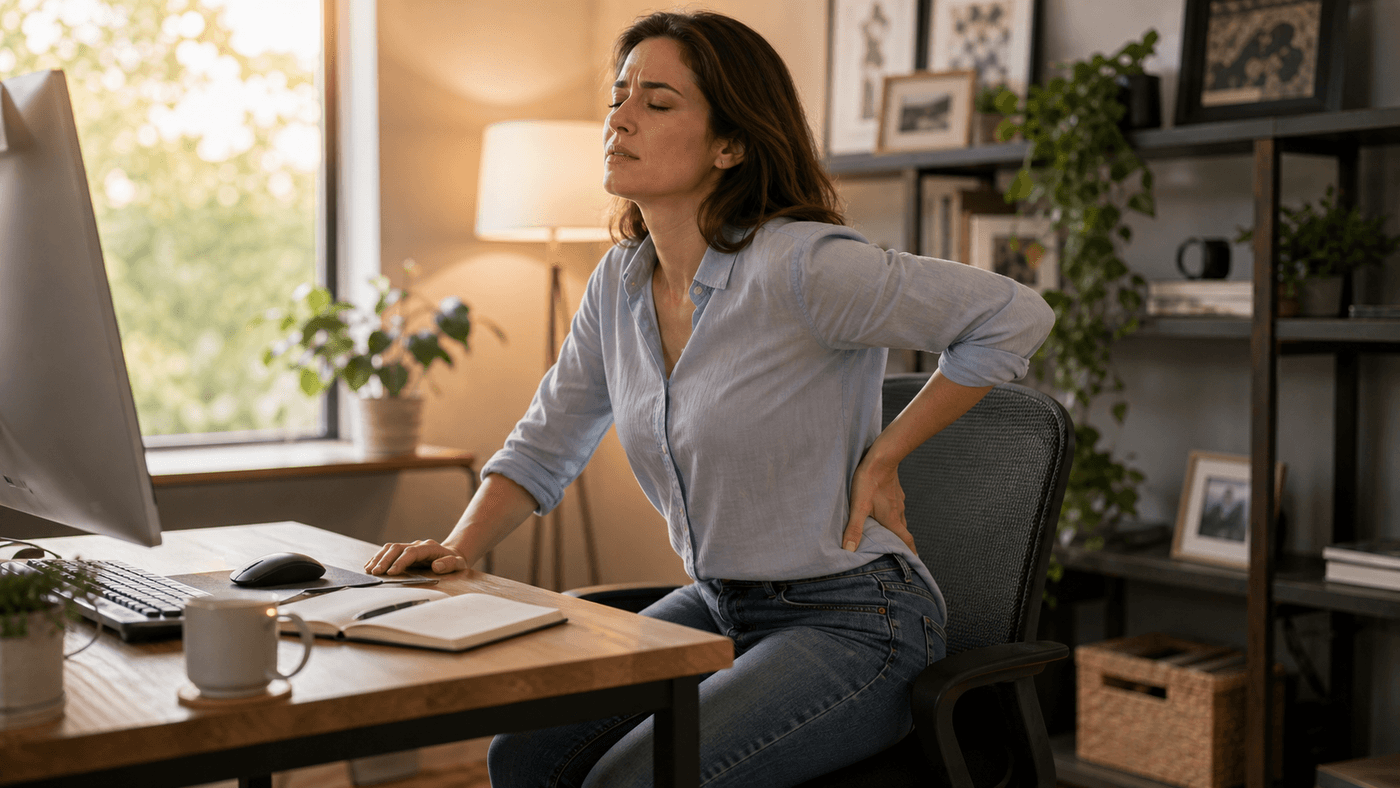
It is tempting to believe a single stretch after work should solve everything. And yes, a good stretch can help. But stiffness created by repetition usually wants repetition in return. One long mobility session cannot fully replace many small movement interruptions that never happened.
That sounds inconvenient until you realize how small those interruptions can be. Stand during one call. Walk to refill water. Open the hips for thirty seconds between tasks. Take the stairs once without making it an event. These choices do not need to look like fitness to count as support.
What they do is remind the body that movement remains part of the day, not something postponed until the damage is done.
What Started Helping Me Feel Looser By Evening
The best changes were practical enough to survive real life. I moved my water farther away. I stood up whenever I sent something that took real concentration to write. I walked for a few minutes after lunch instead of scrolling through the recovery I kept claiming I did not have time for. I made the first walk after work non-negotiable, even when it was short.
Those changes did not make me feel athletic. They made me feel less trapped inside the physical consequences of my own schedule. By evening, my joints were no longer being asked to go from stillness to full life without a transition.
That is an important distinction. The goal is not dramatic improvement overnight. The goal is to stop arriving at evening already braced.
Where Balmorex Pro Fits in a Mobility Routine
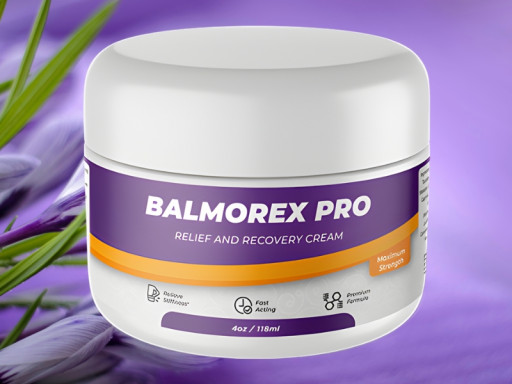
Balmorex Pro made sense to me because it belonged to the real pattern. I was not looking for a product to erase the fact that long sitting has consequences. I wanted support that fit alongside walking breaks, easier transitions, hydration, and a routine that respected the joints I was asking so much from every day.
That is why its role here feels measured. The reader first sees the cause clearly: a desk-centered day that quietly stiffens the body. Then the product becomes a practical support step inside a believable mobility plan.
That kind of placement matters. It keeps the offer grounded in daily life rather than turning it into a fantasy about never having to move better or pay attention again.
What Better Evenings Give Back
When desk stiffness softened, the biggest difference was not just physical comfort. It was emotional relief. Evenings stopped beginning with a private argument between me and my own body. Cooking, walking, tidying up, even getting off the couch later on all felt less expensive.
That matters because the workday should not take your whole body with it. The chair should not keep claiming your hips after the laptop closes. Your knees should not need a pep talk to walk into the rest of your life.
Readers who want a broader comparison beyond this one angle can also see the larger guide to joint support options. This article is the lived version for people whose workday quietly teaches their body too much stillness.
The Goal Is Not Heroic Flexibility. It Is Easier Movement.
I do not need my desk routine to become a performance of wellness. I need it to stop hardening me into the shape of my job. I want the first steps after work to feel normal. I want evening movement to feel available. I want my body to recognize that the day belongs to it too.
If long sitting keeps following you home, pay attention to that. The discomfort may be quieter than an injury, but it is still asking for support. A few small movement returns, a better daily rhythm, and the right joint-comfort help can change how the whole evening feels.
That is the real win: not perfection, just a body that comes with you more willingly when work is done.
Written by Elias Menden — for those who want freer movement after long sitting