There’s a particular quality to exhaustion that has nothing to do with how much sleep you got. It’s the kind that sits in your chest when you wake up, the heaviness that follows you through morning coffee and stays present even during moments that should feel peaceful. Your body is running a program in the background — one you didn’t consciously start and can’t seem to pause.
I used to think this was just the cost of a full life. The slight tension in my shoulders, the way my heart would race over small decisions, how rest felt more like a pause than true restoration. But what I was experiencing wasn’t the natural rhythm of engagement and recovery. My nervous system had learned to stay partially activated, treating ordinary Tuesday afternoons like emergencies that required constant vigilance.
The realization came during what should have been a quiet morning. I was sitting with my tea, watching light move across the kitchen table, when I noticed my breath was shallow and my jaw was clenched.
There was no deadline looming, no crisis to manage. Yet my body was braced for something that wasn’t coming. That’s when I understood: my nervous system wasn’t responding to my actual environment anymore. It was responding to patterns that had become automatic.
The Morning Your Body Remembers Safety

Your nervous system speaks in the language of cortisol, and cortisol speaks in the rhythm of your days. When this rhythm is working well, cortisol rises gently in the morning, giving you clear energy to meet whatever’s ahead. It peaks when you need focus, then gradually declines as evening approaches, allowing your system to shift into genuine rest mode. But when your nervous system gets stuck in a state of chronic activation, cortisol patterns become erratic.
It might surge at 3 AM when you should be sleeping, or stay flatlined when you need energy for an important conversation. Your adrenals, those small glands that manage your stress response, become like musicians playing from sheet music that no longer matches the song.
I started paying attention to these patterns in my own body. The afternoon crashes that felt like hitting a wall. The way my mind would race precisely when I was trying to wind down.
The mornings when I’d wake up feeling like I’d been running all night, even though I’d barely moved. Understanding this wasn’t about willpower or mindset — it was about giving my body the support it needed to remember its natural rhythms. That’s when I discovered Cortisol AM, a supplement designed specifically to help regulate morning cortisol patterns and support healthy adrenal function.
Ready to support your body’s natural rhythm instead of fighting it?
What Happens When You Stop Fighting Your Own System

The first thing I noticed wasn’t dramatic. It was the absence of something I’d grown so accustomed to that I’d stopped recognizing it was there. That low-level hum of tension that used to follow me from room to room started to quiet. My shoulders dropped without me having to consciously remind them to relax.
Cortisol AM works by supporting your body’s natural cortisol production in the morning while helping to modulate the stress response throughout the day. Instead of fighting against dysregulated patterns, it helps restore the rhythm your nervous system is designed to follow.
The ingredients — including adaptogenic herbs and nutrients that support adrenal function — work together to help your body remember what balanced feels like.
But the real shift happened in how I met unexpected moments. A last-minute schedule change used to send a spike of anxiety through my chest. With my cortisol patterns more regulated, I found I could adjust without that immediate stress response. My nervous system had space between the stimulus and the reaction — space I’d forgotten was possible.
This wasn’t about becoming less responsive or emotionally numbed. It was about responding from a place of groundedness rather than reactivity.
When genuine challenges arose, I had more resources available because my system wasn’t already depleted from treating everyday occurrences as emergencies.
Curious how morning cortisol support could change your entire day?
The Science of Coming Back to Yourself
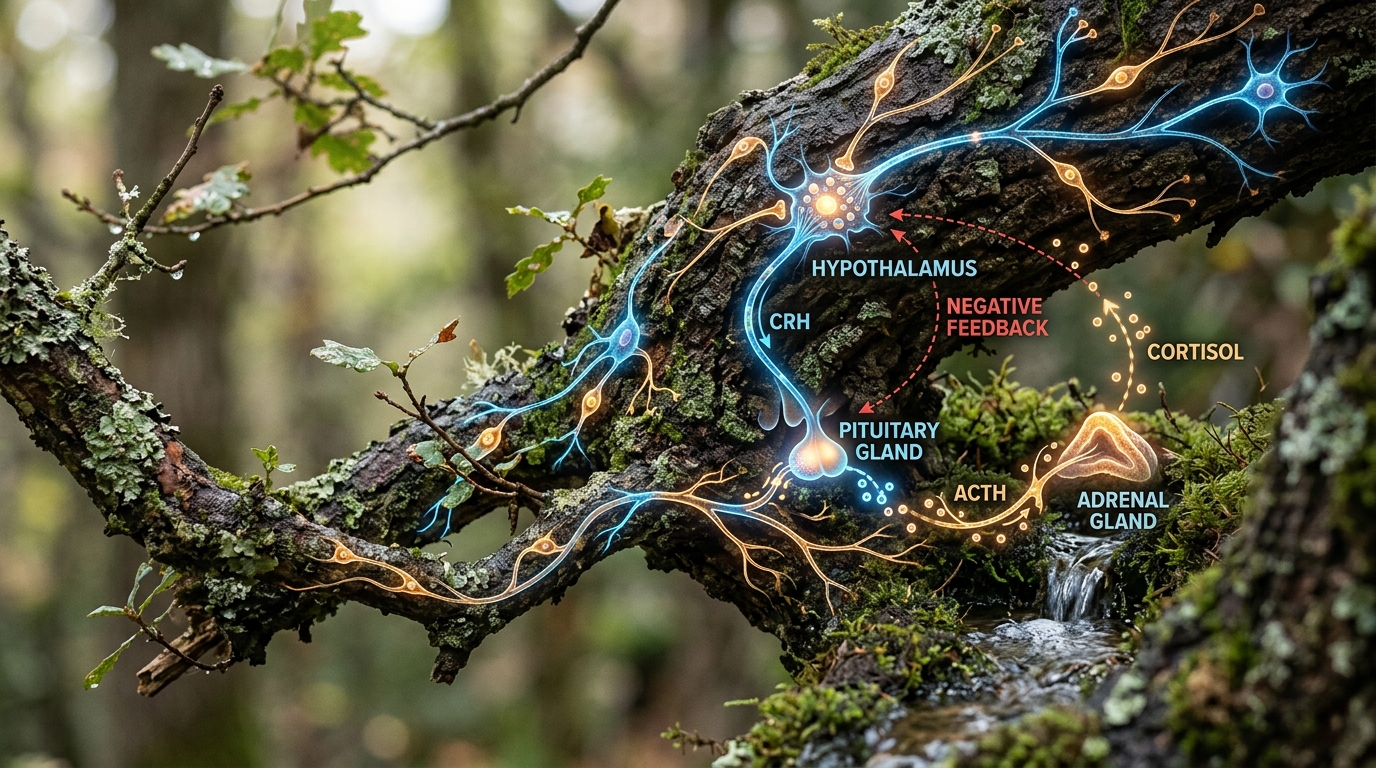
Your nervous system has two main modes: sympathetic (the accelerator) and parasympathetic (the brake). In a healthy system, these work together like a dance — engaging when you need energy and action, then shifting back to rest and restoration when the moment passes. But chronic stress can leave the sympathetic system chronically activated, making it difficult to fully access that restorative parasympathetic state. The hypothalamic-pituitary-adrenal (HPA) axis is the communication network between your brain and adrenals that manages this dance.
When this axis is functioning well, stress responses are proportionate and recovery is complete. When it’s dysregulated, you get stuck in patterns of over-reaction or under-reaction, with incomplete recovery in between.
Cortisol AM specifically targets this HPA axis function, providing the nutrients and botanical support your adrenals need to produce cortisol in healthy patterns.
Rather than artificially suppressing or stimulating cortisol, it helps your body find its own natural balance. The result is a nervous system that can engage fully when needed and rest completely when it’s time.
This biological foundation creates space for all the other practices that support nervous system health — the deep breathing, the time in nature, the boundaries around work and relationships. When your cortisol patterns are regulated, these practices land more deeply because your system is primed to receive them.
Your nervous system remembers how to heal when given what it needs.
Learning the Language of Your Own Rhythms

Recovery looks different for everyone, but there are common signs that your nervous system is finding its way back to balance. Sleep becomes more restorative — not just more hours, but the quality of rest that leaves you actually refreshed. Your energy feels more stable throughout the day, without the dramatic peaks and crashes that used to punctuate your afternoons. Emotionally, things that used to feel overwhelming start to feel manageable.
Not because they’ve become smaller, but because your capacity to meet them has expanded. You might notice you’re making decisions more easily, or that you can be present in conversations without part of your attention scanning for the next thing that needs your attention.
For me, one of the clearest indicators was how I started my mornings. Instead of immediately reaching for my phone or mentally cataloging the day’s demands, I found myself naturally taking a few breaths and noticing how I felt. This wasn’t a practice I had to force — it emerged as my nervous system remembered that there was space between waking and doing.
Taking Cortisol AM became part of this morning rhythm, a daily signal to my body that I was committed to supporting its natural patterns rather than overriding them.
The consistency mattered as much as the supplement itself — showing up daily for the relationship between my conscious intentions and my body’s deeper wisdom.

Restore Your Natural Rhythm
Support your body’s cortisol patterns for balanced energy and genuine rest.
Cortisol AM works with your natural HPA axis to regulate morning cortisol production. Adaptogenic herbs and targeted nutrients help your nervous system remember its healthy patterns, creating space between stress and reaction. Experience mornings that feel restorative and energy that sustains without crashes.
- ✓ Mornings that feel naturally energized
- ✓ Emotional resilience without overwhelm
- ✓ Deep rest that actually restores
The Ripple Effects of Nervous System Health

When your nervous system is regulated, everything else has room to function better. Digestion improves because your body can actually allocate resources to breaking down and absorbing nutrients instead of being in constant ready-for-emergency mode. Immune function strengthens because your system isn’t chronically depleted by stress responses. Relationships change too.
When you’re not constantly managing your own internal state, you have more availability for genuine connection. Conversations become easier because you’re not simultaneously trying to self-regulate while staying present with another person.
The quality of your listening shifts because your nervous system isn’t pulling your attention toward perceived threats that don’t actually exist.
Creative and cognitive functions that may have felt blocked start to flow more freely. The mental fog that comes with chronic stress activation begins to lift, replaced by the kind of clear thinking that feels effortless rather than forced. Ideas arrive more organically, and focus sustains itself without the exhausting effort of constantly redirecting attention.
These changes compound over time. Each day that your nervous system operates from a place of balance makes the next day’s regulation easier.
Your body starts to trust that safety is the default state, not something it has to constantly work to maintain. This trust becomes the foundation for everything else — better sleep, more stable energy, clearer thinking, and deeper resilience when genuine challenges arise.
Transform how your body meets stress with targeted adrenal support.
What Your Body Knows About Rest

True rest is different from exhaustion or collapse. When your nervous system is regulated, rest becomes an active state of restoration rather than just the absence of activity. Your body knows how to use stillness to rebuild resources, how to let muscles release tension they’ve been holding, how to allow thoughts to settle without effort.
I started to recognize this quality of rest in small moments throughout the day. The way my breathing would naturally deepen when I paused between tasks. How my face would soften when I looked out the window at trees moving in the wind.
These weren’t conscious practices — they were my nervous system’s natural response to feeling safe enough to let down its guard.
Evening routines took on new meaning when my cortisol patterns became more regulated. Instead of feeling like I was trying to force my body to wind down against its will, the transition from day to night felt more organic. My system began to naturally prepare for sleep as daylight faded, cortisol levels gradually declining to make space for the restorative processes that happen during deep rest.
This shift toward natural rhythms extended beyond sleep. I found myself naturally hungry at regular intervals, naturally energized for morning activities, naturally ready for social connection at certain times and solitude at others.
My body was remembering how to be in partnership with natural cycles instead of fighting against them.
Give yourself permission to wake up feeling like yourself again.
The Morning You Wake Up and Feel Like Yourself

There’s a particular quality to mornings when your nervous system is balanced. You wake up feeling like you actually slept, like your body used the night for restoration rather than continued vigilance. Your first thought isn’t about everything you need to manage, but about the simple fact of being awake and present.
Taking Cortisol AM became part of these mornings — not as another task to remember, but as a way of honoring the commitment I’d made to supporting my body’s natural wisdom. Each morning dose was a reminder that healing doesn’t happen through force or willpower, but through consistent, gentle support for the systems that want to work well when given what they need.
The changes weren’t immediate or dramatic, but they were steady and sustainable. Week by week, I noticed my system’s capacity expanding. Stressful situations that used to leave me depleted for days began to feel manageable. I could engage fully when engagement was called for, then return to baseline without carrying residual activation into the next experience.
This is what nervous system optimization actually looks like — not the absence of stress or challenge, but a system that can meet whatever arises with appropriate responsiveness and then return to a state of genuine rest. It’s your body remembering that safety is possible, that resources can be replenished, that there’s space between one moment and the next for healing to happen.
Written by Liora Menden — for those who seek balance
Ready for mornings that feel naturally energized instead of forced?