It started with my hands. Not shaking exactly, but never quite settled. Even when I was sitting quietly, reading or watching something peaceful, my fingers would drum against my leg or twist my ring or find some small motion that felt necessary. I didn’t think much of it at first. We all have our fidgets.
But then I noticed my sleep changing. Not insomnia — I could fall asleep. But I would wake at 3 AM with my heart doing something that felt like preparation. For what, I couldn’t say. There was no emergency, no deadline looming, no crisis requiring my immediate attention. Yet there I was, alert and wired in the dark, my nervous system apparently convinced that something needed watching.
What I didn’t realize then was that my body had stopped trusting stillness.
Years of running on stress hormones had trained my nervous system to stay ready, to keep scanning, to never fully rest. I was living in a state of chronic activation that felt normal because it had become normal.
The Day I Realized My Calm Was Broken

The moment I truly understood something had shifted happened on a Saturday morning. I had nowhere to be, nothing pressing on my schedule, and I decided to sit on my back porch with coffee and just exist. It should have been lovely. The light was soft, the air was cool, birds were doing their morning chorus. But I couldn’t land in it.
My mind kept reaching for tasks, for problems to solve, for something to organize or plan or worry about. When I tried to simply be present with the morning, my body felt restless, almost agitated.
It was as if calm had become uncomfortable.
I realized I had lost the ability to be truly at ease. Not just mentally, but physically. My nervous system had forgotten how to downshift, how to move from activation into rest. The stress response that was meant to be occasional had become my baseline. This wasn’t about being busy or having a demanding life. This was about my body’s inability to recognize when the demand was over, when it was safe to relax.
Ready to give your nervous system the support it needs?
Understanding What Stress Actually Does to Your System

When your nervous system is constantly activated, your body produces stress hormones like cortisol as a survival mechanism. In acute situations, this is brilliant — cortisol gives you energy, sharpens your focus, and helps you respond to challenges. But when stress becomes chronic, cortisol levels can become dysregulated. High cortisol in the morning can leave you feeling wired but tired, like your body is running on empty but can’t slow down.
Your sleep suffers because your system doesn’t know how to transition into rest mode. Your digestion becomes erratic because your body thinks survival matters more than processing food properly.
What I was experiencing wasn’t weakness or poor time management. It was the predictable result of a nervous system that had been in protection mode for so long it had forgotten how to return to baseline.
My body was trying to keep me safe by staying ready for the next thing, but that readiness had become a prison. I started to understand that true wellness isn’t about pushing through stress more efficiently. It’s about restoring your body’s ability to move fluidly between activation and rest, between engagement and recovery.
Your body remembers how to rest when given the right support
The Morning That Changed Everything

I remember the morning I first took Cortisol AM. Not because anything dramatic happened, but because of what didn’t happen. For the first time in months, I woke up and my first thought wasn’t about what needed to be done. There was a softness to the transition from sleep to waking that I had forgotten was possible.
Cortisol AM is designed to support healthy cortisol rhythms — higher in the morning to give you natural energy, then gradually declining throughout the day so your body can prepare for rest. Instead of fighting against my body’s stress response, I was finally working with it.
What struck me most was the quality of my energy. Not the jittery alertness I had grown accustomed to, but something more steady and sustainable. I could focus without feeling like I was forcing it. I could engage with my day without that underlying sense of urgency that had become my constant companion.
Support your natural cortisol rhythm for sustainable daily energy
Learning to Trust Rest Again

The real transformation wasn’t immediate. It took weeks for my nervous system to remember that it was safe to relax. But gradually, I started to notice small changes. My hands stopped moving restlessly. I could sit through a movie without reaching for my phone. The 3 AM wake-ups became less frequent, then rare.
More importantly, I began to trust that rest was productive, not lazy.
That my body’s request for stillness wasn’t weakness but wisdom. I had spent so long believing that constant motion equaled productivity that I had forgotten the necessity of genuine recovery. Supporting my cortisol balance with Cortisol AM gave my nervous system permission to cycle naturally between activity and rest. Instead of being stuck in perpetual activation, I could move through my days with more ease, knowing that my body remembered how to slow down when the day was done.
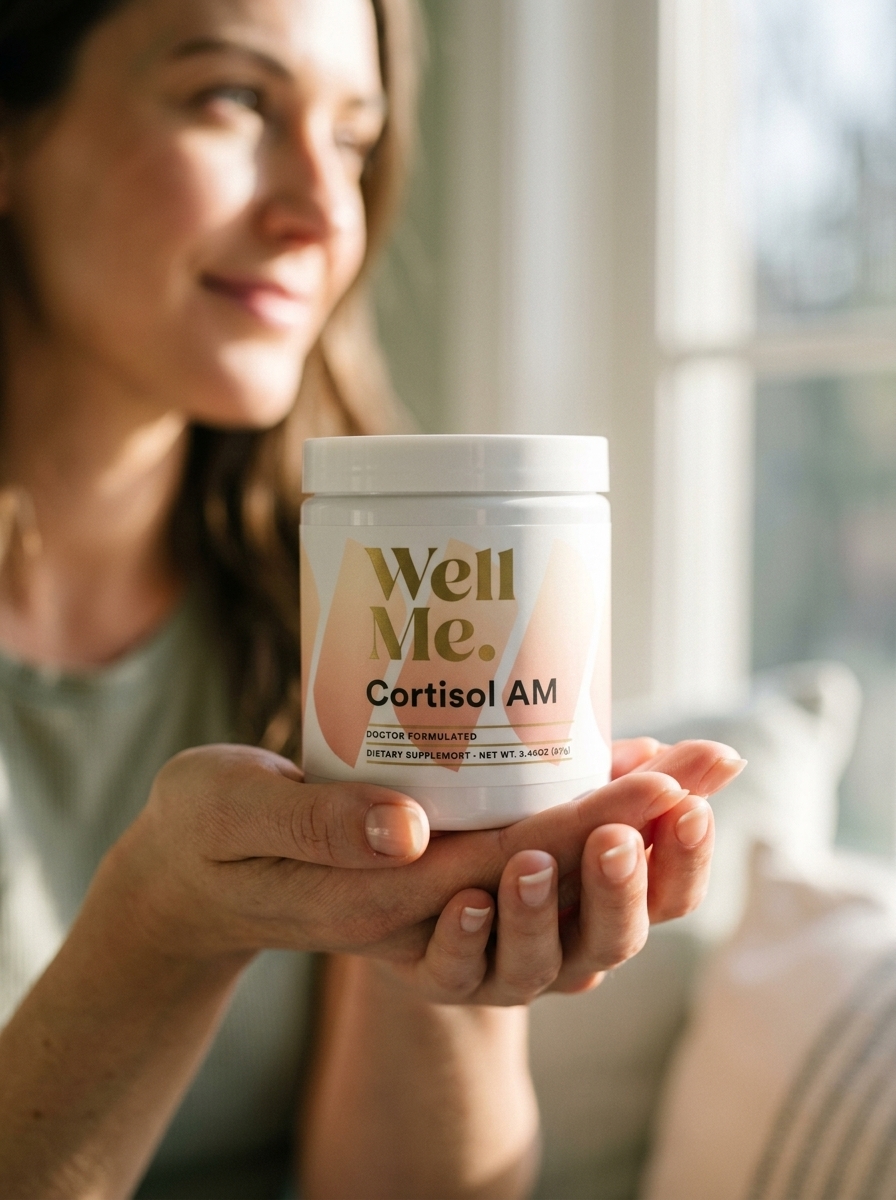
Restore Natural Calm
When your nervous system forgets how to rest, give it the support it needs.
Cortisol AM helps regulate your body’s natural stress hormone rhythm — higher energy in the morning, gentle decline toward evening. Instead of fighting chronic activation, work with your body’s wisdom. Support healthy cortisol balance so your nervous system can remember it’s safe to truly rest.
- ✓ Natural energy without jitters
- ✓ Deeper, more restorative sleep
- ✓ Genuine calm that feels sustainable
What Recovery Actually Feels Like

People often ask me what changed, and the answer is both everything and nothing. My life is just as full, my responsibilities just as real. But my relationship to stress has fundamentally shifted. I can be fully engaged when engagement is needed, and I can be fully present when presence is called for. My sleep became restorative again — not just time spent unconscious, but actual recovery that left me refreshed.
My digestion improved because my body finally felt safe enough to process food properly. Even my relationships deepened because I could be genuinely present instead of managing anxiety while pretending to listen.
The most surprising change was rediscovering pleasure in simple things. Food tasted better when I wasn’t eating it in a state of low-level stress. Conversations became more satisfying when I wasn’t simultaneously scanning for the next thing I needed to handle.
Experience what genuine calm feels like in your body
The Nervous System Needs Support, Not Suppression

What I learned is that you cannot will your nervous system into balance. You cannot think your way out of chronic activation. You have to give your body the biochemical support it needs to remember its natural rhythms.
Cortisol AM didn’t suppress my stress response — it helped regulate it. My body still responds appropriately to actual challenges, but it no longer treats ordinary life events as emergencies. I can feel the difference between real stress that requires action and phantom stress that’s just old patterns playing out.
This isn’t about eliminating stress from life, which is neither possible nor desirable. It’s about restoring your body’s ability to respond proportionally and recover completely. It’s about teaching your nervous system that it’s safe to let go.
Help your nervous system remember it’s safe to truly rest
Coming Home to Your Own Body

The deepest gift of healing my nervous system has been coming home to my own body. For years, I lived slightly outside myself, managing life from a place of chronic preparation rather than embodied presence. I had become a very efficient person, but I had lost touch with simply being human.
Now when I sit on my porch in the morning, I can actually be there. Not planning the day or reviewing yesterday, but present with the light and the air and the quiet miracle of consciousness itself. My nervous system has remembered that this — this simple being here — is safe.
That restless energy that once felt like motivation now reveals itself as what it always was: a nervous system trying to protect me by never letting me fully land.
But protection without rest isn’t sustainable. What I needed wasn’t more strength to push through. I needed support to come down.
Written by Liora Menden — for those who seek rest
Transform restless energy into sustainable presence and peace